Ottawa Opens Applications for $890-Million AI Sovereign Compute Program
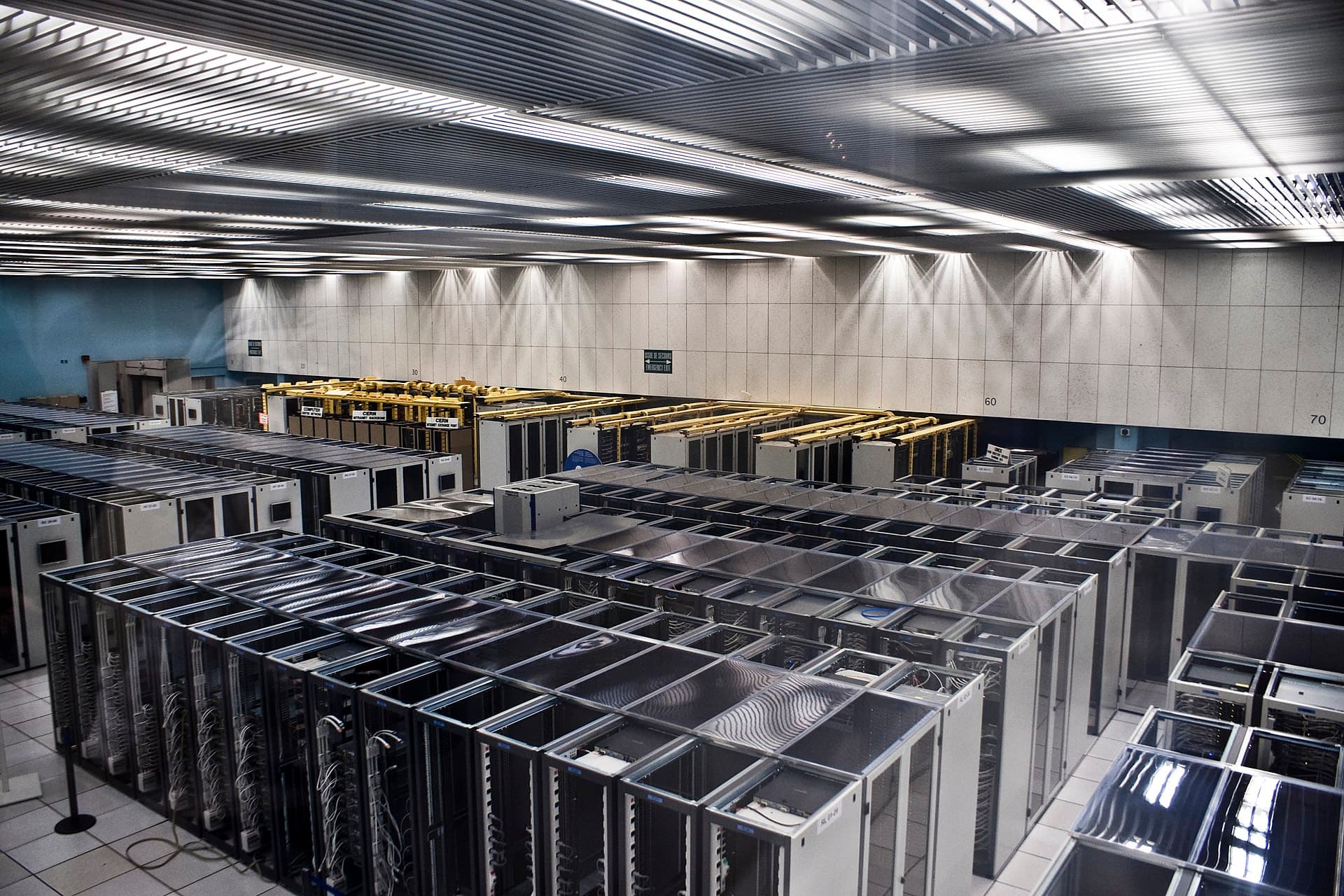
The federal government has formally opened the call for applications under its AI Sovereign Compute Infrastructure Program, the cornerstone of a national push to build domestic supercomputing capacity for artificial intelligence research and commercial deployment. The program will direct $890 million toward the construction of large-scale, AI-optimised supercomputers on Canadian soil, with applications closing on June 1.
The launch is one element of a broader strategy that Innovation Minister Évan Solomon has dubbed Canada's path to AI sovereignty. Earlier this week, the federal government also unveiled the six pillars of a long-anticipated national AI strategy, a document repeatedly delayed under the previous Trudeau and short-lived Carney transitional cabinets but now positioned as a centrepiece of the prime minister's industrial agenda.
What the program funds
The AI Sovereign Compute Infrastructure Program is intended to capitalise the construction of one or more large-scale data-centre and supercomputing facilities purpose-built for AI workloads. Eligible applicants include public-private consortia involving Canadian universities, research institutions, telecommunications companies, hyperscale data-centre operators and provincial Crown corporations. The federal contribution is structured as repayable and non-repayable funding combined, with the precise mix dependent on the nature of each project.
Applicants must demonstrate how their proposals would benefit Canadian researchers, public-sector users and Canadian-headquartered firms, including small and medium-sized enterprises building AI applications in fields such as health, climate science and advanced manufacturing. The program also requires applicants to detail how they will source the cooling, electricity and network capacity needed to run modern AI training clusters at scale, and how they will manage the resulting greenhouse-gas footprint.
Officials emphasised that the program is not aimed exclusively at the largest data-centre operators. The application window is open to mid-sized projects that focus on inference workloads or specialised research clusters, including ones tied to specific universities or sectors. The intention, officials said, is to ensure that compute capacity is accessible to a broad range of Canadian users rather than concentrated among a small number of multinational customers.
Why sovereign compute matters
The Carney government has framed AI compute as critical infrastructure on par with railways, telecommunications networks and electricity grids. With most of the world's high-end AI training currently running on hyperscale facilities located in the United States, Europe and East Asia, Canadian researchers and companies often face a choice between buying capacity from foreign clouds or scaling back the ambition of their projects.
Officials argue that the resulting dependency creates several layers of risk. Data hosted on foreign infrastructure can be subject to other countries' subpoena and surveillance regimes, particularly in the United States. Pricing and access can be dictated by foreign providers whose incentives are not aligned with Canadian users. And in scenarios of acute geopolitical stress, access to compute capacity could be constrained at exactly the moment Canadian researchers and firms most need it.
The program is therefore designed to ensure that meaningful AI training and inference capacity exists on Canadian soil, under Canadian regulatory jurisdiction, with clear access pathways for Canadian users. Officials have stopped short of mandating Canadian ownership of the underlying technology stack, recognising that frontier AI hardware is largely produced outside Canada, but they have emphasised data residency and operational sovereignty as core program criteria.
Six pillars of the AI strategy
Solomon's office released a separate document outlining the six pillars of the federal AI strategy. They cover sovereign compute, talent and research, responsible deployment in the public sector, support for Canadian AI start-ups and scale-ups, regulation and safety, and international cooperation.
The talent pillar emphasises retention of Canadian-trained AI researchers, who have historically migrated to U.S. firms in large numbers, alongside expansion of doctoral and postdoctoral programs at Canadian universities. The public-sector deployment pillar focuses on streamlining federal procurement of Canadian-built AI tools and on equipping the federal public service to use AI responsibly in service delivery.
Regulation and safety remain in flux. The Trudeau-era Artificial Intelligence and Data Act, originally tabled as part of Bill C-27, did not pass before Parliament was dissolved last year, and the Carney government has signalled that it will table updated AI legislation later in this Parliament. The strategy document avoids prescribing specific rules but commits the government to working with provinces, regulators and civil society on a framework that emphasises both innovation and accountability.
How the research community is responding
Canada's three major AI research institutes, Vector in Toronto, Mila in Montreal and Amii in Edmonton, broadly welcomed the program. Their leaders have argued for years that compute capacity is the binding constraint on Canadian AI research, and several have indicated they intend to participate in proposals submitted under the new call.
University leaders are similarly supportive but flagged concerns about ensuring that smaller institutions and underrepresented groups benefit. Several presidents have called for explicit allocations of compute capacity to early-career researchers, women and Indigenous scholars in AI fields, on the grounds that simply funding hardware does not necessarily translate into broader access.
Industry reaction has been mixed. Canadian-headquartered AI companies, including the Toronto-based foundation-model developer Cohere, welcomed the program as a long-awaited recognition of compute as critical infrastructure. International cloud providers operating in Canada offered measured statements emphasising their existing investments while signalling interest in participating in any consortium that involves Canadian partners.
Provincial dimension
The program will inevitably prompt competition among provinces hoping to host the new facilities. Quebec's plentiful and inexpensive hydroelectricity makes it a natural location for energy-intensive supercomputing, and Premier Christine Fréchette's government has already signalled interest in attracting projects, building on the province's track record of welcoming data-centre investments. Hydro-Québec's surplus capacity is a meaningful selling point, although questions remain about whether the utility's medium-term load picture leaves room for hyperscale AI workloads alongside electric-vehicle and industrial demand.
British Columbia, with its mix of clean electricity and proximity to West Coast research clusters, is similarly positioned to compete. Alberta has actively pitched itself as a future AI hub, leveraging Edmonton's research base around Amii, the University of Alberta's reinforcement-learning programs, and the province's natural-gas-based generation. Ontario's existing fibre, talent and capital concentrations remain a draw, particularly for facilities focused on financial-services and health-AI workloads.
Atlantic Canada and the territories are less likely to host the largest facilities, but officials emphasised that smaller specialised clusters could be sited in any region with the appropriate connectivity and electricity profile. Northern jurisdictions in particular have begun to explore data-centre projects tied to natural cooling advantages, although power capacity remains a challenge.
Risks and trade-offs
The most contentious dimension of the program is its environmental footprint. AI training facilities are highly energy-intensive, and a single large cluster can consume hundreds of megawatts of power continuously. Critics, including some climate-focused think tanks, warn that adding very large new loads to provincial grids could complicate decarbonisation timelines, particularly in jurisdictions still reliant on natural-gas generation.
Officials have committed to environmental criteria in the program's evaluation framework, including a preference for projects that match incremental load to incremental clean generation. They have also indicated that water use and waste-heat reuse will be considered, with several Canadian universities already exploring district-heating partnerships that capture warm air from data-centre cooling systems for nearby buildings.
A second concern is whether the new capacity will primarily benefit Canadian users or foreign customers. The program's terms require Canadian-prioritised access, but enforcement mechanisms in fast-moving technology sectors are notoriously difficult to design. Civil-society groups have called for transparent reporting on how capacity is allocated once facilities come online.
What is next
Applications close June 1, with a project-evaluation process expected to run through the summer. Funding decisions and announcements of selected projects are anticipated in the autumn, with construction timelines varying significantly depending on the size and complexity of each facility. Some smaller research-focused clusters could be operational within 18 to 24 months, while large hyperscale projects typically take three to five years from green-light to first AI workload.
In parallel, the Carney government is expected to table updated AI legislation in the autumn legislative session, alongside any privacy-law modernisation that emerges from the post-Bill C-27 review. The combined package is positioned as the regulatory backbone for the strategy that the AI Sovereign Compute Infrastructure Program is designed to support.
For Canadian researchers, start-up founders and public-sector AI users, the most consequential question is whether the program will deliver capacity in time to be competitive with the rapid scaling under way at U.S. and Chinese hyperscalers. The next two years will determine whether Canada's bid for AI sovereignty translates into meaningful research and economic outcomes or remains primarily a symbolic gesture.
Spotted an issue with this article?
Have something to say about this story?
Write a letter to the editorRelated Stories

Toronto's Cohere Acquires Germany's Aleph Alpha to Build Transatlantic AI Counterweight
3d ago
Ottawa Launches National AI Sovereign Compute Initiative
6d ago

Toronto's Xanadu Becomes First Photonic Quantum Company to Go Public on Nasdaq and TSX
Apr 20