Quebec Premier Fréchette Pitches Macron on Critical Minerals and Defence
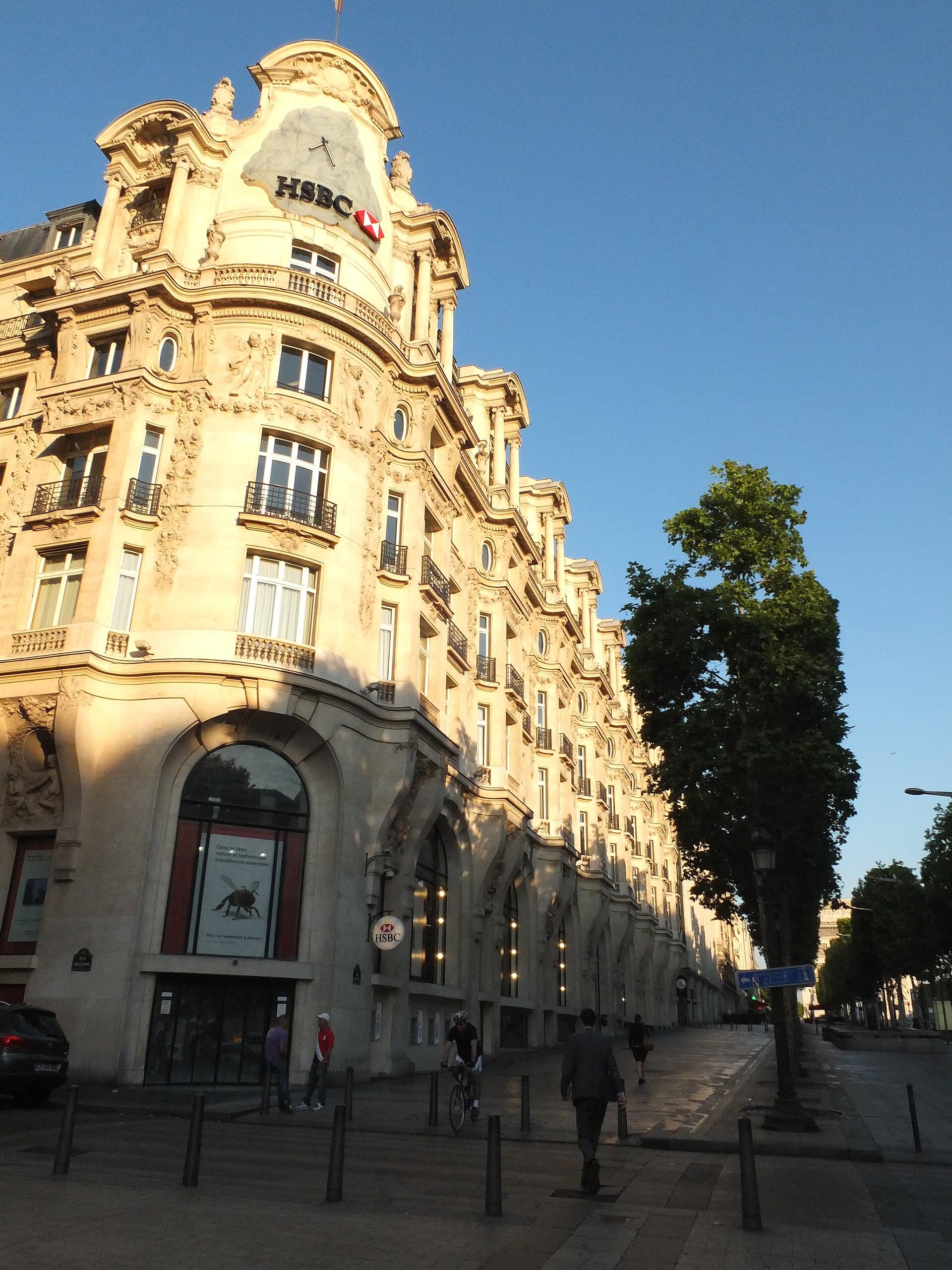
Quebec Premier Christine Fréchette's first major international trip as head of the provincial government has taken her to Paris, where she met French President Emmanuel Macron at the Élysée Palace, dined with French Prime Minister Sébastien Lecornu, and pitched Quebec as a critical minerals partner for France and Europe. The mission, light on signed agreements but heavy on relationship-building, lands as Quebec navigates federal trade tensions and global supply chain realignment.
What happened in Paris
Fréchette met Macron at the Élysée Palace on Monday, accompanied by Quebec ministers Christopher Skeete and Mathieu Lacombe. During their meeting, Macron said Quebec has the potential to contribute in several areas, including research, artificial intelligence and strategic fields. Fréchette also met Lecornu and participated in a roundtable with French officials and business leaders focused on critical and strategic minerals.
Fréchette presented Quebec as a trusted partner for France and Europe, highlighting the province's resource base and 28 identified critical minerals. The pitch resonated with French officials, who are increasingly focused on diversifying European supply chains away from dependence on China for rare earths and other inputs critical to clean energy and defence industries.
The strategic context
European governments have been working to secure access to critical minerals essential for the energy transition and for advanced manufacturing. France, with significant nuclear industry interests and growing defence procurement needs, has been particularly active in seeking new supply partnerships. Canadian provinces, including Quebec, have positioned themselves as alternatives to less reliable supply sources.
Quebec's resource base includes significant deposits of lithium, graphite, nickel and other critical minerals. The province has been working to expand processing capacity and downstream manufacturing to capture more of the value chain. Federal critical minerals strategy, which has been refined under successive governments, provides a framework for cooperation with provinces such as Quebec.
The defence angle
The trip also touched on defence cooperation. Quebec is home to significant defence industrial capacity, including the aerospace cluster centred on Montreal. French officials have expressed interest in deepening industrial cooperation in defence, particularly as European militaries expand procurement in response to the war in Ukraine and broader geopolitical pressures.
Fréchette's discussions touched on both bilateral commercial opportunities and the broader trans-Atlantic security architecture. The conversation echoes themes that Prime Minister Mark Carney has emphasised at the federal level: that Canada and Europe should deepen their economic and security cooperation in part as a hedge against the unpredictability of the Trump administration.
Lowering expectations
Fréchette had publicly lowered expectations for the mission ahead of departure, saying that she did not expect to return with signed deals but rather with relationships and commitments to continued engagement. That framing has insulated the trip from criticism on the basis of specific deliverables and has emphasised its character as a relationship-building exercise.
Quebec's tradition of conducting its own international engagement, particularly with France, dates back decades. The province has maintained a network of foreign representations and has used international engagement to bolster its economic and cultural standing. Fréchette's trip is the latest example of that long-running approach.
The political context in Quebec
Fréchette took office in April after the Coalition Avenir Québec caucus selected her to succeed François Legault. The new premier has spent her first weeks in office defining her priorities and her approach to both federal and international files. She has met Prime Minister Mark Carney in Ottawa and US Trade Representative Jamieson Greer in Washington.
A provincial election is on the horizon in Quebec, and the new premier has limited time to establish herself before that contest. The Paris trip is part of a strategy to project competence on economic and international files in a province that has long valued an active international presence.
Reaction from opposition parties
Provincial opposition parties offered mixed responses to the Paris mission. The Parti Québécois said that international engagement is an essential dimension of Quebec's role and welcomed the premier's emphasis on critical minerals. Québec Solidaire pressed for more attention to climate and human rights dimensions in international economic relationships. The Liberals expressed cautious support for the broad direction while questioning the practical deliverables.
Federal reaction has been mostly supportive. Ottawa has emphasised that Canadian provinces can play valuable supporting roles in trade diplomacy, particularly when their interests align with federal strategy. Quebec's pursuit of European partnerships dovetails with the Carney government's broader diversification efforts.
The economic stakes
For Quebec, expanded trade with France and Europe more broadly is a long-standing strategic priority. The Comprehensive Economic and Trade Agreement between Canada and the European Union has reduced barriers to trade across the Atlantic, and Quebec exports to France and other European partners have grown in recent years.
Critical minerals are a particular area of opportunity. The European Union has set ambitious targets for sourcing critical minerals from reliable partners, and Quebec is well positioned to be one of them. Securing long-term offtake agreements with European industrial buyers could anchor significant new investment in mining and processing capacity in the province.
The federal dimension
Quebec's international engagement operates within the constitutional framework that gives the federal government primary responsibility for foreign policy. In practice, provinces have considerable space to engage on issues within their jurisdiction, particularly in trade, economic development and culture. Federal and provincial governments coordinate, sometimes closely and sometimes loosely, on international files.
The Carney government's diversification strategy creates space for provinces to advance their own international interests in ways that complement federal priorities. Quebec's Paris trip is, in that respect, well aligned with federal direction.
The diplomatic relationship
The Quebec-France relationship is one of the most institutionalised provincial international relationships in the country. Quebec maintains a general delegation in Paris with significant capacity, and the two governments meet at regular intervals through structured mechanisms. The relationship has produced cooperation on education, culture, mobility of workers and economic development over many years.
Macron's comments during the Fréchette meeting reaffirmed France's interest in deepening the relationship. The French president has used his time in office to push for European strategic autonomy, and partnerships with reliable democratic resource suppliers fit naturally into that vision.
The CETA framework
The Comprehensive Economic and Trade Agreement between Canada and the European Union has been the formal framework underpinning growing trans-Atlantic trade since 2017. The agreement has eliminated tariffs on a wide range of goods, opened up procurement markets and provided regulatory cooperation mechanisms. Quebec exports to France and other European partners have benefited from CETA's provisions.
Implementation of CETA has been incomplete in some areas. Several European member states have not ratified the full agreement, which has limited the application of certain provisions. Despite that complication, the agreement has provided a working basis for sustained growth in trans-Atlantic trade and investment.
Quebec's energy export ambitions
Quebec is a significant electricity exporter, with Hydro-Québec selling power to several US states and to other Canadian provinces. The province's hydroelectric base gives it a low-carbon profile that is attractive to European partners looking for clean energy partnerships. While exports of electricity to Europe are constrained by geography, Quebec's expertise in clean power systems and hydrogen production has commercial potential.
The Carney government's national clean electricity strategy, released earlier this month, opens potential paths for Quebec to play a larger role in supplying clean electricity to other provinces and, indirectly, to neighbouring regions in the United States that are seeking low-carbon power sources. Federal-provincial cooperation on transmission infrastructure will shape what is possible.
The Indigenous dimension of Quebec's resource agenda
Significant portions of Quebec's critical minerals deposits and hydroelectric resources are on or near Indigenous traditional territories. Cree, Innu and other Indigenous communities have long-standing relationships with the province on resource development, including landmark agreements such as the Paix des Braves with the Crees of Eeyou Istchee. Any major expansion of critical minerals mining will require continued partnership with Indigenous communities.
Indigenous leaders have welcomed economic opportunities while pressing for meaningful consultation, environmental protection and revenue sharing. Several recent mining projects in Quebec have featured Indigenous equity participation, and that model is likely to become more common as new projects advance.
What's next
Specific next steps will emerge in the coming weeks and months as the Quebec and French governments work through follow-up to the Paris meetings. Industry roundtables, ministerial visits and structured trade promotion missions are likely to follow. Specific commercial agreements, if and when they materialise, will signal the trip's tangible payoff.
For Fréchette, the trip is a credential-building exercise as well as a substantive engagement. For Quebec's economy, it is one more move in a long-running effort to diversify markets and to anchor European demand for Quebec resources, technology and expertise. For Canada more broadly, it is another example of how subnational diplomacy can support broader national objectives in an increasingly multipolar world.
Spotted an issue with this article?
Have something to say about this story?
Write a letter to the editor