Carney Heads to Armenia in Historic Trip to European Political Community Summit
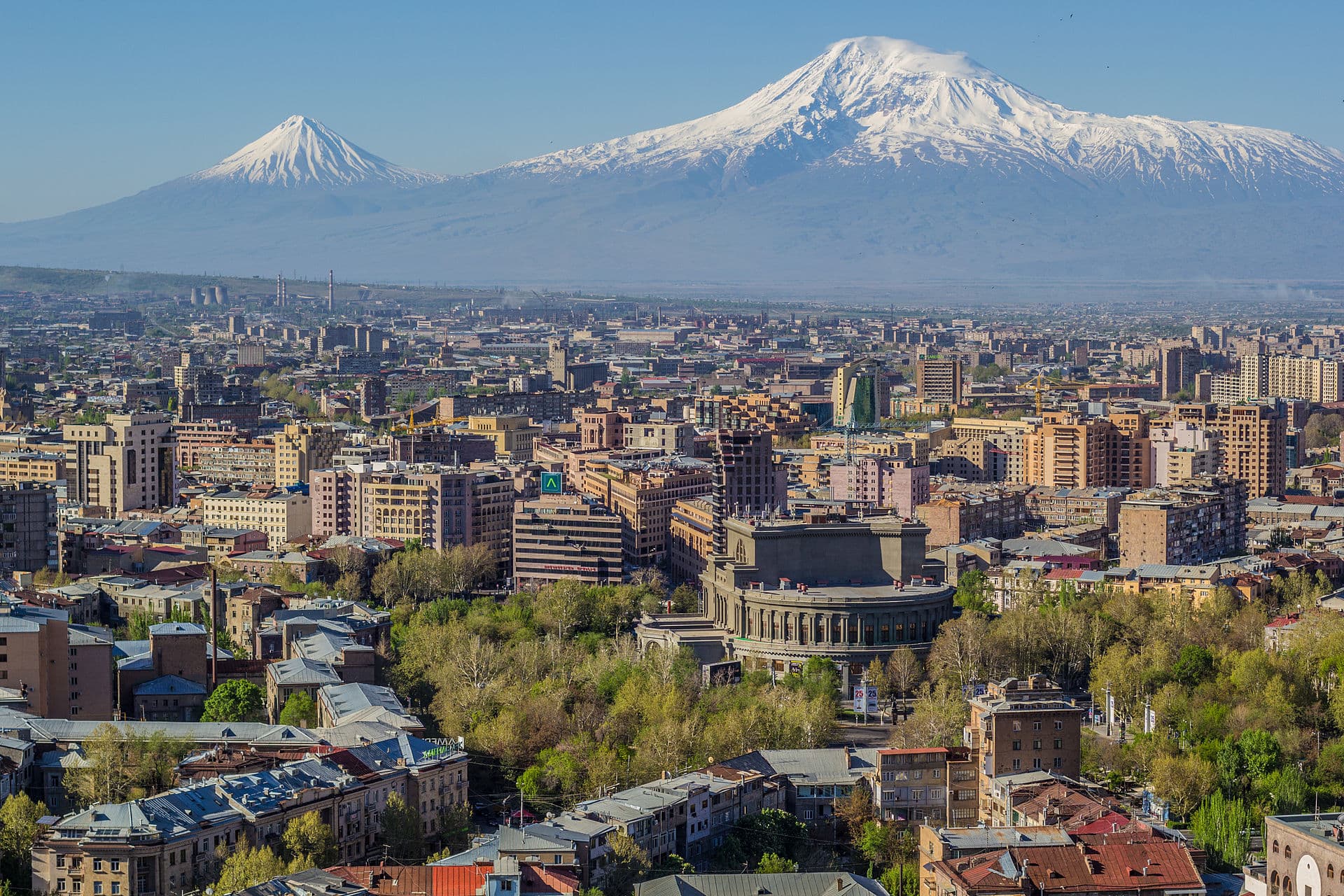
Prime Minister Mark Carney will travel to Yerevan, Armenia, from May 2 to May 4 to participate in the eighth European Political Community Summit, becoming the first non-European leader ever invited to the gathering and signalling Canada's deepening pivot toward European democracies amid an increasingly complicated relationship with the United States. The visit will also be the first official trip to Armenia by a Canadian prime minister in nearly a decade.
The summit
The European Political Community was established in 2022 as a forum for European leaders to discuss strategic, security and economic issues outside the confines of the European Union itself. The membership stretches across the EU and beyond to include the United Kingdom, Norway, Switzerland, the Western Balkans, the South Caucasus and other European partners. The body has emerged as one of the most expansive forums for political coordination on the continent.
This year's summit will be held under the theme "Building the Future: Unity and Resilience in Europe," with discussions focused on strengthening democratic resilience, developing connectivity, and enhancing economic and energy security. Russia's continuing war against Ukraine will dominate the security conversation, while economic priorities will include critical minerals, energy independence and trade diversification.
Carney was invited to attend by European Council President António Costa and Armenian Prime Minister Nikol Pashinyan, the host of this year's summit. The invitation marks the first time the EPC has welcomed a leader from outside Europe, and is being read as a recognition of Canada's strategic relevance and its longstanding alignment with European democracies on key foreign policy questions.
Why Armenia
Armenia hosting the summit reflects both the country's growing diplomatic profile and the broader EU effort to engage the South Caucasus more substantively. Armenia has been navigating a complex regional environment, with longstanding tensions with neighbouring Azerbaijan, an evolving relationship with Russia and a deepening engagement with European institutions.
For Carney, the trip provides an opportunity to engage with leaders across the EPC membership in a single setting, including those representing countries Canada works with on Ukraine support, NATO defence priorities and trade relationships. The Armenian setting also offers symbolic value, given the size of the Armenian Canadian community and Armenia's role as a partner of Canada on humanitarian and democratic governance issues.
The Carney agenda
The prime minister's office has indicated he will use the summit to reinforce collective security commitments and transatlantic defence readiness, advance support for Ukraine, and position Canada as a premier destination for global capital and investment in critical minerals, energy, defence and advanced technologies. The Canada Strong Fund, announced this week, will feature in the prime minister's pitch to European investors and government partners.
Trade diversification away from over-reliance on the United States is expected to be a recurring theme. Canada's strategy under Carney has emphasised deeper economic relationships with Europe, the United Kingdom, Asia-Pacific democracies and Latin America, partly as a response to the volatility of the trade environment with Washington under the Trump administration.
The prime minister will also seek bilateral meetings with key European leaders during the summit, including discussions with Costa, Pashinyan and others. Topics will likely include the EU-Canada Comprehensive Economic and Trade Agreement, ongoing cooperation on Ukraine and the broader security architecture of the Euro-Atlantic and Indo-Pacific regions.
Canadian-European relations
Canada's relationship with European democracies has been one of the most stable elements of the country's foreign policy for decades. CETA has provided a strong commercial framework, and security cooperation through NATO, the G7 and other multilateral forums has been a constant feature of the relationship.
The current period has placed renewed emphasis on Canada-Europe ties, both because of the trade tensions with Washington and because of shared concerns about the war in Ukraine, China's strategic ambitions and the broader fragility of the international rules-based order. European leaders have generally been receptive to Canadian engagement and have welcomed the prime minister's invitation to the EPC as a meaningful gesture.
Canada's defence spending commitments, including its NATO 2 per cent of GDP target, have been a topic of European interest. Canadian capability commitments around the F-35 fighter purchase, submarine procurement and ground forces modernisation are all being watched in European capitals as evidence of Canada's seriousness about collective defence.
The Ukraine dimension
The summit comes at a moment when efforts to broker a lasting Ukraine ceasefire have stalled. The Easter ceasefire collapsed within hours, and the war's strategic stalemate has continued. European leaders are working to ensure sustained military, financial and humanitarian support for Ukraine while preparing for various peace scenarios.
Canada's contribution to that effort includes military equipment, training, sanctions enforcement and humanitarian aid. Carney is expected to use the summit to coordinate with European leaders on additional steps and to discuss the potential transfer of frozen Russian state assets to support Ukrainian reconstruction, an issue on which Canada has been actively engaged.
The critical minerals pitch
One of the most concrete elements of Carney's summit agenda is the pitch to position Canada as a strategic partner for European critical minerals supply chains. The combination of Canada's geological resources, regulatory environment and political stability makes the country an attractive partner for European industries looking to reduce dependence on Chinese-controlled supply chains.
The Canada Strong Fund will play a role in supporting investments in this space, with Canadian critical minerals projects expected to attract European industrial and financial partners. The summit's focus on energy and economic security provides a natural setting for these conversations.
The Armenian Canadian community
Armenian Canadians, numbering more than 80,000, have been a steady advocacy voice for stronger Canada-Armenia relations. Communities in Montreal, Toronto, Vancouver and other cities have followed the geopolitical situation in the South Caucasus closely and have welcomed the prime minister's decision to attend the summit.
The trip provides an opportunity for renewed Canadian engagement with Armenia on humanitarian, democratic and economic issues. Bilateral discussions during the summit are expected to touch on these themes, although the broader summit programme will dominate the prime minister's schedule.
Reaction at home
Reaction to the trip has been generally positive across the political spectrum. Conservative critics have flagged questions about the cost and timing of the trip given competing domestic priorities, but have not opposed the diplomatic substance. NDP voices have welcomed the focus on European cooperation and Ukraine support, while urging stronger emphasis on humanitarian and human rights themes.
The Bloc Québécois has supported the trip's focus on Europe, viewing it as consistent with Quebec's traditional preference for diversified international engagement and trade.
What it means for Canadians
For Canadians, the trip reinforces the federal government's strategic shift toward Europe as part of broader trade and security diversification. The economic and diplomatic outcomes will play out over time, but the symbolism of a Canadian prime minister attending the EPC for the first time as a non-European invitee is significant.
The prime minister's pitch to European investors and partners on critical minerals, energy and defence is consistent with the broader economic strategy of using Canadian assets to attract patient capital and build domestic industries. How effectively the trip translates into specific commitments will depend on follow-up work in the months ahead.
The defence dimension
Defence and security questions will dominate much of the summit's agenda. European leaders are working through the implications of the Trump administration's posture toward NATO, the burden-sharing debate around the alliance's defence spending targets, and the operational realities of supporting Ukraine over a sustained period.
Canada's commitments to higher defence spending and to specific procurement programmes provide a credible foundation for engagement on these issues. Carney's background as a former central banker also lends his diplomatic interventions a particular credibility on the financial and economic dimensions of security policy.
Discussions about the future of the European defence industry, joint procurement initiatives and standardisation of equipment are all topics where Canada has potential interests as both an ally and a supplier. Canadian aerospace and defence firms have been pursuing opportunities with European militaries, and the summit provides a venue for advancing those conversations at the political level.
Energy and climate cooperation
Energy security has been one of the central preoccupations of European leaders since Russia's full-scale invasion of Ukraine, and Canada's energy export potential has become a more visible part of the conversation. Canadian liquefied natural gas, hydrogen and clean electricity exports to Europe are all topics that have advanced through bilateral and multilateral discussions.
Climate cooperation is closely linked to energy security in the European framework. Canadian commitments on emissions reduction, clean technology development and critical minerals supply align Canada with the European Green Deal in important respects, although the specifics of cooperation continue to be negotiated through technical working groups.
What's next
Carney returns to Canada following the summit and is expected to brief Parliament on the outcomes upon his return. Bilateral follow-up meetings with European leaders are likely to occur in the weeks and months following the trip, building on the conversations begun in Yerevan.
The CUSMA review process, the ongoing Ukraine situation, and the broader trajectory of Canada-Europe relations will all shape how the trip is remembered and assessed. For now, the historic invitation marks a clear moment in Carney's first year as prime minister and signals the direction of Canadian foreign policy at a time of significant global transition.
Bilateral side meetings
Beyond the formal summit programme, Carney is expected to hold bilateral meetings with several European leaders during his time in Yerevan. Conversations with the leaders of the United Kingdom, France, Germany and key Eastern European partners are likely to feature prominently. Each bilateral provides opportunity to advance specific policy files and trade discussions.
The prime minister's team has been preparing detailed briefing materials covering the priorities and sensitivities of each interlocutor, ensuring that the limited time available for sidebars is used efficiently. Canadian diplomats based in European capitals have been coordinating logistics and ensuring that the prime minister's messaging aligns with broader Canadian engagement on each file.
Spotted an issue with this article?
Have something to say about this story?
Write a letter to the editor