BC Wildfire Service Warns of Elevated Risk as 2026 Season Opens With Dry Soils and Above-Normal Forecast
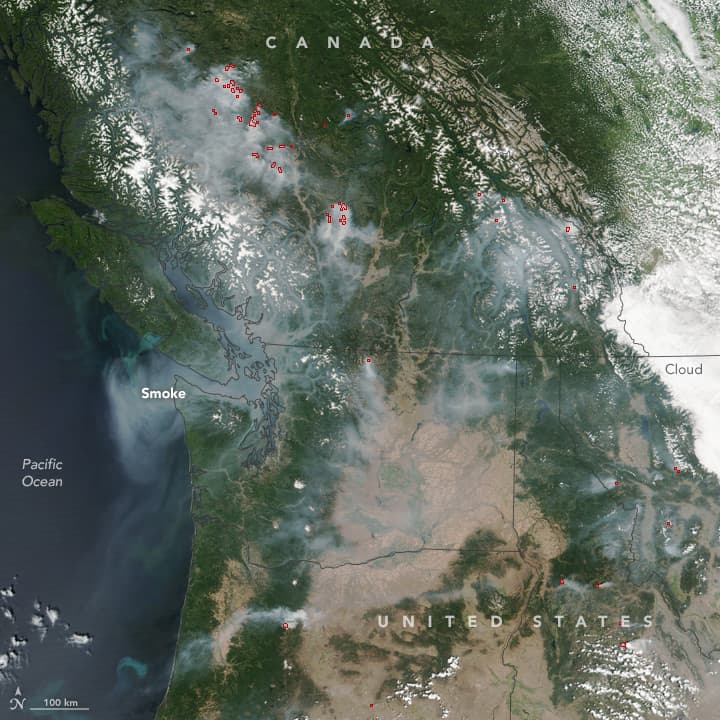
The British Columbia Wildfire Service has formally opened the 2026 wildfire season with a warning that drought conditions across the Interior, the Cariboo, and the Peace region have left fuels primed for ignition and could produce an early and active fire year if spring precipitation does not return. The agency, which marks April 1 as the start of the formal fire season, has already deployed initial-attack crews and air tankers to forward operating bases across the southern half of the province, several weeks earlier than is typical for a normal year.
What the conditions look like
Drought codes across the southern Interior of British Columbia entered the 2026 season at levels that match or exceed those recorded at the start of the catastrophic 2023 and 2024 fire seasons. The drought code, a measure of the dryness of deep, compacted, organic soils, is particularly elevated in the Thompson-Okanagan, the Kamloops Fire Centre, and parts of the Cariboo and Prince George Fire Centres. The fine fuel moisture code, which tracks the dryness of grasses and small twigs that drive ignition, is also high across the southern half of the province.
Snowpack, which normally feeds streamflow and soil moisture into May and June, was below normal across most of southern British Columbia at the end of the winter. The April 1 snow survey from the River Forecast Centre showed snowpack at roughly seventy per cent of normal across the South Coast, and below sixty per cent across much of the Interior.
The combination of dry soils, below-normal snowpack, and a forecast that calls for above-normal temperatures and below-normal precipitation across most of the province through May and June has produced an outlook the BC Wildfire Service describes as concerning. Officials have stopped short of calling the year a near-certain repeat of 2023, when more than two and a half million hectares burned, but have said the conditions warrant proactive deployment and public preparation.
Where the early-season activity is concentrated
Through the third week of April, the BC Wildfire Service has responded to a small number of human-caused fires, primarily in the southern Interior, with no significant fires of natural origin. The early-season activity has been consistent with the kind of brush, grass, and debris-burning ignitions that typically dominate spring fire activity, and most have been contained quickly.
Of greater concern to officials are several over-wintering fires that have been smouldering in deep peat and organic soils since the 2025 season ended. Over-wintering fires, also known as zombie fires, can re-emerge in the spring once snow recedes and ground conditions warm. The agency has identified several active overwintering fires in the Cariboo and Peace regions and is monitoring them closely for signs of renewed surface activity.
Operational readiness
The BC Wildfire Service entered the 2026 season with the largest standing fire-fighting workforce in its history, the result of a multi-year buildup that began after the 2023 season. The province's air tanker fleet, helicopter contracts, and unit crew complement have all been expanded over the past three years, and a permanent year-round workforce of fire professionals has been established to ensure that operational expertise is retained between fire seasons.
The federal government has signalled that it will deploy Canadian Armed Forces resources to British Columbia and other affected provinces if requested, building on the operational pattern established during the 2023 and 2024 seasons. Mutual aid agreements with Alberta, the territories, and several United States jurisdictions, including Washington and Idaho, are also in place. Officials have noted that the agreements with American partners will be important even if cross-border political relationships remain strained on the trade file.
What it means for affected communities
For residents in fire-prone areas, the agency is urging early preparation. Households are being asked to clear flammable materials from within ten metres of their homes, to maintain defensible space around outbuildings, and to ensure that emergency kits are ready to go. Local governments across the southern Interior have been holding public information sessions on FireSmart practices and on local emergency notification systems.
For Indigenous communities, the season opens against a backdrop of multi-year displacement from previous fire years. Several First Nations communities in the Cariboo, the Chilcotin, and the Tsilhqot'in have not yet completed reconstruction after losses sustained in the 2023 and 2024 seasons. Community leaders have called on the federal and provincial governments to ensure that emergency response plans for 2026 specifically protect those communities and that evacuation infrastructure is in place before any major incident develops.
For tourism operators in the Okanagan, the Kootenays, and the Cariboo, the early-season warnings raise concerns about a repeat of the 2023 cancellations and travel disruptions. Industry groups have urged provincial authorities to communicate clearly with international visitors and to invest in real-time air-quality and access information.
The role of climate change
The BC Wildfire Service and Environment and Climate Change Canada have both been clear in recent years that the elevated fire risk facing British Columbia is consistent with what climate models have projected for the region. Warmer winters, lower spring snowpack, longer summer dry periods, and earlier spring fire seasons are all features of the climate scientists have anticipated for several decades.
The 2023, 2024, and 2025 seasons were each among the most severe in British Columbia's recorded fire history, and the cumulative effect of repeated severe seasons is beginning to alter the structure of forests across the province. Forest scientists at the University of British Columbia and the University of Northern British Columbia have noted that the species composition, age class distribution, and carbon storage of the province's forests are all being reshaped by the changed fire regime.
The Carney government's spring economic update included new funding for wildfire response and mitigation, including additional resources for FireSmart programmes, prescribed burning, and Indigenous-led land stewardship pilots. Critics have argued that the funding levels remain well below what the scale of the problem requires.
Air quality and public health
Smoke from British Columbia wildfires has affected air quality across the province and beyond in each of the past three summers. Health officials have warned that even short-term exposure to wildfire smoke can produce significant respiratory and cardiovascular effects, particularly for people with existing conditions, for older adults, for pregnant people, and for children.
Public health authorities in British Columbia, Alberta, and Saskatchewan have updated their wildfire smoke guidance for the 2026 season, with new recommendations on indoor air filtration, on the use of clean-air centres in communities affected by smoke, and on the management of outdoor work and recreation during smoke events. Indigenous Services Canada has provided portable air filtration units to several First Nations communities in fire-prone regions.
What's next
The BC Wildfire Service will issue regular updates on conditions and on active fires through the season. Provincial and federal officials have said the next major coordinating meetings on wildfire preparedness will be in mid-May, when an updated forecast will be available and when crew deployments will be reviewed in light of conditions on the ground.
For residents of the most affected regions, the agency's clear message is that 2026 may produce another difficult season and that preparation now is the most effective way to reduce risk later. The province's emergency management agencies are urging people in fire-prone areas to review their evacuation plans, to register for local alert systems, and to maintain readiness through the summer.
For the rest of the country, the British Columbia outlook is also a leading indicator. Conditions in southern Alberta, Saskatchewan, and northwestern Ontario are similar in many respects to those that have driven the British Columbia outlook, and officials in those provinces have indicated that they are watching the southern Interior closely. A serious early-season British Columbia fire would, in past years, have been followed by escalating activity across the Prairies and into the boreal forest within weeks, and that pattern is the one provincial fire managers across the country are now planning around.
Spotted an issue with this article?
Have something to say about this story?
Write a letter to the editor