Carney Unveils National Electricity Strategy to Double Canada's Grid
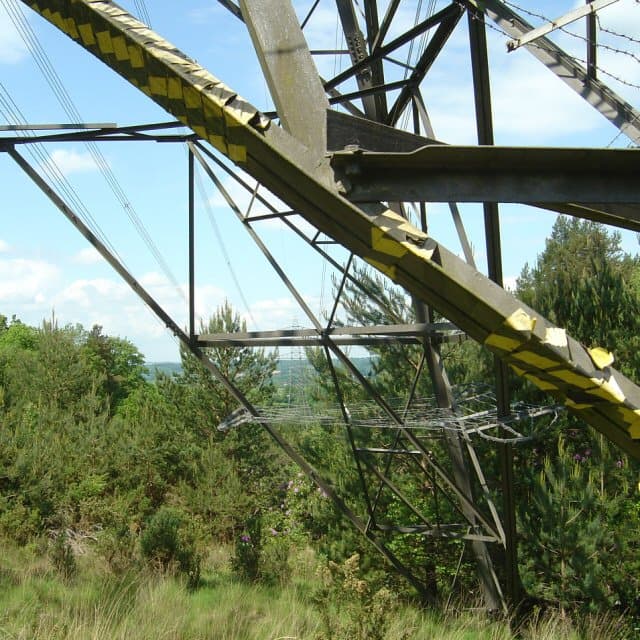
Prime Minister Mark Carney announced a forthcoming National Electricity Strategy on 14 May 2026, setting out one of the most ambitious infrastructure undertakings in modern Canadian history. The plan aims to roughly double the capacity of the country's electricity grid by 2050, drawing on a mix of clean energy and natural gas, with a stated goal of lowering energy costs for about 70 per cent of Canadian households. The announcement marks a defining moment for Carney's majority government, which won power on 13 April and has since placed energy and infrastructure at the centre of its economic agenda.
The strategy responds to a projection that Canada's appetite for electricity will surge in the decades ahead, driven by the electrification of transport, the growth of energy-hungry industries and the spread of technologies such as artificial intelligence and the data centres that power it. Carney has framed the moment in stark terms, describing a global energy crisis and arguing that countries able to produce and move abundant, affordable power will hold a lasting economic advantage. Doubling the grid, in this view, is not optional but essential to Canadian competitiveness.
To achieve that expansion, the government estimates that about 130,000 new workers will be needed, with roughly 30,000 jobs created by the end of 2028 and about 100,000 more by 2050. The scale of the workforce required underscores the magnitude of the build-out, which would touch generation, transmission and distribution across every province and territory. It also positions the strategy as a major source of skilled employment at a time when the government is keen to demonstrate economic momentum.
The plan is not without controversy. The decision to include natural gas alongside clean energy sources has drawn criticism from climate advocates, who argue that leaning on fossil fuels risks undermining Canada's emissions targets. The strategy also wades into territory where provinces hold significant constitutional authority, since electricity generation and distribution fall largely under provincial jurisdiction. Reconciling federal ambition with provincial control will be among the plan's central challenges.
Doubling the Grid by 2050
The core of the strategy is a commitment to roughly double Canada's electricity grid capacity by 2050, a target that reflects expectations of sharply rising demand over the coming quarter-century. As Canadians shift toward electric vehicles, electric heating and electrified industrial processes, and as new data centres and advanced manufacturing draw heavily on the grid, the existing system would be unable to keep pace without substantial expansion.
The government has framed the build-out as a way to deliver clean, reliable and affordable power for decades to come. Achieving that scale of expansion involves not only adding generation but also reinforcing the transmission lines and distribution networks that carry electricity from where it is produced to where it is used. Such infrastructure takes years to plan, approve and construct, which is part of why the government has set a horizon stretching to 2050.
A defining feature of the plan is its energy mix. Rather than relying solely on renewable and other clean sources, the strategy explicitly incorporates natural gas, with the government signalling adjustments to clean electricity regulations to give natural gas a larger role in building out the grid. Officials have presented this as a pragmatic choice to ensure reliability and affordability while capacity expands, particularly in regions where firm, dispatchable power is needed to back up variable renewable sources.
The financial dimensions of the undertaking are enormous. The expansion is expected to require well over a trillion dollars in construction over its lifetime, with public funds covering part of the cost alongside private investment. Mobilising capital on that scale, across multiple provinces and decades, will demand sustained political commitment and cooperation that extends well beyond any single government's term.
Lower Bills for Most Households
A central selling point of the strategy is its promise to lower energy costs for about 70 per cent of Canadian households. The government has tied the case for expansion not only to climate and competitiveness but to affordability, arguing that a larger, more efficient grid can deliver cheaper electricity to most Canadians over time. That framing is politically significant at a moment when cost-of-living pressures remain top of mind for voters.
The affordability argument rests on the idea that expanding supply and modernising infrastructure can put downward pressure on prices, even as overall demand rises. By increasing capacity and improving the efficiency of the system, the government contends, electricity can become a relatively cheaper form of energy compared with alternatives, benefiting households as they electrify heating, transport and other uses.
The claim is likely to face scrutiny. Building out a grid on this scale carries vast upfront costs, and how those costs are distributed between taxpayers, ratepayers and private investors will shape whether households actually see lower bills. Critics may question whether the savings will materialise as promised, or whether the benefits will be evenly spread across regions with very different energy systems and starting points.
For the roughly 30 per cent of households not covered by the affordability projection, the picture is less clear, and the government has not detailed how outcomes might vary by region. Provinces with abundant hydroelectric power, for instance, already enjoy low rates, while others rely on more expensive or carbon-intensive generation. The uneven geography of Canadian electricity means the strategy's effects will look different from coast to coast.
A Workforce of 130,000
The employment implications of doubling the grid are substantial. The government estimates that about 130,000 new workers will be required to carry out the expansion, a figure that captures the labour intensity of building generation facilities, stringing transmission lines and upgrading distribution networks across the country. The plan envisions a phased ramp-up, with roughly 30,000 jobs created by the end of 2028 and about 100,000 more added by 2050.
Those jobs span a wide range of skilled trades and professions, from electricians and line workers to engineers and project managers. The build-out would create sustained demand for workers in construction and the skilled trades, sectors the government has been eager to support. Meeting that demand will require training and recruitment efforts, since the labour market may not currently hold enough qualified workers to staff a project of this magnitude.
The phasing of the workforce growth reflects the long arc of the strategy. The initial 30,000 positions by 2028 represent the early stages of construction and planning, while the larger wave of roughly 100,000 jobs over the following two decades corresponds to the bulk of the build-out. This staged approach allows the labour force to grow alongside the projects rather than all at once.
For communities across the country, the prospect of tens of thousands of well-paying jobs is a significant economic draw. Energy infrastructure projects often bring employment to regions outside major urban centres, and the geographic spread of grid expansion could distribute the benefits widely. The challenge will be ensuring that training pipelines and local hiring keep pace with the timeline the government has set.
Selling Public Assets to Fund Projects
Alongside the electricity strategy, Carney signalled a notable shift in how the government might finance its infrastructure ambitions. On the same day as the strategy announcement, he said his government is open to selling public assets, such as airports and other infrastructure, if the proceeds help fund new projects. The willingness to consider asset sales reflects the immense capital requirements of initiatives such as the grid expansion.
The idea of recycling capital from existing public assets into new construction is a familiar tool in infrastructure financing, but it can be politically sensitive. Airports and similar assets are valuable, strategically important and, in many cases, woven into the public's sense of national infrastructure. Any move to sell them is likely to prompt debate about who would own them, how they would be operated and whether the public interest would be protected.
For Carney, the openness to asset sales fits a broader pattern of treating infrastructure as an economic engine and seeking creative ways to fund it. With the grid expansion alone expected to cost more than a trillion dollars over its lifetime, and with other major projects on the agenda, the government faces the practical question of how to mobilise enough capital without relying solely on public borrowing.
The proposal remains tentative, framed as a willingness to consider rather than a firm commitment. How it develops will depend on which assets might be involved, what terms could be negotiated and how the public and Parliament react. It nonetheless signals that the government is prepared to look beyond conventional financing as it pursues its infrastructure goals.
Faster Approvals and Provincial Deals
The electricity strategy is part of a wider push by Carney to accelerate major projects of all kinds. On 12 May 2026, he proposed legislation to streamline approvals for major projects, setting a goal of limiting federal regulatory approvals to one year. The aim is to shorten the timelines that have historically slowed large infrastructure undertakings, a frequent complaint among project proponents and provincial governments alike.
Faster approvals are closely linked to the feasibility of the grid expansion. Building generation and transmission infrastructure on the scale envisioned requires moving through complex regulatory processes, and lengthy reviews can delay projects by years. By committing to a one-year target for federal approvals, the government is signalling that it wants to remove bureaucratic bottlenecks, though the proposal will need to balance speed against environmental and Indigenous-consultation obligations.
The strategy also unfolds against the backdrop of evolving relationships with the provinces. Carney's government reached an energy memorandum of understanding with Alberta Premier Danielle Smith that could see a West Coast pipeline begin construction around 2027, a development that has eased some of the long-standing friction between Ottawa and Edmonton over energy. He has also met British Columbia Premier David Eby on energy matters, reflecting the need for federal-provincial coordination.
Because electricity falls largely under provincial jurisdiction, the success of a national strategy depends heavily on provincial buy-in. Each province controls its own generation mix, utilities and regulatory framework, and any genuinely national approach must accommodate that diversity. The deals and meetings with provincial leaders illustrate the careful diplomacy required to align a federal vision with the constitutional realities of Canadian energy.
What's Next
The National Electricity Strategy was announced as a forthcoming plan, meaning the coming months will reveal its detailed design, including how the energy mix, financing and timelines are spelled out. The inclusion of natural gas alongside clean energy will remain a flashpoint, with climate advocates pressing for clarity on how the approach squares with Canada's emissions commitments and supporters emphasising reliability and affordability.
Legislation to streamline approvals will move through Parliament, where its provisions will be debated and potentially amended. The one-year target for federal approvals will be tested against the practical demands of environmental review and Indigenous consultation, and how the government balances speed with those obligations will shape both the legitimacy and the durability of the projects it hopes to accelerate.
Federal-provincial negotiations will continue to be decisive. With electricity under provincial control, Ottawa must work with each province to translate the national vision into concrete projects, a process that will involve the kind of bargaining seen in the Alberta memorandum and the discussions with British Columbia. The willingness of provinces to cooperate, and the terms they demand, will determine how much of the strategy is realised.
For Canadians, the stakes are tangible: electricity bills, employment opportunities, the pace of the transition to electric vehicles and electrified industry, and the country's progress toward its climate goals. The strategy represents a bet that a far larger grid can deliver affordability, jobs and competitiveness at once. Whether that bet pays off will unfold over the decades the plan is designed to span, beginning with the choices the government makes in the months immediately ahead.
Spotted an issue with this article?
Have something to say about this story?
Write a letter to the editor


Comments
Be the first to comment.