Pentagon Pause on Defence Board Puts Pressure on Carney Over NATO Spending
The Pentagon has paused its participation in the US-Canada Permanent Joint Board on Defence and renewed pressure on the Carney government to deliver a credible plan to meet NATO's new spending targets, including a long-delayed decision on the F-35 fighter jet program. The escalation, confirmed in briefings to Canadian and US reporters this week, represents the sharpest rebuke yet of Canadian defence policy by the Trump administration and sets up a difficult summer of negotiations on the bilateral defence relationship.
What the Pentagon did
The Pentagon announced on May 18 that it was pausing its participation in the Permanent Joint Board on Defence, the senior advisory body that has guided North American continental defence cooperation since its creation in 1940 by then-prime minister Mackenzie King and US president Franklin D. Roosevelt. The board, which traditionally meets twice a year, brings together senior military and civilian defence officials from both countries to coordinate continental defence priorities.
Pentagon officials told Canadian counterparts that the pause reflected frustration with the lack of a published Canadian roadmap to meet NATO's spending targets and the absence of a firm decision on the F-35 procurement. Senior US officials said they had also delivered a classified paper to the Canadian Department of National Defence detailing US continental defence priorities and the gaps that Washington sees in current Canadian planning.
US Trade Representative Jamieson Greer reinforced the message in a separate briefing this week, telling reporters that Canada was in a different position than other US trading partners on tariffs and on defence cooperation, in part because Ottawa had not delivered the kind of detailed commitments the Trump administration is seeking.
The NATO spending question
NATO members agreed at last summer's Hague summit to a new target of 3.5 per cent of GDP spent on military activities, plus an additional 1.5 per cent of GDP on defence infrastructure. The combined 5 per cent target is more than double Canada's current spending level and would represent a significant reorientation of federal budget priorities.
Canada met NATO's existing 2 per cent of GDP target for the first time in 2025, spending roughly $63.4 billion on national defence. The federal government has committed to additional spending of more than $82 billion over five years to enhance Canadian Armed Forces capabilities, but those commitments fall well short of what would be required to meet the new Hague targets.
The Carney government has not yet published a detailed plan to meet the new NATO targets, and federal officials have signalled that such a plan will form part of the fall economic update or the next federal budget. Defence Minister David McGuinty has previously said the government is examining a range of options, including accelerated procurement schedules and increased recruitment for the Canadian Armed Forces.
The F-35 decision
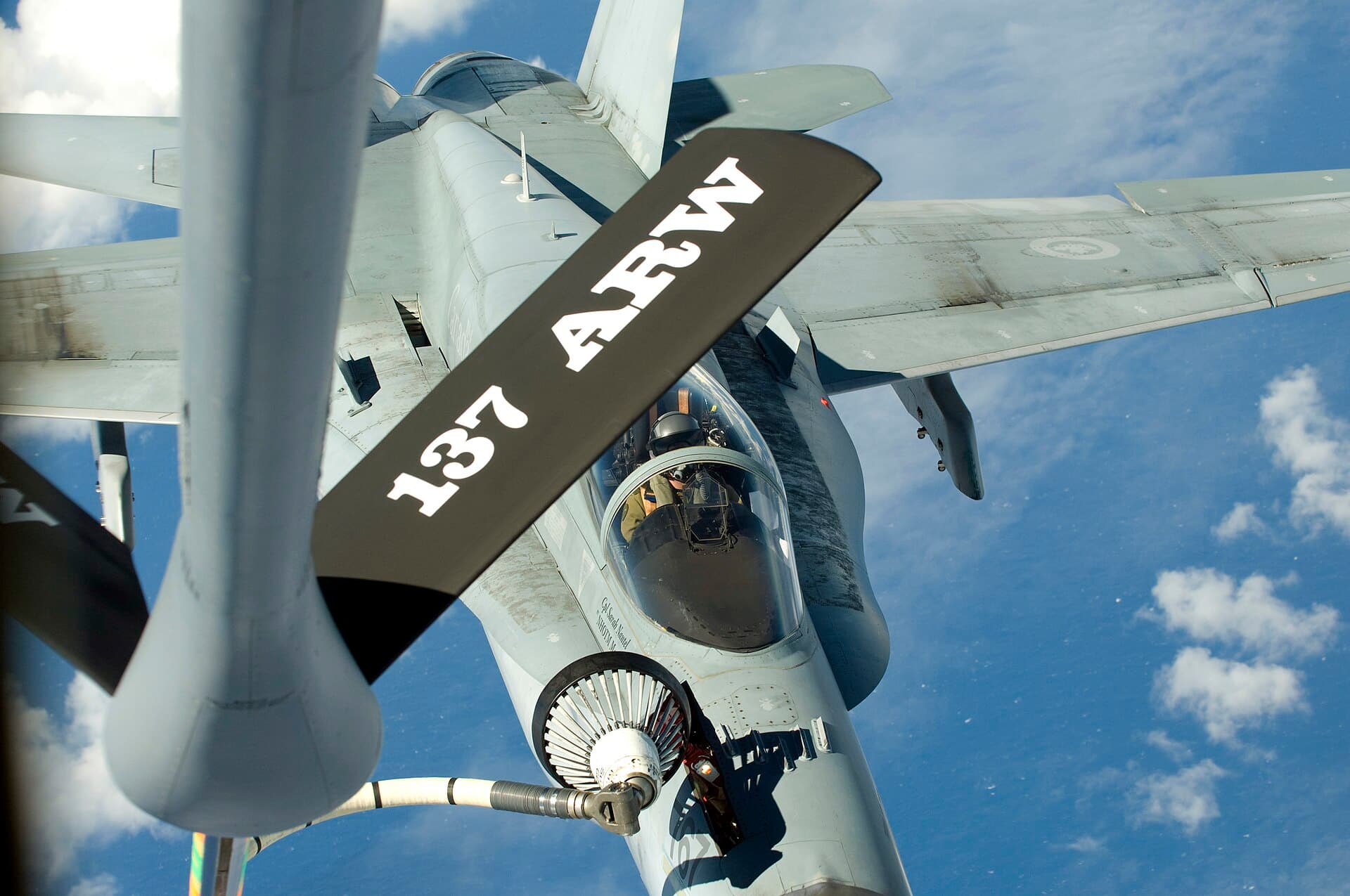
Senior Pentagon officials have cited the long-delayed F-35 review as a major irritant. Canada committed in 2023 to purchase 88 Lockheed Martin F-35 fighter jets to replace the aging CF-18 fleet. After President Trump returned to office in January 2025 and imposed tariffs on Canadian exports, the Carney government opened a review of the procurement to consider whether some of the order should be filled by European-made alternatives.
The review was originally scheduled to wrap up by September 2025 but has not been formally completed. Federal officials have suggested that any decision will need to balance industrial benefit considerations with operational interoperability requirements, particularly for NORAD-related missions where Canadian and US aircraft regularly operate together.
Sweden's Saab Gripen and the European-built Eurofighter Typhoon have both been mentioned as possible alternatives, although industry analysts have warned that neither offers the same level of operational integration with US systems that the F-35 provides. The first batch of Canadian F-35 aircraft is already in production at Lockheed Martin's Fort Worth facility under the original contract.
Canada's response
Federal officials have publicly downplayed the significance of the Pentagon's move while privately acknowledging it as a serious escalation. McGuinty issued a statement saying Canada remains committed to a strong defence partnership with the United States, including through NORAD and through joint participation in NATO operations.
Prime Minister Carney has avoided directly engaging with the Pentagon's criticism but has used recent public appearances, including at the Economic Club of New York this week, to emphasise that Canada is investing in its own defence capabilities. The prime minister has highlighted the announced expansion of the Royal Canadian Navy's surface fleet and the modernisation of NORAD radar and tracking systems in the Arctic.
Senior Canadian officials have argued in private conversations with US counterparts that the Carney government is moving as quickly as is fiscally and politically feasible, given competing demands on the federal budget and the broader trade pressure being applied by the Trump administration. Canadian officials have also pointed to existing commitments to NATO operations in Europe and to the Indo-Pacific deployment of Canadian frigates as evidence of substantive contribution.
What it means for Canadians
The immediate impact of the Pentagon's pause on the Permanent Joint Board is limited. Day-to-day continental defence cooperation continues through NORAD and through direct service-to-service relationships between the Canadian Armed Forces and the US military. The longer-term concern is that the pause could harden into a more formal cooling of the bilateral defence relationship.
For Canadian taxpayers, the prospect of meeting NATO's new 5 per cent target would mean a substantial reordering of federal priorities. Independent budget analysts have estimated that hitting the combined target would require additional defence spending of more than $50 billion annually within a decade, money that would have to come from new taxes, reduced spending in other programs or a combination of both.
The political dynamics within Canada are also complicated. Polling consistently shows broad public support for the Canadian Armed Forces but limited appetite for dramatic increases in defence spending, particularly when those increases would be funded by cuts to social programs or by deferred investments in infrastructure and housing.
Opposition reaction
Federal Conservative Leader Pierre Poilievre has accused the Carney government of mishandling the defence file, arguing that years of underinvestment under successive Liberal governments have left Canada exposed to the kind of criticism now being levelled by the Pentagon. Poilievre has pledged that a future Conservative government would meet NATO commitments on an accelerated timeline.
NDP Leader Don Davies has called for Canada to develop more independent defence capabilities and to deepen relationships with European allies, including through the recently announced security and defence partnership with the European Union. Davies has cautioned against allowing Trump administration pressure to dictate Canadian procurement decisions, particularly on the F-35 file.
Bloc Québécois Leader Yves-François Blanchet has argued that defence procurement decisions should prioritise Canadian industrial benefit, including the aerospace industry concentrated in Quebec. The Bloc has previously called for a comprehensive review of the F-35 deal and for stronger Canadian content requirements in major defence contracts.
Continental defence and NORAD
NORAD modernisation remains the centrepiece of the bilateral defence relationship. The two governments committed several years ago to a multibillion-dollar upgrade of the North Warning System, including new over-the-horizon radars and improved Arctic surveillance capabilities. Implementation of those commitments has been steady but slow, and the Pentagon is understood to have raised pacing concerns in its classified paper to Canadian officials.
Both Canadian and US defence officials continue to emphasise the operational importance of NORAD, which has been the cornerstone of continental air defence since 1958. The binational command is unique in the world and is widely seen as a strategic asset for both countries, particularly as Arctic security becomes a more salient global concern.
The challenge for the Carney government is to demonstrate progress on NORAD modernisation and on broader defence spending without conceding ground to the Trump administration on other files, particularly trade. Federal officials have signalled that defence and trade should be treated as separate negotiations, but Washington has not always observed that distinction.
What's next
Canadian defence officials are expected to travel to Washington in coming weeks for further talks on continental defence priorities. The Carney government is also expected to release at least an initial defence spending plan ahead of the NATO summit later in the year, where Canada will be expected to present a credible roadmap to the new spending targets.
The F-35 decision is likely to be the first concrete signal of how the Carney government intends to balance industrial benefit, operational interoperability and political messaging on defence. A decision is expected before the end of the summer, although officials have cautioned that the review remains genuinely open.
Spotted an issue with this article?
Have something to say about this story?
Write a letter to the editor


Comments
Be the first to comment.