Canada-Germany LNG Deal Signals Pivot From US Energy Market
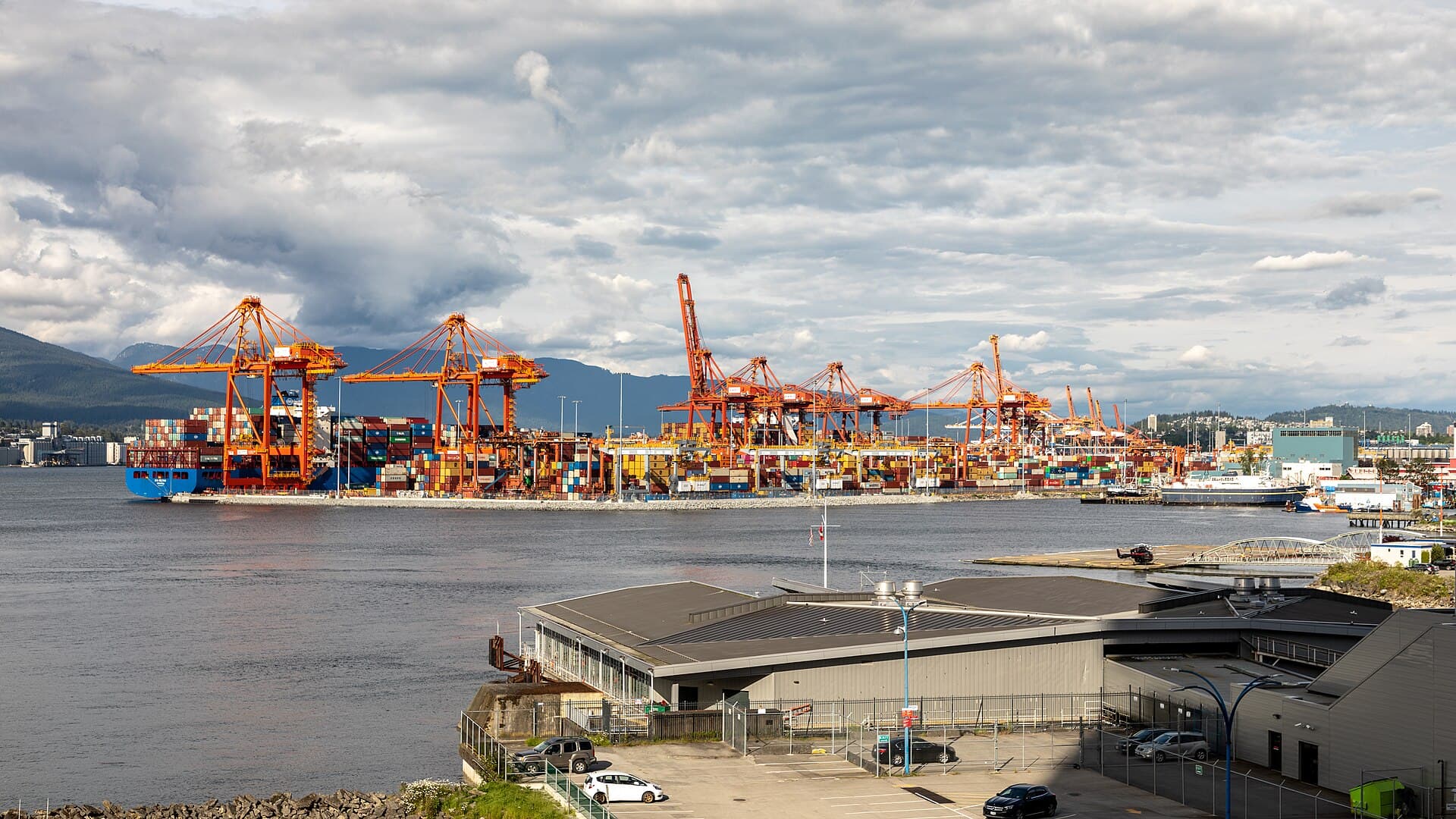
Canada and Germany have signed a long-awaited agreement to ship liquefied natural gas from the proposed Ksi Lisims facility in northwestern British Columbia, a deal that Prime Minister Mark Carney's government is presenting as the most tangible result yet of its strategy to diversify Canadian exports away from the United States. The agreement, finalised this week with the German state-owned trading company SEFE, commits up to one million tonnes of LNG per year over a multi-year supply window once the West Coast project begins commercial operation.
What was announced
The supply deal, confirmed by federal and provincial officials on Tuesday, ties together two pieces of energy policy that have moved slowly for years: Germany's hunt for stable non-Russian gas and Canada's effort to build large-scale LNG export capacity on the Pacific. Securing Energy for Europe, known by the abbreviation SEFE, was set up by Berlin in 2022 to backstop German supply after the Kremlin throttled pipeline flows. Ksi Lisims, a roughly ten-billion-dollar liquefaction project near the Alaska Panhandle, has been advanced by the Nisga'a Nation in partnership with Rockies LNG and Western LNG.
Federal officials say the agreement does not constitute a final investment decision on Ksi Lisims itself, which still requires regulatory sign-off and additional commercial commitments. But the SEFE contract gives proponents a long-term European anchor customer, a missing piece that has held back several Pacific Coast proposals through previous boom-and-bust cycles. B.C. Premier David Eby said the announcement bolsters the investment case for a project his government has been quietly cheering on.
Carney was in New York City this week courting investors and delivering remarks at the Economic Club, making the case that Canada is open to capital after years of regulatory delays. The Germany deal is now being marketed by his office as evidence that energy export expansion and emissions discipline can coexist within a single national strategy, a message aimed equally at European buyers and at provincial governments pushing for pipeline approvals.
How the project got here
Ksi Lisims has been on the books for several years, but its prospects have shifted with the broader political environment. When German Chancellor Olaf Scholz visited then-prime minister Justin Trudeau in 2022, both leaders left without a firm LNG commitment, with Trudeau citing weak commercial demand for new West Coast projects. The change of tone since Carney took office in April 2025 reflects a sharper focus on trade diversification, driven by US tariff pressure under President Donald Trump.
The Nisga'a Nation has positioned the project as Indigenous-led infrastructure, owning the terminal site on Pearse Island and partnering with private operators on the build. Project advocates argue that this structure addresses some of the consent and benefit-sharing concerns that derailed earlier West Coast LNG proposals, including the cancelled Pacific NorthWest LNG project. Critics, including several environmental groups, have continued to challenge the climate accounting of new liquefaction capacity.
The proposed terminal would draw feed gas from northeastern British Columbia and pipe it across the province to the coast, where the gas would be cooled into liquid form for tanker shipment. The deal with SEFE involves a roughly fifteen-year supply commitment once the facility is operating, according to people familiar with the contract who spoke to Canadian and European outlets ahead of the announcement.
Reaction from Alberta and British Columbia
The reaction from western premiers was mixed but broadly positive. Alberta Premier Danielle Smith welcomed the deal as validation of her long-standing argument that Canada needs more pipeline capacity to tidewater, while pushing back on what she called Ottawa's continuing inconsistency on energy policy. Smith is meeting other western premiers in Kananaskis this week, where the agenda has been overshadowed by Alberta's separation referendum announcement.
Eby said the German contract strengthens British Columbia's position as both a host for the export terminal and a beneficiary of the construction phase. The B.C. premier has previously expressed reservations about expanding fossil fuel infrastructure, but his government has supported Ksi Lisims based on its Indigenous ownership structure and its use of electrified compression. Energy Minister Adrian Dix briefed reporters earlier in the week that the federal announcement was imminent, before the deal was officially confirmed.
Saskatchewan Premier Scott Moe said the agreement should clear the way for further LNG approvals and called on Ottawa to move quickly on additional projects, particularly those proposed for the Lower Mainland and the Kitimat corridor. Manitoba Premier Wab Kinew was more measured, emphasising the role that interprovincial infrastructure should play in any expansion of energy exports.
What it means for Canadians
For Canadian households, the most direct implication of the deal is the prospect of new construction jobs in British Columbia and increased upstream gas activity in Alberta and British Columbia's northeast. The project's proponents estimate thousands of construction jobs during the build phase and a smaller permanent workforce once the facility is running. The federal government has framed those jobs as part of its broader case that energy exports can fund the transition to lower-carbon industries.
The deal also has knock-on implications for domestic gas prices. Industry analysts have argued for years that constrained export capacity has kept Canadian gas trading at a steep discount to international prices, hurting producers and provincial royalty revenues. New export terminals would narrow that gap, which could marginally raise prices Canadian consumers pay for natural gas and electricity generated from gas. Federal officials acknowledged the trade-off this week but argued that the broader economic benefit outweighs the cost.
The contract is also a test of Carney's pitch to international investors that Canada can move from announcement to action on major projects. The federal Bill C-5, which streamlines federal review timelines for designated projects, is at the centre of that effort. The government has said it intends to designate Ksi Lisims under the framework, although that decision has not been formalised.
Economic and trade implications
Carney has set a public target of doubling Canadian exports to non-US markets, and Tuesday's deal is the most concrete commercial milestone toward that goal since he took office. Statistics Canada data show that more than three-quarters of Canadian merchandise exports still flow south of the border, a dependency that has been laid bare by the on-again, off-again US tariff regime under Trump. The German contract is small relative to total Canadian gas exports, but officials argued it is structurally significant because it locks in a European customer for a contracted duration.
European officials present at the announcement framed the deal as part of their REPowerEU strategy, which aims to permanently end European reliance on Russian fossil fuels. SEFE's role is to provide volume security for German utilities, particularly during winter periods. The contract is also a hedge against tighter global LNG markets in the early 2030s, when several long-term Qatar and Australian contracts roll over.
The agreement comes the same week that Israel and Iran moved closer to a US-brokered deal that would reopen the Strait of Hormuz, which carries a large share of global LNG and oil. Even with that channel reopening, European buyers have signalled they want long-term contracts in geographies considered politically and physically distant from Middle Eastern flashpoints. Canada's Pacific Coast fits that profile.
Climate questions
Environmental groups warned that the deal locks in fossil fuel infrastructure that will be difficult to retire before its end-of-life dates. Stand.earth and the David Suzuki Foundation said in separate statements that any new export terminals must come with binding upstream methane controls and verified emissions reductions across the gas supply chain. The federal government has pointed to its planned cap on oil and gas emissions and to electrified design choices at Ksi Lisims, including using clean grid power for compression rather than burning gas on site.
The Climate Change Performance Index ranked Canada poorly in its 2026 update, citing the removal of the consumer carbon price earlier this year and the pause of the federal zero-emission vehicle target. Federal officials acknowledged in their announcement that Ottawa still owes Canadians a credible 2030 emissions plan, and ministers have begun signalling that the next emissions reduction plan will be folded into a broader industrial strategy expected in the fall.
Indigenous leaders involved in the project framed the climate question differently, arguing that Indigenous-led projects with embedded environmental controls are an essential part of any realistic transition. The Nisga'a Nation has previously said it intends to use revenues from Ksi Lisims to fund clean infrastructure and community programs across the Nass Valley.
What's next
The next milestones for the project include a final investment decision by Rockies LNG and Western LNG, federal approval under the streamlined Bill C-5 framework, and the closing of additional commercial offtake agreements. Carney's office has signalled that further trade announcements are expected over the coming weeks as the prime minister continues his economic diplomacy push in New York and ahead of the G7 summit later in the year.
Carney is scheduled to deliver his fall economic statement and a follow-on industrial strategy document later in 2026, and Tuesday's deal is likely to feature prominently in both documents. For now, the German agreement represents the clearest signal yet that Ottawa intends to convert the political rhetoric of export diversification into binding commercial reality.
Spotted an issue with this article?
Have something to say about this story?
Write a letter to the editor


Comments
Be the first to comment.