Ottawa Bets on Critical Minerals With New Funds and Quebec Graphite Mine
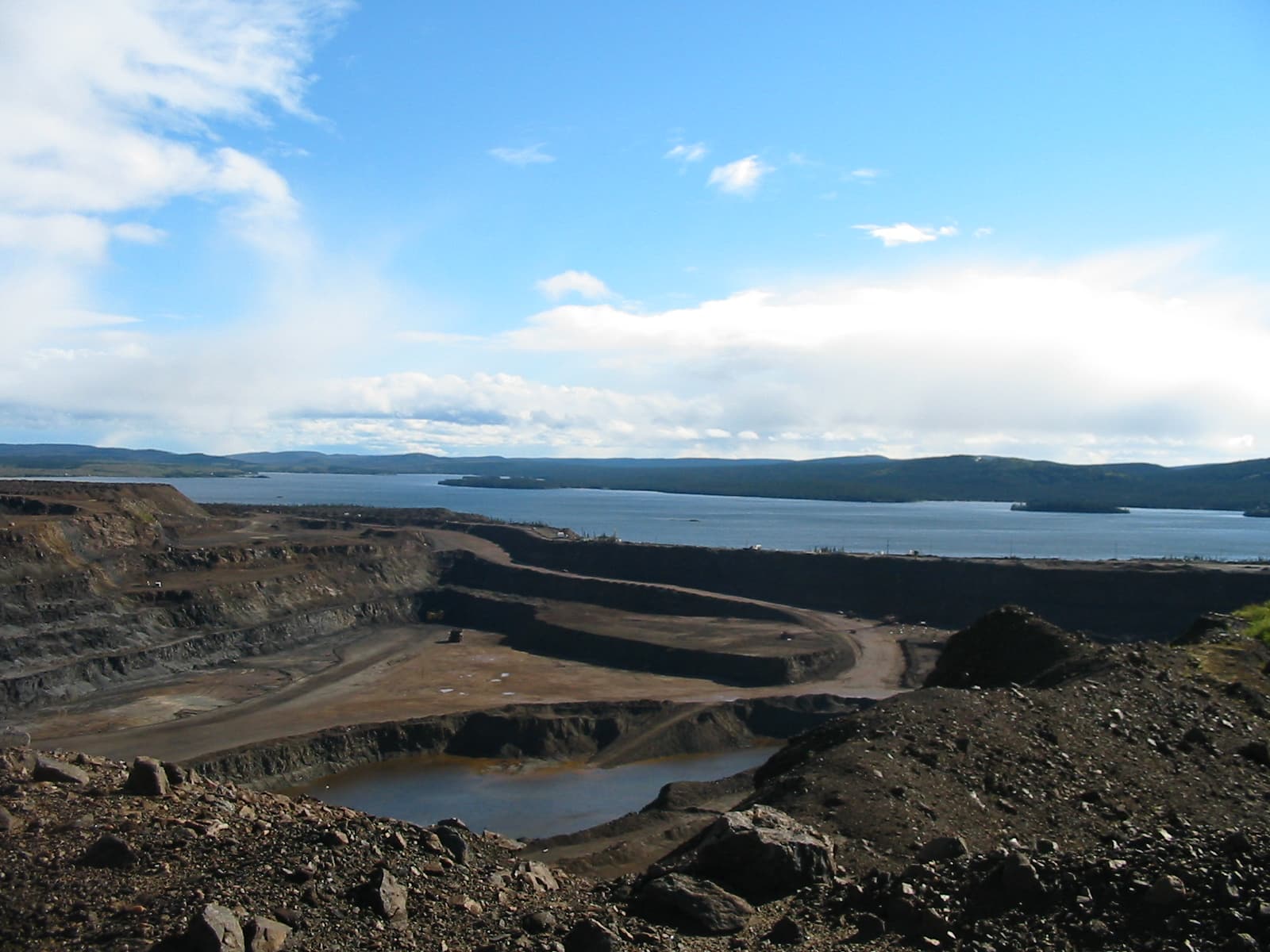
Canada is moving aggressively to position itself as a reliable supplier of the minerals that power electric vehicles, batteries and the booming artificial intelligence economy, pairing new federal financing tools with the groundbreaking of what is billed as the largest graphite mine in the G7. The push, anchored by a recent ceremony in Quebec and a suite of funding announcements, reflects a strategy to capture more of the critical minerals value chain at home rather than shipping raw materials abroad.
A graphite milestone in Quebec
In mid-May, Prime Minister Mark Carney broke ground on Nouveau Monde Graphite's Matawinie mine in Quebec, a project described as the largest graphite mine in the Group of Seven. Graphite is a key component of lithium-ion battery anodes, and demand has surged alongside the global shift to electric vehicles and grid-scale energy storage.
The Matawinie project carries symbolic as well as economic weight. Much of the world's graphite supply and processing has been concentrated in China, leaving Western automakers and battery producers exposed to a single dominant source. A large domestic mine offers Canada and its allies a measure of supply security at a time when resource access is increasingly treated as a strategic concern.
For Quebec, the mine adds to a growing battery and minerals cluster that has attracted investment in recent years, building on the province's abundant hydroelectricity and its ambitions to host an end-to-end battery supply chain. The groundbreaking signals that those ambitions are moving from announcement to construction.
New federal financing tools
Beyond individual projects, Ottawa has assembled a set of financing instruments designed to accelerate the sector. Among them is a Critical Minerals Sovereign Fund, a financing pool of roughly 2 billion dollars intended to support development through equity investments and loan guarantees. The fund is aimed at getting new mining and processing projects into operation faster while diversifying the supply of a long list of key minerals.
The government has also pointed to a First and Last Mile Fund, with plans to invest about 1.5 billion dollars between 2026 and 2030 on the infrastructure that connects remote mining sites to markets, including roads, power and rail. Such infrastructure is often the difference between a deposit that stays in the ground and one that becomes a working mine.
These tools reflect a recognition that mineral projects face high upfront costs, long timelines and significant risk, factors that can deter private investment. By sharing risk and improving the economics of early-stage projects, the government hopes to crowd in private capital rather than replace it.
Building the processing chain
A recurring theme in Canada's strategy is the desire to do more processing domestically. Mining raw ore and exporting it for refining elsewhere captures only a fraction of the value and leaves the country dependent on foreign processors. To address that, the government has signalled investments in midstream capacity.
One example is support for domestic battery-grade cobalt sulfate production in northern Ontario, where federal money is intended to help establish refining capability for a material essential to many battery chemistries. Building processing capacity is widely seen as the harder and more strategically important challenge, given how concentrated global refining has become.
The logic extends across the 34 minerals the government has identified as critical. By developing mining, processing and manufacturing together, Canada aims to offer automakers and technology firms a more complete and secure supply chain, an increasingly attractive proposition as companies seek to reduce reliance on a small number of foreign suppliers.
The artificial intelligence factor
An unexpected driver of mineral demand has emerged from the rapid expansion of artificial intelligence. Hyperscale data centres, which house the computing power behind AI systems, require vast quantities of copper, critical metals and reliable electricity. That demand is reshaping forecasts for materials that were already stretched by the energy transition.
For Canada's mining sector, the AI boom represents a convergence of a fast-growing global market with the country's mineral strengths. Analysts have noted that the rise of data centres is becoming one of the strongest new sources of demand for critical minerals, adding to pressure from electric vehicles and renewable energy.
Technology is also changing how minerals are found. A Vancouver-based company recently raised 12.5 million dollars in financing to expand its use of artificial intelligence to help geologists discover mineral deposits, an illustration of how AI is influencing both the demand for minerals and the methods used to locate them.
A strategy shaped by trade tensions
The minerals push cannot be separated from the broader context of strained trade relations with the United States. As tariffs and uncertainty complicate the cross-border economy, Canada has emphasised resilience, diversification and self-reliance across strategic sectors, and critical minerals sit at the centre of that thinking.
Securing domestic supply chains is partly a hedge against external shocks, whether from trade disputes or geopolitical disruptions to global supply. By controlling more of the chain from mine to processed material, Canada aims to reduce vulnerability and to offer allies an alternative to suppliers they increasingly view as unreliable.
The approach also dovetails with allied efforts to build supply chains that exclude or reduce dependence on geopolitical rivals. Canada's mineral endowment, combined with its clean electricity and stable institutions, gives it a credible pitch as a preferred supplier to like-minded economies.
What it means for Canadians
For workers and communities, the investments point to potential jobs in mining, processing and manufacturing across several provinces, including Quebec, Ontario and British Columbia. Resource projects can bring significant employment and revenue, particularly to regions that host them, though they also raise environmental and consultation considerations that must be managed.
For the broader economy, a stronger minerals and battery sector offers a path to participate in the global energy and technology transition rather than merely supplying raw inputs. Capturing more value domestically could support manufacturing and innovation for years to come.
Indigenous communities, whose lands and rights are often directly affected by mining, are central stakeholders in this strategy. Meaningful consultation, partnership and benefit-sharing will shape whether projects proceed smoothly and whether the benefits are broadly shared.
The environmental balance
Expanding mining and processing inevitably raises environmental questions. Extracting and refining minerals can carry significant ecological costs, from land disturbance to water use and emissions, and Canada's reputation as a responsible supplier depends on managing those impacts credibly.
The government has emphasised the concept of responsibly produced minerals, positioning Canada as a source that meets high environmental and labour standards in contrast to jurisdictions with weaker protections. That framing is central to the country's pitch to allies and to environmentally conscious markets seeking alternatives.
Balancing the drive to develop projects quickly with rigorous environmental review and consultation is a persistent challenge. Streamlining approvals to accelerate development must be weighed against the need to protect ecosystems and respect the rights of affected communities, a tension that will shape how the strategy unfolds.
Competing in a global race
Canada's minerals push is part of a worldwide scramble to secure the materials underpinning the energy and technology transitions. Major economies are investing heavily in supply chains, forging partnerships and, in some cases, restricting exports of strategic materials, intensifying the competition Canada faces.
The dominance of a small number of countries over the mining and especially the processing of many critical minerals looms over the entire effort. Western governments, including Canada's, have made reducing that dependence a strategic priority, which gives Canadian projects added geopolitical significance beyond their commercial value.
Success will require Canada to move faster than it traditionally has on resource development while maintaining the standards that distinguish it. The country has the geology, the expertise and the stability to be a leading supplier, but translating those advantages into operating mines and processing facilities at scale remains the central test.
The stakes extend beyond economics to national strategy. In a world where access to critical materials is increasingly treated as a matter of security, building a domestic supply chain is as much about resilience and sovereignty as it is about jobs and growth.
The regional dimension
The benefits and challenges of the critical minerals push are distributed unevenly across the country, concentrated in the regions that host mining and processing. Provinces with significant mineral deposits stand to gain from investment, jobs and revenue, giving them a particular stake in the strategy's success.
At the same time, these regions bear the environmental and social impacts of resource development, and the communities affected, including many Indigenous nations, will play a central role in determining whether projects proceed. Balancing regional opportunity with responsible development is essential to building broad support for the national effort.
The geographic spread of Canada's mineral wealth, from Quebec and Ontario to the western provinces and the north, means the strategy touches much of the country. Coordinating development across these diverse regions, each with its own priorities and circumstances, is part of the complexity the federal government must manage.
What's next
Investor confidence will be a critical factor in determining how quickly projects advance. The combination of public financing and a clear strategic direction is intended to attract private capital, but investors will look for consistency and follow-through before committing to long-horizon projects.
The pace of permitting and consultation will also shape the timeline. Moving projects forward responsibly while avoiding undue delay is a balance that will influence whether Canada can seize the opportunity that rising global demand presents.
The coming months will test whether the financing tools translate into operating mines and processing plants. Construction at projects like Matawinie, the deployment of the sovereign fund and progress on processing capacity will be key indicators of momentum.
With global demand rising from both clean energy and artificial intelligence, and with trade pressures pushing toward self-reliance, Canada's bet on critical minerals is likely to remain a defining economic theme. The challenge will be moving from announcements and groundbreakings to a fully realised domestic supply chain.
Spotted an issue with this article?
Have something to say about this story?
Write a letter to the editor


Comments
Be the first to comment.