Iran-US Near Deal on Strait of Hormuz and Uranium Disposal
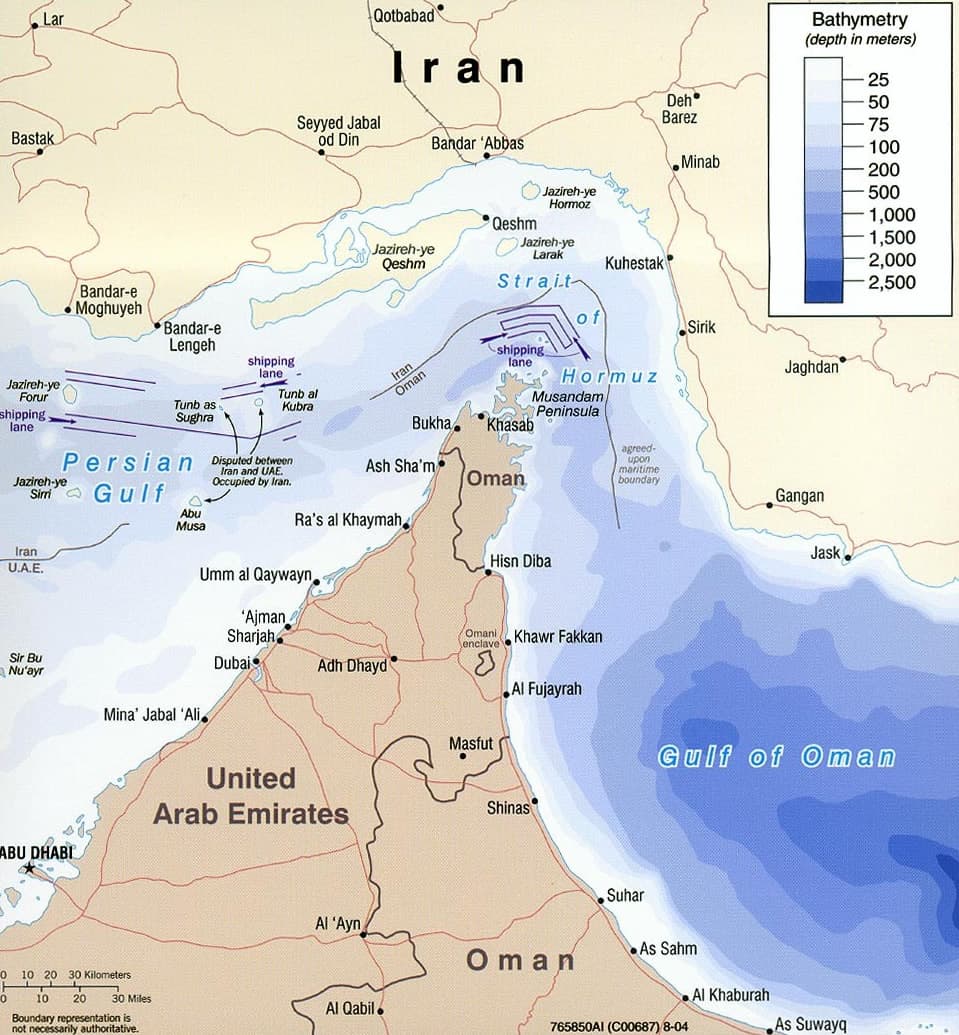
The United States and Iran are reportedly close to a framework agreement that would reopen the Strait of Hormuz to commercial shipping and require Tehran to dispose of its highly enriched uranium, in what would be the most significant diplomatic breakthrough since the conflict that erupted between the United States, Israel and Iran earlier this year. President Donald Trump has alternated between announcing imminent progress and instructing his negotiators not to rush, but the broad outlines of a settlement have begun to take clearer shape in recent days, with major implications for Canadian energy prices, shipping routes and broader Middle East policy.
What is reportedly on the table
According to multiple media reports, the proposed framework includes a temporary moratorium on Iranian uranium enrichment, the phased lifting of certain sanctions, and the reopening of maritime trade routes in the Persian Gulf. A senior US official has reported that Washington and Tehran have agreed in principle to a deal that would reopen the Strait of Hormuz and compel Iran to dispose of its highly enriched uranium.
The specifics of any uranium disposal mechanism remain under negotiation, with possible options including shipment of highly enriched material to a third country or downblending to lower enrichment levels under international supervision. The International Atomic Energy Agency would likely play a central verification role under any framework, although the specific monitoring arrangements remain unsettled.
Recent days have produced contradictory signals from Washington. Trump said earlier in the week that a memorandum of understanding was close to finalisation, only to follow up shortly afterward by instructing his negotiators not to rush. The fluctuations have complicated the work of European intermediaries who have continued to engage both sides on the contours of a possible settlement.
Background: the 2026 conflict
Israel and the United States began a series of strikes against Iran on February 28, 2026, targeting nuclear and ballistic missile infrastructure with the stated aim of inducing regime change and forcing Tehran to abandon its enrichment programme. The conflict produced significant Iranian casualties, damage to multiple nuclear facilities and substantial volatility in global energy markets.
Iran's retaliatory response included strikes on US and allied targets in the region, the closure of the Strait of Hormuz to commercial shipping for an extended period, and significant disruption to oil and gas markets. Oil prices surged more than 50 per cent during the peak of the conflict, with downstream effects on inflation around the world, including in Canada.
On May 12, the US imposed new sanctions targeting Iranian nuclear research with possible military applications. Several days later, additional sanctions targeted individuals and entities in China and Iran over their support for Iran's ballistic missile programme. The pattern of additional sanctions during ongoing negotiations has been characteristic of the diplomatic process.
What it means for Canadians
The immediate Canadian interest in any agreement is energy prices. The closure of the Strait of Hormuz and the broader disruption to Middle East oil and gas flows have been significant contributors to Canadian energy inflation through 2026. Statistics Canada's April CPI release showed transportation inflation surging to 7.6 per cent from 3.7 per cent in March, driven by a 19.2 per cent jump in energy prices.
A reopening of the Strait would contribute to broader normalisation of global energy markets. The Strait carries roughly one-fifth of global oil shipments and a significant share of global LNG. The recently announced Canada-Germany LNG deal involves Pacific-coast shipping that is unaffected by the Strait directly, but the broader global LNG market would normalise more rapidly with the Strait reopened.
For Canadian inflation, an extended period of lower energy prices would contribute to a return of headline inflation closer to the Bank of Canada's 2 per cent target. The Bank of Canada's April projection had inflation easing back to target by 2027, a forecast that depended in part on assumptions about the duration of energy market disruption.
The verification challenge
Any agreement requiring Iran to dispose of highly enriched uranium would face significant verification challenges. Iran's enriched uranium stockpile is held across multiple facilities, and previous IAEA inspections have noted limitations in the agency's access to certain sites. The 2026 conflict damaged or destroyed some facilities entirely, complicating the accounting process.
The framework would need to specify timelines, verification mechanisms and consequences for non-compliance. The previous Joint Comprehensive Plan of Action, agreed in 2015, included detailed verification provisions that broke down after the US withdrawal from the agreement in 2018. Negotiators in the current process have been working to design verification arrangements that account for the lessons of that breakdown.
European partners, including France, Germany and the United Kingdom, have continued to play a role in the verification discussions. The European parties to the JCPOA have insisted that any new framework include credible monitoring provisions and clear consequences for non-compliance.
Israeli and regional implications
The Israeli government, led by Prime Minister Benjamin Netanyahu, has continued to insist on the complete dismantlement of Iran's nuclear capabilities. The Israeli position has been more maximalist than the US framework reportedly under discussion, and Israeli officials have signalled that they reserve the right to take additional military action if they conclude that Iranian nuclear capability is being reconstituted.
Gulf states have generally welcomed the prospect of diplomatic resolution, although their public positions have varied. Saudi Arabia, the United Arab Emirates and other Gulf Cooperation Council members have continued to engage with both Washington and Tehran, with regional diplomatic activity intensifying in recent weeks.
The broader regional situation remains complex. The Gaza ceasefire reached in October 2025 remains in place but fragile, with Israeli airstrikes continuing intermittently and humanitarian conditions in Gaza remaining dire. The interaction between Iran-US negotiations and broader regional dynamics has continued to shape the diplomatic environment.
Canadian government position
The Canadian government has continued to engage with allies on the broader diplomatic effort, although Canada is not a direct party to the Iran-US negotiations. Federal officials have called for any agreement to include credible verification provisions and to be consistent with broader nuclear non-proliferation objectives.
Canada has continued to maintain sanctions on Iran related to human rights concerns and to the activities of the Islamic Revolutionary Guard Corps, which Canada listed as a terrorist entity in 2024. Those sanctions are separate from the nuclear-related sanctions being discussed in the US-Iran framework and would not be automatically affected by any agreement.
Canadian diaspora communities, including the substantial Iranian Canadian community across Toronto, Vancouver and other cities, have continued to advocate on human rights issues and on the broader political situation in Iran. Diaspora views on any prospective agreement have varied widely, with some welcoming any de-escalation and others concerned about the implications of sanctions relief for the Iranian regime.
Trump's negotiating posture
President Trump's approach to the Iran negotiations has been characteristic of his broader diplomatic style, with frequent public statements that have alternated between optimism about imminent progress and warnings about Iranian intransigence. The pattern has created uncertainty for both Iranian negotiators and for the European intermediaries involved in the process.
The Trump administration has positioned the prospective agreement as a major foreign policy achievement, with the president himself emphasising the contrast between the proposed framework and the Joint Comprehensive Plan of Action that he withdrew from during his first term. Critics have argued that the new framework is unlikely to be substantively stronger than the original deal, although the operational details of any agreement will be central to that assessment.
Trump's broader posture on Middle East policy has continued to evolve, including through his administration's involvement in the Gaza ceasefire framework and ongoing engagement with Saudi Arabia and other Gulf states on a range of regional issues.
What's next
The diplomatic process is expected to continue in coming days, with European intermediaries continuing to engage both sides. The precise timeline for any announcement remains uncertain, with multiple variables, including domestic political considerations in Washington and Tehran, capable of accelerating or delaying progress.
For energy markets, the prospect of a sustained Iran-US framework would be a significant positive signal, contributing to softer oil prices and to broader normalisation of shipping in the Persian Gulf. For Canadian households, the most direct impact would be on gasoline and natural gas prices, with downstream effects on broader inflation.
The Bank of Canada's June 10 rate decision will be one of the next economic data points to factor in any Iran-US progress. Most market participants expect the central bank to hold its policy rate steady, but the inflation outlook for the rest of 2026 would shift meaningfully if the energy market environment changes.
Spotted an issue with this article?
Have something to say about this story?
Write a letter to the editor


Comments
Be the first to comment.