Canada's EU Defence Pivot Opens Door to $1.25 Trillion Programme
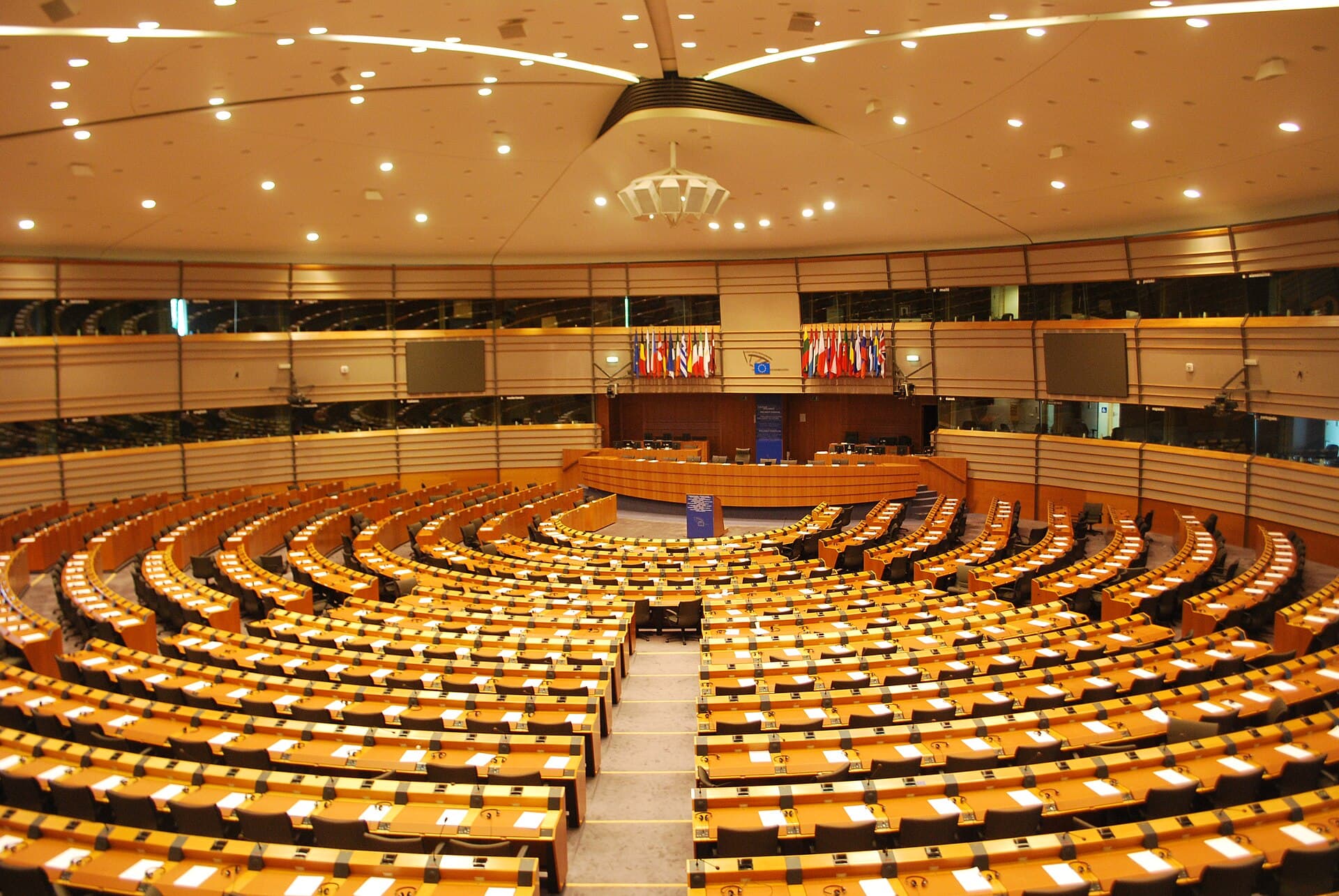
Canada's defence-industrial relationship with Europe has been transformed over the past year through participation in the European Union's Security Action for Europe initiative, a framework that opens the door for Canadian companies to bid into the EU's $1.25-trillion ReArm Europe procurement programme. The shift, accelerated by U.S. President Donald Trump's tariff policies and broader trade volatility, marks one of the most significant realignments in Canadian defence strategy in decades.
What the SAFE framework does
Canada officially joined the Security Action for Europe initiative at the Munich Security Conference in February 2026. SAFE is a key pillar of the EU's Readiness 2030 plan, designed to streamline defence procurement, foster industrial cooperation, and accelerate equipment delivery to European militaries.
Through SAFE, Canadian-headquartered firms in aerospace, electronics, naval systems, ammunition production, and cybersecurity can compete for European procurement on terms that previously favoured EU-based companies. The framework also includes mechanisms for shared research and development and for cross-border production agreements.
The Canadian government has described the arrangement as a strategic positioning move. With the United States accounting for the overwhelming majority of Canadian defence imports historically, diversifying suppliers and integrating into European supply chains gives Canada more options if relations with Washington remain volatile.
Why the timing
The Trump administration's tariff policies have placed significant pressure on Canadian manufacturers, including in sectors with defence-industrial links. Steel, aluminum, autos, and electronics have all faced tariff actions, and Canadian firms have been actively seeking diversification strategies.
The EU, for its part, has been accelerating its own defence build-out in response to the war in Ukraine and broader concerns about reliance on American security guarantees. The ReArm Europe programme represents one of the largest coordinated defence investments in European history.
For Canadian firms, the timing is opportune. Several Canadian companies have global expertise in areas where European procurement is concentrated, including military aerospace, light armoured vehicles, electro-optics, and ammunition production.
NATO spending and Canadian commitments
Prime Minister Mark Carney has touted Canada's achievement of NATO's 2 per cent of GDP defence spending target, reached this year roughly half a decade ahead of the previous government's planned timeline. At last year's Hague summit, allies agreed to raise defence investment toward 5 per cent of GDP.
The Carney government has begun outlining the path to higher spending. Over the next decade, Canada has committed to unleash half a trillion dollars in defence investment, including submarines, aircraft, drones, sensors, radar systems, and increased munitions stockpiles.
European integration through SAFE provides an additional channel for that investment to flow through. Some Canadian programmes will benefit from European industrial partners, while Canadian firms supplying European militaries will see significant export potential.
The submarine question
Among the most-watched defence files is Canada's submarine acquisition. The federal government has committed to acquiring up to 12 new submarines to replace the aging Victoria-class fleet. European builders, including in Germany, France, and Sweden, are positioned as competitive bidders alongside U.S. and South Korean alternatives.
The submarine decision is significant for both military capability and industrial development, with multi-billion-dollar commercial implications. The EU integration through SAFE gives European builders an additional avenue to engage with Canadian decision-makers and industrial partners.
The Canadian aerospace sector
Canadian aerospace firms have been particularly active in pursuing European opportunities under SAFE. Companies operating in fixed-wing manufacturing, helicopters, training aircraft, and aerospace electronics have engaged with European partners on multiple files.
The Canadian-built CT-157 Siskin II, a Swiss-designed turboprop selected to replace the aging CT-114 Tutor in Canadian service, illustrates the deeper transatlantic links emerging in pilot training and demonstration aircraft.
The role of small and medium enterprises
The ReArm Europe programme includes specific provisions for small and medium-sized enterprises, an area where Canada has a strong domestic presence. Canadian SMEs in electronics, advanced materials, sensors, and cybersecurity have been actively engaging with European primes through trade missions, industry events, and direct government-to-government channels.
The Canadian Commercial Corporation, the federal Crown corporation that facilitates government-to-government defence sales, has been expanding its capacity to support these engagements. Provincial governments, particularly in Ontario and Quebec, have also been supporting their defence-industrial bases through targeted programs.
The political dimension at home
The defence pivot has broad political support. Opposition parties have generally backed the higher defence spending and the diversification away from sole reliance on the United States. The Conservative Party has supported the framework while pressing for transparency on procurement and value for money. The New Democrats have called for stronger Canadian industrial benefits requirements.
The Bloc Québécois has emphasised the importance of Quebec's defence-industrial base, particularly in Mirabel, Saint-Hubert, and Longueuil, all hubs for aerospace and defence manufacturing.
The U.S. reaction
The Trump administration has voiced concerns about the EU defence build-out and the integration of allied partners, though the formal U.S. position has supported European defence investment. American firms have continued to pursue Canadian contracts under existing arrangements.
Canada has emphasised that its participation in SAFE complements rather than replaces traditional U.S. defence ties. NATO interoperability standards, joint exercises, and intelligence sharing arrangements remain core elements of Canadian defence policy.
Naval and shipbuilding implications
The Canadian shipbuilding industry, anchored by yards in Halifax, Vancouver, and Quebec, has substantial commercial implications from the European defence build-out. European navies have been expanding orders for support ships, patrol vessels, and specialised vessels, and Canadian yards have been positioning to compete in those markets.
The Royal Canadian Navy's own modernisation, including new river-class destroyers, support ships, and the submarine acquisition, will be one of the largest procurement projects in Canadian history. European builders and Canadian yards have been exploring partnership models that could accelerate delivery while building Canadian industrial capability.
Cybersecurity and electronic warfare
Cybersecurity and electronic warfare are increasingly central to the defence equation. Canadian firms in these sectors, including those connected to government-funded research institutions and universities, have been pursuing European procurement opportunities aggressively.
The federal government has emphasised cyber defence as a priority area, including through the Canadian Centre for Cyber Security. The integration with European frameworks provides additional capacity for joint research, threat intelligence sharing, and capability development.
Workforce and trades capacity
The defence-industrial expansion requires significant growth in skilled trades, engineering capacity, and technical education. Canadian colleges and universities have been expanding programmes in advanced manufacturing, naval engineering, aerospace systems, and cybersecurity. The federal government has supported these efforts through targeted funding programs and industry partnerships.
Labour shortages have been one of the constraints on rapid scaling of defence production. Industry groups have called for sustained focus on apprenticeship programmes, immigration pathways for skilled workers, and pipeline development from the secondary school level.
The Ukraine connection
The European defence acceleration is deeply linked to the war in Ukraine. The collapse of the latest U.S.-brokered ceasefire and the broader uncertainty about U.S. policy direction have prompted European allies to invest in independent defence capacity.
Canadian participation in SAFE and ReArm Europe aligns with continued military support for Ukraine and broader integration with European security structures. The framework provides industrial backbone for the longer-term European defence posture.
The Indo-Pacific dimension
Canada's defence pivot extends beyond Europe to the Indo-Pacific, with Ottawa continuing engagement on the AUKUS framework and on cooperation with Japan, South Korea, and Australia. The defence-industrial diversification through SAFE complements rather than replaces engagement with Indo-Pacific allies.
Canadian defence firms have been competing for procurement in multiple Indo-Pacific markets, with shipbuilding, aerospace, and electronics representing the strongest sectors. The federal government's overall defence strategy aims to position Canadian industry as a participant in major democratic-aligned procurement programmes across the world.
What it means for Canadians
For Canadian workers in defence-related industries, the EU integration provides expanded export opportunities, new partnership models, and potential growth in skilled employment. Manufacturing jobs in aerospace, electronics, and shipbuilding have historically been concentrated in Quebec, Ontario, and Atlantic Canada, and the SAFE participation supports those regional economies.
For Canadian taxpayers, the higher defence spending, paired with the new procurement framework, comes with significant fiscal implications. The government has emphasised that the spending will be staged over a decade and will incorporate value-for-money requirements.
Recruitment and the Canadian Armed Forces
Defence modernisation also runs through personnel. The Canadian Armed Forces have faced sustained recruitment challenges over the past decade, with shortages across the regular force and the reserves. The current build-out of equipment requires parallel growth in trained personnel to operate, maintain, and support new systems.
The federal government has launched recruitment campaigns, streamlined onboarding processes, and expanded incentives for skilled recruits in technical specialties. Several thousand additional positions are being added across the services over the coming years.
The arctic security dimension
Canadian defence modernisation includes a significant Arctic component, with new investments in surveillance, satellite capability, and Arctic-capable platforms. European partners, including Norway, Denmark, and Finland, share interest in Arctic security, providing common ground for cooperation.
The North American Aerospace Defense Command and related continental defence frameworks remain central to Canadian Arctic capability, complemented now by emerging European partnerships on satellite, surveillance, and maritime patrol assets.
What's next
Canadian companies will continue to bid into European procurement processes through the SAFE framework. Government-to-government coordination will continue between Ottawa and EU institutions, with the bilateral SAFE agreement providing the operational architecture.
The federal defence policy update, expected later this year, will provide more detail on how Canada will move from the NATO 2 per cent baseline toward higher commitments. The Bank of Canada and the federal Department of Finance will both be watching the budgetary implications.
For now, the message from Ottawa is clear: Canada's defence-industrial future runs through Europe as well as North America. The next phase of implementation will determine how deeply that integration takes root.
Spotted an issue with this article?
Have something to say about this story?
Write a letter to the editor


Comments
Be the first to comment.