China-Taiwan Tensions Climb as U.S. Pauses $14 Billion Arms Sale and Canada Joins Pacific Exercises
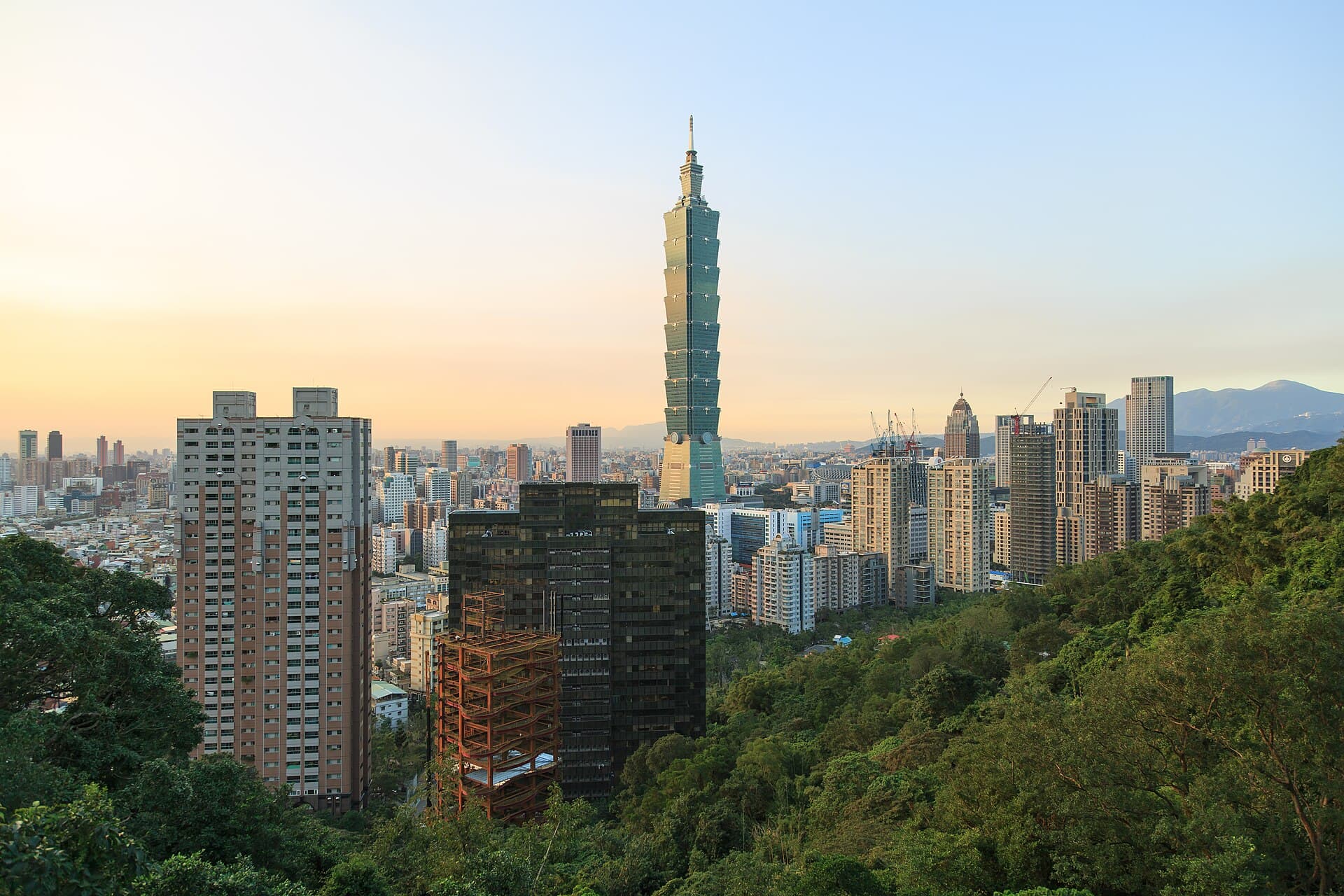
Tensions across the Taiwan Strait climbed sharply through May after the United States indicated it was pausing a fourteen-billion-dollar arms sale to Taiwan to preserve munitions stocks for its operations against Iran, and as China's People's Liberation Army stepped up military exercises in the surrounding waters. The combination has produced one of the tensest moments in the strait since the 2022 Pelosi crisis and has drawn Canada deeper into the region's security architecture through a series of joint exercises with the United States, Japan, the Philippines, and Australia.
The U.S. arms sale pause was confirmed by a senior Pentagon official and has sparked alarm in Taipei, where thousands of demonstrators rallied this month to demand higher defence spending and stronger Western support. Taiwanese President William Lai's government has tried to reassure the public that other defence arrangements remain intact, but the pause has nonetheless eroded confidence in the reliability of American support at a moment when Chinese pressure is escalating.
For Canada, the Indo-Pacific has become a steadily more important theatre of operations. The Royal Canadian Navy participated in a major combined exercise with American, Japanese, Australian, and Philippine forces in the West Philippine Sea earlier this spring, and Ottawa has continued to deepen its defence relationships across the region as part of the broader Indo-Pacific Strategy first articulated in 2022.
Beijing's pressure campaign
China has continued an aggressive multi-domain strategy aimed at constraining U.S. influence and at signalling resolve over Taiwan. Recent military activities have included surface task group exercises east of the Luzon Strait conducted by the People's Liberation Army Navy, expanded cyberespionage operations targeting Taiwanese and allied infrastructure, and targeted economic coercion designed to isolate Taipei.
The Chinese Southern Theater Command announced in late April that a surface task group consisting of one Type 055 guided missile destroyer, one Type 052D guided missile destroyer, one Type 054A frigate, and one Type 903A oil replenishment vessel had conducted exercises in response to what Beijing described as the current regional situation. The exercises were widely interpreted as a signal of capability and intent.
China has also intensified diplomatic pressure on countries that maintain unofficial ties with Taiwan, including efforts to constrain Taiwan's participation in international organisations and to reduce its diplomatic presence abroad. Beijing's foreign policy apparatus has been particularly active in coordinating with allies and partners that share its preferred framing of the Taiwan question.
The Trump-Xi summit
From May 13 to 15, U.S. President Donald Trump met with Chinese General Secretary Xi Jinping at a summit in Beijing. The two leaders discussed Taiwan, the Iran war, trade, and other global flashpoints but did not reach significant agreement on the most contentious issues.
Xi reportedly warned Trump that missteps on Taiwan could push the two countries into conflict, a stark formulation that has been carefully analysed by foreign policy specialists in capitals around the world. The Chinese leader's emphasis on the seriousness of the Taiwan question reflected a longstanding pattern of red-line warnings designed to constrain U.S. policy choices.
Trump, for his part, indicated that he wanted to expand trade with China and described the relationship as one of the most important of his presidency. The summit produced limited concrete deliverables but did establish a framework for continued senior-level dialogue.
The arms sale pause
The Pentagon's decision to pause the fourteen-billion-dollar arms sale to Taiwan, in order to preserve munitions stocks for ongoing operations against Iran, has been one of the most controversial signals of the Trump administration's regional posture. U.S. officials have argued that the pause is temporary and will be reversed as soon as inventories allow, but Taiwan's leadership has expressed deep concern about the precedent.
The arms package included precision-guided munitions, air defence interceptors, and a range of platforms that Taiwan had been counting on to bolster its deterrent posture. The delay raises questions about the reliability of U.S. weapons commitments at a moment when Taiwanese forces are working to integrate new capabilities and to deter Chinese pressure.
In Taipei, thousands rallied this month in support of higher defence spending and clearer U.S. backing. The protests reflected broad public concern about the pace of Chinese military pressure and the perceived unreliability of American support at a critical juncture.
The Canadian role
Canada has progressively expanded its presence in the Indo-Pacific over the past five years, beginning with the publication of the federal Indo-Pacific Strategy in 2022 and continuing through a series of naval deployments, defence partnerships, and trade engagements. The 2026 cycle has seen further intensification of those activities.
Canadian warships participated in a combined exercise with the United States, the Philippines, Japan, and Australia in the West Philippine Sea from April 20 to May 1. The exercise focused on anti-submarine operations, fleet air defence, and replenishment at sea, and marked the first time Japan participated as an active partner in the long-running Balikatan exercise series.
The Royal Canadian Navy has continued to maintain a forward presence in the region, including transits through the Taiwan Strait that have drawn pointed responses from Chinese officials. The Carney government has framed these activities as part of Canada's broader commitment to the rules-based international order in the Indo-Pacific.
The economic stakes
Canada's economic interests in the Indo-Pacific are substantial and growing. Trade with China remains significant despite the political tensions, and Canada is also working to expand trade with Japan, South Korea, the ASEAN nations, and India. Taiwan, which is a major source of semiconductors and electronic components, is a critical link in supply chains that affect Canadian industry.
A serious conflict in the Taiwan Strait would be catastrophic for global supply chains, particularly for semiconductors. Canadian technology firms, automotive manufacturers, and consumer electronics retailers all depend on Taiwanese production for critical inputs. The federal government has continued to support efforts to diversify and strengthen semiconductor supply chains, including through North American collaboration.
The economic risks of a conflict are extraordinary in scale. Estimates from major economists place the cost of a Taiwan Strait conflict in the trillions of dollars globally, with severe consequences for inflation, growth, and financial stability. Avoiding such an outcome is therefore a major Canadian interest, even putting aside the human cost.
The Indo-Pacific Strategy at three years
The Canadian Indo-Pacific Strategy, published in 2022, set out a broad framework for expanding Canadian engagement in the region across diplomacy, security, trade, and development. Three years into the strategy, the federal government has worked to build the institutional muscle required to deliver consistent engagement.
Major initiatives include expanded diplomatic missions across the region, the deployment of a dedicated Indo-Pacific trade representative, additional naval rotations, and an increase in development assistance to Southeast Asian partners. The strategy has been broadly supported across party lines in Ottawa, with debate concentrated on the pace and adequacy of implementation rather than on the underlying direction.
The Carney government has continued to build on the strategy and has signalled that the Indo-Pacific will remain a major focus through this mandate. Defence procurement decisions, including the submarine and surveillance aircraft programmes, are partly justified on the basis of Canadian engagement in the region.
The diaspora connection
Canada is home to large Taiwanese, Chinese, Hong Kong, Filipino, and Vietnamese diaspora communities, each with its own perspective on the political dynamics across the strait. Community organisations have been active in advocacy, fundraising, and cultural programming, and their views shape Canadian political discourse on the region in important ways.
The Carney government has worked to maintain dialogue with all of these communities while respecting Canada's official one-China policy, which recognises the People's Republic of China and maintains only unofficial relations with Taiwan. Balancing those commitments with broader Canadian interests in the region has been a careful, sustained diplomatic exercise.
For Canadian families with relatives in Taiwan, the rising tensions have brought significant anxiety. Community organisations have stepped up information sharing about consular services, emergency preparedness, and travel advisories.
The semiconductor stakes for Canada
Taiwan's role in global semiconductor production is impossible to overstate. The island manufactures roughly two-thirds of the world's most advanced chips, including the components essential for everything from automotive electronics to artificial intelligence training systems. Any significant disruption to Taiwanese production would ripple immediately through Canadian industry, particularly automotive, telecommunications, and consumer electronics.
The federal government has been working with provincial partners and with industry to map out the most critical chip dependencies across Canadian supply chains. Programs to encourage North American chip production, including investments in Quebec and Ontario fabrication facilities, are part of a broader strategy to reduce the worst-case vulnerabilities, although fully replacing Taiwanese capacity is not realistic on any reasonable timescale.
For Canadian technology firms, the political risk associated with Taiwan has become a board-level concern. Major employers in the artificial intelligence sector, in particular, have begun to consider how their supply chain choices intersect with broader geopolitical questions, and the federal government has been engaging with industry to coordinate planning.
What's next
The Pentagon's pause on Taiwan arms sales will be a key signal to watch in the coming weeks. A swift resumption would help to restore confidence in U.S. commitments, while a continued delay would deepen the concerns Taipei and its supporters have expressed.
Canadian naval rotations are expected to continue, with another Royal Canadian Navy deployment to the region anticipated later this year. Canada will also continue to engage diplomatically and economically with regional partners, including through major trade and security dialogues scheduled for the second half of the year.
For Taiwan, the path forward depends heavily on its own defence preparations and on the steadiness of allied support. For Canada, the Indo-Pacific will remain a central theatre of foreign and defence policy for the foreseeable future, with rising stakes and rising commitments.
Spotted an issue with this article?
Have something to say about this story?
Write a letter to the editor


Comments
Be the first to comment.