Supreme Court of Canada Says Aboriginal Title Cannot Override Private Land
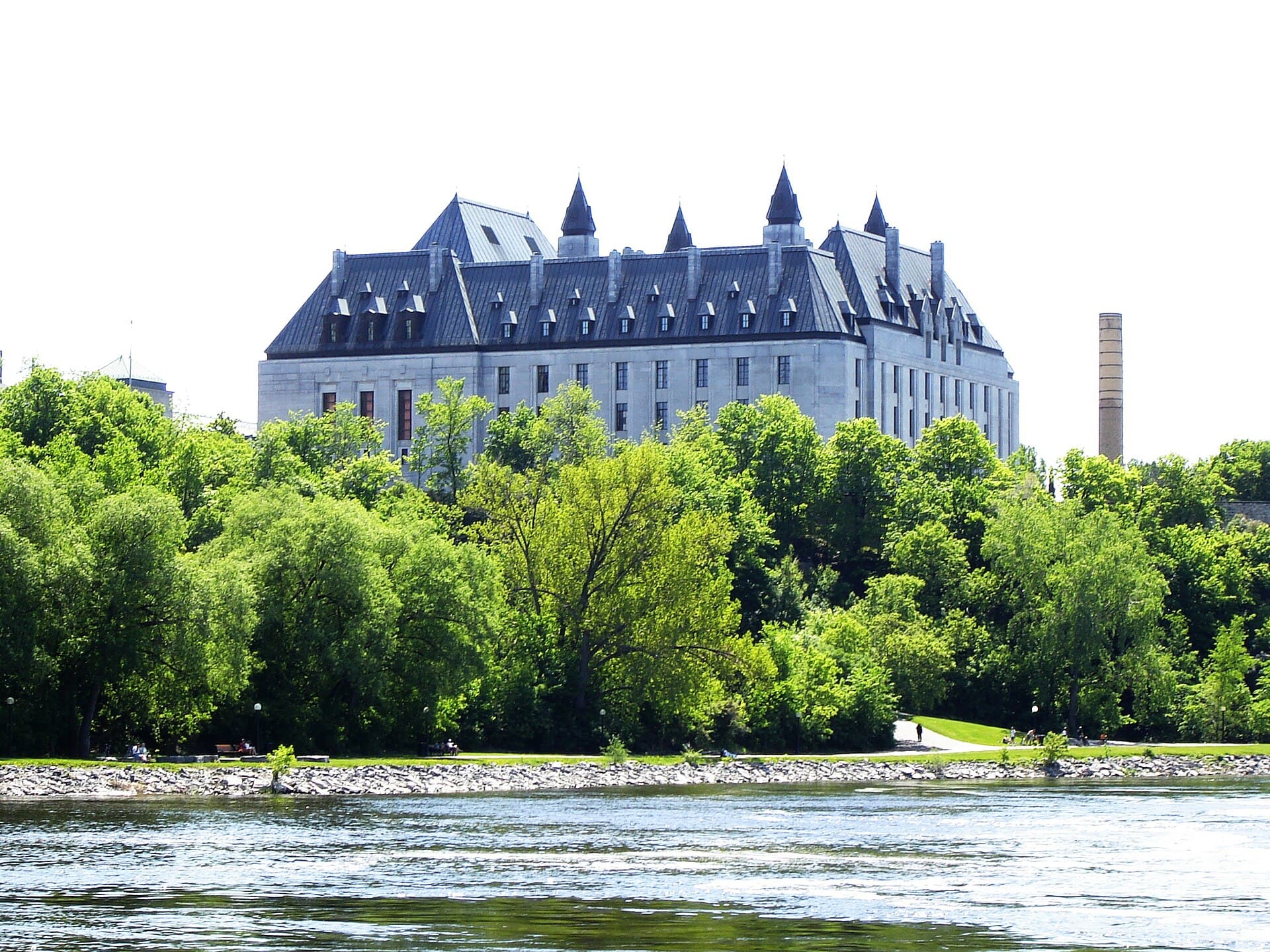
The Supreme Court of Canada has clarified one of the most contested boundaries in Canadian property law, allowing a lower court ruling to stand that Aboriginal title cannot be declared over privately owned land. The decision, which came in late May 2026, marks a significant moment in the long and unfinished work of reconciliation, and it draws a clearer line between the constitutional protection of Indigenous land rights and the certainty that homeowners and businesses expect from the country's land titles system.
The federal government has said the ruling will have an impact on the closely watched Cowichan Tribes case in British Columbia, where questions about title, private property and Crown land have moved through the courts for years. By declining to extend Aboriginal title over land already held in private hands, the high court has signalled how it views the intersection of two competing sets of rights, both of which carry deep legal and historical weight in Canada.
For many Canadians, the practical message is one of stability. Title to a family home or a commercial property is not suddenly in question. For Indigenous nations pressing claims across the country, the ruling represents a narrowing of one avenue, even as other routes to recognition, negotiation and compensation remain open. The decision is therefore best understood not as a sweeping rejection of Indigenous land rights, but as a careful delineation of where the doctrine of Aboriginal title reaches and where it does not.
What the court decided
At the centre of the ruling is the principle that Aboriginal title, a right grounded in the long occupation and use of land before the arrival of European settlers, cannot be declared over property that is already privately owned. The court allowed the lower court's conclusion on this point to stand, effectively confirming that private property rights and Aboriginal title cannot occupy the same ground at the same time in the way that some claims had sought.
This is a narrower outcome than some headlines might suggest. The court did not strike down the broader framework of Aboriginal title, nor did it dismiss the many land claims working their way through negotiation and litigation across Canada. Instead, it addressed the specific question of whether title could be imposed over land held by private owners, and it answered that it could not. The distinction matters, because it preserves both the constitutional standing of Aboriginal title and the integrity of the private land registry.
Legal observers had anticipated that the court would be cautious on this question. Canadian law has long recognised Aboriginal title as a unique form of collective right, affirmed in earlier landmark rulings, while also treating the security of registered private title as a cornerstone of the economy. Reconciling those two ideas has been one of the most difficult tasks facing the judiciary, and this ruling reflects an attempt to keep both intact rather than to elevate one entirely above the other.
The ruling does not resolve every related question. It leaves open how claims involving Crown land, unregistered land or overlapping interests should proceed, and it does not foreclose negotiated settlements that might recognise Indigenous interests in other ways. In that sense, the decision is a clarification of limits rather than a final word on the future of land claims in Canada.
The Cowichan case and British Columbia
The federal government has pointed to the Cowichan Tribes case in British Columbia as one of the matters most directly affected by the ruling. British Columbia has long been the central arena for Aboriginal title litigation, in part because much of the province was never covered by historic treaties, leaving large questions about Indigenous land rights unresolved for generations.
The Cowichan litigation has involved questions about land that touches on private holdings, Crown property and municipal interests, the kind of overlapping claims that make these cases so complex. By confirming that title cannot be declared over privately owned parcels, the court has shaped the legal terrain on which the Cowichan matter and similar disputes will continue to unfold. The federal government's acknowledgement of that impact suggests it expects the ruling to influence how arguments are framed going forward.
For British Columbia, where land claims intersect with forestry, mining, housing and infrastructure, the clarification carries practical weight. Resource projects and development proposals have often been delayed or complicated by uncertainty over title, and a clearer rule about private land may reduce some of that ambiguity. At the same time, the province remains home to dozens of unresolved claims, and the decision does not make those negotiations any less necessary.
Indigenous leaders in the province have invested decades in pursuing recognition through the courts and at negotiating tables. While the full range of reactions will become clearer in the days ahead, it would be expected for some Indigenous leaders to express disappointment that this particular path has been narrowed, even as they continue to press their claims through treaty processes and other legal avenues.
Reconciliation and competing rights
The ruling lands at a moment when reconciliation remains a defining theme of Canadian public life. Successive governments have committed to renewing the relationship between the Crown and Indigenous peoples, and the courts have played a central role in defining what that relationship requires. Decisions about land are among the most consequential, because land is bound up with identity, sovereignty, economic opportunity and historical injustice.
From the perspective of property certainty, the decision offers reassurance. Homeowners, lenders and businesses rely on the assumption that a registered title is secure. Any erosion of that assumption could ripple through mortgage markets, insurance and investment decisions. By confirming that Aboriginal title cannot be declared over private land, the court has protected that certainty, which many in the broader economy will welcome.
From the perspective of Indigenous rights, the ruling underscores a recurring tension. Aboriginal title was affirmed precisely to recognise that Indigenous peoples held and used the land long before colonial settlement, and to provide a constitutional basis for redress. When that right meets the reality of land that has since been sold, developed and registered to private owners, the law must choose how to balance the two. This decision places clear limits on title in that situation, which advocates may see as leaving historic dispossession only partly addressed.
The challenge for policymakers is that legal clarity alone does not deliver reconciliation. Even where title cannot be declared, governments retain the ability to negotiate agreements, provide compensation, share revenue from resource development and recognise Indigenous jurisdiction in other forms. The ruling may therefore push more of the work of reconciliation toward the negotiating table and away from the courtroom.
A busy term for the high court
The Aboriginal title decision arrives during an unusually active term for the Supreme Court of Canada, which has issued a series of consequential rulings this spring. While each addresses a distinct area of law, together they illustrate the breadth of questions the court is shaping in 2026.
On May 15, 2026, the court in Ahluwalia v. Ahluwalia recognised a new civil claim, a tort of intimate partner violence, opening a path for survivors to seek damages through the courts in family law contexts. That ruling drew attention for its potential to reshape how the legal system responds to abuse within relationships.
Earlier, on May 1, 2026, the court in Alford v. Canada held that Parliament may set limits on parliamentary privilege for members of a national security and intelligence committee, addressing the balance between legislative independence and the handling of sensitive information. Taken alongside the Aboriginal title decision, these rulings show a court engaged with the foundational structures of Canadian law, from constitutional rights to the workings of Parliament itself.
These cases serve as context rather than the centre of the story. The Aboriginal title ruling stands apart for its direct bearing on land, property and the relationship between the Crown and Indigenous peoples, themes that touch communities across the country in a uniquely tangible way.
Impact on homeowners and resource projects
For ordinary Canadians, the most immediate question is what the ruling means for the security of their property. The clearest answer is that registered private title remains protected from a declaration of Aboriginal title. That stability matters for anyone holding a mortgage, planning to buy or sell, or relying on land as collateral, and it removes one source of uncertainty that had hung over the system.
For the resource sector, the decision may ease some hesitancy around projects that intersect with disputed land. Energy, mining and forestry developments in British Columbia and elsewhere have frequently encountered delays tied to unresolved title questions. Greater clarity about the limits of title over private property could give proponents and investors more confidence, though it does not eliminate the broader requirement to consult and accommodate Indigenous communities affected by development.
It is important to recognise what the ruling does not change. The Crown's duty to consult Indigenous peoples on decisions that may affect their rights remains firmly in place, rooted in the Constitution and in earlier decisions of the court. Projects on or near Crown land, and those touching unresolved claims, will still require careful engagement. The decision narrows one legal question without dissolving the wider obligations that shape resource development in Canada.
The economic stakes are considerable. British Columbia's resource industries support tens of thousands of jobs and contribute heavily to provincial and federal revenues. At the same time, Indigenous communities increasingly participate as partners and proponents in such projects, and the path forward will depend on continued negotiation as much as on the boundaries the court has drawn.
What's next
In the weeks ahead, attention will turn to how the ruling is applied in the Cowichan Tribes case and in other disputes where private land and Aboriginal title intersect. Lawyers on all sides will be studying the reasoning closely, and lower courts will look to it for guidance as they handle the many claims still before them in British Columbia and beyond.
Governments may also respond. Ottawa and the provinces could see the decision as an invitation to accelerate negotiated settlements, treaty processes and revenue-sharing arrangements, recognising that the courts have limited one avenue while leaving others open. Indigenous organisations are likely to press for renewed political commitment to reconciliation, arguing that legal limits make negotiated solutions all the more important.
For now, the ruling stands as a marker of where Canadian law currently draws the line between two sets of deeply held rights. It affirms the security of private property while preserving the constitutional standing of Aboriginal title in its proper sphere. How the country reconciles those principles in practice, through negotiation, policy and continued dialogue, will define the next chapter of a story that is far from finished.
The broader project of reconciliation continues regardless of any single decision. The question many Canadians will be asking is whether this clarification helps move that project forward by encouraging negotiated agreements, or whether it leaves Indigenous communities feeling that the courts have closed a door without opening another. The answer will emerge not in legal text alone, but in the choices governments and communities make in the months and years to come.
Spotted an issue with this article?
Have something to say about this story?
Write a letter to the editor

Comments
Be the first to comment.