China-Taiwan Tensions Rise Ahead of Trump-Xi Summit
China and Taiwan tensions have intensified through April with a combination of military posturing, diplomatic moves, and economic pressure that have raised the stakes ahead of an anticipated summit between United States President Donald Trump and Chinese President Xi Jinping. The combination of live-fire drills, an unprecedented meeting between Xi and a sitting Taiwanese opposition leader, and an aggressive coast guard presence around Taiwan has produced one of the most fraught moments in cross-strait relations in years, with implications for Canadian trade, security, and Indo-Pacific positioning.
Chinese coast guard and naval activity near Taiwan rose sharply in April, with unnamed Taiwanese security officials saying that the People's Republic of China deployed approximately 100 coast guard and naval vessels throughout the East and South China Seas during one window of activity, up from typical levels of 50 to 60 vessels. The escalation coincided with diplomatic moves designed to constrain Taipei's international space and with broader regional tensions involving Japan and other United States allies.
The Xi-Cheng meeting
Xi Jinping met with Kuomintang party chair Cheng Li-wun in Beijing in early April, the first encounter between Xi and a sitting Taiwanese opposition leader in nearly a decade. During the meeting, Xi reiterated that Taiwan independence is the primary threat undermining stability across the Taiwan Strait. The framing was consistent with Beijing's longstanding position, but the choice of moment and counterpart amplified the message.
The Kuomintang's leadership and the Democratic Progressive Party that holds the Taiwanese presidency have markedly different approaches to cross-strait relations. The KMT has historically been more amenable to dialogue with Beijing while still rejecting the framework of one country two systems applied to Hong Kong, while the DPP under President William Lai Ching-te has taken a more assertive posture on Taiwanese sovereignty. The Beijing meeting served to highlight that internal Taiwanese division.
Live-fire drills and the airspace dispute
Concurrent with the diplomatic engagement, the People's Republic of China staged live-fire drills in the Yellow Sea during Cheng's visit. The drills are part of an ongoing pattern of military exercises that have grown in scope and frequency in recent years, and that have served as both training opportunities and signals of Beijing's resolve.
Taiwan also experienced one of the most striking diplomatic incidents of the period when President Lai cancelled a planned visit to Taiwanese diplomatic ally Eswatini on April 21 after Mauritius, Madagascar, and the Seychelles revoked overflight permissions for his aircraft. The episode appears to be the first time a country has invoked the one China policy to block Taiwanese officials from flying through its airspace, and it reflects the success of Chinese diplomatic pressure in narrowing the operational space available to Taiwanese leaders abroad.
Pressure on Japan
China has also intensified what observers describe as a targeted pressure campaign against Japan, with the maritime activity around the Senkaku and Diaoyu islands accompanied by economic measures and diplomatic protests. The pattern reflects a willingness on Beijing's part to use multiple instruments of state power to advance its position, with implications for the broader regional security architecture.
Japan's response has been to deepen security cooperation with the United States, the Philippines, and Australia, and to expand its own defence spending and capabilities. The trilateral and minilateral arrangements that have emerged in the Indo-Pacific have begun to take on operational substance that had been largely aspirational in earlier years.
The Trump-Xi summit
The Trump administration and the People's Republic of China have signalled that a leaders' summit between Trump and Xi is being planned, although the date and venue have not been confirmed. United States Secretary of State Marco Rubio spoke recently with Chinese counterpart Wang Yi about the Iran war and the upcoming summit, with Wang stressing that Taiwan remained the biggest risk to bilateral ties with the United States.
The Trump administration's posture on Taiwan has combined continued arms sales and rhetorical support with periodic willingness to use the issue as leverage in broader negotiations. The combination has produced anxiety in Taipei and uncertainty among other regional partners about how reliably the United States will support Taiwanese positions in any future crisis.
The Canadian dimension
For Canada, the China-Taiwan question is woven into a broader set of Indo-Pacific calculations. The Carney government has continued the Indo-Pacific strategy framework adopted under the previous government, with continued attention to trade diversification, defence cooperation, and rules-based international order.
Canadian companies with significant exposure to both the Chinese and Taiwanese economies have been navigating the tensions through risk management approaches that include supply chain diversification and contingency planning. The semiconductor industry, in which Taiwan plays a central global role, is of particular interest to Canadian technology firms and to broader policy considerations around supply chain resilience.
What it means for Canadian trade
The risk that cross-strait tensions could escalate into a broader crisis poses material risks to Canadian trade. A serious disruption in the Taiwan Strait, through which a substantial share of global maritime trade flows, would have immediate effects on Canadian importers and exporters across multiple sectors. The risks are particularly acute for industries dependent on East Asian inputs, including consumer electronics, automotive components, and renewable energy equipment.
The federal government has been working with Canadian businesses and provincial governments to assess and manage these risks. Trade Minister Mary Ng has continued to engage with Indo-Pacific counterparts on diversification opportunities, and the Canadian Trade Commissioner Service has expanded its presence in markets including Vietnam, Indonesia, and Thailand.
Defence implications
The escalation in the Indo-Pacific has implications for Canadian defence planning. The Carney government's commitment to the new NATO 5 per cent of GDP defence and security spending target adopted at the 2025 NATO Summit in The Hague includes investments that will give Canada a more significant capability to operate in the Indo-Pacific. The federal government has agreed to invest 3.5 per cent of GDP on core defence and another 1.5 per cent on critical infrastructure such as highways and bridges by 2035, with a planned half a trillion dollars in defence investment over the next decade.
Canadian naval deployments to the Indo-Pacific have continued, with Royal Canadian Navy frigates participating in international exercises and freedom of navigation operations. The expanded defence investment is expected to enable more sustained Canadian presence in the region, although the practical effects of increased spending will take years to translate into deployable capabilities.
Diaspora implications
For the Canadian diaspora communities tied to both China and Taiwan, the tensions add to an already complex set of personal and political considerations. The Canadian-Taiwanese community has been active in advocating for stronger Canadian support for Taiwan's international participation, while the broader Chinese-Canadian community is itself diverse in its political views and orientations.
Federal officials have continued to emphasise the importance of distinguishing between the People's Republic of China as a state and the broader Chinese-Canadian community, and have warned about the risks of foreign interference operations directed at Canadian residents. The Canadian Security Intelligence Service has flagged Beijing-linked activities as a continuing concern.
The semiconductor angle
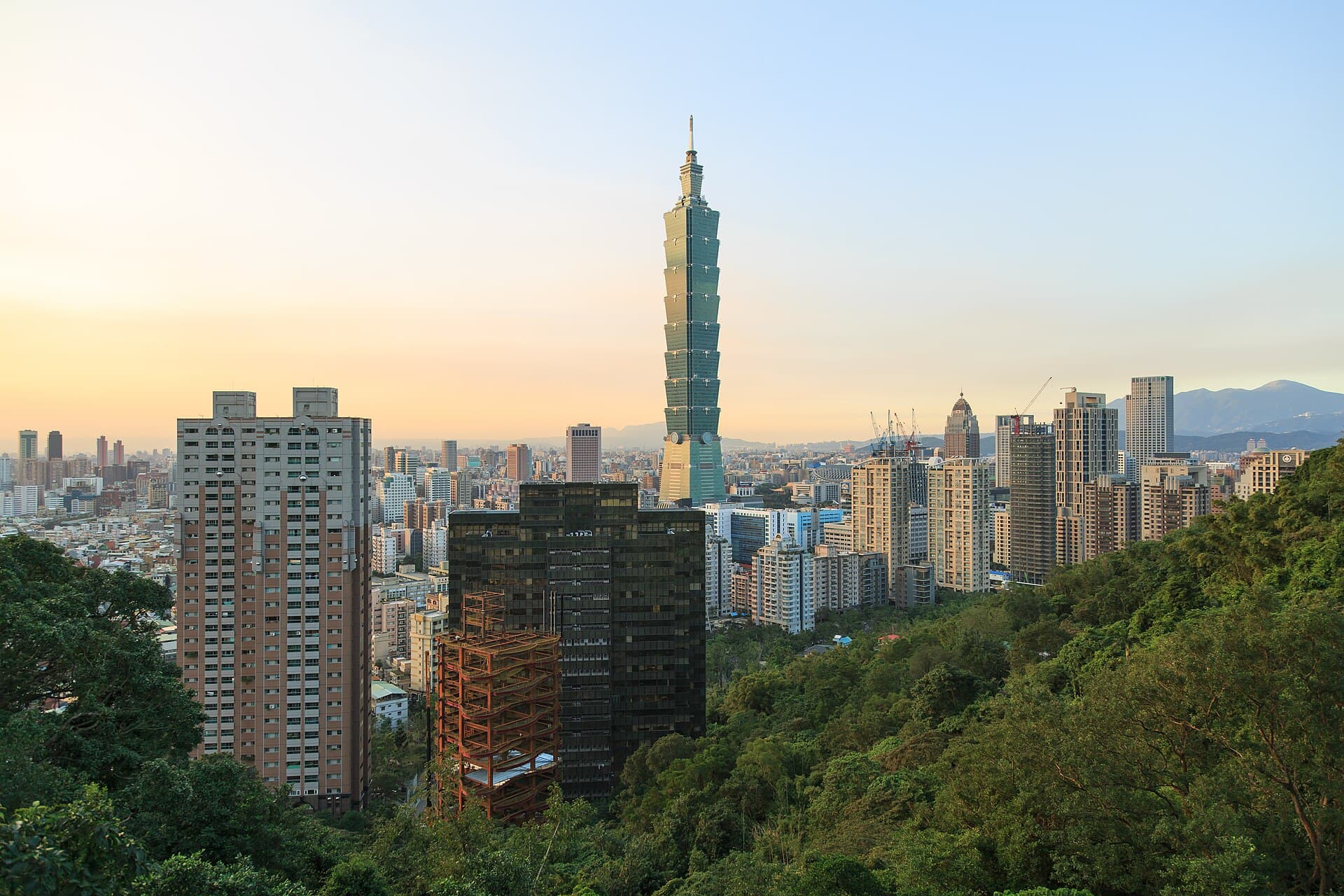
Taiwan's central role in global semiconductor production is one of the most significant economic dimensions of the cross-strait tensions. Taiwan Semiconductor Manufacturing Company produces a substantial share of the world's most advanced semiconductors, and its facilities are concentrated in Taiwan. Any disruption in production or in the broader supply chain would have immediate effects on a wide range of industries globally.
For Canadian technology companies and for broader Canadian economic security, the semiconductor concentration is a recognised vulnerability. Federal officials have engaged with industry to assess the implications and to consider what supply chain diversification or reshoring measures might be appropriate. The challenges are substantial, given the scale of investment and time required to build new semiconductor capacity, but the strategic importance has continued to attract attention.
The Hong Kong precedent
Beijing's broader posture toward Taiwan is shaped in part by the experience of Hong Kong, where the implementation of the National Security Law and the broader transformation of the political system over recent years have created a precedent that Taiwanese leaders point to as a warning. The one country two systems framework that was applied to Hong Kong has been formally offered as a model for Taiwan, although Taiwanese political opinion across the spectrum has consistently rejected the proposal.
The experience of Hong Kong has also shaped Canadian policy responses, including the introduction of pathways for Hong Kongers to come to Canada and the strengthening of safeguards against foreign interference. These policy frameworks may need to evolve further if cross-strait tensions escalate or if a broader regional crisis develops.
The other regional players
South Korea, Australia, and the Philippines have all increased their engagement with the Indo-Pacific security conversation. South Korea has continued to navigate complex relationships with both Beijing and Washington while maintaining its alliance commitments. Australia has expanded its defence spending and capabilities, including through the AUKUS partnership with the United States and the United Kingdom. The Philippines has taken a more assertive posture against Chinese maritime activity in the South China Sea.
Canada's engagement with these partners has continued through bilateral and multilateral channels. The Indo-Pacific Economic Framework, the Comprehensive and Progressive Agreement for Trans-Pacific Partnership, and various other arrangements provide formal structures for cooperation. The Carney government has emphasised the importance of these relationships in its broader foreign policy framework.
What's next
The immediate near-term horizon includes the planned Trump-Xi summit, continued Chinese military activity around Taiwan, and the unfolding response by the Taiwanese government and by other regional partners. Beijing's behaviour in the months ahead will be shaped both by the dynamics of its relationship with Washington and by domestic factors including economic conditions and political priorities.
For Canada, the path ahead involves continued engagement on trade diversification, defence cooperation, and Indo-Pacific positioning. The Carney government's Indo-Pacific posture will be tested through the coming months by the combination of cross-strait tensions, the Iran war's broader effects on global politics, and the continuing United States-Canada trade frictions that have consumed so much diplomatic bandwidth in recent quarters.
Spotted an issue with this article?
Have something to say about this story?
Write a letter to the editor