FIFA Congress in Vancouver Becomes Stage for Israel-Palestine Confrontation
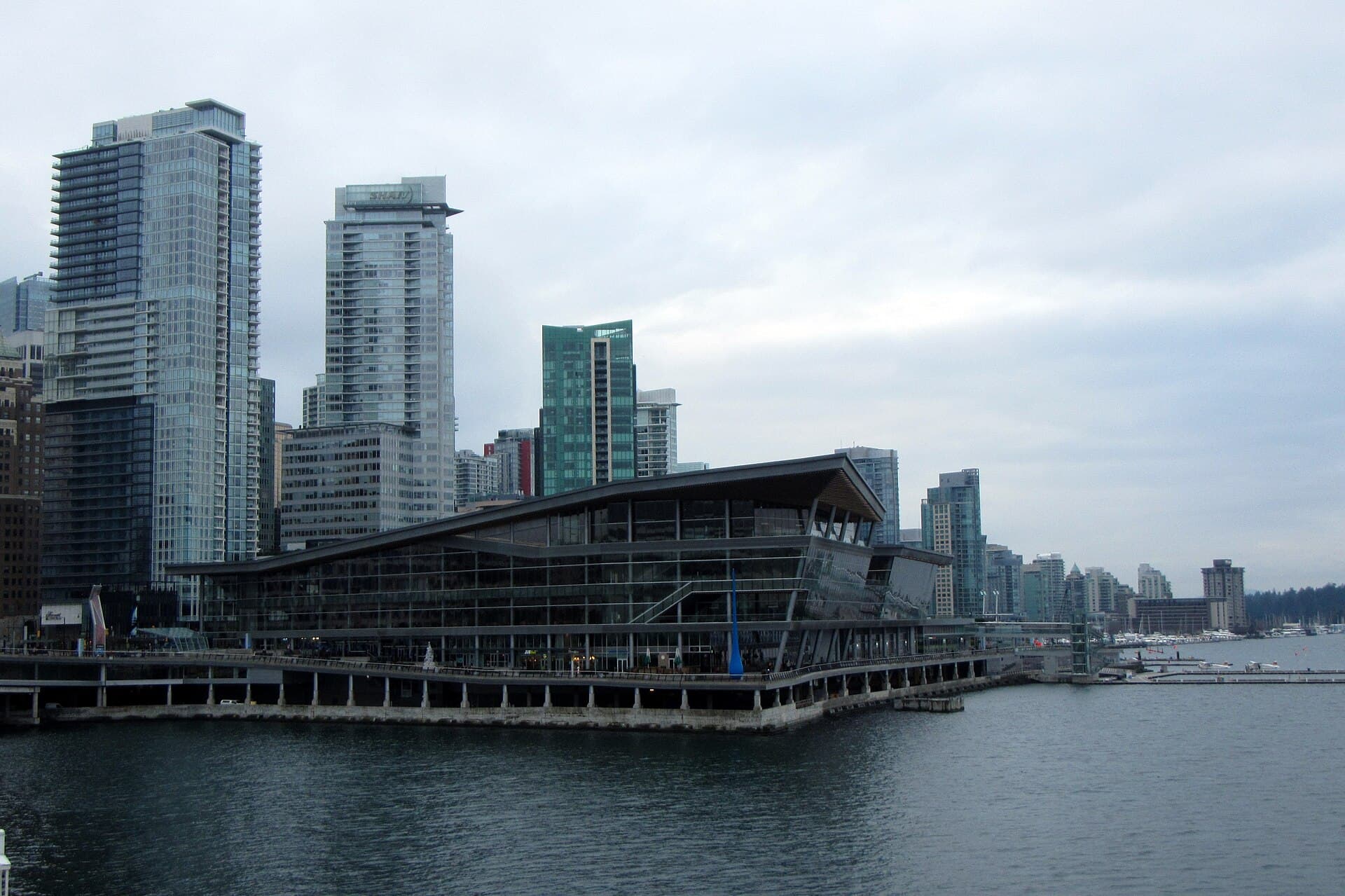
The 76th FIFA Congress in Vancouver became the stage for one of the most pointed Israel-Palestine confrontations in international sport this year, after Palestine Football Association president Jibril Rajoub refused to shake hands with Israel Football Association vice-president Basim Sheikh Suliman during a moment that FIFA president Gianni Infantino had attempted to choreograph as a gesture of unity. The incident on Thursday at the Vancouver Convention Centre highlighted the deep political pressures running through global football and put Canada's host city in the middle of a story that has drawn international media attention.
For Vancouver, the choice to host the Congress reflected both the city's growing profile as a major sports destination and its central role in the upcoming 2026 FIFA World Cup, which Canada is hosting alongside the United States and Mexico. Vancouver's BC Place will be among the Canadian venues for the tournament, with the city expected to host multiple matches. The Congress's broader business included votes on World Cup operational details, governance reforms, and financial decisions that will shape the global game in the years ahead.
The handshake that did not happen
The incident unfolded after both Rajoub and Suliman addressed the Congress. Infantino called both men to the stage in what was clearly intended as a moment of public reconciliation. The two officials stood far apart from each other, and Rajoub protested loudly away from microphones before leaving the stage. The optics were the inverse of what Infantino had hoped for, capturing instead the depth of the divide that has only widened since the start of the Gaza war in October 2023.
Following the Congress session, Rajoub gave an impassioned plea to journalists in which he questioned whether Israel has the right to even be part of FIFA. He argued that Israel should be sanctioned because of what he characterised as violations of FIFA statutes and of broader human rights obligations. The Palestinian football leader has repeatedly raised the issue of Israeli clubs based in West Bank settlements, an issue that has become a focal point of diplomatic effort within international football.
The settlement clubs question
Rajoub used his address at the Congress to call on FIFA to act on the Palestine Football Association's allegations that Israel has breached anti-discrimination regulation by allowing clubs based in West Bank settlements to compete in the Israeli league system. He confirmed that the PFA is taking the matter to the Court of Arbitration for Sport after FIFA ruled in March not to suspend Israel over the clubs.
The settlement clubs question has been before FIFA in various forms for more than a decade. International humanitarian law and the position of the United Nations and most international actors regard the West Bank settlements as illegal, although Israel disputes that characterisation. The football-specific question turns on FIFA's own statutes, which prohibit national associations from operating in another association's territory without consent, and on the body's anti-discrimination rules.
The Israeli response
The Israel Football Association, through Suliman and other officials, has consistently rejected calls for sanctions. Israeli officials have argued that the federation operates within the framework set by Israeli authorities and that the question of the settlements is a political matter that should not be adjudicated by football governance bodies. The Israeli posture has also emphasised the broader threats facing the Israeli football community, including the impact of the Gaza war and the parallel conflict with Hezbollah on Lebanese territory.
Israeli national teams have continued to compete in international competitions through the war, although those appearances have been accompanied by protests at venues in Europe and elsewhere. The Israeli Football Association has indicated that it will defend itself in any Court of Arbitration for Sport proceedings.
The Vancouver context
For Vancouver, hosting the Congress carried both prestige and risk. The city has invested significantly in its sports tourism profile and has used the Congress as part of the broader build-up to the 2026 World Cup. Local officials had hoped for a Congress that would generate positive coverage of the city and the country, although the Israel-Palestine confrontation produced the headlines that travelled furthest.
The Vancouver Convention Centre, where the Congress was held, has hosted a wide range of major international events. City officials and Tourism Vancouver have generally regarded such hosting as net positive for the local economy and for Vancouver's standing among global cities, even when the events themselves produce contentious moments.
The broader Gaza context
The Congress unfolded as the war in Gaza continues. Israeli forces have continued operations in western Gaza and the United States-backed ceasefire arrangement remains in a partial and contested state. Israel intercepted approximately 175 activists aboard 20 ships from a Gaza-bound aid flotilla in recent days, and the United Nations has continued to warn about the humanitarian situation inside the territory.
The conflict in Lebanon has also intensified, with more than 2,500 people killed and more than a million displaced since fighting between Israel and Hezbollah escalated in early March. The cumulative humanitarian and political toll of the multiple regional conflicts has raised the stakes of any high-profile international event involving Israeli participation.
The Canadian government posture
The Carney government has consistently called for adherence to international humanitarian law in Gaza and for a sustainable ceasefire framework. Canada's voting record at the United Nations and its statements through Global Affairs Canada have placed the country in a middle position among Western nations, generally supportive of Israel's right to defend itself but increasingly critical of specific operational practices and of conditions in the occupied Palestinian territories.
Canadian officials did not directly respond to the FIFA Congress incident, but the federal government has previously expressed support for FIFA's authority to manage its own governance issues. The episode underscores the ways in which international sports events held in Canada can become flashpoints for global political conflicts that the host country has limited ability to manage.
What it means for Canadian football
For Canadian football, the Congress was an opportunity to showcase the country's preparation for the 2026 World Cup. Canada Soccer used the occasion to engage with international counterparts on tournament logistics, broadcast arrangements, and security planning. The Canadian men's national team will play its World Cup opener at BMO Field in Toronto on June 12 against Bosnia and Herzegovina, with additional Canadian matches scheduled at venues in Toronto and Vancouver.
The men's national team's preparation has continued under coach Jesse Marsch, with friendlies against Iceland and Tunisia in late March and final tune-up matches against Uzbekistan and Ireland scheduled for June 1 and June 5 in Edmonton and Montreal. The Canada Soccer roster will be finalised by the May 30 FIFA deadline, with FIFA requiring all national teams to submit rosters of 26 players by that date.
The broader FIFA agenda
The Congress also addressed a broader agenda of governance and operational matters. Discussions covered the rollout of the expanded 48-team World Cup format, broadcast rights, financial distributions to member associations, and the controversial expansion of the FIFA Club World Cup. While none of these items generated the same headlines as the Israel-Palestine moment, they will shape the global game's trajectory in significant ways.
Infantino's tenure as FIFA president has been marked by both expansion ambitions and persistent controversies. The Vancouver Congress did little to change the basic dynamics of his leadership, although the public failure of the staged reconciliation may complicate his ability to position FIFA as a unifying force in international politics.
The diaspora communities in Canada
The episode in Vancouver also resonated with Canadian diaspora communities tied to both Israel and Palestine. Canada hosts substantial Jewish and Arab Canadian communities, both of which have engaged actively with the broader Gaza conflict through advocacy, fundraising, and political organising. The communities have at times found themselves in tension with one another over the course of the war, and incidents like the FIFA Congress moment can amplify those tensions.
Federal officials and community leaders have continued to emphasise the importance of dialogue and respect for differing perspectives. The Canadian Race Relations Foundation and similar organisations have provided resources for communities navigating the challenges of the moment. The cumulative effect of the war on community relations within Canada has been significant.
The financial governance picture
Beyond the headline-grabbing political moments, the FIFA Congress also addressed substantial financial matters. The body's revenues, drawn primarily from broadcast rights, sponsorships, and World Cup operations, have continued to grow, and the distribution of those revenues to member associations is a perennial source of debate. Smaller national associations, including those in Africa, Asia, and the Caribbean, have continued to push for larger shares of the revenue distribution.
Governance reforms in recent years, prompted in part by historical scandals, have been mixed in their results. FIFA's transparency initiatives, ethics processes, and governance structures continue to draw both praise and criticism, and the Vancouver Congress maintained that pattern. The body's longer-term direction will depend on the willingness of member associations and leadership to address structural issues that have shaped the organisation for decades.
What's next
The Court of Arbitration for Sport will now consider the Palestine Football Association's case against FIFA's March decision not to suspend Israel. The proceedings are expected to take months, and the outcome will have significant implications both for football governance and for the broader political conversation about Israeli participation in international sports.
For Vancouver and for Canada, the focus now shifts to the World Cup itself. The tournament begins in June 2026 and will bring international attention to multiple Canadian cities. The lessons of the Vancouver Congress, including the difficulty of managing international politics within the framework of a major sports event, are likely to inform the security, communications, and operational planning for the tournament in the months ahead.
The combination of sport and global politics has been a feature of major international events for decades, and the experience of the Vancouver Congress underscores that the World Cup itself will likely face similar moments. Tournament organisers, host cities, and participating teams will all need to prepare for the possibility that political tensions involving any number of countries will surface during matches or in associated public events.
Spotted an issue with this article?
Have something to say about this story?
Write a letter to the editor