Fréchette Heads to Washington on First Foreign Mission as Quebec Premier
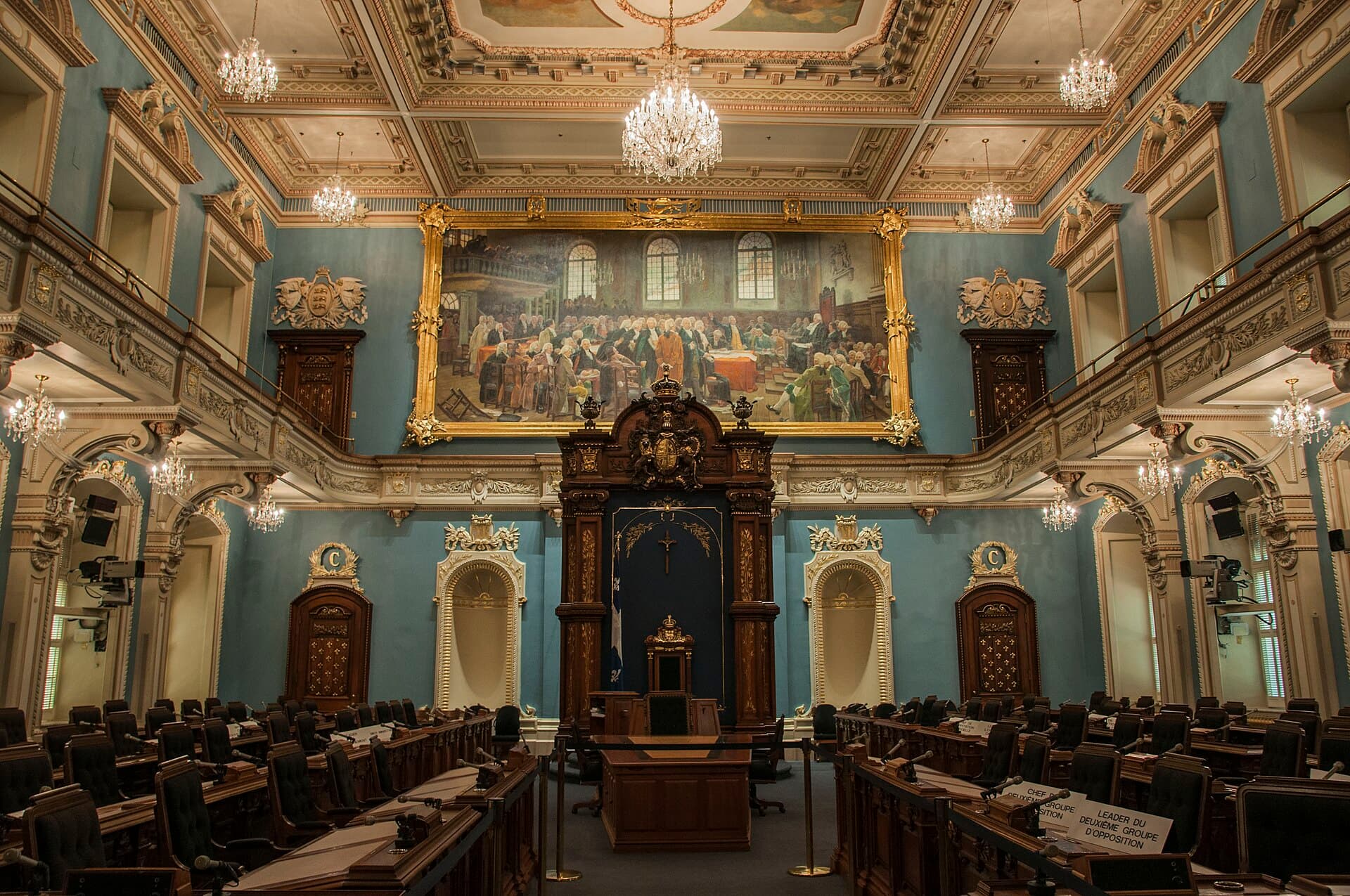
Quebec Premier Christine Fréchette will travel to Washington next Monday for her first official foreign mission since being sworn in on April 15, a trip designed to put a Quebec stamp on the increasingly tense Canada-United States trade conversation just two months before the mandatory joint review of the Canada-United States-Mexico Agreement begins on July 1. The visit signals that Fréchette intends to follow the path set by her predecessor François Legault in maintaining direct provincial diplomacy with the United States, while also distinguishing her own approach to the file.
Fréchette's office confirmed that she will meet with the United States trade representative and several members of Congress with significant Quebec exposure in their districts, including representatives from northern New England and upstate New York. The agenda will focus on aluminum, hydro-electricity exports, softwood lumber, and the broader question of whether the trade agreement will be extended or downgraded into a regime of annual reviews.
The trade backdrop
The Trump administration has been adding tariffs to Canadian aluminum and steel for more than a year, with rates that have escalated to 50 per cent on certain product categories. Quebec, home to most of Canada's primary aluminum smelters and a substantial share of its steel processing, has been on the front line of that pressure. Earlier this week the Trump administration unveiled a new program offering Canadian aluminum and steel companies immediate tariff relief if they commit to moving production to the United States in the future, a move provincial officials have characterised as an attempt to use tariff pressure to extract investment commitments.
The CUSMA review is the formal mechanism by which the three governments must decide by July 1 whether to extend the agreement for another 16 years. Investment bank Jefferies has put the odds of a clean renewal at just 10 per cent, with a 75 per cent probability that the agreement slides into a decade of annual reviews, a status that would create persistent uncertainty for cross-border investment.
Who Fréchette is
Fréchette is Quebec's 33rd premier and the second woman to hold the office. She defeated Bernard Drainville in the Coalition Avenir Québec leadership vote on April 12, taking 58 per cent of the ballots cast. Before entering politics, she worked in economic development in Montreal and the broader region, and held a number of positions tied to the Parti Québécois before joining the CAQ.
Elected as a CAQ member of the National Assembly in 2022, Fréchette served as Quebec's immigration minister before becoming minister of economy, innovation and energy in 2024. That dual background gives her a fluency in trade and industrial policy that she has signalled will define her premiership at least through the next provincial election.
The cabinet she has built
Fréchette unveiled her cabinet on April 21, naming 29 ministers. The lineup includes five new faces alongside ministers familiar from the Legault era, and notably installs Drainville as minister of economy, innovation and energy. The appointment of her leadership rival to one of the most important economic portfolios in cabinet was widely interpreted as Fréchette making good on a campaign promise to keep her party united, while also putting Drainville in the position of having to defend the government's record on jobs and investment ahead of the next general election.
The cabinet reshuffle came just days after the Supreme Court of Canada upheld a lower-court ruling on Quebec's redrawn electoral map. The 7-2 decision means that one riding on the Gaspé Peninsula and another in Montreal's east end will be eliminated in favour of two new districts in the growing Laurentians and Centre-du-Québec regions, redrawing the political geography in which Fréchette will fight her first general election.
What's at stake in Washington
Quebec officials have prepared a briefing for the Washington trip that emphasises the integrated nature of the cross-border supply chain in aluminum, hydro-electricity, and aerospace. Hydro-Québec exports significant volumes of electricity to New England and New York, and Quebec aerospace manufacturers including Bombardier and Pratt and Whitney Canada are deeply embedded in supply chains that cross the border multiple times before final assembly.
Provincial officials have been blunt that the goal of the mission is to make the case to American counterparts that tariffs on Quebec aluminum harm United States manufacturers as much as they harm Canadian smelters. Rio Tinto and Alcoa, both with significant operations in the province, have made similar arguments through their own channels, and provincial officials say they expect to coordinate with company representatives during the visit.
Reaction at home
Quebec opposition parties have offered measured reactions. The Parti Québécois, which has gained ground in recent polling, has welcomed the trip in principle but argued that the province needs a more aggressive posture on protecting its industries. Québec solidaire has questioned whether Fréchette will use the visit to push for stronger labour and environmental conditions in any trade arrangement. Liberal opposition leader Marc Tanguay said the trip was overdue and called for the premier to brief the National Assembly on its outcomes.
The federal government has signalled that it sees Fréchette's visit as complementary to its own efforts. Prime Minister Mark Carney has said publicly that Canada has more than irritants with the United States on trade, and his government has pursued a parallel campaign of high-level engagements in Washington and with state governors who have significant Canadian exposure. Carney was scheduled to host a federal-provincial first ministers' meeting later in the spring focused specifically on the CUSMA review.
What it means for Quebecers
For workers in Quebec aluminum smelters, aerospace plants, and electricity-intensive industries, the immediate question is how long the current tariff structure will last and whether the Trump administration's new investment-for-relief program will draw away production. Industry analysts have warned that even modest shifts in primary aluminum capacity to the United States would carry significant employment consequences in regions including the Saguenay-Lac-Saint-Jean and the North Shore.
For consumers, the indirect implications include continued upward pressure on the price of imported United States goods if Canadian counter-tariffs remain in place, and broader uncertainty about the cost of cross-border services such as digital subscriptions and travel. The federal Spring Economic Update's temporary fuel excise tax suspension provides some short-term relief at the gas pump, but does not address the structural questions raised by the CUSMA review.
The hydro-electricity file
Quebec's hydro-electricity exports to New England and New York are an unusually durable element of the cross-border relationship. Hydro-Québec sells significant volumes of clean power to American utilities under long-term contracts, and the New England Clean Energy Connect transmission line, designed to deliver Quebec power to Massachusetts, is a key piece of New England's clean-energy strategy.
Provincial officials see those contracts as relatively insulated from the broader trade tensions, but they have also signalled awareness that any erosion of the cross-border regulatory environment could have effects on infrastructure projects that take years or decades to plan and build. The Washington visit will give Fréchette an opportunity to reinforce relationships with state-level political leaders whose continued support for Quebec power imports remains essential.
The aerospace cluster
Quebec's aerospace cluster, anchored in greater Montreal, faces its own set of trade-related questions. Bombardier, Pratt and Whitney Canada, CAE, and a network of mid-sized suppliers all participate in supply chains that frequently cross the border multiple times during production. The aerospace industry has historically benefited from a free-trade arrangement and has lobbied consistently for the maintenance of those terms.
The Trump administration's broader posture on aerospace has been less hostile than its posture on aluminum and steel, in part because of the strategic importance of the sector to United States defence and commercial aviation supply chains. Provincial officials have been working with industry to ensure that aerospace concerns receive adequate attention in any CUSMA review, and Fréchette is expected to raise the issue during her Washington meetings.
The political balancing act
Fréchette will need to balance several competing considerations during the visit. The federal government's primary diplomatic channel runs through Prime Minister Carney's office and through Foreign Affairs Minister Mélanie Joly, and provincial diplomacy can complicate or complement that engagement depending on coordination. Fréchette's office has indicated that the visit has been coordinated with federal officials, and that the messaging will be aligned with broader Canadian positions.
At the same time, the premier needs to demonstrate to a Quebec audience that her government is actively defending provincial interests. The CAQ's political position depends in significant part on its ability to project effective representation of Quebec on the national and international stages. The Washington visit is therefore both a substantive trade engagement and a domestic political moment that will be watched closely in the province.
The CAQ's electoral position
The next provincial election is scheduled for October 2026, although Fréchette has the discretion to call an earlier vote within the framework of the National Assembly's electoral law. Polling in recent months has shown the Parti Québécois maintaining significant support, with the CAQ working to recover from a difficult stretch in 2024 and 2025. Fréchette's leadership and her early decisions on cabinet, file priorities, and trade engagement will shape the CAQ's electoral prospects through the rest of the year.
Quebec's electoral landscape is also shaped by the Supreme Court of Canada's recent decision upholding the redrawn electoral map. The new boundaries, which take effect for the next election, will alter the political geography in ways that benefit some parties and disadvantage others. The CAQ will be working to ensure that its candidate slate and policy platform are aligned with the new map.
What's next
Fréchette's Washington visit is expected to last several days, with stops planned at the office of the United States trade representative, on Capitol Hill, and with Quebec-based companies that maintain Washington offices. The premier is then scheduled to return to Quebec City for the resumption of the National Assembly's spring session, where her government is expected to table a series of economic measures aimed at supporting industries directly exposed to United States tariffs.
The CUSMA review formally begins on July 1, with the trilateral negotiations to determine whether the agreement is extended or moved into the annual review track. Whatever the outcome, provincial governments including Quebec are likely to remain central players in a trade conversation that increasingly cuts across federal, provincial, and corporate jurisdictions.
Spotted an issue with this article?
Have something to say about this story?
Write a letter to the editor