Oil Shock From Iran War Sends Brent Soaring, Splitting Canada's Economy
A war between Iran and a U.S.-Israel coalition has triggered a global fuel crisis that is now tearing Canada's economy in two directions at once, punishing consumers at the pumps while delivering a windfall to the energy heartland. The 2026 Iran war fuel crisis has sent oil prices spiralling upward as shipping through one of the world's most critical chokepoints grinds to a near halt.
Shipping traffic through the Strait of Hormuz, through which roughly 20 per cent of the world's oil trade passes, has been largely blocked by Iran since February 28, 2026, when the United States and Israel launched an air war against Iran. The disruption of so vital an artery has rippled through global markets, lifting prices and reviving inflationary pressures that central banks had only recently begun to bring under control.
For Canada, the consequences are uniquely double-edged. As one of the world's major oil producers and a country where households are deeply exposed to fuel costs, the shock lands on both sides of the ledger at once, creating a split-screen economy in which the same event squeezes families and enriches an entire industrial region.
A chokepoint that moves the world
The Strait of Hormuz is the narrow passage through which roughly a fifth of global oil trade flows, making it one of the most strategically sensitive waterways on the planet. When Iran moved to block shipping through the strait beginning February 28, it effectively threatened to choke off a substantial share of the world's daily crude supply, a development with immediate consequences for prices everywhere.
The market reaction was swift. Brent crude surged 10 to 13 per cent to around $80 to $82 per barrel by early March, a sharp move that signalled traders were pricing in a prolonged disruption rather than a brief flare-up. The jump reflected the simple arithmetic of supply and demand colliding with geopolitical risk.
More recent reports have put Brent June futures around $119.94 per barrel, a level that would have seemed improbable only months earlier. The climb from the low $80s toward roughly $120 illustrates how quickly the crisis has escalated and how deeply the blockage of the strait has unsettled the global energy balance.
The trajectory has prompted some of the most dramatic forecasts in years. Some U.S. officials and Wall Street analysts have begun to consider the prospect of oil reaching $200 a barrel, a once-unthinkable figure that, if realised, would reshape the economics of every oil-importing and oil-exporting nation, Canada among them.
The squeeze on Canadian households
For Canadian families, the most immediate and painful effect arrives at the gas pump. Higher crude prices feed directly into the cost of gasoline and diesel, and a move toward triple-digit oil translates into noticeably steeper fill-ups for commuters, tradespeople and anyone reliant on a vehicle. The pain is felt fastest and most visibly in the price posted at the corner station.
The damage does not stop at the pump. Fuel costs work their way through the entire economy, raising the price of moving goods, heating homes and producing countless products. The result is renewed inflation pressure for households that had only recently begun to feel relief after years of elevated prices, threatening to undo hard-won progress on the cost of living.
That resurgence of inflation complicates the task facing the Bank of Canada, which holds its rate at 2.25 per cent and announces again on June 10. A central bank that had been managing a delicate balance between supporting a weak economy and keeping prices in check now confronts an external price shock that pulls in the opposite direction from the slowdown it had been trying to cushion.
The dilemma is acute. Cutting rates to support a fragile economy risks fuelling inflation further, while holding or raising them to contain price pressures risks deepening the weakness that has already pushed the country into a technical recession. The June 10 announcement will be watched closely for signs of how policymakers intend to navigate the conflicting pressures.
Alberta and the energy sector cash in
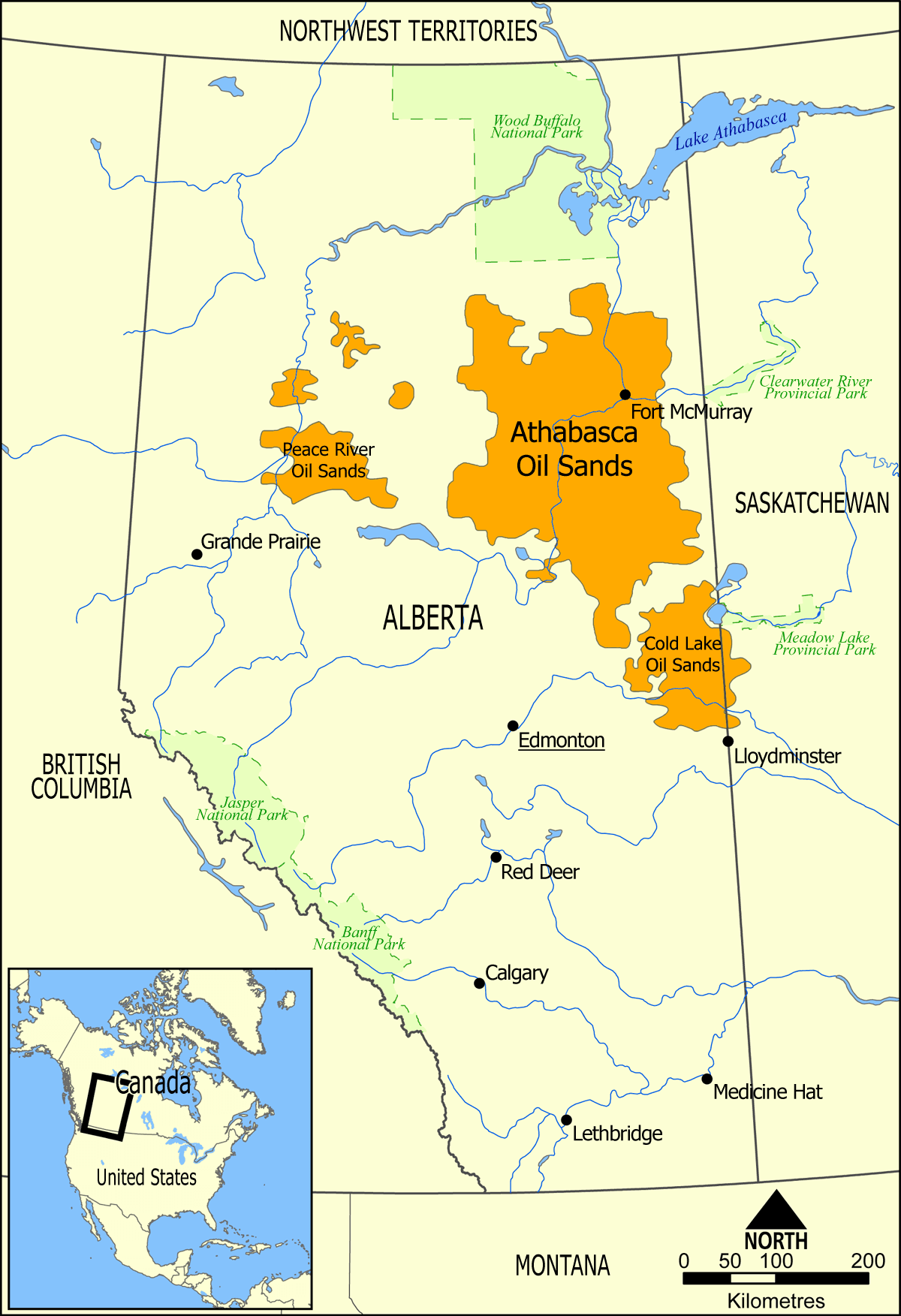
If the oil shock is a burden for consumers, it is a boon for producers, and Canada is among the world's most significant. The country's status as a major oil producer means that surging prices flow into the revenues of the oil-and-gas sector, lifting Alberta and the broader energy industry that anchors much of the western economy.
Higher crude prices improve the economics of extraction, encouraging activity across the oil patch and boosting the value of every barrel Canada produces and exports. For a province whose fortunes rise and fall with the price of oil, a move toward triple-digit Brent represents a substantial tailwind after years in which low and volatile prices weighed on the region.
The benefits extend beyond corporate balance sheets to royalties, employment and investment in energy-producing regions. When prices climb, the incentive to drill, develop and ship grows accordingly, drawing activity and capital into a sector that serves as a pillar of the national economy. Alberta, in particular, stands to gain from the renewed momentum.
This is the heart of the split-screen effect. The very same surge in oil prices that drains household budgets across the country pours strength into the energy sector that forms one of Canada's economic foundations, leaving the nation's overall position far more ambiguous than the headline inflation numbers alone would suggest.
An unexpected lift for the recovery
The timing of the oil shock intersects with Canada's broader economic story in a striking way. The country had stumbled into a first-quarter technical recession, raising fears of a prolonged slump. Yet rising oil and gas activity is now helping power a second-quarter rebound, turning a geopolitical crisis into an unlikely source of growth.
The early signs are visible in the data. Statistics Canada's early estimate points to 0.4 per cent April GDP growth, led by mining, quarrying and oil and gas. That sectoral leadership underscores how central the energy industry is to the national accounts and how quickly a rebound in extraction can shift the headline growth figure.
The mechanism is straightforward. As oil prices rise and activity in the oil patch intensifies, the output of the energy sector climbs, lifting overall economic growth even as other parts of the economy struggle with weak investment and the lingering effects of the trade dispute with the United States. Energy becomes the engine pulling the broader economy forward.
That dynamic offers the government a measure of relief after a difficult start to the year. A recovery driven by oil and gas hands Prime Minister Mark Carney's government a more encouraging narrative, even if it rests on a foundation of geopolitical turmoil and comes at the direct expense of household purchasing power.
A nation pulled in two directions
The crisis crystallises a long-standing tension in the Canadian economy. The country is at once a major energy producer and a nation of consumers who must pay the prices that producers receive. When oil surges, those two identities pull against each other, and the 2026 fuel crisis has dramatised the divide more sharply than any event in recent memory.
Regionally, the split is pronounced. Energy-producing provinces, with Alberta at the forefront, benefit from the price surge, while consumers across the country, including in regions without significant oil production, shoulder the higher costs at the pump and in the broader basket of goods. The same barrel of oil that enriches one part of the country burdens another.
The policy implications are equally divided. Federal decision-makers must weigh the inflationary harm to households against the growth and revenue benefits to the energy sector, a balance with no easy resolution. The Bank of Canada's June 10 decision will be one early test of how that tension is managed at the level of national policy.
For now, Canada occupies a paradoxical position: a country whose households are squeezed by soaring fuel costs even as its energy sector and overall growth figures are lifted by the very same prices. The crisis abroad has become, in effect, two crises at home, one for consumers and one of opportunity for producers.
What's next
The most immediate signal will come on June 10, when the Bank of Canada announces its next rate decision against the backdrop of an external price shock colliding with a fragile recovery. Markets and households alike will be watching for any sign of how the central bank intends to weigh resurgent inflation against economic weakness.
Beyond the rate decision, the trajectory of the conflict and the status of the Strait of Hormuz will dictate where oil prices head from here. A prolonged blockage that keeps Brent near or above current levels would entrench both the consumer squeeze and the energy windfall, while any easing would unwind them.
The forecasts of oil reaching $200 a barrel remain speculative, but they signal the scale of the risk that analysts are now contemplating. Should prices climb that high, the strain on Canadian households would intensify dramatically, even as the energy sector reaped unprecedented gains, sharpening the divide already running through the economy.
The interplay between the two forces will determine the net effect on Canada. If the energy-led growth in mining, quarrying and oil and gas continues to outpace the drag from higher consumer prices, the headline economic figures may stay positive even as households feel poorer. If inflation bites harder and crimps spending across the broader economy, the windfall in the oil patch could be offset by weakness elsewhere. That balance, more than any single price point, will define how the crisis is ultimately judged at home.
For Canada, the coming weeks will reveal whether the oil-and-gas-led rebound can sustain the second-quarter recovery and whether the inflationary pressure proves transitory or stubborn. The crisis born in the waters of the Strait of Hormuz has become a defining variable for the Canadian economy, pulling it in two directions at once.
Spotted an issue with this article?
Have something to say about this story?
Write a letter to the editor


Comments
Be the first to comment.