CFL Season Kicks Off June 4 With Alouettes at Tiger-Cats

The 2026 Canadian Football League season begins on June 4, when the Montreal Alouettes visit the Hamilton Tiger-Cats to open a campaign that runs through to October 24. The kickoff marks the return of a uniquely Canadian institution, one built on a wider field, three downs, and a brand of football that has its own rhythm and traditions. The regular season will give way to a playoff push and, ultimately, the Grey Cup, set for Sunday, November 15 in Calgary.
The opener pairs two clubs with familiar storylines. Montreal arrives with a retooled roster, while Hamilton leans on continuity at the most important position. For both, the first game offers an early read on where they stand after an off-season of change and a spring of preparation. Training camps opened in May, with rookie camps around May 6 and full camps following, giving coaches several weeks to sort depth charts before the games begin to count.
The league enters the year with the Saskatchewan Roughriders as defending Grey Cup champions, a status that frames every other team's ambitions. Saskatchewan retained its core, including Grey Cup most valuable player Trevor Harris, signalling an intent to defend its title rather than rebuild. That stability makes the Roughriders an early reference point for the rest of the league.
Beyond the standings and rosters, the 2026 season introduces several rule changes designed to shape the flow of games. A modified single-point rule, an automatic 35-second play clock, and a requirement that teams place their benches on opposite sides of the field will all be in effect. Each adjustment carries practical consequences for how the game is played and managed, and coaches will spend the early weeks adapting.
A Canadian game with its own identity
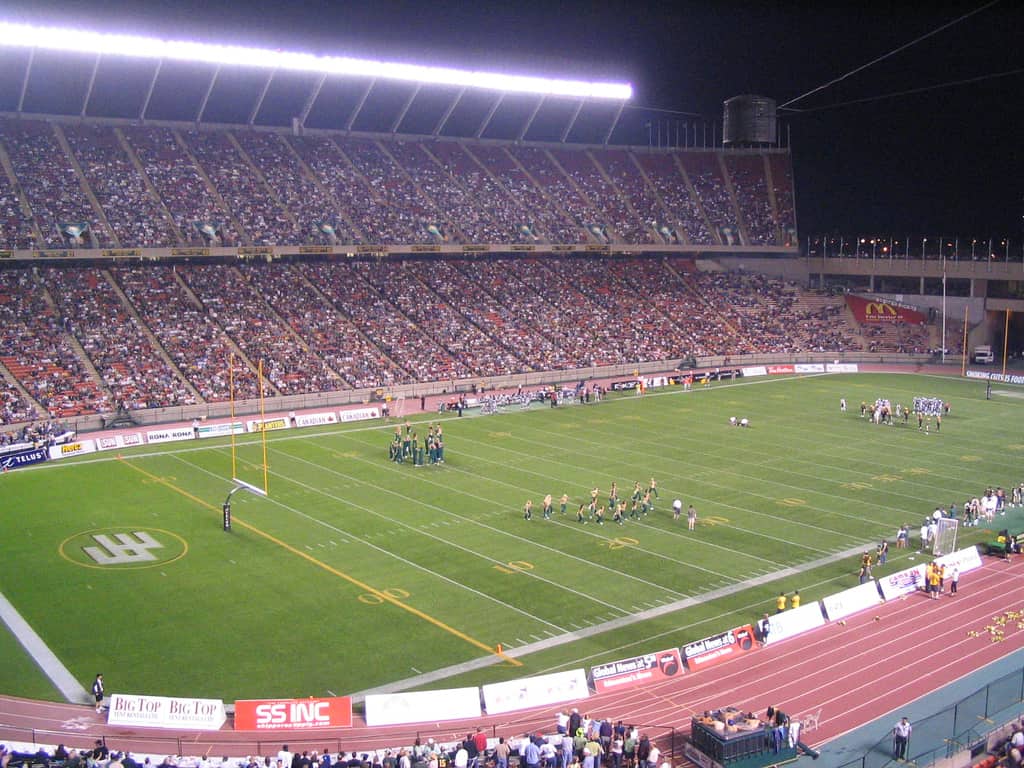
The CFL occupies a distinct place in the national sporting landscape. It is a league native to Canada, with rules and dimensions that set it apart from the game played elsewhere. The wider field, the deeper end zones, the single point, and the limit of three downs all contribute to a faster, more open style that rewards creativity and risk. For generations of fans, that distinctiveness is precisely the appeal.
The Grey Cup sits at the heart of that tradition. First awarded more than a century ago, it is among the oldest trophies in North American professional sport, and its annual championship game has long functioned as a national event. The 2026 edition, scheduled for November 15 in Calgary, will cap the season and continue a lineage that connects the modern league to its earliest days. Few Canadian sporting occasions carry the same blend of competition and ceremony.
The league's geographic spread is part of its character as well. Teams stretch from coast to coast, anchoring communities in markets large and small, and the regional rivalries that result give the schedule its texture. The opener between Montreal and Hamilton revives one such matchup, a meeting of two eastern clubs with histories that reach back decades. Across the country, similar rivalries will define the months ahead.
For all the attention paid to other leagues, the CFL endures because it offers something they do not: a homegrown competition with its own rules, its own stars, and its own championship. The start of a new season is a reminder of that identity, and a chance for fans to reconnect with a game that belongs to Canada in a way no import ever could.
Saskatchewan defends, with its core intact
The Roughriders begin 2026 as the team to beat. Having won the most recent Grey Cup, they enter the season with the target that comes with being champions, and they have positioned themselves to defend it by keeping their key pieces together. Retaining Grey Cup most valuable player Trevor Harris is central to that effort, providing continuity at quarterback and a proven leader who delivered when it mattered most.
Defending a title is rarely simple. The challenge of repeating in any league is well documented, and the CFL is no exception, with parity and the grind of a long season conspiring against front-runners. Saskatchewan's decision to hold its core together rather than overhaul it suggests confidence in the group that won, and a belief that experience and chemistry will carry over into the new campaign.
For Saskatchewan supporters, among the most devoted in the league, the prospect of a defence of the championship adds anticipation to the season. The Roughriders enjoy a passionate following that travels well and fills stadiums, and a title defence only heightens that engagement. The team's early form will be watched closely as a barometer for whether the championship window remains open.
Still, a season is long, and the standings in June say little about November. Saskatchewan's task is to translate its retained talent into sustained results across the schedule, then navigate the playoffs once more. The Roughriders begin the year as favourites in the eyes of many, but the field will have plenty to say about whether that billing holds.
Quarterback storylines across the league
Quarterback play often decides the CFL season, and 2026 features several names worth tracking. In Hamilton, Bo Levi Mitchell returns for his fourth season with the Tiger-Cats, bringing a veteran presence to a club hoping to build on its recent direction. Mitchell's experience gives Hamilton a steady hand at the position as it opens at home against Montreal.
Montreal, meanwhile, has reshaped parts of its roster. The Alouettes added backup quarterback Dustin Crum, deepening their options behind centre, but they also released key defensive players, a move that introduces questions about how the team will hold up on that side of the ball. The opener will offer an early glimpse of how those changes balance out, and whether Montreal's offence can compensate for defensive turnover.
In the West, Edmonton turns to Cody Fajardo, who will start at quarterback as the club looks to establish stability. Fajardo brings starting experience to a team eager to climb, and his performance will shape Edmonton's outlook through the summer and into the fall. The quarterback position remains the clearest lever a team can pull, and Edmonton is betting on a familiar profile to drive its season.
British Columbia's situation stands out for a different reason. Nathan Rourke, regarded as the CFL's top Canadian, was extended through 2028, securing the future of a player who has become a focal point for the league's Canadian talent. Rourke's presence carries symbolic as well as competitive weight, representing the kind of homegrown star the CFL has long sought to cultivate and retain.
New rules reshape the 2026 game
The league's rule changes for 2026 will be felt from the opening kickoff. A modified single-point rule adjusts one of the game's most distinctive features, the rouge, which has no equivalent in the version of football played south of the border. Any change to the single point alters strategic calculations on punts, missed field goals and kicking decisions, and coaches will need to recalibrate accordingly.
An automatic 35-second play clock is also new, standardising the pace between plays and removing some of the variability that previously existed. A consistent clock can influence tempo, no-huddle approaches and late-game management, and teams will adapt their preparation to the new timing. The change is aimed at flow and clarity, and its effects should become apparent quickly once the season begins.
Perhaps the most visible adjustment is the requirement that teams place their benches on opposite sides of the field. For years, certain configurations had teams sharing a sideline, and the new arrangement changes the look and logistics of game day. Coaches, players and officials will all adjust to the revised setup, which brings the league into line with a more conventional layout.
Taken together, the changes reflect a league willing to refine its product while preserving the elements that make it distinct. None of the adjustments alters the fundamental character of the Canadian game, but each will shape how the 2026 season unfolds. The opener between Montreal and Hamilton will serve as the first laboratory for how the new rules play out in live competition.
What the opener tells us
First games are imperfect guides, but they are not without value. Montreal at Hamilton offers an early test of two eastern clubs with contrasting off-seasons, and the result will provide a small piece of information about where each stands. For Hamilton, it is a chance to set a tone at home with a veteran quarterback; for Montreal, an opportunity to show its reshaped roster can compete.
The broader league picture will take weeks to clarify. With Saskatchewan defending and quarterbacks across the country settling into their roles, the standings will shift as teams find form or falter. The early schedule, played in the weeks after camps break, often produces uneven football as units gel, and patience is required before drawing firm conclusions.
What is certain is that the season has arrived, and with it the long march toward Calgary in November. The CFL's calendar is a familiar rhythm for Canadian fans, from June openers through a summer of regional rivalries to a championship that doubles as a national celebration. The 2026 edition begins with Montreal at Hamilton and ends with one team lifting the Grey Cup.
What's next
After the June 4 opener between Montreal and Hamilton, the CFL settles into a regular season that runs to October 24, with teams jockeying for playoff position across the months ahead. Saskatchewan will look to defend its title, while quarterback storylines in Hamilton, Edmonton and British Columbia shape the contenders. The road leads to the Grey Cup in Calgary on November 15, the season's defining occasion and the prize every team is chasing.
Spotted an issue with this article?
Have something to say about this story?
Write a letter to the editor


Comments
Be the first to comment.