Starmer Faces Mounting Labour Revolt as Streeting Lines Up Leadership Bid
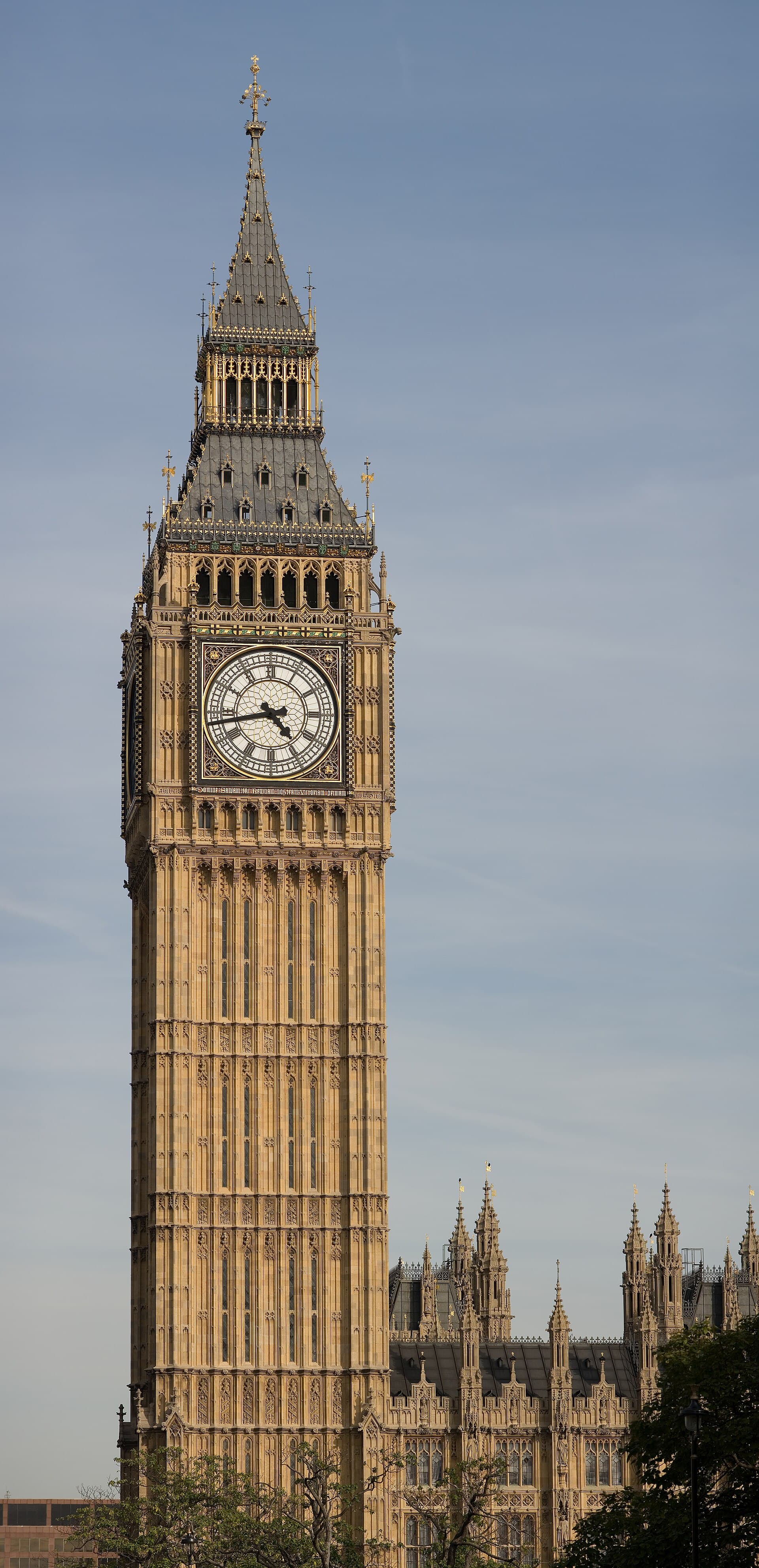
Britain's Labour government is in open crisis after more than eighty Labour MPs, several cabinet ministers, and an expanding circle of senior aides have urged Prime Minister Sir Keir Starmer to step aside or set a clear departure timetable. The pressure has now culminated in the resignation of cabinet minister Wes Streeting, who has announced his intention to launch a formal leadership challenge.
Starmer, who took office in July 2024 after Labour's sweeping general election victory, has rejected the calls and indicated that he intends to continue governing. The combination of his rejection of pressure and his rapidly worsening polling position has left the United Kingdom in a state of political uncertainty that betting markets and political analysts say is unlikely to resolve quickly.
For Canada, the question of Labour's leadership matters significantly. The United Kingdom remains one of Canada's closest diplomatic, security, and trade partners, and a change of government or leadership in London could affect everything from defence procurement coordination to trade negotiations with the European Union, the United States, and the broader Commonwealth.
How the crisis built
The Labour leadership crisis has its roots in the difficult policy choices that Starmer's government made in its first eighteen months in office. The party inherited a difficult fiscal situation from the previous Conservative government and pursued a combination of tax increases, spending restraint, and infrastructure stimulus that has produced mixed results.
Polling has shown a steady erosion of Labour's support, with approval ratings near minus forty-six and Reform UK consistently leading in voter intention polls. The combination has shaken Labour's parliamentary caucus and prompted backbench and ministerial frustration with what they describe as a lack of strategic direction at the top.
The most recent local and by-election results have intensified the pressure. Labour has lost ground in former strongholds while Reform UK and the Liberal Democrats have made significant gains. The pattern has prompted concerns that without a leadership change, Labour faces a wipeout at the next general election.
Streeting's challenge
Wes Streeting, who had been one of the most prominent ministers in the Starmer government, resigned this week and announced his intention to seek the Labour leadership. The former health secretary has positioned himself as a candidate who can reset Labour's relationship with both traditional working-class voters and the centre-right voters who delivered the 2024 majority.
Streeting's resignation came after months of speculation about his ambitions and what many in Westminster have described as a deliberate distancing from the Starmer agenda on several key issues. His campaign launch was widely expected and is regarded as one of the most serious internal challenges Labour has faced in a generation.
Other potential candidates include Greater Manchester Mayor Andy Burnham, whose name has been raised consistently in leadership speculation. Burnham has not formally declared but has done little to discourage the discussion of his candidacy.
Starmer's response
Starmer has rejected the calls for resignation and has indicated that he intends to govern through the current parliamentary session. The prime minister has emphasised his government's policy achievements, including planning reform, NHS workforce planning, and renewed climate commitments, and has argued that the difficult choices made in the first year of government will pay off over time.
However, no formal leadership challenge has been triggered under Labour party rules, which require either a clear formal challenger or a successful no-confidence motion by the Parliamentary Labour Party. The mechanics of any leadership change therefore depend significantly on how Streeting's challenge unfolds and on whether sufficient MPs ultimately back a formal contest.
Betting markets have moved sharply against Starmer. At the peak of speculation earlier in May, Polymarket priced the probability of Starmer leaving office by December 31 at over ninety per cent. That figure has eased somewhat but remains well above the level that any incumbent government would consider tolerable.
What it means for the United Kingdom
The political instability in Westminster has begun to affect government decision-making across departments. Several major announcements have been delayed, and policy implementation has slowed as ministers and civil servants navigate the uncertain leadership question.
The Treasury's autumn fiscal statement, which had been expected to set out a multi-year plan for public spending and revenue measures, has been complicated by the leadership question. Markets have begun pricing in a higher risk premium on UK assets, with gilts and the pound under modest pressure as the political situation has worsened.
For Reform UK, the situation is an opportunity. The party has continued to consolidate its position as the most credible right-of-centre alternative, and its leadership has been working to build a more comprehensive policy platform that goes beyond opposition to immigration and to net-zero commitments.
The Canadian dimension
For Canada, the political shifts in London matter on multiple fronts. The United Kingdom is one of Canada's largest trade partners outside the United States and a key partner on defence procurement, intelligence sharing through Five Eyes, and Commonwealth coordination.
Canada and the United Kingdom signed a trade continuity agreement after Brexit but have not yet finalised a comprehensive bilateral trade deal. Negotiations have been bogged down on several technical issues including agriculture, automobiles, and digital trade, and the current political uncertainty in London is unlikely to accelerate those discussions.
Defence cooperation has continued at a strong pace, with British and Canadian forces working together on Arctic surveillance, NATO operations, and intelligence-sharing arrangements. A change of UK leadership is unlikely to disrupt those arrangements in the short term but could reshape the political envelope in which they operate.
King Charles and constitutional questions
The political crisis has also raised quiet questions about the role of King Charles, who has been carefully apolitical throughout his reign but who, as head of state, would be involved in any transition of leadership. Constitutional convention places strong limits on the monarch's role, but the king's relationships with senior Labour and Conservative figures have been a subject of careful management throughout his time on the throne.
For Canada, where King Charles is also head of state, the constitutional implications are largely indirect. The UK political situation does not affect Canadian governance, but it provides another illustration of how parliamentary systems can navigate leadership instability without triggering a broader constitutional crisis.
The two Commonwealth realms have maintained close coordination on royal matters, including the recent state visit by King Charles to Canada and his upcoming engagements with Commonwealth leaders. Those rhythms are unlikely to be disturbed by the leadership question in Westminster.
European and global implications
The leadership crisis is also being watched closely in Brussels, Washington, and other major capitals. The United Kingdom plays a significant role in NATO, in Ukraine support, and in coordinating Western responses to the Trump administration's foreign policy shifts. A change of leadership in London could alter the tone and tactics of those engagements, although the broad strategic direction is unlikely to shift quickly.
European partners, particularly France and Germany, have been working with the United Kingdom on a series of post-Brexit cooperation initiatives, including security partnership arrangements and migration management. The pace and ambition of those initiatives could be affected by political turbulence in Westminster.
The United States under President Donald Trump has had a complicated relationship with the Starmer government, with cooperation on intelligence and on certain trade matters but significant friction on tariffs, climate policy, and Ukraine. A successor government would face the same challenges.
Canadian-UK trade conversations
Canadian and British negotiators have been working for years on a more comprehensive bilateral trade agreement to replace the transitional arrangement put in place after Brexit. Discussions have moved slowly, with sticking points around agricultural access, automotive content rules, and digital trade provisions. The current political uncertainty in Westminster is likely to slow those discussions further.
Canadian agricultural exporters in particular have been frustrated by the slow progress. Beef, pork, and dairy producers have argued that a strengthened bilateral arrangement could provide important market access to compensate for tariff pressures elsewhere. The agricultural file has historically been one of the most politically sensitive areas of Canada-UK trade discussions.
A change of UK leadership could either accelerate or further delay the bilateral trade conversation. A new prime minister focused on rebuilding economic confidence might prioritise concluding outstanding international agreements, while a more inward-focused government might let the file drift further.
The Reform UK factor
The rise of Reform UK has been one of the dominant features of the political landscape in 2026 and is the broader context within which the Labour leadership crisis is unfolding. Reform's polling lead has been sustained over months and has begun to translate into local election success, byelection wins, and a steadily growing parliamentary presence.
The party's combination of immigration restriction, scepticism of net-zero policies, and economic nationalism has resonated with voters in former Conservative and Labour strongholds alike. Both major parties have been struggling to find effective responses, and the Labour leadership debate is partly a contest over how to confront the Reform challenge.
For Canada, the rise of Reform UK is being watched as part of a broader pattern of populist political movements across the Western democracies. Canadian policy makers have been studying how to respond to similar pressures at home, including in the context of the Alberta separation referendum and the ongoing debates about immigration, housing, and affordability.
What's next
The immediate question is whether Streeting can secure sufficient backing among Labour MPs to formally trigger a leadership challenge. Labour party rules require a relatively high threshold of caucus support to launch a contest, and the timing of any vote would depend on internal party processes.
If a contest is triggered, it could last weeks or months, during which time the government would face significant operational distraction. The longer the uncertainty persists, the more difficult it becomes for the government to advance its policy agenda or to project stability internationally.
For Starmer, the path forward is to convince a critical mass of Labour MPs that his government can recover its political position before the next general election. Whether he can do so against a determined Streeting candidacy and a continuing slump in the polls is the central question facing British politics this summer.
Spotted an issue with this article?
Have something to say about this story?
Write a letter to the editor


Comments
Be the first to comment.