Toronto's Hidden Exodus: Who Is Leaving the City and Where Are They Going
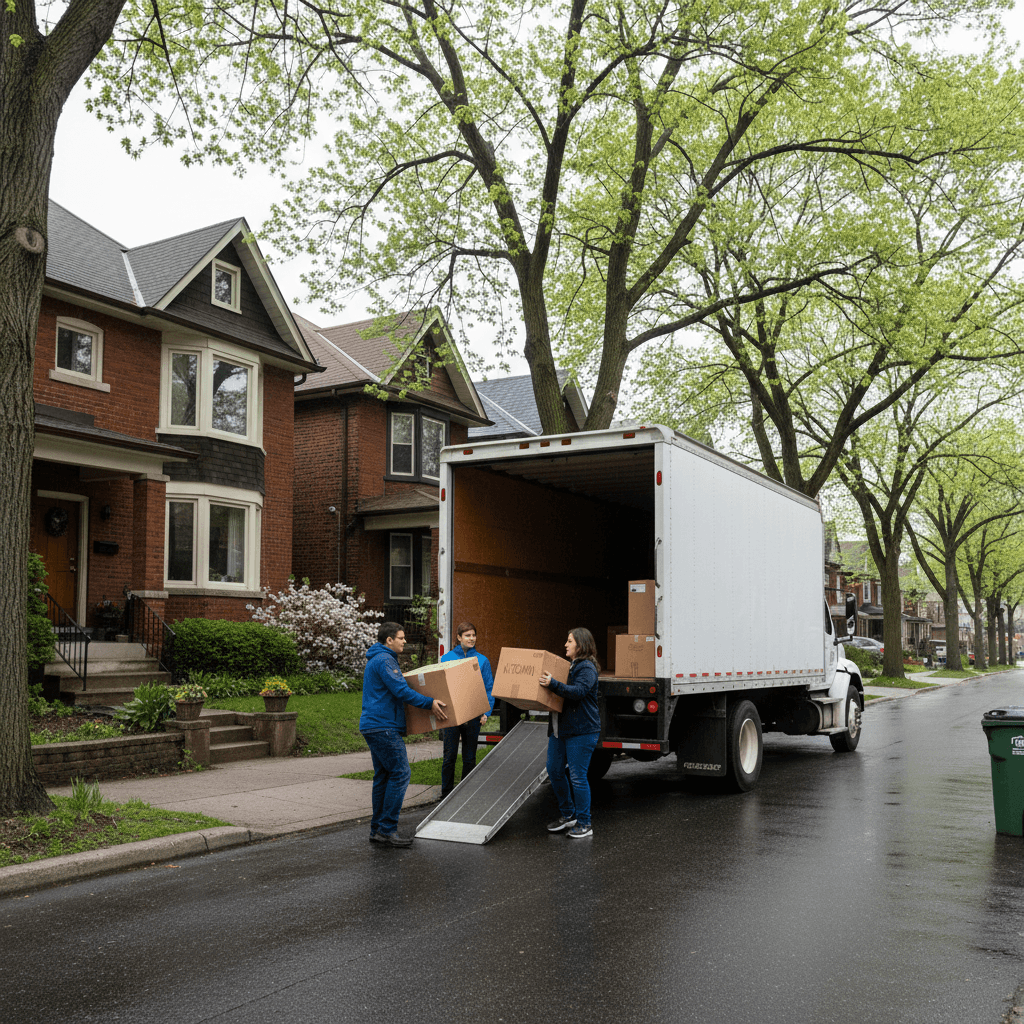
A quiet demographic shift is underway in Toronto. The city that for decades served as the gravitational centre of Canadian life, pulling people from across the country and around the world, is experiencing a meaningful reversal. Net out-migration from Toronto has been accelerating, with data from school enrolment, real estate patterns, and Statistics Canada population estimates painting a consistent picture: more people are leaving Toronto than arriving from other Canadian cities and towns, and the trend is gaining momentum in 2026.
The Numbers Behind the Trend
The Toronto District School Board's enrolment projections for 2026-27 are among the most striking indicators of the shift. The TDSB is projecting approximately 5,000 fewer students in the coming school year compared to the current year, a decline that reflects not a sudden drop in births but the cumulative effect of families leaving the city over several years. School enrolment typically lags demographic change, meaning the families counted as missing from next year's classrooms largely left in the 2023 to 2025 period.
The TDSB's projections have direct operational consequences. Fewer students mean lower provincial grants, pressure to close or consolidate underenrolled schools, and difficult decisions about programming and staffing. Several schools in older inner suburbs and some downtown neighbourhoods are now operating below the enrolment thresholds that justify their current complement of staff and programs. The board has been managing this quietly, but the cumulative impact of continued out-migration will eventually force more visible decisions.
Statistics Canada population estimates have also captured the trend at the census metropolitan area level. While the Toronto CMA continues to grow when international immigration is included, the internal migration picture, accounting for movement between Canadian provinces and cities, shows Toronto consistently losing population to other parts of Ontario and Canada. The net figure represents tens of thousands of people per year choosing to leave rather than stay or arrive from elsewhere in the country.
Real estate transaction data provides another lens. The share of Toronto home sales to buyers with addresses outside Toronto, or to investors purchasing for rental income, has been closely watched as an indicator of who is buying the city's housing stock. More relevant to out-migration is the data on Toronto residents purchasing in surrounding markets, a flow that has been consistently large throughout the 2020s and that accelerated as remote and hybrid work arrangements became entrenched.
Who Is Leaving and Why
The out-migration is not randomly distributed across Toronto's population. Research on internal migration patterns in Canada consistently shows that the groups most likely to leave expensive major cities are young families, middle-income earners, and working-age people in the early and middle stages of their careers. These are precisely the groups for whom the gap between Toronto housing costs and local earnings is most acutely felt.
A family with two professional incomes, trying to buy a home large enough for children, in a neighbourhood with good schools and reasonable commute times, faces a fundamental financial reality in Toronto: the housing that matches their needs costs far more than a reasonable mortgage against their combined income can support. That reality has existed for years, but the combination of the high-interest-rate period of 2022 to 2024 and stubbornly elevated prices has made it feel permanent rather than cyclical to many families making the decision about where to live.
Quality of life concerns beyond housing also feature prominently in surveys of Toronto out-migrants. Commute times for those not working remotely have remained long and unreliable. Public spaces in some parts of the city have deteriorated. The sense of neighbourhood community that many families prioritise, knowing their neighbours, having accessible parks and schools, feeling safe walking at night, is harder to access in dense urban environments than in smaller cities.
Renters leaving Toronto face a somewhat different calculus than owners but often reach the same conclusion. The rent-to-income ratio in Toronto has deteriorated substantially over the past decade, with average rents for family-sized apartments well above what lower and middle-income households can sustainably afford. Renters who have been priced out of ownership and face unsustainable rent increases are increasingly willing to consider secondary cities where both renting and eventual ownership remain financially accessible.
Where They Are Going: Ontario's Beneficiaries
The cities absorbing Toronto's out-migrants form a familiar list: Hamilton, Kitchener-Waterloo, Ottawa, Barrie, and to a lesser extent Guelph, Oshawa, and St. Catharines. Each of these cities has seen population growth driven in meaningful part by Toronto arrivals, and each is navigating the opportunities and pressures that growth creates.
Hamilton has been transformed by Toronto out-migration over the past decade. The city's older housing stock, once an affordable entry point for buyers priced out of Toronto, has seen significant price appreciation as demand from Toronto buyers compressed the affordability advantage. Hamilton's west end and Mountain neighbourhoods have seen noticeable demographic change, with younger professional families from Toronto bringing different spending patterns, neighbourhood expectations, and political priorities. The city's arts scene, restaurant culture, and housing stock have all evolved in response.
Kitchener-Waterloo has absorbed migration from Toronto while maintaining a strong independent economic identity built around its technology sector and universities. The region is large enough to have its own economic gravity, meaning Toronto arrivals are joining an existing dynamic community rather than transforming a smaller city from the outside. The regional transit network and reasonable commute times to Toronto for those who need occasional access to the city make it a particularly attractive destination for hybrid workers.
Ottawa's growth from Toronto out-migration reflects the federal capital's stable government employment base, lower housing costs relative to earnings, and high quality of life metrics. The city's bilingual character and distinct culture make it more of a deliberate choice than a default destination, but it receives a consistent flow of Torontonians seeking a large-city experience with better housing affordability. Ottawa's housing market has tightened considerably from its historic discount to Toronto, though a significant gap remains.
Housing Price Implications in Destination Cities
The flow of buyers from Toronto to secondary cities has put upward pressure on housing prices in those markets, creating a complex affordability cascade. As Toronto buyers, sometimes flush with equity from a home sale in the GTA, enter Hamilton or Kitchener-Waterloo markets, they can outbid local buyers and compress the affordability that made those markets attractive in the first place. The regions receiving Toronto migration are wrestling with how to accommodate growth while protecting housing affordability for their own existing residents and those who would otherwise move there from smaller communities.
Hamilton's residential real estate market has seen average prices that would have been unimaginable a decade ago, driven largely by demand from Toronto migrants. The city's supply response has been hampered by the same zoning and development approval challenges that constrain housing supply across Ontario, meaning prices have risen faster than supply has grown. The affordability advantage relative to Toronto persists, but it has narrowed materially and continues to compress.
Barrie, closer to Toronto and with direct GO Train service, has felt intense demand pressure that has pushed its housing market into territory that local incomes do not easily support. The city's growth has been rapid enough to strain infrastructure, schools, and local services in ways that have become visible quality-of-life issues for both long-time residents and newcomers. The lesson of Barrie's experience is that absorbing Toronto out-migration without adequate infrastructure investment is not a sustainable path to community wellbeing.
Provincial housing policy is grappling with how to facilitate this internal migration while avoiding simply exporting Toronto's affordability problem to a new set of communities. The expansion of transit-oriented development rules, the reduction of development charges for certain housing types, and the imposition of provincially mandated housing targets on municipalities are all measures with implications for how well secondary cities can absorb continued in-migration from Toronto and the GTA.
What It Means for Toronto's Fiscal Base
The departure of middle-income families and working-age Torontonians has fiscal implications for the city that go beyond school enrolment. Toronto's tax base depends heavily on property taxes from residential properties and on the income and spending of working residents. When households leave, they take their property tax payments, their spending at local businesses, and their income tax contributions to provincial services with them.
The households most likely to leave are not necessarily the highest earners or the largest property taxpayers in absolute terms, but they represent the broad middle of Toronto's tax base, the families and workers whose collective contribution funds city services. Their replacement by a population composed of a higher proportion of very wealthy households and very low-income households would increase inequality in the city's population and create a more uneven distribution of tax capacity relative to service needs.
City of Toronto officials have noted the fiscal risk posed by out-migration in budget documents and strategic planning contexts. The city's financial model is already under stress from the mismatch between the costs of operating a major urban centre and the revenue tools available to a municipality under Ontario's local government framework. Out-migration that erodes the property tax base while the costs of transit, shelters, roads, and parks do not decline proportionately makes that financial stress worse.
There are also softer fiscal implications. Middle-income families with children are heavy users of city recreation centres, libraries, and parks. Their departure reduces pressure on those services in the short term but also reduces the constituency for maintaining and improving them. Cities that lose their middle-class population base tend to see a gradual deterioration of the public amenities that make urban life attractive to precisely the families who might otherwise stay.
Is This a Permanent Trend?
The critical question is whether Toronto's out-migration represents a structural shift or a cyclical response to conditions that may change. There are arguments on both sides, and the honest answer is that the evidence currently available does not definitively resolve the question.
The structural argument holds that Toronto has entered a new phase where its housing costs permanently exceed what the domestic labour market can support for most middle-income households, and that internal migration to secondary cities is therefore a rational long-term adaptation. Under this view, Toronto will gradually become more stratified, a city of high earners, international migrants filling labour market gaps, and lower-income residents who cannot afford to leave, with the broad middle class dispersed to the surrounding region.
The cyclical argument suggests that housing affordability improvements driven by increased supply, interest rate normalisation, or some combination of factors could reverse the out-migration trend. Younger Torontonians who left in their late twenties or early thirties might return as their incomes grow and housing market conditions shift. The city's fundamental attractions, economic opportunity, cultural life, transit, amenities, remain powerful draws that would reassert themselves if the cost barrier were reduced.
Most demographers reviewing the available evidence lean toward a view that the current trend reflects both structural and cyclical elements, that some departure is a permanent feature of the new Toronto reality but that the pace could moderate significantly with the right policy responses. The Toronto Regional Real Estate Board, the TDSB, and city planning staff are all engaged in ongoing monitoring of the trends and are working to understand the conditions under which they might stabilise.
What Would Turn the Tide
If Toronto wants to reverse or at least slow the exodus of young families and working-age residents, the policy levers are not mysterious. More housing supply at prices that middle-income households can access, better and faster transit so that car-free or car-light living is genuinely viable across the city, improved public spaces and services in neighbourhoods that have been underinvested, and a tax and regulatory environment that keeps the cost of living from continuing to rise faster than incomes.
None of those changes are simple or quick. Housing supply at scale requires sustained political will across multiple levels of government, willing landowners, and a development industry operating at high capacity. Transit improvements take years from announcement to operation. Neighbourhood revitalisation is a generation-long project. The conditions that have driven the exodus built up over decades and will not reverse overnight.
What city and provincial leaders can do is begin the work seriously, communicate clearly about the trade-offs involved, and maintain the focus over the election cycles that typically distract governments from long-horizon urban policy. The 5,000 empty school desks that the TDSB is projecting for next year are not just a budget problem. They are a signal from families who made a decision with their feet. Understanding that decision, and building a city that more families would choose to stay in, is among the most important policy challenges facing Toronto and Ontario in the years ahead.