Democrats File Six Impeachment Articles Against Defence Secretary Hegseth
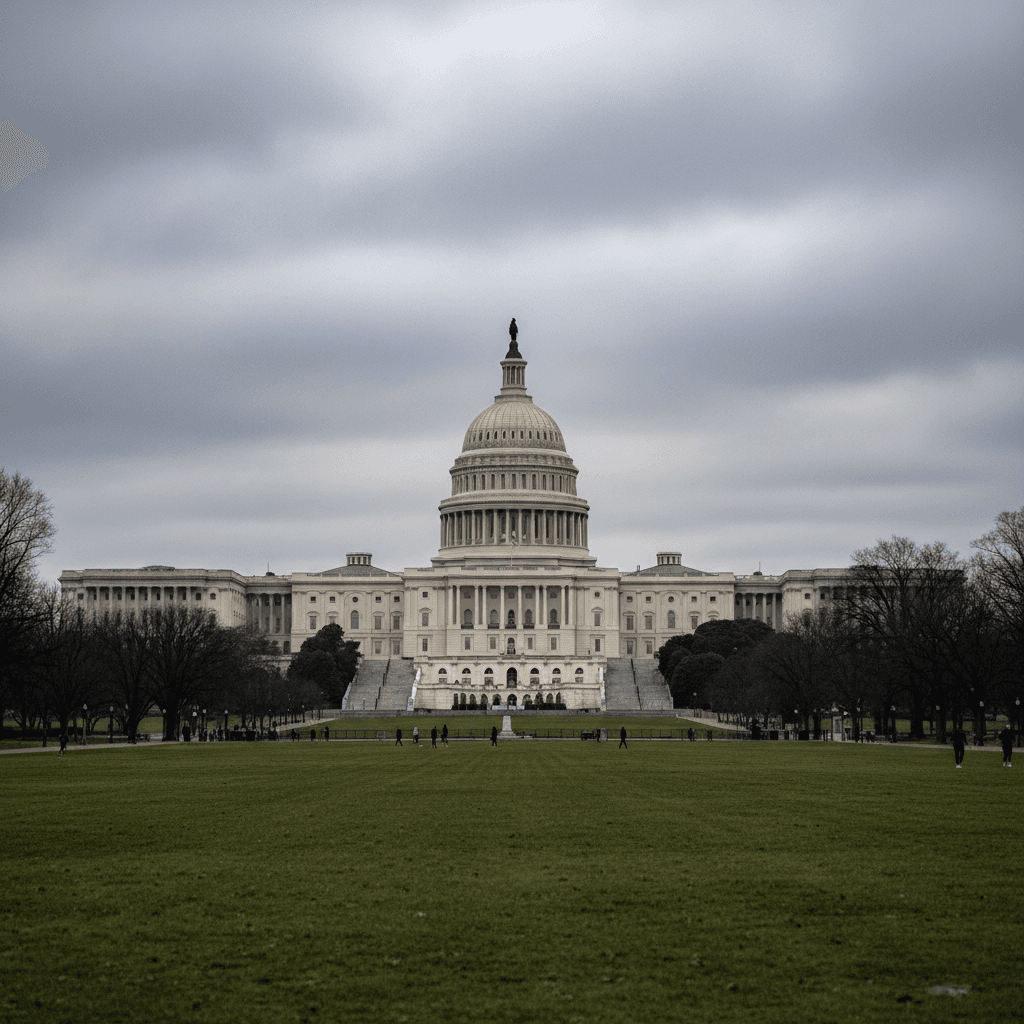
House Democrats took the extraordinary step of filing six articles of impeachment against Secretary of Defense Pete Hegseth in April 2026, cataloguing a set of accusations that span unauthorized military action, violations of the laws of armed conflict, classified information mishandling and obstruction of congressional oversight. The filing, led by Representative Yassamin Ansari of Arizona, represents one of the most serious formal challenges to a cabinet official in recent American political history and arrives against a backdrop of significant congressional unease about the conduct of U.S. military operations in the Middle East.
The articles were filed as 40 Democratic senators voted for at least one of a series of Iran and Israel-related resolutions, signalling a level of institutional pushback from the Senate that is unusual given its Republican majority. Whether the impeachment effort can succeed in a chamber where Republicans control the process is a separate question from whether the legal and moral substance of the articles has merit, and analysts on both sides of the political spectrum have engaged seriously with the conduct allegations even while disagreeing sharply about the political prospects.
For Canadians watching American institutional stability, the Hegseth impeachment effort is one of several signals that the structure of civilian oversight over the U.S. military and the constitutional framework governing the authorization of war are under serious strain. Those questions have direct implications for Canadian security arrangements, for NORAD and for the reliability of the alliance relationship that underpins Canada's defence posture.
Article One: Unauthorized War Against Iran
The first and arguably most constitutionally significant article accuses Hegseth of conducting an unauthorized war against Iran without congressional approval, in violation of the War Powers Act and the constitutional requirement that Congress authorize the initiation of hostilities. The article alleges that Hegseth planned and directed military operations against Iran without seeking or obtaining the required congressional authorization, bypassing the oversight mechanisms that the legislature has built over decades of post-Vietnam War reform.
The legal questions raised by this article are not partisan. Constitutional scholars across the ideological spectrum have long argued that the executive branch has progressively expanded its claimed authority to initiate military action without congressional approval, using the Authorization for Use of Military Force passed after the September 11 attacks and other broad statutory authorities as justifications for operations their authors did not intend to cover. Democrats filing the article argue that the Iran operations represent a clear case where those authorities do not apply and where the failure to seek congressional approval was a deliberate choice rather than an oversight.
Republican defenders of Hegseth counter that the president has inherent constitutional authority as commander-in-chief to respond to threats to American forces and interests, and that the operations in Iran fell within that authority. The debate is genuinely contested as a matter of constitutional law, though the scale and duration of the Iran operations have made the inherent authority argument harder to sustain as weeks of military activity accumulated.
Article Two: Violations of Laws of Armed Conflict
The second article is the most grave in its specific factual allegations. It accuses Hegseth of overseeing or authorizing military strikes that violated the laws of armed conflict, specifically citing the bombing of a girls' school in the Iranian city of Minab that resulted in civilian casualties. The strike, documented by independent journalists and confirmed by the International Committee of the Red Cross, has been cited by human rights organizations as a potential war crime under the Geneva Conventions' proportionality and distinction principles.
Minab, a city in the Hormozgan province, is not a recognized military installation, and the girls' school that was struck was identified by U.S. military planners as housing an alleged dual-use facility in a target assessment that critics argue was inadequate and failed to meet the legal standard for protecting civilian objects from attack. Hegseth has not publicly addressed the specific targeting decision, and the Department of Defense's initial response characterized the strike as having followed applicable rules of engagement.
International law obligations do not disappear because a government asserts compliance, and several allied nations, including Canada, France and Germany, have called for an independent investigation into the circumstances of the Minab strike. The impeachment article gives institutional weight to those calls and establishes a formal record of congressional concern that will persist regardless of the article's ultimate fate in a Republican-controlled chamber.
Article Three: Signalgate and Classified Information
The third article addresses the so-called Signalgate scandal, in which Hegseth was found to have shared classified information about pending military operations in an unsecured Signal messaging group that included a journalist. The disclosure, which preceded strikes on Houthi targets, was first reported in detail by The Atlantic and subsequently confirmed by multiple U.S. government sources.
The significance of Signalgate goes beyond the specific operational security breach, serious as that was. The article argues that Hegseth's handling of classified information demonstrated a systematic disregard for the protocols that protect American service members and intelligence sources, and that his continued tenure as defence secretary following the revelation represents a failure of accountability that the legislature must address. Former intelligence officials from both parties have described the breach as egregious and potentially damaging to collection operations that depend on adversaries not anticipating American military timelines.
The comparison to how the same Republican lawmakers who filed the impeachment article treated Hillary Clinton's email handling has been widely noted. Democrats argue that the double standard is glaring and that the Signalgate disclosure was objectively more serious because it involved real-time operational information about imminent strikes rather than retrospectively classified administrative materials.
Articles Four Through Six: Obstruction, Abuse of Power and Conduct
The remaining three articles address Hegseth's refusal to comply with congressional oversight requests, including subpoenas for documents and testimony related to the Iran operations and the Minab strike. Article four alleges obstruction of congressional oversight through systematic non-compliance with legally issued demands for information. Article five alleges abuse of the powers of the office of Secretary of Defense, including the use of department resources and personnel for political purposes and the retaliatory removal of senior military officers who raised concerns about the legality of orders they received.
Article six is the most formulaic but carries symbolic weight: it accuses Hegseth of conduct unbecoming of the office of Secretary of Defense and of bringing disrepute to the United States Armed Forces, citing the cumulative pattern of the preceding articles as well as public statements and behaviour that Democrats argue have degraded civilian-military relations and the institutional reputation of the Department of Defense.
The obstruction and abuse of power articles track a template that has been used in previous impeachment proceedings, drawing on the precedents set by the Clinton and Trump impeachments. The specific conduct allegations against Hegseth, particularly around the retaliatory removal of senior officers, add factual texture that distinguishes the articles from boilerplate political exercises, though Republican defenders will predictably characterize them as exactly that.
What the Impeachment Odds Actually Are
The procedural reality of Hegseth's situation is that impeachment by the House requires only a simple majority, which Democrats do not currently possess. Absent a significant defection by Republican members, the articles will not pass the House, meaning Hegseth will not be tried by the Senate and will not face removal through this mechanism. That is not a prediction that the effort is without consequence: the filing creates a formal record, generates continued media attention to the underlying conduct allegations and builds a political case that could matter in future elections.
In the Senate, where removal requires a two-thirds majority, the prospects are even more remote under the current configuration. The 40 Democratic senators who voted for Iran and Israel-related resolutions are a substantial bloc but well short of the 67 votes needed to remove Hegseth, and it would require an extraordinary number of Republican defections to reach that threshold. Historical precedent suggests that senators from the president's party almost never vote to remove a cabinet official through impeachment, regardless of the underlying conduct.
The political calculation for Republicans in competitive districts and states is more nuanced. The Minab strike and the Signalgate revelations have created real discomfort among some traditional Republican national security figures, and the impeachment filing gives moderate Republicans a visible choice that their constituents and donors may reference. Whether that pressure translates into votes is uncertain, but the existence of six specific and detailed articles makes it harder to dismiss the effort as purely performative.
Historical Parallels and Canadian Perspective
The impeachment of a cabinet secretary is historically rare in American politics. The most comparable modern precedent is the 1876 impeachment of Secretary of War William Belknap for corruption, and the two twentieth-century precedents are both obscure and limited in relevance to the current situation. The closest substantive parallel is the historical debate over whether senior officials who implement presidential orders that may violate international law bear personal legal responsibility for those orders, a question that American military tribunals addressed in the aftermath of earlier conflicts.
From a Canadian perspective, the Hegseth impeachment proceedings are one of several indicators of stress in the U.S. institutional framework that bears on the alliance relationship. Canada's defence posture is deeply integrated with that of the United States through NORAD, the Permanent Joint Board on Defence and a range of bilateral security arrangements that assume a degree of institutional stability and legal predictability in American military conduct. An American defence secretary conducting operations without congressional authorization and sharing classified information through unsecured channels is precisely the kind of breakdown in institutional norms that makes Canadian defence planners uncomfortable about long-term alliance reliability.
Related Stories

French Beyond Quebec: Canada's Push for Francophone Immigration
1h ago

Ontario Sets Immigration Record: 1,334 Invitations Issued in a Single Day
1h ago
Canada's Largest Arctic War Game Just Wrapped: Inside NANOOK-NUNALIVUT 2026
1h ago

BC NDP Holds 4-Point Lead as K'omoks Treaty Makes History
1h ago