BC NDP Holds 4-Point Lead as K'omoks Treaty Makes History
British Columbia's political landscape this week offers a study in contrast between electoral competition and the longer work of building new relationships with Indigenous peoples. On one side, fresh polling from Leger places the BC NDP government four percentage points ahead of the Conservative opposition as both parties prepare for a contest that is likely still two years away. On the other, the province introduced the K'omoks Treaty Act, 2026, the first step in formally ratifying an agreement with the K'omoks First Nation that has been decades in the making.
Together, the two stories capture where British Columbia sits in the spring of 2026: a province with a competitive partisan landscape, real economic anxieties and a reconciliation agenda that continues to reshape the relationship between the provincial Crown and Indigenous peoples along the coast and Interior.
The Full Polling Picture
The Leger survey, conducted in the first week of April, shows the BC NDP at 44% among decided voters, the Conservative Party of BC at 40%, the BC Greens at 10% and the new OneBC party at 3%. The poll carries a margin of error of plus or minus two to three percentage points at the 95% confidence level, meaning the race is genuinely close but the NDP holds a real if modest structural advantage.
The NDP's lead is driven by strong support in Metro Vancouver, where the party dominates the riding-rich inner suburbs and several core urban seats. The Conservatives lead in the Interior and much of the Fraser Valley, where resource economy concerns and social conservative values have built a durable base. The suburbs of Surrey, Langley, Burnaby and the North Shore remain the battleground that will determine the outcome of the next election.
Among younger voters aged 18 to 34, the NDP leads by a wider margin, while the Conservatives perform best among voters over 55. Gender gaps are also significant: women favour the NDP by a double-digit margin while men are closely split. Those demographic patterns largely mirror what the 2024 election produced, suggesting the parties have not yet made significant inroads into each other's core constituencies in the months since.
The Green Party's 10% share is notably higher than their seat count in the current legislature, a disparity that reflects the distorting effects of the first-past-the-post system on smaller parties. OneBC, a right-leaning populist movement that positioned itself as an alternative to both the mainstream NDP and Conservatives, has failed so far to generate the breakthrough its founders anticipated.
What Is Driving NDP Support
Government insiders and independent analysts offer broadly similar explanations for the NDP's polling resilience despite a challenging economic environment. Premier David Eby has maintained relatively strong personal approval ratings even as the government faces criticism over housing costs, health care wait times and fiscal management. His communication style, direct and data-heavy, has connected with a segment of voters who want a government that engages seriously with complex problems.
The NDP has also benefited from a fragmented opposition through most of its tenure. BC United's collapse in 2024 consolidated the centre-right vote into the Conservatives, but that consolidation is still settling, and the Conservative Party's ongoing leadership race has diverted the opposition's energy from holding government to account. Once a new Conservative leader is in place, analysts expect the polling gap to narrow.
Affordability remains the dominant voter concern in every survey. The NDP's housing supply legislation, which accelerated rental construction in several Metro Vancouver municipalities, has generated tangible results that the government is willing to cite. Whether voters credit the government for those improvements or remain focused on prices that are still among the highest in North America will be a central test of the NDP's re-election campaign.
The K'omoks Treaty: What It Covers
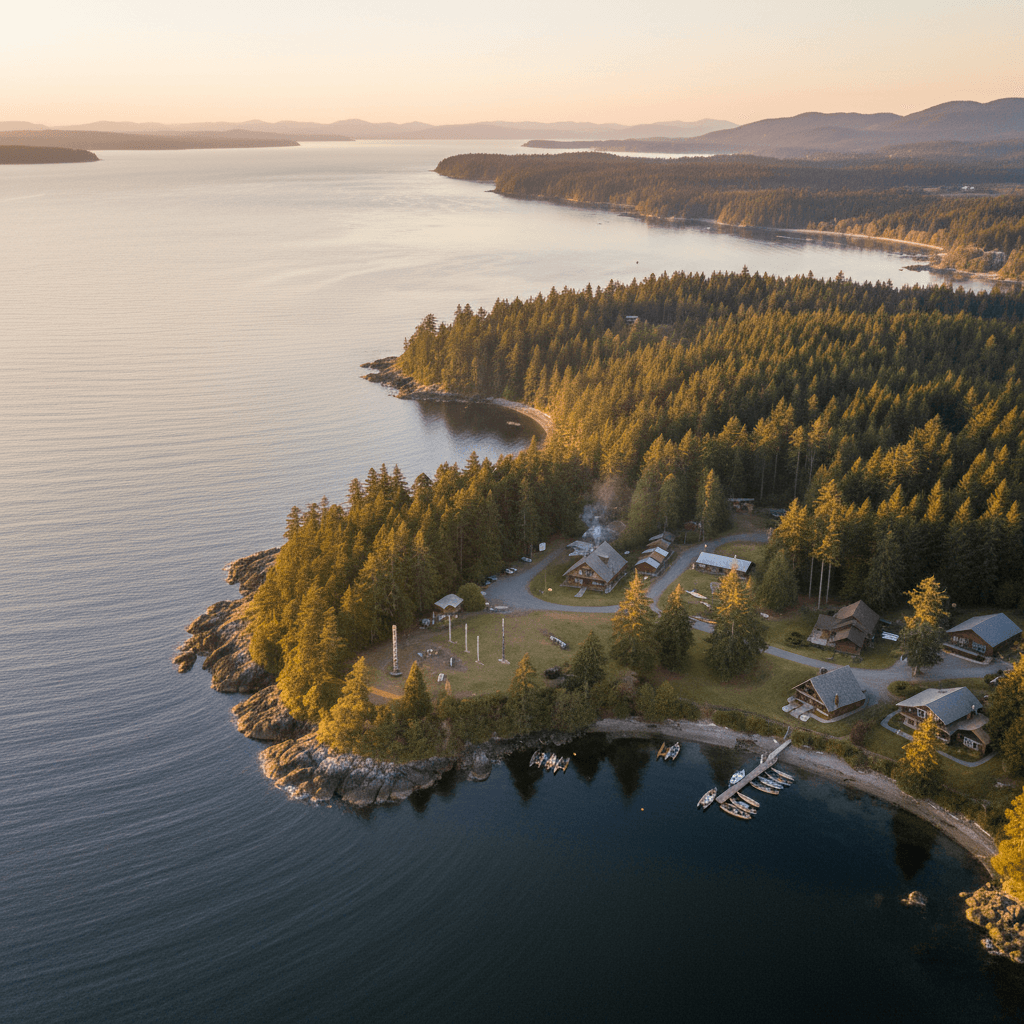
Separate from the partisan horse race, the introduction of the K'omoks Treaty Act, 2026 marks a genuine milestone in British Columbia's treaty-making history. The K'omoks First Nation is a Coast Salish people whose traditional territory spans the area around Courtenay and Comox on the east coast of Vancouver Island, a region of natural beauty, rich fisheries and rapidly growing population.
The treaty, if ratified by both the provincial legislature and the federal Parliament, would provide the K'omoks First Nation with defined lands, financial resources, self-governing powers and co-management rights over fisheries and environmental stewardship in their territory. It would also provide legal certainty for existing landowners and municipalities in the affected area, resolving a long-standing ambiguity that has complicated development planning and resource decisions for decades.
The agreement emerged from the BC Treaty Commission process, a joint federal-provincial-First Nations framework established in 1992 to negotiate treaties with the more than 100 BC First Nations that never signed historic treaties with the Crown. The K'omoks have been in the formal negotiation process for more than two decades, navigating the multiple stages of the treaty process that move from a statement of intent through framework agreements and agreement-in-principle before reaching a final agreement.
The treaty addresses several core categories: the amount and location of K'omoks lands, how those lands will be governed, how natural resources within the territory will be managed, what financial transfer payments will fund K'omoks governance and programs, and how the agreement interacts with existing federal laws including the Indian Act during a transition period.
What the K'omoks Treaty Means in Practice
For the K'omoks First Nation, ratification would mean the transition from the current regime under the Indian Act to a self-governing structure with its own constitution, laws and institutions. The nation would gain authority over decisions about land use, education, social services and resource management in ways that colonial-era legislation does not currently allow.
Economically, the treaty would give the K'omoks access to a capital transfer from the federal government, allowing investment in housing, infrastructure and economic development. Revenue-sharing arrangements for forestry and fisheries would provide ongoing income to support government operations and community programs. Nations that have completed the treaty process in BC generally point to improved housing, infrastructure and administrative capacity in the years following ratification.
For residents of the Comox Valley, the treaty would resolve land tenure questions that have affected some properties in areas claimed under the treaty and provide a stable legal framework for future development. Municipal governments in the area have generally supported the treaty process, recognizing that clarity on land status and Indigenous governance is preferable to ongoing uncertainty.
The Broader BC Treaty Process
The K'omoks treaty, if ratified, would be only the ninth final agreement concluded through the BC Treaty Commission process in more than three decades of negotiations. The slow pace of treaty-making in British Columbia has been a persistent source of frustration for First Nations, the federal and provincial governments and independent advocates who see it as one of the most important unfinished pieces of Canadian constitutional business.
Critics of the process argue that the multi-stage framework is too expensive, too slow and too tilted toward government interests to produce fair outcomes efficiently. Many First Nations that entered the process in the 1990s have since suspended or withdrawn from negotiations, preferring to pursue their interests through litigation, specific claims or direct negotiations with the Crown outside the formal commission framework.
The provincial government has paired the treaty process with a separate stream of reconciliation legislation, including the Declaration on the Rights of Indigenous Peoples Act passed in 2019, which committed BC to align its laws with the United Nations Declaration on the Rights of Indigenous Peoples over time. That commitment has created its own legal and political complications, most recently around the government's proposed amendments to the declaration act that generated a caucus revolt earlier this year.
What Reconciliation Legislation Does in Practice
The K'omoks Treaty Act is a specific piece of ratification legislation, but it sits within a broader architecture of reconciliation-related law that British Columbia has been building since at least 2019. Understanding what that legislation actually does requires separating the symbolic from the structural.
At the symbolic level, reconciliation legislation signals a shift in the Crown's stated relationship with Indigenous peoples, from one premised on assimilation and denial of rights to one premised on recognition and partnership. That signal matters to Indigenous communities, to investors who track social licence risks and to international observers who evaluate Canada against its human rights commitments.
At the structural level, laws like the K'omoks Treaty Act change who makes decisions about land and resources, who receives revenues and who governs communities. Those changes have real and measurable consequences: nations with treaty rights and self-government authority routinely outperform those still operating under the Indian Act on indicators of housing quality, education completion and economic participation.
The NDP government has made reconciliation a signature policy commitment, and the introduction of the K'omoks Treaty Act during a period of competitive polling is not purely coincidental. Demonstrating progress on treaty-making appeals to progressive voters in Metro Vancouver while the practical benefits of legal certainty in resource and development decisions are welcomed by business and municipal stakeholders who do not typically see themselves as reconciliation advocates.
What Comes Next
The K'omoks Treaty Act must pass the BC legislature before moving to federal Parliament for its own ratification legislation. Both governments have signalled support, and the treaty has the backing of the K'omoks First Nation membership through a ratification vote conducted under the treaty commission process. The timeline for full ratification is likely several months.
On the political front, all eyes are on the Conservative leadership vote expected later this spring. Once a new leader is confirmed, the polling gap between the parties is expected to narrow as the official opposition sharpens its message and redirects attention from internal competition to holding the NDP accountable. How quickly the Conservatives can consolidate after a potentially divisive race will go a long way toward determining whether the NDP's current four-point lead is durable or illusory.
Related Stories
Democrats File Six Impeachment Articles Against Defence Secretary Hegseth
1h ago
French Beyond Quebec: Canada's Push for Francophone Immigration
1h ago

Ontario Sets Immigration Record: 1,334 Invitations Issued in a Single Day
1h ago
Canada's Largest Arctic War Game Just Wrapped: Inside NANOOK-NUNALIVUT 2026
1h ago