Trump Signals Iran Peace Talks in Pakistan Within Days

President Donald Trump signalled in mid-April 2026 that a second round of direct negotiations between the United States and Iran could resume within days, with Pakistan serving as the proposed host country for talks that both sides have cautiously agreed to pursue despite the simultaneous escalation of financial sanctions and a naval blockade of Iranian ports. Trump's announcement came as Washington was also facilitating parallel peace negotiations between Israel and Lebanon, a diplomatic calendar that reflects the administration's attempt to manage multiple active conflict tracks in the Middle East through a combination of coercion and engagement.
The dual strategy is inherently contradictory on its surface: announcing the financial equivalent of bombing on one day and proposing peace talks on the next is not a conventional approach to diplomacy. But Trump administration officials argue that the pressure and the dialogue are complementary tools in a coherent strategy, with the coercive measures intended to establish the negotiating leverage that makes a favourable deal possible rather than representing a commitment to maximum pressure regardless of Iranian responses.
Pakistan's role as a neutral meeting ground reflects the limited options available for hosting direct U.S.-Iran talks in a moment of active military tension. Oman has historically served as a back channel between Washington and Tehran and played a role in earlier rounds of nuclear negotiations. Pakistan's offer to host reflects both Islamabad's interest in regional stability and its relationships with both Washington and Tehran, relationships that are each complex but functional enough to make it a credible convenor.
Where the First Round of Talks Broke Down
The first round of direct U.S.-Iran talks in 2026 produced a ceasefire framework but not a comprehensive agreement, and the breakdown of those early negotiations over the terms of any nuclear and regional deal left the situation more unstable than the talks began. The core gap that the first round failed to bridge was between the U.S. demand for a complete halt to Iranian uranium enrichment and the Iranian insistence on preserving its right to enrich uranium at levels it characterizes as civilian rather than weapons-oriented.
Secondary gaps concerned Iranian regional proxy relationships, particularly with the Houthi movement in Yemen and Hezbollah in Lebanon, which the U.S. was demanding that Iran sever or at least significantly reduce. Iranian negotiators refused to accept any provision that required them to abandon relationships they describe as defensive security arrangements, and that disagreement became the proximate cause of the breakdown in the first round.
The intensity of the military pressure since the first round collapsed has, according to diplomatic sources in multiple capitals, created conditions where Iran's internal debate about whether to return to talks has shifted. Some Iranian officials who opposed returning to negotiations under military and economic pressure have been overruled by factions that believe the costs of continued confrontation are unsustainable, and Trump's announcement of a second round reflects his administration's assessment that Iran's internal balance has shifted enough to make talks productive.
What Iran Is Demanding Versus What the U.S. Is Offering
Iran's stated demands heading into a second round centre on sanctions relief at a scale commensurate with what it would be asked to give up on the nuclear and proxy fronts. Tehran is seeking a removal of the financial and energy sanctions that have constrained the Iranian economy, a lifting of the naval blockade and formal guarantees that the United States will not unilaterally reimpose sanctions if Iran meets its commitments, a demand driven by the experience of the first Trump administration's withdrawal from the JCPOA in 2018.
The U.S. is offering a phased sanctions relief framework tied to verifiable Iranian compliance with nuclear restrictions and measurable reductions in Iranian support for regional proxy forces. American negotiators are also prepared to discuss a new security architecture for the Persian Gulf that would include some form of implicit security guarantee for Iran, though the specific terms of any such guarantee are deeply contested within the administration and between the U.S. and its Gulf Arab allies.
The gap between complete upfront sanctions relief with binding non-reimposition guarantees, as Iran is seeking, and phased relief tied to ongoing compliance verification, as the U.S. is offering, has been the central structural challenge in every previous round of Iran nuclear diplomacy. Whether the current military pressure has altered Iranian willingness to accept a more conditional deal structure is the key question that the Pakistan talks are intended to test.
Why Pakistan Is Serving as Neutral Ground
Pakistan occupies a unique position in the geopolitics of the broader Middle East and South Asian region. It maintains diplomatic relations with both the United States and Iran, and its foreign policy establishment has long positioned Pakistan as a potential mediator in regional conflicts, partly as a strategic value-add in relationships with major powers and partly as a genuine expression of its Muslim-majority population's interest in Islamic world solidarity.
Islamabad's relationship with Washington is complicated by the post-2021 Afghanistan situation, Pakistani nuclear programme concerns and periodic tensions over counter-terrorism cooperation, but the two countries maintain functional diplomatic and intelligence channels. Pakistan's relationship with Tehran is shaped by religious, ethnic and commercial ties, including a shared border and significant trade in both formal and informal goods.
The choice of Pakistan also reflects the absence of better options. European capitals, which hosted earlier rounds of Iran nuclear talks, are too closely identified with the Western sanctions regime to be seen as neutral. Russia, which hosted Iran-U.S. contacts during some periods, is not available as a facilitator given the broader collapse of U.S.-Russia relations. Gulf Arab states have their own stakes in the outcome that prevent them from being seen as neutral. Pakistan offers a location that Iran can accept as genuinely non-aligned in the specific context of the bilateral dispute.
Israel's Position on Any Iran Deal
Israel has been the most consistent and vocal opponent of a negotiated settlement that leaves Iran with any enrichment capacity, and the Netanyahu government has made clear that it retains the option of unilateral military action against Iranian nuclear facilities if it concludes that any deal being negotiated does not adequately address what it characterizes as an existential threat. Israeli lobbying of the Trump administration against a deal it considers insufficiently stringent has been intense and is a genuine constraint on American negotiating flexibility.
At the same time, Israel is engaged in its own parallel peace process with Lebanon under American facilitation, and the Netanyahu government has indicated it will accept a comprehensive Lebanon deal if the terms adequately address Hezbollah's weapons stocks in southern Lebanon and provide credible enforcement mechanisms. The simultaneous tracks of Iran negotiations and Israel-Lebanon talks create a complex diplomatic equation: a deal with Iran that reduces Iranian support for Hezbollah could make an Israel-Lebanon agreement more achievable, but the sequencing and the political management of both tracks require more diplomatic sophistication than has been consistently evident in the Trump administration's Middle East team.
What a Deal Would Mean for Oil Prices and Global Stability
A successful U.S.-Iran nuclear and regional deal would have immediate and significant effects on global oil markets. The lifting of sanctions on Iranian oil exports and the removal of the naval blockade would return several hundred thousand barrels per day of Iranian crude to the global market, providing downward pressure on prices that would be felt across commodity markets. The magnitude of the price effect would depend on how quickly Iranian production could recover to pre-sanctions levels and how OPEC producers responded to the incremental supply.
For global stability more broadly, a successful deal would reduce the risk of a regional conflict expanding to involve major powers and would create conditions for diplomatic progress on a range of related issues including the Yemen civil war, the reconstruction of Lebanon and the political stabilization of Iraq. It would also reduce the pressure on shipping insurance rates and freight costs in the Gulf, which have risen significantly in response to the blockade and the broader risk environment.
Scepticism From Hawkish and Dovish Observers
Hawks in Washington and Jerusalem doubt that any deal the Trump administration can achieve will adequately constrain Iran's nuclear programme, arguing that Iran's enrichment infrastructure and technical expertise have developed to a point where any restrictions short of complete dismantlement are reversible within months. They favour continued pressure and the prospect of military action as more reliable tools for preventing Iranian nuclear weapons development.
Doves and arms control advocates express a different form of scepticism: they worry that the Trump administration's willingness to use maximum pressure and the language of financial warfare undermines the trust-building that durable diplomatic agreements require. They argue that a deal negotiated under coercion is inherently fragile and that the pattern of sanctions, negotiations, withdrawals and re-sanctions that has characterized U.S.-Iran relations makes it difficult for any Iranian government to sell a new agreement to its domestic audience.
Canada's Role if a Peace Agreement Is Reached
Canada has maintained diplomatic channels with Iran through the period of American-Iranian confrontation, positioning Ottawa as a potential contributor to any post-agreement normalization process. Canadian officials have been active in multilateral forums addressing the humanitarian consequences of the Iran conflict, and Canada has significant Iranian diaspora community interests in how the situation resolves.
A peace agreement that reduced tensions in the Persian Gulf and restored Iranian oil exports to global markets would have positive macroeconomic effects for Canada through lower global inflation and reduced supply-chain disruption risk. Canada could also play a role in the post-agreement phase through multilateral monitoring mechanisms, reconstruction financing channels and the kind of quiet diplomatic facilitation at which Canadian foreign policy has historically excelled. The Carney government has signalled a desire to strengthen Canada's independent foreign policy voice, and a constructive role in Middle East stabilization would fit that aspiration.
Related Stories
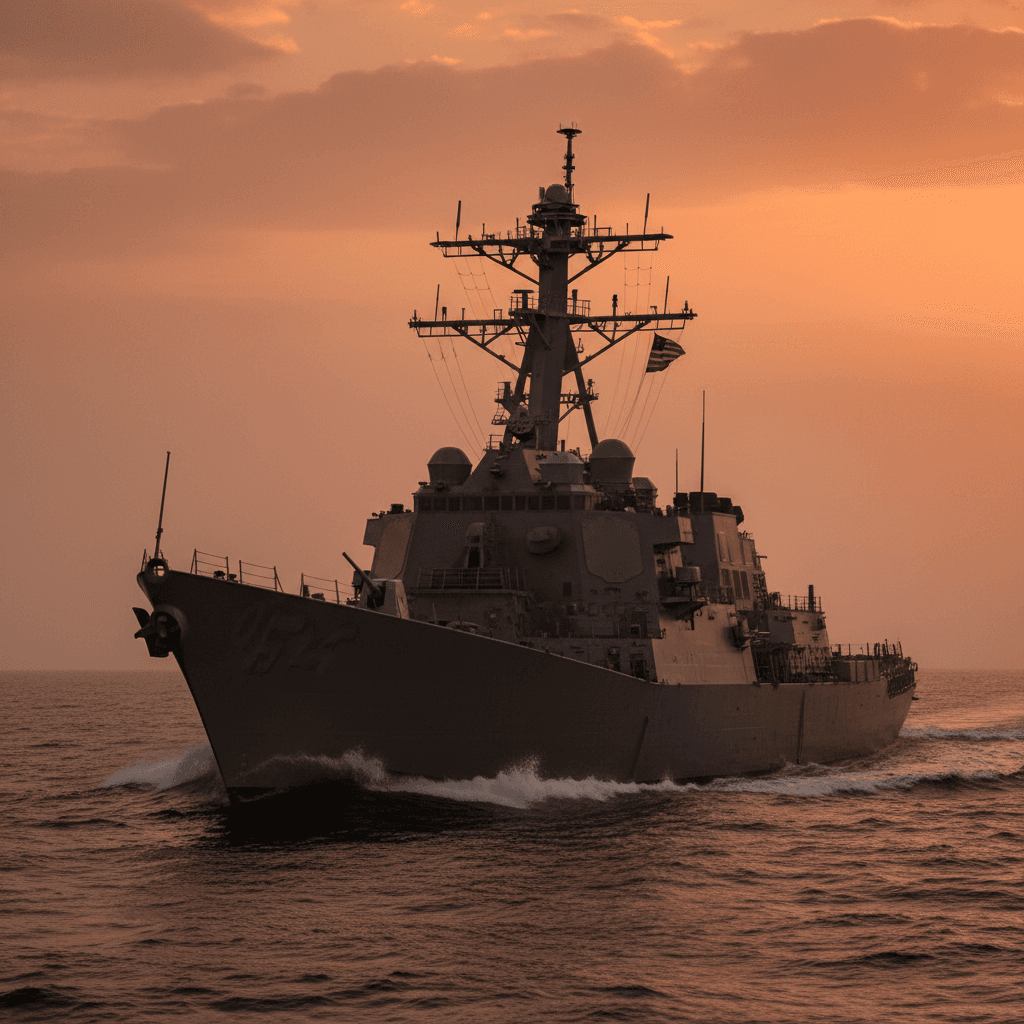
Financial Warfare: How the U.S. Plans to Economically Strangle Iran
1h ago

Canada hits NATO 2% target, commits $500B over decade toward 5% by 2035
13h ago

Cameco signs $2.6B uranium deal with India as Ottawa resets ties
13h ago
Canada pledges $120M for Sudan as civil war enters fourth year
13h ago