French Beyond Quebec: Canada's Push for Francophone Immigration
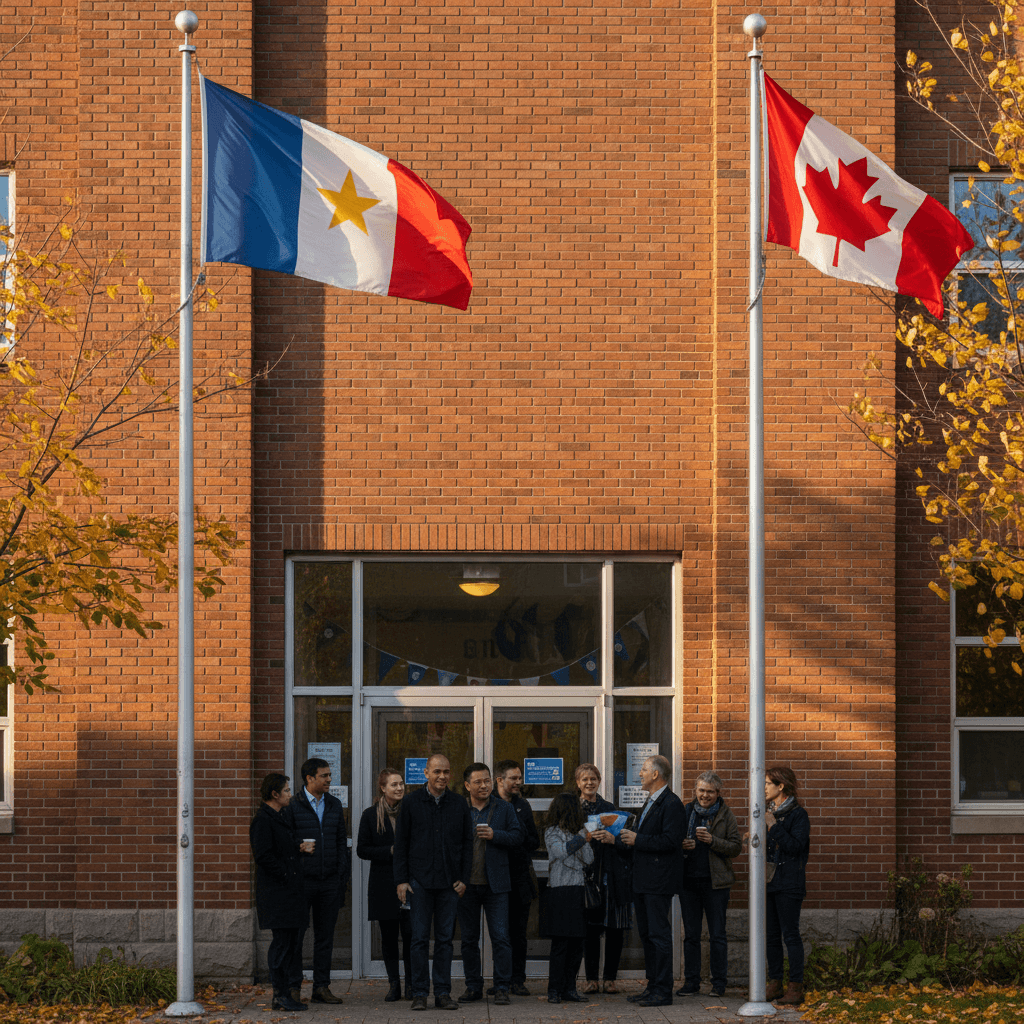
Canada is celebrating Francophonie 2026 with a set of federal commitments designed to address one of the country's quieter demographic challenges: the slow erosion of French-speaking communities outside Quebec. New initiatives announced through the spring include expanded pathways for Francophone immigrants to settle in New Brunswick, Ontario, Manitoba and British Columbia, paired with funding for integration services and community infrastructure designed to improve the retention of French-speaking newcomers once they arrive.
The announcements reflect a federal government that has been under sustained pressure from Francophone advocacy groups, provincial premiers and constitutional scholars to take the demographic survival of official-language minority communities more seriously. French-speaking Canadians outside Quebec represent approximately one million people, concentrated primarily in New Brunswick, northeastern Ontario, southeastern Manitoba and pockets of Alberta and British Columbia. Their communities are aging, and without a sustained influx of French-speaking newcomers, the linguistic balance of Canada outside Quebec will tilt further toward English with each passing decade.
Where Francophone Communities Exist Outside Quebec
New Brunswick is the only officially bilingual province in Canada and home to the largest and most institutionally complete Francophone community outside Quebec. The Acadian community, whose roots predate Confederation, represents approximately 32% of New Brunswick's population and maintains its own school system, universities, hospitals, media and political organizations. Moncton, the province's largest city, is effectively bilingual and serves as a hub for Acadian cultural and economic life. Federal Francophone immigration initiatives have historically found their most receptive institutional environment in New Brunswick, which has the absorption capacity to integrate newcomers into French-language institutions.
Ontario has Canada's largest Francophone minority population in raw numbers, approximately 600,000 people, concentrated in Ottawa-Gatineau, the northeast of the province around Sudbury and Timmins, and the southwest around Windsor and Tecumseh. Northern and eastern Ontario Francophone communities have deep historical roots and maintain French-language school boards, colleges and community organizations. However, assimilation pressure in Ontario is intense, and research consistently shows that French-language use declines sharply between first and second generation in the province's major urban centres outside the Ottawa Valley.
Manitoba's Saint-Boniface neighbourhood in Winnipeg is the heart of western Canada's historic Francophone community. The Société franco-manitobaine has long been one of the most active Francophone advocacy organizations in western Canada, and Manitoba operates a French-language school division that serves thousands of students across the province. The community has made deliberate efforts to attract Francophone immigrants from Africa and the Caribbean in recent years, with some success, though retention rates for newcomers who do not already have family ties in the province are modest.
British Columbia's Francophone community is smaller and more dispersed, concentrated primarily in the Lower Mainland and Victoria. The BC Francophone Affairs Branch and the Fédération des francophones de la Colombie-Britannique support a network of French-language schools and community services, but the community lacks the institutional density of its New Brunswick or Ontario counterparts. French speakers in BC face particularly strong assimilation pressure given the province's distance from Quebec and the dominance of English in its economic and cultural life.
What the Federal Initiative Includes
The federal government's Francophone immigration initiative, announced through Immigration, Refugees and Citizenship Canada and the department of Canadian Heritage, has several components. The centrepiece is an enhanced Francophone Mobility stream that allows Francophone workers with job offers in officially designated communities outside Quebec to obtain work permits and eventually permanent residence through an expedited pathway that does not require the same points threshold as the Express Entry system.
The initiative also includes a significant expansion of the Francophone component within the Atlantic Immigration Program, which gives employers in Atlantic Canada a direct role in nominating workers for permanent residence. New Brunswick, Prince Edward Island, Nova Scotia and Newfoundland and Labrador will all receive higher allocations for Francophone nominees, with New Brunswick receiving the largest increase given its bilingual status and institutional capacity.
Funding for settlement services in Francophone minority communities has been increased by $45 million over four years, a recognition that the existing settlement infrastructure, most of which was built around English-language service delivery, has historically underserved newcomers who need to settle and integrate into French-speaking environments. Community organizations in Moncton, Sudbury, Winnipeg and other Francophone hubs will be eligible to apply for grants to expand their capacity.
The government has also committed to improving the Francophone immigrant experience within the federal immigration system itself. Historically, immigration officers have been more likely to assess Francophone applicants for their English proficiency than their French proficiency, a structural bias that has disadvantaged French speakers relative to what the points system nominally intends. Changes to assessment protocols and officer training are included in the initiative, though their practical impact will take time to measure.
How Many Francophone Immigrants Canada Aims to Attract
The federal government's current Francophone immigration target is 8.5% of all new permanent residents outside Quebec to be Francophone, a goal that was set several years ago and has consistently been missed. Actual Francophone immigration outside Quebec has run between 4% and 6% of total admissions, with the gap attributed to a combination of lower French-language proficiency testing adoption among immigrants globally, competition from Quebec's own Francophone admission programs and settlement infrastructure gaps in smaller minority communities.
The new initiative includes a revised target of 10% by 2028, a modest increase that critics from Francophone community organizations have called insufficient. Groups like the Fédération des communautés francophones et acadienne du Canada have argued for targets closer to 20%, arguing that only a substantial increase in Francophone immigration can offset the demographic aging of existing communities and slow the pace of assimilation.
The federal government's position is that quality of settlement outcomes matters as much as volume of admissions. An immigrant who arrives in a Francophone community with good language support, employment connections and integration services is far more likely to remain in that community and continue using French than an immigrant who arrives with no French and no community connection and assimilates to English within a few years. The 10% target is therefore paired with the expanded settlement funding, on the theory that better-supported newcomers will produce better retention outcomes.
Quebec's Own Francophone Immigration Strategy
Quebec is simultaneously pursuing its own Francophone immigration strategy through the 2026-2029 Quebec Immigration Plan, which sets targets for the number of immigrants selected through the province's autonomous selection system. Quebec has sole authority under the Canada-Quebec Accord to select economic immigrants for settlement in the province, and the new plan emphasizes French-language proficiency as the primary selection criterion.
The Fréchette government has maintained the Legault-era commitment to prioritizing Francophone immigrants and has signalled that it will continue to push for a reduction in the total number of federally admitted non-economic immigrants, particularly temporary residents, whose French-language proficiency rates are lower on average than those of economic immigrants selected by the province.
Quebec's immigration plan targets approximately 50,000 permanent residents per year through the provincial selection system, with the explicit goal of maintaining the relative weight of French as the language of daily life in Montreal and in the province as a whole. The province has faced criticism for restricting intake during periods of labour shortage, but defends its approach on the grounds that integration capacity is a real constraint and that a smaller number of well-integrated immigrants is preferable to a larger number who struggle to find their footing in a French-language society.
The relationship between Quebec's provincial strategy and the federal push for Francophone immigration outside the province is complex. Quebec benefits when the rest of Canada successfully integrates Francophone immigrants, because it demonstrates the viability of living in French in Canada and can serve as a pipeline of French-speaking professionals who may later choose to relocate to Quebec. But Quebec also competes with other provinces for French-speaking immigrants, and the federal government's enhanced pathways outside Quebec could draw applicants who might otherwise have settled in the province.
The Challenge of Francophone Retention Outside Quebec
The most stubborn problem in Francophone immigration outside Quebec is not attracting immigrants but keeping them. Research conducted by the Office of the Commissioner of Official Languages and by academic demographers consistently shows that French-speaking immigrants outside Quebec have high rates of English-language adoption within five years of arrival and that their children often integrate primarily into English-language social and educational environments.
Several factors drive this retention challenge. The economic incentives to speak English in most Canadian cities outside Ottawa are substantial: English is the dominant language of most employers, most professional networks and most digital platforms. For immigrants who arrived with professional credentials and career ambitions, the rational economic calculation often favours English integration even when French infrastructure is available.
Community density also matters enormously. In Moncton, where French speakers represent a large share of the local population and where French-language institutions are accessible and vibrant, Francophone immigrant retention is measurably higher than in Vancouver, where the Francophone community is small, dispersed and not particularly visible in daily urban life. Building the institutional density necessary to improve retention requires sustained investment over many years, not a single program announcement.
Youth retention is a particular vulnerability. Second-generation Francophones outside Quebec, children of immigrants who settled in French-speaking communities, are at high risk of shifting to English as they enter secondary school and then post-secondary education, particularly if they move to large urban centres for university. The absence of large, nationally competitive French-language universities outside Quebec is a structural gap that no immigration program can fully compensate for.
What It Means for the Linguistic Balance of Canada
The federal Francophone immigration initiative and Quebec's parallel French-first strategy are both responses to the same underlying demographic reality: French-speaking Canadians are a declining share of the total population, and without deliberate intervention, that trend will continue. The question is whether immigration is sufficient as a tool to reverse it, or whether the structural advantages of English in a North American context are simply too powerful for immigration policy to overcome.
Official language demographers who testified before a Senate committee in 2025 argued that Francophone immigration outside Quebec can stabilize communities and slow the rate of assimilation, but that it cannot on its own reverse the long-term decline in the francophone share of Canada's population. Reversing that decline would require either dramatically higher Francophone immigration volumes than any current target contemplates, or a significant change in the economic and cultural incentives that currently favour English adoption.
Canada's commitment to official bilingualism is enshrined in the Constitution Act of 1982 and given operational force through the Official Languages Act and various federal service delivery obligations. But the practical reality of bilingualism in Canada has always been uneven, with French speakers in provinces outside Quebec and New Brunswick often finding that their language rights on paper exceed their language access in practice. The Francophonie 2026 celebrations and the associated federal commitments represent a renewed attempt to narrow that gap. Whether they succeed will depend on follow-through over years, not months.
What Comes Next
Community organizations across Francophone Canada have welcomed the new initiatives while noting that federal announcements have often outpaced delivery in the past. The test will come in the implementation: how quickly the expanded settlement funding reaches organizations on the ground, how effectively the new immigration pathways are communicated to potential applicants in source countries and how consistently immigration officers apply the revised assessment protocols for French-language proficiency.
For Francophone communities in New Brunswick, Ontario, Manitoba and British Columbia, the spring 2026 announcements offer genuine hope alongside familiar caution. The need is real, the direction is right and the resources being committed are more substantial than in previous cycles. Whether they add up to a meaningful shift in the demographic trajectory of French outside Quebec is a question that only the data of the next five years will answer.