Canada's Largest Arctic War Game Just Wrapped: Inside NANOOK-NUNALIVUT 2026
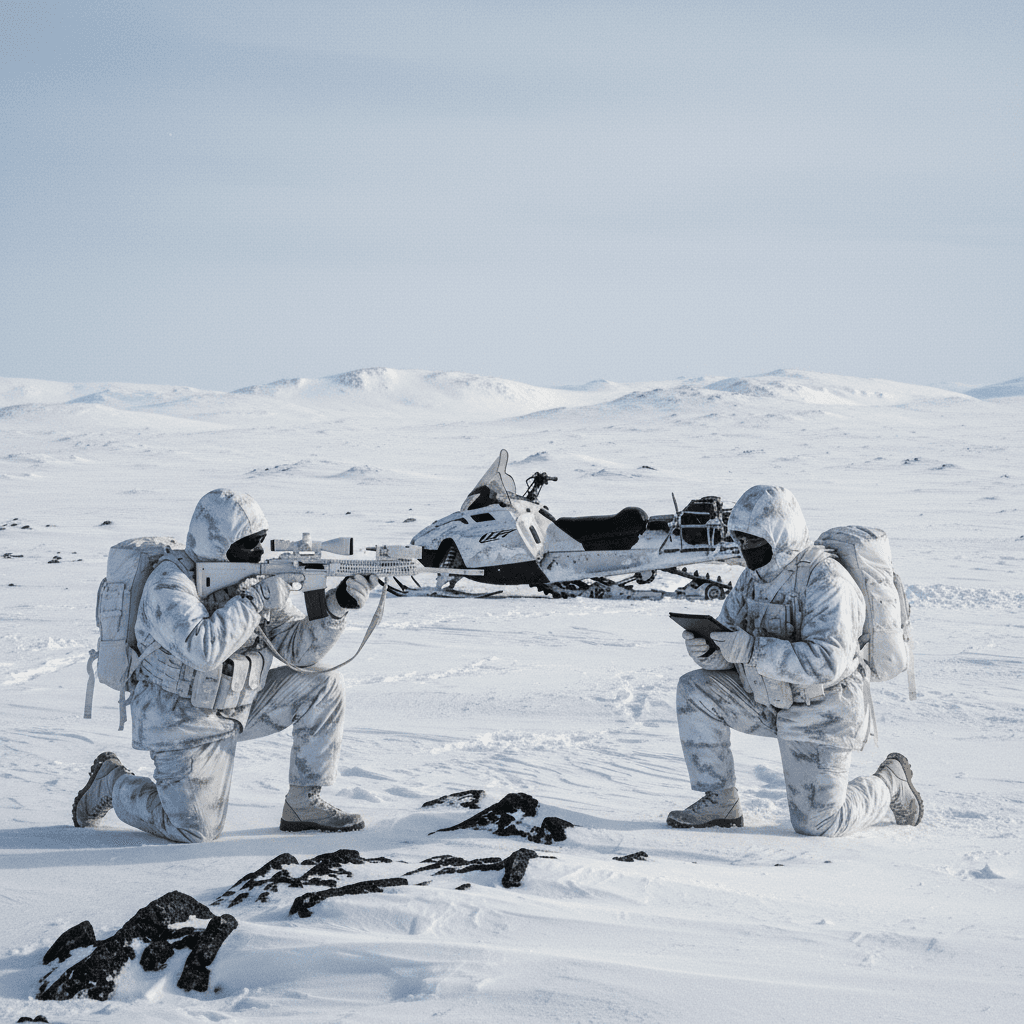
The Canadian Armed Forces wrapped up the largest iteration of Operation NANOOK-NUNALIVUT in the exercise's history in April 2026, completing a multi-month campaign across Yukon, the Northwest Territories and Nunavut that tested cold-weather combat capability, inter-allied coordination and Arctic logistics under conditions that would break most military forces. Approximately 1,300 Canadian service members participated, supported by more than 200 vehicles and equipment including M777 lightweight howitzers, and joined by military personnel from Belgium, Denmark, France and the United States.
The exercise ran from February through April, spanning the harshest months of the Arctic winter and extending into the spring thaw period when ice travel becomes unpredictable and logistics grow more complex. It was not a training exercise in the narrow sense of rehearsing established procedures. It was a deliberate stress test of whether Canada and its allies can actually fight and survive in the High Arctic, a question that has moved from theoretical to pressing as the strategic competition for Arctic access intensifies.
Arctic sovereignty and defence have become among the most politically charged files in Canadian national security, driven by Russian military activity near Canadian airspace, Chinese economic interest in northern shipping routes and the accelerating pace of climate change that is making previously inaccessible Arctic resources and sea lanes attainable. NANOOK-NUNALIVUT 2026 is one of Canada's most visible answers to that challenge, a demonstration to allies and adversaries alike that Canadian forces can operate where others cannot.
What the Exercise Involved
Operations ranged across all three northern territories, with different phases testing distinct capability domains. In Yukon, forces practiced cold-weather movement and sustainment over mountainous terrain, working through the logistical problems of keeping vehicles, equipment and personnel functional at temperatures that regularly reach minus 40 Celsius. The NWT phase focused on combined-arms integration, bringing together infantry, artillery and support elements under conditions that test command and control when communications are degraded by cold and geography.
The Nunavut phase placed the heaviest emphasis on sovereignty assertion, with forces operating near coastlines and on sea ice to demonstrate that Canada can physically access and hold the most remote parts of its Arctic archipelago. This is not merely symbolic. The ability to project military presence to places like Devon Island, Axel Heiberg or the shores of the Northwest Passage has direct legal and political implications for Canadian claims over those waters and territories.
The M777 howitzers were a notable addition to the equipment set. These lightweight 155-millimetre artillery pieces can be transported by helicopter, giving forces a significant indirect fire capability in terrain where wheeled or tracked artillery could not be delivered. Their presence signals that Canada is building a genuine combined-arms capacity for the Arctic rather than relying solely on infantry and light vehicles.
Why the Arctic Is Strategically Vital Right Now
Russia has been rebuilding its Arctic military infrastructure since the mid-2010s, reopening and expanding Soviet-era bases, deploying new surface-to-air missile systems and conducting regular patrols with long-range bomber aircraft that approach Canadian and American airspace. The 2022 invasion of Ukraine accelerated NATO's awareness of this threat, and the subsequent accession of Finland and Sweden to the alliance added significant northern flank capability but also underscored how exposed the High Arctic approaches to North America remain.
China's Arctic interest is economic and strategic in roughly equal measure. Beijing has described itself as a near-Arctic state and has invested in Arctic shipping research, northern resource development and infrastructure in ways that NATO members interpret as positioning for long-term access. The Northern Sea Route, which runs along the Russian coast, and the Northwest Passage, which runs through the Canadian Arctic Archipelago, are both of significant interest to Chinese shipping planners as climate change makes them more reliably navigable.
Climate change is itself a dual-use development from a strategic standpoint. The melting of sea ice that is causing ecological harm and displacing Indigenous communities is simultaneously making the Arctic more accessible to commercial and military actors who previously could not operate there. New shipping lanes, revealed mineral deposits and accessible seabed areas all carry strategic value, and the states that can credibly exercise sovereignty over them will have significant advantages in the decades ahead.
What Capabilities Canada Demonstrated
The exercise demonstrated several capabilities that Canada has been building systematically since the Arctic defence investment announcements of recent years. Cold-weather logistics at the scale of 1,300 personnel across three territories requires an enormous support infrastructure, and completing the exercise successfully shows that the Canadian Forces can sustain operations in the North for extended periods rather than for short, symbolic deployments.
The integration of allied forces was another significant demonstration. Running a combined exercise with four partner nations in Arctic conditions requires interoperable communications, compatible logistics protocols and command structures that can span national military cultures. The participation of Belgium is particularly notable given that country's geography: its involvement speaks to a broader NATO understanding that the High Arctic is a collective security concern rather than a bilateral Canada-US issue.
The artillery component demonstrated a willingness to deploy genuine combat power to the North. Previous Arctic exercises have sometimes been criticized as more performative than operationally credible, featuring lightly armed infantry on snowmobiles rather than the kind of combined-arms capability needed to contest territory against a serious adversary. The M777 deployment represents a departure from that pattern.
What International Participation Signals About NATO Arctic Priorities
The decision by Belgium, Denmark, France and the United States to participate in NANOOK-NUNALIVUT 2026 reflects a broader shift in NATO's approach to Arctic security. Since Russia's full-scale invasion of Ukraine, the alliance has dramatically elevated the profile of its northern flank, publishing a dedicated Arctic strategy and directing more resources toward cold-weather capability development across member states.
Denmark's participation carries particular significance given its responsibility for Greenland's defence and the intensifying international interest in Greenland's strategic position. France's involvement is notable because it is the largest NATO continental power with the most complex military to deploy to Arctic conditions, and its willingness to commit resources to the exercise signals genuine political support for Arctic collective defence. The United States, through Alaska-based forces and NORAD, is the most deeply invested allied partner in Canadian Arctic security, and American participation in NANOOK-NUNALIVUT reinforces the NORAD modernization investments both countries have announced.
Together, the four participating nations send a message to potential adversaries: Canadian Arctic sovereignty is not a bilateral Canada-US arrangement that could be contested during a period of difficult Canada-US relations. It is embedded in a multilateral framework that includes major European allies with their own interests in ensuring the Arctic operates under a rules-based order rather than a power-projection competition.
Canadian Sovereignty Assertions in the North
Canada's legal position on the Northwest Passage, which Ottawa treats as internal Canadian waters while the United States and other states argue it constitutes an international strait, is one of the most consequential unresolved sovereignty questions in Canadian foreign policy. The physical ability to exercise presence in and around the passage is not irrelevant to the legal argument: consistent, credible military and civilian activity in a contested zone strengthens the practical dimensions of a sovereignty claim even when the legal dimensions remain disputed.
NANOOK-NUNALIVUT contributes directly to this argument. When Canadian forces operate on the sea ice of Lancaster Sound, in the waters near Resolute or on the coasts of Ellesmere Island, they are not merely training. They are conducting activities that populate the factual record of Canadian presence and capability in the region, a record that matters in any eventual legal or diplomatic resolution of the passage question.
The exercise also serves a domestic political purpose. Northern Indigenous communities, including Inuit communities represented by Inuit Tapiriit Kanatami, have long emphasized that genuine Arctic sovereignty requires a sustained human presence in the North, not just occasional military visits. The Canadian Rangers, a reserve force component with heavy Indigenous membership in the North, play a central role in NANOOK-NUNALIVUT, and their integration into the exercise is a deliberate choice that reflects the government's understanding that Indigenous knowledge and presence are irreplaceable components of northern security.
What Gaps in Arctic Defence Remain
Despite the scale of NANOOK-NUNALIVUT 2026 and the investment it represents, analysts who study Arctic security consistently identify gaps that the exercise does not fill. The most frequently cited is surveillance: Canada's ability to detect and track activity in its Arctic airspace and maritime approaches remains limited relative to the size of the territory and the pace of adversary activity. The NORAD modernization investments announced in recent years are intended to address this, but they are multi-year projects whose full capability will not be available for several years.
Sustainment is a related challenge. Operating 1,300 personnel in the Arctic for weeks is a significant logistical achievement, but holding territory or conducting sustained operations against a contested adversary would require infrastructure, fuel, ammunition and medical support that does not yet exist at adequate scale in the North. Forward operating bases, fuel caches and hardened communications infrastructure remain at levels that analysts describe as insufficient for credible contested defence rather than presence demonstration.
Icebreaker capacity is another gap that NANOOK-NUNALIVUT cannot address on its own. Canada's icebreaker fleet, operated by the Canadian Coast Guard, is aging and has been the subject of long-delayed modernization commitments. The ability to operate surface vessels in Arctic waters year-round is central to both commercial and military presence, and the current fleet does not provide that capability reliably. New vessels are in various stages of procurement, but their delivery timelines have slipped repeatedly and remain a source of concern for Arctic security analysts.
The broader lesson of NANOOK-NUNALIVUT 2026 is that Arctic defence is a multi-generational project rather than a problem that any single exercise, budget cycle or policy announcement can resolve. Canada has made genuine and significant progress in demonstrating its capacity to operate in the High Arctic, building allied partnerships and asserting sovereignty through presence. What remains is the harder work of sustaining and deepening that capability against adversaries who are investing in Arctic access with strategic patience and consistent resource commitment. The exercise that just concluded is a milestone worth marking. It is not a destination.
Related Stories
Democrats File Six Impeachment Articles Against Defence Secretary Hegseth
1h ago
French Beyond Quebec: Canada's Push for Francophone Immigration
1h ago
Ontario Sets Immigration Record: 1,334 Invitations Issued in a Single Day
1h ago
BC NDP Holds 4-Point Lead as K'omoks Treaty Makes History
1h ago