Manitoba Raises Minimum Wage to $16.40 and Opens New Brandon Health Centre
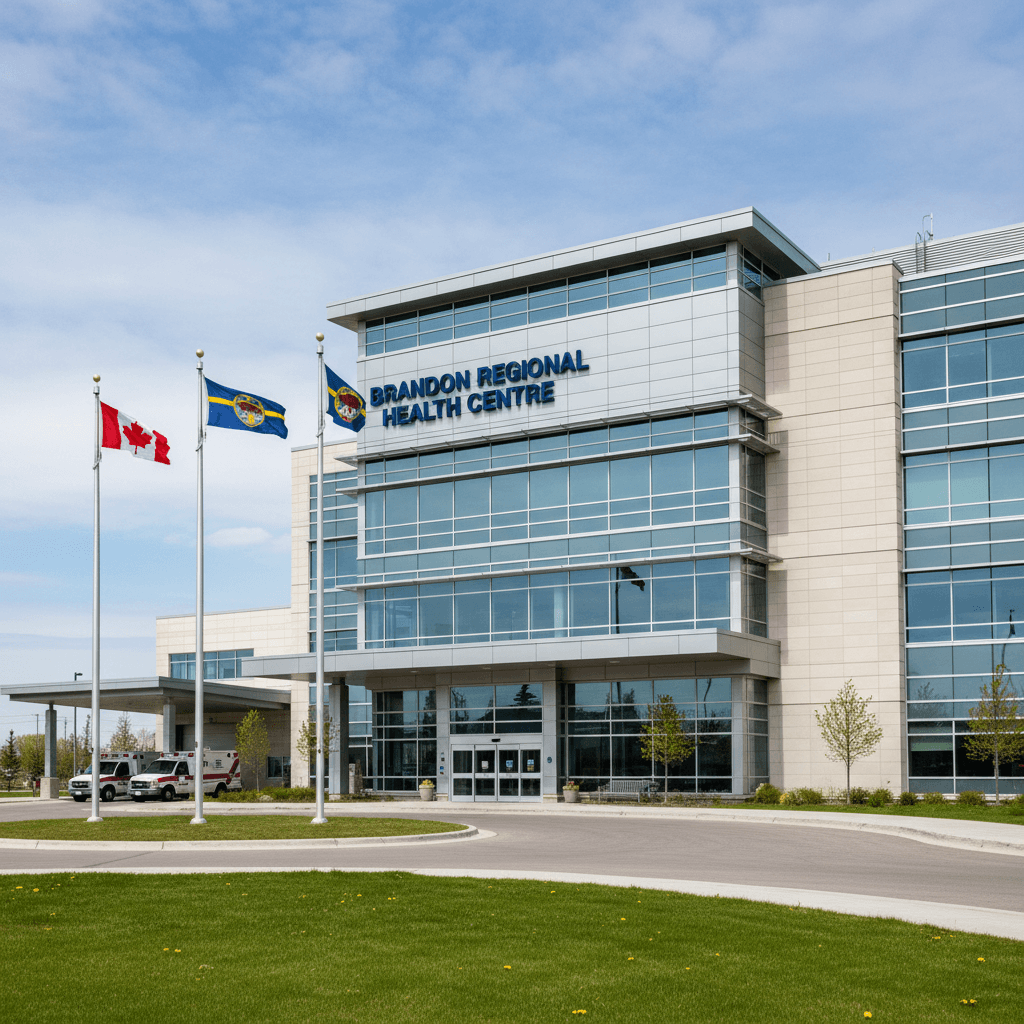
The Manitoba government has announced two significant investments in the province's working residents and healthcare infrastructure this spring. A minimum wage increase to $16.40 per hour, effective October 1, 2026, will provide a raise for the province's lowest-paid workers, while a new critical care centre opening at Brandon Regional Health Centre will expand access to intensive care services for residents of western Manitoba. Together the announcements reflect a government attempting to address both the cost of living pressures facing working Manitobans and the chronic healthcare infrastructure gaps in the province's rural and regional communities.
The Minimum Wage Increase: Who It Affects
Manitoba's current minimum wage stands at $16.00 per hour, established by the previous increase. The announced increase to $16.40 represents a 40-cent, or 2.5 percent, adjustment that will take effect October 1, 2026. The province uses an annual review process linked to a combination of inflation metrics and economic indicators to determine minimum wage adjustments, and the 2026 increase is consistent with that formula-based approach.
Approximately 60,000 Manitobans earn at or very close to minimum wage, based on Statistics Canada labour force data for the province. These workers are concentrated in sectors including retail trade, food and beverage service, accommodation, personal care services, and certain agricultural processing operations. The geographic distribution of minimum wage workers reflects Manitoba's economic geography, with concentrations in Winnipeg's retail and service sectors, in Brandon and other regional centres, and in rural communities where food processing, tourism, and agricultural service employment are significant.
The practical impact of the 40-cent increase for a full-time minimum wage worker is approximately $832 per year in additional gross income, or roughly $70 per month before taxes. While modest in absolute terms, this increase provides some relief for workers facing elevated costs for food, transportation, and housing. For households where multiple members work at minimum wage, the combined impact is more substantial.
Young workers are disproportionately represented among minimum wage earners. Statistics Canada data consistently shows that workers between 15 and 24 years of age account for a significant share of those paid minimum wage, though the majority of minimum wage earners are adults. In Manitoba's context, this means the increase will provide some benefit to the province's youth workforce, many of whom are balancing work with education and who face the same housing affordability pressures as all Manitobans.
The Economic Debate Around the Increase
Minimum wage policy is one of the most empirically studied areas of labour economics, and the research literature has evolved substantially over the past two decades. The traditional economic prediction that minimum wage increases would cause significant employment losses has been challenged by research showing that modest, predictable increases in line with inflation and productivity growth have limited negative employment effects while providing meaningful income support to low-wage workers.
Manitoba's business community has generally accepted the formula-based approach to minimum wage adjustment, which provides predictability and avoids the larger shocks associated with politically driven increases that skip years of adjustment and then jump dramatically. The province's restaurant and hospitality sectors, which are most sensitive to minimum wage changes given labour's large share of their cost structure, have noted that the 2026 increase is manageable within current operating conditions.
Labour advocates have welcomed the increase but consistently argue that Manitoba's minimum wage remains below what is needed for a single adult to meet basic living costs in Winnipeg. Living wage calculations, which attempt to estimate the income required to cover actual costs without relying on income supports, typically put the figure well above the statutory minimum. The gap between minimum wage and living wage is a persistent point of advocacy from anti-poverty organisations and worker groups in the province.
The provincial government's position is that minimum wage is one tool among several for supporting low-income Manitobans, and that tax credits, rental assistance, childcare subsidies, and other income supports also contribute to the overall support available to low-wage workers and their families. The October 1 effective date allows employers, particularly in the retail and hospitality sectors, the summer business season to absorb the change before the increase takes effect.
Brandon Regional Health Centre: What Is Being Built
The new critical care centre at Brandon Regional Health Centre represents a long-awaited expansion of intensive care capacity in western Manitoba. Brandon Regional serves as the regional hospital for a catchment area encompassing the Westman region, including the city of Brandon and the surrounding rural municipalities that extend toward the Saskatchewan border. With approximately 180,000 residents in its catchment area, the hospital functions as the tertiary care hub for one of the most geographically isolated major care regions in the province.
The new critical care centre adds intensive care unit capacity that was identified as urgently needed following comprehensive reviews of Brandon Regional's capacity and the region's care needs. The expansion includes new ICU beds equipped with modern monitoring and life support technology, reconfigured nursing stations designed for improved patient oversight, and updated infection control infrastructure that meets current standards for critical care environments. The facility also includes expanded space for family members supporting patients in critical care, an element of the design that reflects the broader recognition of family-centred care as a component of patient recovery.
The Brandon centre will also include enhanced capacity for cardiac monitoring, post-surgical recovery, and high-dependency care for patients who require close observation but do not meet the threshold for full intensive care. This intermediate care capacity fills a gap that has historically meant patients were either occupying ICU beds at a cost and intensity greater than their condition required, or were placed in general ward beds without the monitoring their condition warranted. The new facility's design addresses both of those inefficiencies.
Construction of the new wing has been underway for approximately 18 months, and the spring 2026 opening is the culmination of a project that was initially announced in 2023 as part of the province's post-pandemic healthcare capital investment program. The total cost of the Brandon critical care expansion is approximately $85 million, funded jointly through provincial capital appropriations and federal health infrastructure support.
What It Means for Rural Healthcare Access in Western Manitoba
The opening of the Brandon critical care centre addresses a gap in regional healthcare capacity that has had real consequences for patients and families in western Manitoba. Before this expansion, critically ill patients in the Westman region who required intensive care beyond what the existing Brandon Regional facilities could provide faced the prospect of transfer to Winnipeg, more than 200 kilometres away. That transfer, often by air ambulance given the distances and the urgency of critical illness, meant patients were separated from their families and communities at the most vulnerable moments of their medical experience.
The economic and emotional cost of those transfers falls heavily on rural families. A spouse or parent in critical care in Winnipeg means travel costs, accommodation, and lost work for family members trying to remain present for their loved one. For elderly patients, the stress of transport and the disorientation of an unfamiliar environment add to the clinical challenges of recovery. Having critical care capacity closer to home is not merely a matter of convenience; it is a genuine healthcare quality and outcomes issue.
Healthcare workers in the Westman region have also identified the critical care expansion as important for workforce retention. Rural and regional hospitals often struggle to attract and retain specialist physicians and highly trained nurses when the scope of practice available to them is limited by facility capacity. An expanded critical care unit creates clinical opportunities for Brandon's healthcare workforce that may help keep skilled professionals in the region rather than seeking the professional development opportunities available only in larger urban centres.
The capacity expansion also has implications for how Brandon Regional manages surge situations. During periods of high demand, including influenza season, major trauma events, and, as the past several years have demonstrated, pandemic conditions, the lack of critical care capacity at Brandon has created a bottleneck that affected not just Westman patients but the entire provincial system. When Brandon cannot absorb its regional critical care cases, those cases flow to Winnipeg, adding pressure to a Health Sciences Centre complex that is already managing substantial urban demand.
Broader Context: Manitoba's Healthcare Investment
The Brandon critical care centre is one of several capital investments the Manitoba government has made in regional and rural healthcare infrastructure over the past several years. The broader program reflects a recognition that Manitoba's geography, with a large rural and remote population spread across a vast territory, requires a distributed model of healthcare delivery rather than a centralised approach that concentrates services primarily in Winnipeg.
This philosophy of regional health investment has faced tensions with fiscal constraints and with the realities of specialist physician supply. Building physical capacity in regional centres is a necessary but not sufficient condition for improving regional care; the buildings must also be staffed with physicians and nurses who are willing and able to work in those locations. Recruitment and retention of healthcare workers in rural and regional Manitoba has been and remains a significant challenge that capital investment alone cannot solve.
The provincial government has paired the capital investments with targeted physician and nurse recruitment programs, loan forgiveness arrangements for healthcare workers who commit to service in underserved areas, and partnerships with the University of Manitoba's medical and nursing programs to create training experiences in regional settings. The evidence from other jurisdictions suggests that training healthcare workers in rural and regional settings significantly increases the likelihood that they will choose those settings for their careers.
Indigenous communities in western Manitoba will also benefit from improved critical care capacity at Brandon Regional, given the hospital's role as a referral destination for First Nations communities in the region. Improving the quality and capacity of care available closer to home reduces the burden on patients and families from remote communities who currently face very long travel distances to access critical care services.
The Political Context
Both the minimum wage increase and the Brandon health investment occur within the context of a Manitoba government seeking to demonstrate tangible improvements in living standards and healthcare access for Manitobans outside Winnipeg. The government has been working to address a perception, particularly among rural and regional voters, that policy attention and investment are concentrated in the provincial capital at the expense of smaller communities.
The Brandon announcement in particular speaks to that political geography. Brandon is Manitoba's second city, with a distinct regional identity and a political culture that does not always feel reflected in Winnipeg-centred policy debates. Investments in Brandon Regional Health Centre signal attention to western Manitoba's specific needs in a way that general provincial health policy announcements do not always convey.
The minimum wage increase, for its part, addresses cost of living concerns that are salient across urban and rural Manitoba alike. With food prices, fuel costs, and housing costs all elevated relative to the period before 2021, the question of whether wages are keeping pace with the cost of living is one that resonates across partisan lines and across the province's geographic diversity.
Opposition critics have argued that the minimum wage increase should be larger and that the Brandon health investment, while welcome, is overdue given years of advocacy from western Manitoba healthcare stakeholders. The government's response has been to point to both announcements as evidence of a realistic and responsible approach to improving outcomes for Manitobans within fiscal constraints.
What Comes Next
The October 1 minimum wage increase gives workers, employers, and businesses several months to prepare. Payroll systems will need to be updated, collective agreements that reference minimum wage may need to be reviewed, and budget projections for businesses relying heavily on minimum wage labour will need adjustment. The province's labour standards branch is preparing updated guidance for employers to facilitate the transition.
The Brandon critical care centre, upon opening this spring, will begin a commissioning process that involves hiring and training the additional nursing and allied health staff needed to operate the new capacity, testing all clinical systems, and managing the transition from current operations to the expanded facility configuration. That process typically takes several months before the full capacity of a new critical care unit is available for patient care.
For Manitoba residents, both announcements represent concrete improvements to the conditions of daily life, modestly better pay for the province's lowest earners and better healthcare available closer to home for western Manitoba families. Progress in both areas, while incremental, is genuine, and both announcements set a direction that advocates for workers and for rural healthcare access hope will continue in the years ahead.