Ontario Line Tunnelling Begins: Toronto's Biggest Transit Build in Decades
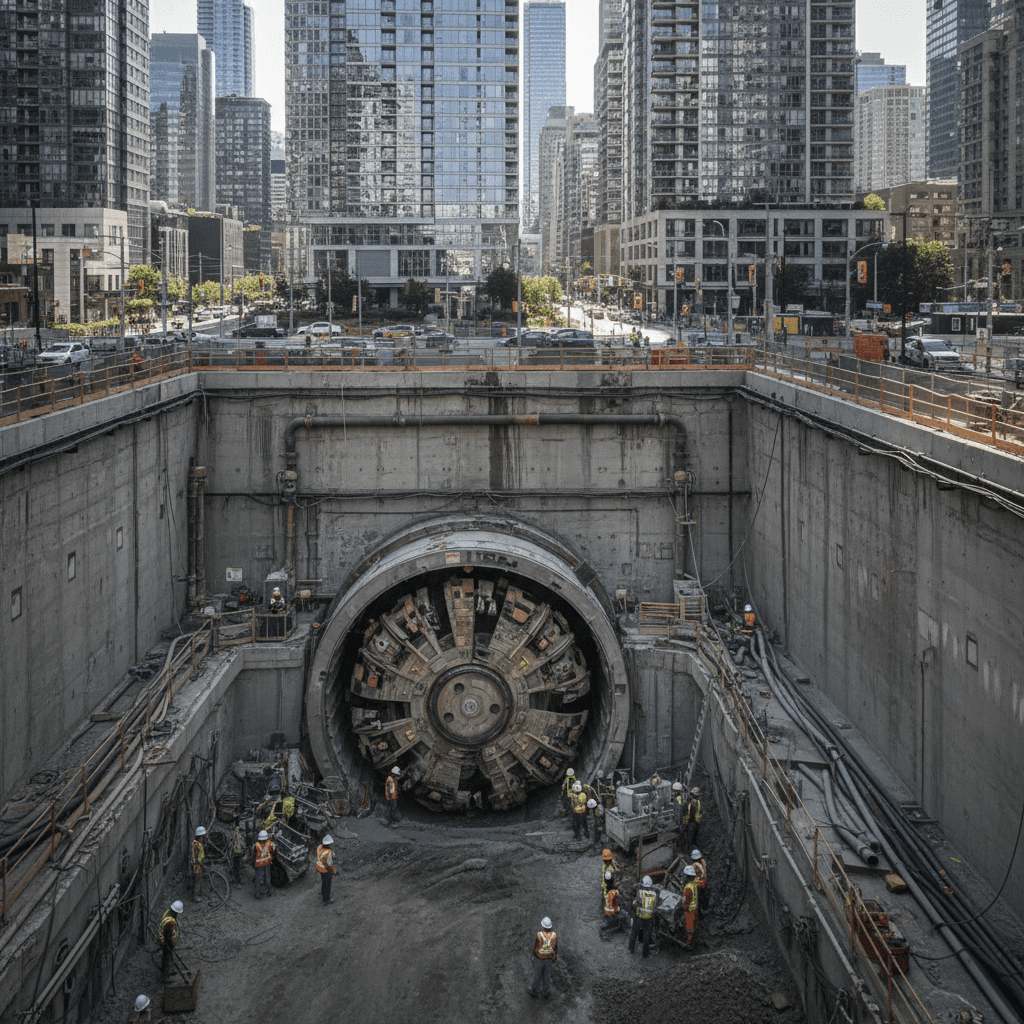
The first tunnel boring machines have broken ground beneath Toronto's streets, marking the formal start of underground construction on the Ontario Line. Premier Doug Ford made the announcement on April 16, 2026, alongside Toronto Mayor Olivia Chow and federal transit representatives, calling it a generational moment for the city. The 15.6-kilometre rapid transit line has been years in the making and will fundamentally reshape how Torontonians move through their city when it opens later this decade.
What the Ontario Line Will Look Like
The Ontario Line will stretch 15.6 kilometres from Exhibition Place in the west to the Ontario Science Centre in the northeast, passing through some of the densest and most transit-dependent neighbourhoods in Canada. The route includes 15 stations and will run almost entirely underground through the central section, with elevated guideway sections at the western and eastern ends. Designed as a fully automated, driverless rapid transit line, the Ontario Line uses a smaller train profile than traditional subway rolling stock, which allowed engineers to tunnel at shallower depths and at lower cost than a conventional heavy rail line.
Stations on the line include new interchanges at Queen and Osgoode on the existing Yonge-University line, a major hub at Exhibition Place, and connections to GO Transit and other surface transit routes. The line is intended to function as a relief valve for the chronically overcrowded Yonge-University subway, diverting passengers who currently funnel through the Bloor-Yonge interchange, one of the busiest transit junctions in North America.
Construction is divided into multiple civil contracts, with the tunnelling segment representing the most complex and expensive portion of the work. Two tunnel boring machines are now actively operating beneath the downtown core, carving through the mix of clay, shale, and urban infrastructure that makes Toronto tunnelling particularly demanding. Engineers say they expect the tunnel boring phase to take approximately two years to complete, with station fitout and systems integration following over subsequent years.
The project will also include significant surface-level improvements at several station locations, including new public plazas, enhanced cycling infrastructure, and improved pedestrian connections to neighbouring streets. City planning staff have been coordinating with communities along the route for several years to ensure the station designs reflect neighbourhood needs and character.
How It Compares to the Relief Line Proposal
The Ontario Line's roots stretch back more than a decade, to a period when Toronto transit planners began grappling with the long-term capacity limits of the Yonge-University subway. For years the project was known as the Downtown Relief Line, a proposed heavy rail subway that would have followed a broadly similar east-west corridor through the core. The Relief Line advanced through multiple rounds of planning and environmental assessment before the Ford provincial government effectively took over transit planning in 2019 and reimagined the project as the Ontario Line.
The switch from the Relief Line to the Ontario Line brought significant changes in scope, technology, and cost. The Ontario Line is longer than the Relief Line proposal, reaching further east to the Science Centre rather than stopping at Pape. It also uses a lighter rail technology, closer to a metro or automated people mover system than a traditional Toronto subway train. Supporters of the change argued the new approach would deliver more capacity faster and at lower cost per kilometre.
Critics, including some transit advocates and city councillors, raised concerns about capacity limitations of the smaller trains and about compatibility with the existing subway network. Others worried about the speed of the transition away from the established planning process. Those debates have largely given way to broad acceptance that the project is proceeding and that delivering rapid transit on this corridor, regardless of the specific technology choice, is urgently needed.
Comparing the two proposals directly requires accounting for years of inflation and scope changes, but official estimates suggest the Ontario Line approach delivers more route kilometres at a competitive cost compared to what the Relief Line would have cost under original plans. The critical factor for most transit watchers is not the technology debate but the timeline: Toronto has waited long enough for relief on its congested core network.
The Route and the Neighbourhoods It Serves
The Ontario Line passes through a remarkable cross-section of Toronto neighbourhoods, including some that have been chronically underserved by rapid transit. The eastern section runs through Riverside, Leslieville, and the Thorncliffe Park area, communities that have grown substantially in recent decades but remain dependent on surface transit. The Don Mills corridor near the Science Centre terminus has long been identified as an area needing better rapid transit connections to employment and post-secondary institutions.
Through the downtown core, the line serves the areas around Queen Street East and West, providing direct access to employment districts, cultural institutions, and entertainment zones that currently rely heavily on streetcar service. The connection to the existing subway at multiple points means passengers from across the city's east end and west end will be able to reach downtown destinations without travelling north to Bloor first.
Exhibition Place, the western terminus, creates a hub connecting to the Lakeshore GO corridor and to future transit improvements planned for the western waterfront. The location also makes the line relevant for major events at Ontario Place, Budweiser Stage, and BMO Field, providing transit capacity for the millions of visitors those venues attract annually.
Ridership projections prepared by Metrolinx estimate the Ontario Line will carry approximately 380,000 passenger trips per day when fully operational. That figure would make it one of the busiest rapid transit lines in Canada and would represent a substantial addition to the capacity of Toronto's overall network. The line is expected to reduce pressure on the Yonge-University line by diverting a significant share of trips that currently overload the existing interchange at Bloor-Yonge station.
Timeline, Cost, and What Comes Next
The provincial government has set a target of opening the Ontario Line by 2031, though major infrastructure projects of this complexity routinely face schedule pressures. The civil construction work, including tunnelling, station excavation, and guideway construction at the ends of the line, is expected to be substantially complete by 2028 or 2029. The remaining years allow for systems installation, testing, and commissioning before revenue service begins.
Total project cost is estimated at approximately $19 billion, making the Ontario Line one of the most expensive public infrastructure investments in Canadian history. The funding comes from a combination of provincial and federal sources, with the federal government committing to major transit infrastructure funding through its urban transit programs. The City of Toronto is contributing land and supporting infrastructure but is not a primary funder of the construction itself.
Construction will create approximately 25,000 direct and indirect jobs over the life of the build, according to provincial estimates. The project is already supporting employment across a wide range of trades, including tunnelling specialists, structural engineers, electrical contractors, and project managers. Metrolinx and its construction partners have committed to local hiring targets and apprenticeship programs tied to the contracts.
Beyond the construction phase, the Ontario Line is expected to generate long-term economic benefits in the corridors it serves. Transit-oriented development is already being planned around several station sites, with developers and city planners working to take advantage of the land value uplift that new rapid transit consistently creates. Areas like Leslieville and the eastern waterfront are expected to see intensification pressure accelerate once the line opens.
The Politics of Getting Here
The announcement this week represents a milestone not only for transit but for the complicated political relationship between Queen's Park and Toronto City Hall. Premier Ford and Mayor Chow have frequently been on opposite sides of policy debates, with the NDP-aligned mayor and the Conservative premier holding starkly different views on housing, transit governance, and urban planning priorities. Yet both appeared together at Wednesday's tunnelling announcement, a signal that the Ontario Line has transcended partisan conflict and become a shared civic priority.
Ford's government has been aggressive in taking over transit planning from the city, a move that was controversial at the time but has arguably accelerated construction timelines by consolidating decision-making authority at the provincial level. Metrolinx, the provincial transit agency, now manages procurement and construction for the Ontario Line entirely, removing the intergovernmental friction that historically slowed Toronto transit projects.
Federal involvement has also been less contentious than in previous eras. Transit infrastructure funding from Ottawa has flowed more smoothly since the federal and provincial governments aligned on a framework for major urban transit investment. The Ontario Line is a beneficiary of that improved federal-provincial relationship, receiving committed funding on a schedule that allows construction to proceed without financing uncertainty.
Mayor Chow used the announcement to call for companion investments in surface transit across Toronto, noting that the Ontario Line will not reach every neighbourhood that needs better service. Her position reflects a long-standing tension in Toronto transit politics between mega-project investments and the more diffuse but arguably equally important improvements to bus and streetcar service that the city needs across its entire network.
Challenges Ahead
Even with tunnelling now formally underway, the Ontario Line faces significant challenges before it carries its first passengers. Construction in a dense urban environment is inherently complex, and the project route passes through some of the most congested subsurface environments in the country, with existing utilities, foundations, and other infrastructure requiring careful management during tunnel boring operations.
Cost management will be an ongoing concern as the project progresses. Global supply chain pressures, skilled trades shortages, and the general inflation that has affected construction costs throughout the 2020s all represent risks to the project's budget. Metrolinx and the province have built contingency reserves into the project budget, but major infrastructure projects of this scale routinely find those reserves tested.
Community relations along the construction corridor will require sustained attention. Residents and businesses near station construction sites will face years of noise, dust, and traffic disruption. The project team has committed to community liaison offices and proactive communication, but managing the lived reality of urban construction at this scale is genuinely difficult.
Integration with the existing transit network is another technical challenge. Ensuring that the Ontario Line's stations connect smoothly with the existing subway, with GO Transit corridors, and with surface transit will require extensive coordination among multiple agencies and levels of government. Getting that integration right is as important to the line's eventual ridership performance as any feature of the line itself.
What Success Looks Like
When the Ontario Line opens, likely sometime in the early 2030s, Toronto will have added more rapid transit capacity in a single project than it has in several decades. The city's long transit deficit relative to peer cities in Europe and North America will not be fully erased by one project, but the Ontario Line represents a genuine and substantial step in the right direction.
For the communities along the eastern and central sections of the route, the line will mean faster, more reliable access to jobs, education, healthcare, and the full range of opportunities that Toronto offers. For the city as a whole, it will mean a less congested core network and better connectivity for the density that Toronto has already built and will continue to build in the years ahead.
The political and institutional work that has brought the project to this point, through multiple governments, multiple planning processes, and years of public debate, is itself an achievement. Now the harder work begins: delivering the line on time, on budget, and to a quality standard that serves Torontonians well for decades to come. The tunnel boring machines are running. The clock is ticking.