Air Canada Drops Toronto-JFK Route as Canadians Turn Away from U.S. Travel
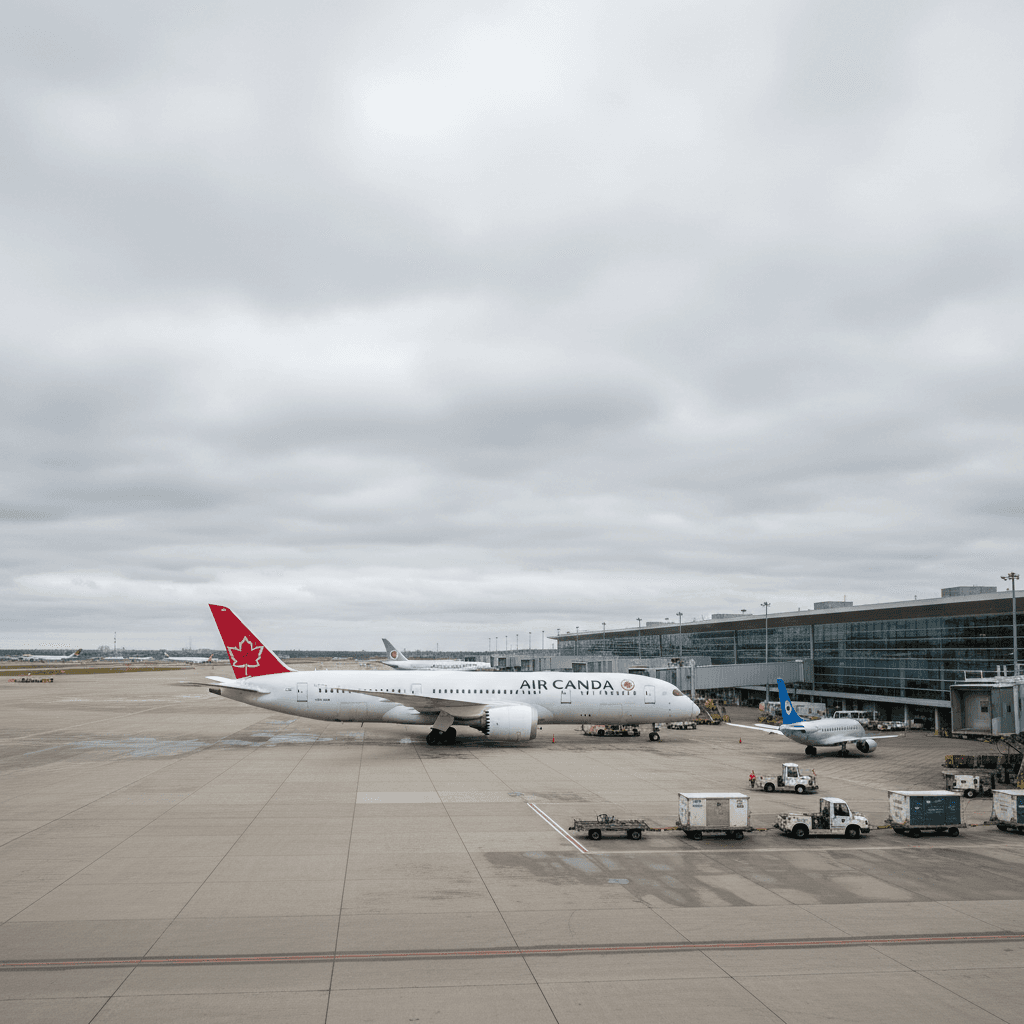
Air Canada's decision to suspend direct flights between Toronto's Pearson International Airport and New York's John F. Kennedy International Airport is the most visible commercial signal yet of a fundamental shift in Canadian travel behaviour. The announcement, made in spring 2026, confirmed what airport passenger data, hotel booking platforms, and tourism research organisations had been documenting for months: Canadians are, in significant numbers, choosing not to travel to the United States. The reasons are a mixture of political sentiment, economic calculation, and a growing enthusiasm for discovering what Canada itself has to offer. The consequences are reshaping the economics of Canadian aviation, the competitive dynamics of the tourism sector, and the geography of where Canadians spend their travel dollars.
Why Air Canada Pulled the Toronto-JFK Route
The Toronto-JFK corridor is one of the busiest air routes in North America and has been served by multiple carriers for decades. Air Canada's decision to suspend its service on this specific route is not primarily about competition from other airlines, though WestJet and several U.S. carriers continue to serve the corridor. It is about load factors, the percentage of seats filled on each flight, falling below the threshold at which the route is commercially viable for Air Canada's cost structure.
Canadian travellers on the Toronto-New York route are a different mix from American travellers heading in the opposite direction. The American passengers tend to be business travellers, tourists, and people with family connections who are less sensitive to political sentiment as a travel factor. The Canadian passengers skew toward leisure travellers and optional business trips, categories that are more responsive to the kind of political and cultural deterrents that have been building since the Trump administration's return to the White House in January 2025.
Border treatment has been a specific and documented concern. Reports of Canadian citizens and permanent residents being subjected to extended secondary screening, phone and device searches, and in some cases detention at U.S. entry points began circulating widely on Canadian social media in late 2024 and intensified in 2025. Travel advisories from the federal government, while carefully worded to avoid directly advising against travel, noted that entry to the United States remained at the discretion of border officers regardless of visa status or previous travel history. For many Canadians, particularly those from racialised communities who felt disproportionately targeted, that warning was sufficient to redirect travel plans.
The economic deterrent has compounded the political one. A weakened Canadian dollar relative to its historical range against the U.S. dollar has made American travel more expensive in real terms. Combined with U.S. domestic inflation that has kept hotel, restaurant, and entertainment costs elevated, the value proposition of an American vacation has deteriorated for middle-income Canadian families compared to domestic and non-U.S. international alternatives.
The Broader Shift in Canadian Travel Patterns
The Toronto-JFK suspension is one data point in a much larger reorientation. Statistics Canada and Destination Canada research published in early 2026 documented a significant acceleration in the trend of Canadians choosing domestic destinations or non-U.S. international travel over American vacations. The numbers are striking. In the first quarter of 2026, Canadian air travel to U.S. destinations was down approximately 14 per cent year-over-year, while domestic air travel was up 9 per cent and trans-Atlantic travel to European destinations was up 18 per cent.
The domestic surge has been most pronounced for destinations in British Columbia, Quebec, and Atlantic Canada. Whistler and the Okanagan Valley in B.C. have seen hotel occupancy rates above pre-pandemic peaks for the first time. Old Quebec City, Cape Breton Island, and PEI's beaches are reporting record forward bookings for the summer 2026 season. These destinations have benefited from both the deliberate Canadians-choosing-Canada sentiment and from a broader rediscovery campaign mounted by provincial tourism agencies that have pivoted their marketing budgets aggressively toward the domestic audience.
The European growth is driven by a different demographic. Canadians who might previously have chosen New York, Miami, or Las Vegas as their primary annual international destination are increasingly choosing London, Paris, Rome, and Barcelona. The weaker Canadian dollar affects European travel too, but the overall value comparison to the U.S. has shifted. And for many travellers, the European option does not come with the border anxiety that has become associated with entering the United States.
Mexico and the Caribbean, long popular with Canadians seeking winter sun, have also benefited. All-inclusive resorts in Cancun, Los Cabos, and Punta Cana are reporting strong Canadian bookings. The cultural and political contrast between those destinations and the current U.S. climate has been noted, if not always articulated, in the booking behaviour.
Which Routes and Destinations Are Growing for Air Canada
Air Canada has been vocal about its strategic response to the shifting travel patterns. While suspending or reducing frequency on certain U.S. routes where load factors have deteriorated, the carrier has been adding capacity on European, domestic, and trans-Pacific routes. New seasonal services to Portugal, Greece, and additional frequencies to the United Kingdom reflect the demand shift. The airline has also added domestic capacity to secondary Canadian destinations, with new routes or improved frequency between Toronto and Charlottetown, Quebec City, and Kelowna.
WestJet has made similar adjustments, with its leisure-focused network pivoting toward the Caribbean and Mexico while pulling back on some U.S. sun destinations where Canadian bookings have weakened. Porter Airlines, with its focus on eastern Canadian cities and leisure travel, has benefited from domestic reorientation and has announced fleet and route expansions aimed at connecting smaller Canadian cities to major domestic hubs.
For travellers on the Toronto-New York corridor specifically, Air Canada's suspension does not eliminate the option. WestJet and United Airlines both continue to serve the route. The competitive dynamic will determine whether fares rise to reflect reduced supply or whether the remaining carriers absorb the capacity with competitive pricing. In the short term, some fare pressure is expected, particularly during peak periods when both business and leisure demand are highest.
Economic Impact on the Tourism Sector
The shift in Canadian travel patterns has uneven economic consequences. The domestic tourism sector is an obvious beneficiary. Hotels, restaurants, tour operators, and retail businesses in Canadian tourist destinations are experiencing revenue growth that partially offsets the broader cost pressures they face. Communities like Banff, Tofino, Lunenburg, and Charlottetown, where tourism is a primary economic driver, are entering the 2026 summer season with optimism that would have seemed premature two years ago.
Canadian airports and the aviation ancillary industry, including ground handling, food service, retail, and fuel supply, face a more complex picture. The growth in domestic and trans-Atlantic routes partially replaces the revenue from reduced U.S.-bound traffic, but the economics differ. Trans-Atlantic flights, being longer, generate more fuel and service revenue per aircraft movement. Domestic growth adds passenger volumes but at lower per-passenger revenue than international routes. The net effect for airports will vary by hub, with Pearson well-positioned due to its trans-Atlantic connectivity and YVR in Vancouver similarly advantaged by its trans-Pacific routes.
For the Canadian hospitality sector broadly, the challenge is scaling capacity to meet the domestic surge. Hotel development in major Canadian resort destinations has not kept pace with the sudden increase in demand. Labour shortages in food service and hospitality, a persistent issue since the pandemic, are limiting the sector's ability to fully capitalise on the booking surge. Property managers in some destinations are reporting that they cannot staff enough to serve the guests they have, a constraint that will put upward pressure on the cost of Canadian domestic travel and could temper the enthusiasm that is currently driving bookings.
The Political and Cultural Dimensions
The decision of Canadians to avoid U.S. travel is not purely economic. Polling data collected in early 2026 suggests that a meaningful share of Canadians frame their travel choices explicitly as political expression. The sentiment has been described by researchers as a form of soft economic nationalism, a deliberate effort by individual consumers to align spending behaviour with political values at a time when the formal tools of foreign policy, tariff negotiations, diplomatic statements, feel insufficient to express the depth of Canadian frustration with the Trump administration's approach to its northern neighbour.
Social media campaigns encouraging Canadians to choose domestic travel gained significant traction in late 2024 and throughout 2025. Hashtags promoting Canadian destinations, featuring images of Banff, Niagara Falls, Old Quebec City, and the Northern Lights, attracted millions of engagements and contributed to a cultural moment in which choosing to stay in Canada or go to Europe instead of the U.S. became a form of identity expression for a certain segment of the population.
The long-term implications for Canada-U.S. cultural and economic ties are harder to assess. Travel patterns have historically been resilient and responsive to political conditions in both directions. The cross-border tourism and business relationship normalised fairly quickly after previous periods of friction. But the current moment has some features that suggest the shift could be more durable: a generation of younger Canadian travellers who have had formative experiences of the new political climate at U.S. borders, a domestic tourism infrastructure that is now actively building itself to meet Canadian demand, and an ongoing structural competitiveness question about what the U.S. offers that cannot be found closer to home or in Europe.
What Comes Next for Canadian Aviation
The aviation sector will continue to adapt its networks in response to the evolving demand picture. Air Canada has signalled that it will review its full U.S. network for the winter 2026-2027 season, suggesting additional route suspensions or frequency reductions are possible where load factors do not recover. The airline's management has been careful to frame these decisions as commercially driven rather than politically motivated, reflecting the carrier's need to maintain relationships with U.S. aviation partners and its own operations in American cities.
The federal government has been quietly supportive of the domestic tourism growth, including it in communications framing Canada's resilience in the face of American economic pressure. The Tourism Industry Association of Canada has lobbied for additional federal marketing investment in the domestic audience, arguing that the current moment represents a rare opportunity to permanently shift a portion of Canadian travel spend from U.S. to domestic destinations. If habits formed now persist when the political climate eventually shifts, the domestic industry will have built a more robust customer base that persists beyond the current moment of political friction.
Related Stories

IMF Cuts 2026 Growth Forecast to 2.5%: What It Means for Canada
1h ago

Manitoba Raises Minimum Wage to $16.40 and Opens New Brandon Health Centre
1h ago

Ontario Line Tunnelling Begins: Toronto's Biggest Transit Build in Decades
2h ago

Nunavut Gets Fuel Tax Relief — But Groceries Still Cost 50 Per Cent More Than Ottawa
2h ago