Alberta's October Ballot Will Carry Smith's Separation Question
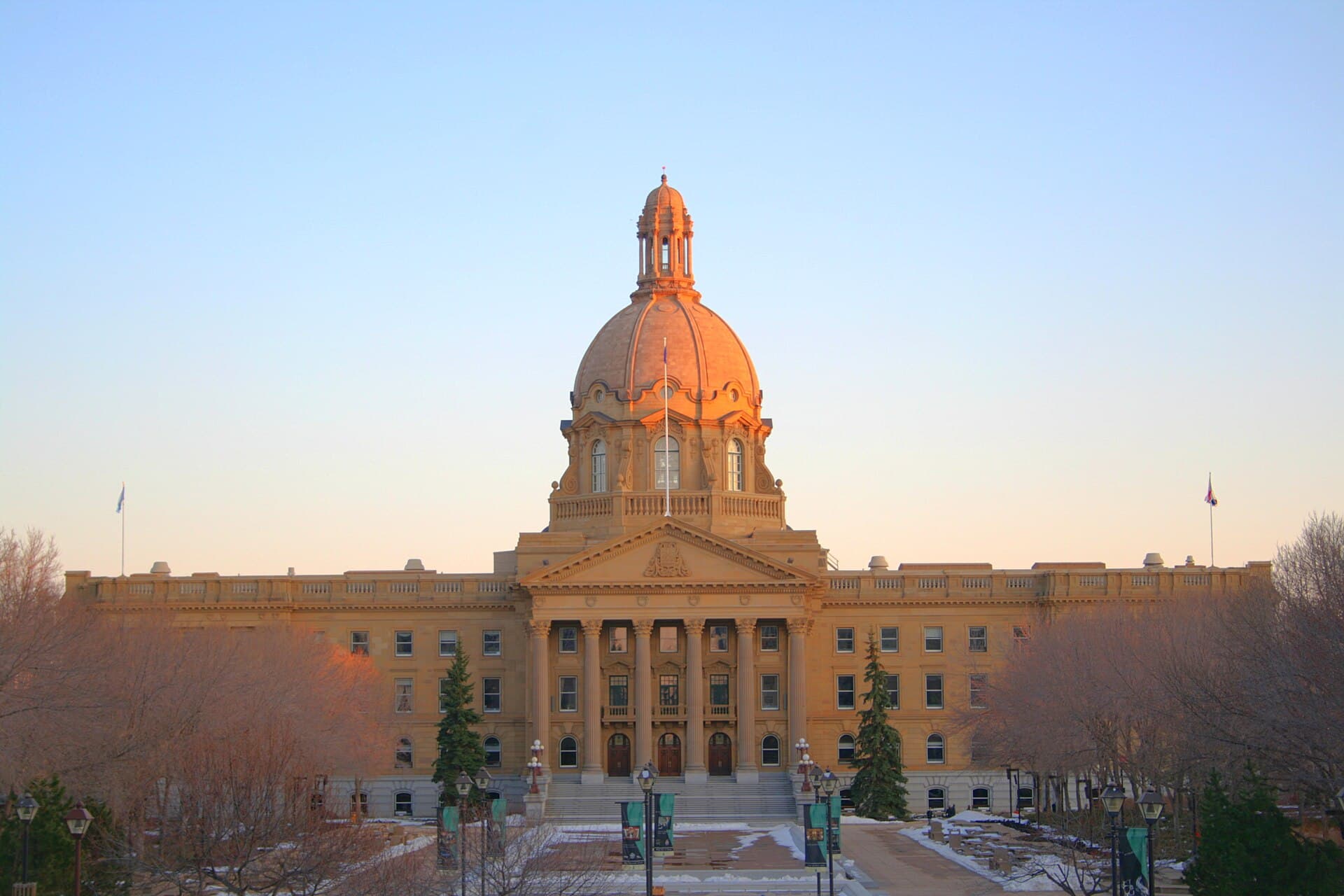
Alberta voters will face a question this October on whether the provincial government should begin the legal process required to hold a binding referendum on leaving Canada. Premier Danielle Smith confirmed the wording in a televised address on May 21, framing the move as a way to channel separatist sentiment into a structured legal process while urging Albertans to ultimately remain part of Confederation.
The question Albertans will vote on
The provincial referendum question, set for the October 19 ballot, reads: "Should Alberta remain a province of Canada or should the Government of Alberta commence the legal process required under the Canadian Constitution to hold a binding provincial referendum on whether or not Alberta should separate from Canada?"
The phrasing is two-stage. A yes vote does not, on its own, take Alberta out of Confederation. It instructs the provincial government to begin the constitutional steps, including potential court review, that would be required before a binding independence vote could be held at a later date.
Smith herself has said she will vote in favour of staying in Canada. She framed the October exercise as a democratic safety valve, arguing that frustration over federal energy and equalisation policy needs an outlet that does not collapse into civil disobedience or extra-legal action.
How we got here
The October question follows a separate court fight. Justice Shaina Leonard of the Court of King's Bench of Alberta stayed a petition drive launched by the pro-separatist group Stay Free Alberta, which had collected signatures asking Albertans whether the province should "cease to be part of Canada to become an independent state." The court ruling halted that effort while constitutional issues are sorted out.
Smith's office described the October ballot question as designed to work within the court's framework rather than around it. By asking voters whether they want the government to begin the legal process, the province sidesteps the constitutional problems that tripped up the citizen petition.
Critics within Alberta's separatist movement have pushed back, arguing the wording is convoluted and does not give voters a clean choice. Federalist groups, by contrast, argue the question still legitimises a path toward independence by putting the mechanics on a provincial ballot.
What the polling shows
An Angus Reid Institute poll released this week found three in five Albertans would vote to stay in Canada in a hypothetical separation referendum. The same survey found more than half of respondents said Smith has handled the separation issue poorly, and a majority described the question's wording as "confusing."
The survey suggests the political risk for Smith cuts in two directions. Among the United Conservative Party base, frustration with Ottawa and the federal Liberal government remains intense. Among the broader electorate, even those skeptical of federal policy show little appetite for actually leaving the country, and the convoluted phrasing has eroded confidence in the process itself.
Pollsters caution that opinion on referendum questions can shift quickly during a campaign, particularly if oil prices, federal tax policy, or pipeline approvals become flashpoints between now and October.
Carney's response
Prime Minister Mark Carney has called the referendum question "not helpful" and has urged Smith to focus on the substantive grievances driving frustration in Alberta rather than the symbolism of a ballot question. Federal officials have signalled they are prepared to engage on energy infrastructure, pipeline approval timelines, and revenue sharing, but they have ruled out major changes to equalisation.
Carney's government is also pushing legislation to fast-track approvals for major projects, a move pitched in part as a response to Western frustration over delayed pipeline and electricity transmission projects. Whether those federal measures land in time to shift the October vote remains an open question.
Western premiers gather in Kananaskis
Premiers from the western provinces and northern territories met on Monday and Tuesday in Kananaskis, with the separation question hanging over the agenda. Smith's counterparts in Saskatchewan, Manitoba, and British Columbia have publicly stated they want Alberta to remain in Confederation, even as several share frustrations with federal energy policy.
The Kananaskis meeting was originally framed around interprovincial trade, labour mobility, and infrastructure financing. The separation file pulled focus, particularly after Smith used her televised address the previous week to set the referendum wording in motion.
Saskatchewan Premier Scott Moe, whose government has also tangled with Ottawa over carbon pricing and resource policy, has said his province is committed to staying within Canada and is not contemplating a similar referendum process.
Indigenous nations push back
Treaty 6, 7, and 8 nations have raised constitutional objections, arguing that any process aimed at altering Alberta's place in Canada must respect treaty rights and the Crown's fiduciary duty. Several First Nations leaders have indicated they intend to be active participants in court proceedings if the October vote produces a yes result and the legal process advances.
The federal government has emphasised that section 35 rights of Indigenous peoples are not subject to a provincial referendum and that any unilateral move toward independence would face significant constitutional obstacles before the Supreme Court of Canada.
Economic stakes
Alberta accounts for roughly one fifth of Canada's gross domestic product, anchored by the oil and gas sector, and is also a major destination for interprovincial workers. A protracted period of constitutional uncertainty could weigh on investment decisions in pipelines, refineries, and downstream petrochemicals, even if the eventual outcome is for the province to remain in Confederation.
Bank economists have warned that the October ballot is unlikely on its own to move markets dramatically, but a yes vote followed by years of court fights and political negotiation could create the kind of long-tail uncertainty that depresses capital spending. The Canadian dollar has been broadly stable through the spring, but currency analysts are watching the question.
Calgary's energy sector, in particular, has expressed concern through industry associations such as the Canadian Association of Petroleum Producers. While the sector benefits from the federal government's recent push to fast-track major projects, the prospect of constitutional negotiations layered on top of existing regulatory uncertainty is widely seen as unwelcome by capital investors.
Provincial revenues are heavily dependent on resource royalties, which fluctuate with commodity prices. A separation process that spanned several budget cycles would inject uncertainty into long-term provincial finance planning, including the Alberta Heritage Savings Trust Fund and the funding of public services that depend on resource revenue.
The Quebec precedent
Quebec's 1980 and 1995 referendums provide the most direct Canadian precedent for what Alberta's October ballot question contemplates. The 1995 vote, in which the no side prevailed by less than one percentage point, prompted the Supreme Court of Canada's reference on Quebec secession and the federal Clarity Act.
Under the Clarity Act, any provincial vote on secession must feature a clear question and a clear majority, and any subsequent negotiation must involve all affected parties, including Indigenous nations and other provinces. Constitutional scholars have noted that Smith's two-stage approach was likely designed in part to navigate the Clarity Act framework.
The Quebec experience also showed that referendum politics can persist for decades after a vote. Alberta's separation question, even if defeated in October, may not disappear quickly from the province's political landscape.
The pipeline and equalisation drivers
The substantive grievances feeding Alberta's separation conversation include the federal regulatory framework for pipelines, the equalisation formula, and the Trudeau-era restrictions on fossil fuel expansion. The Carney government has eased some of those tensions through fast-track project legislation and the new National Electricity Strategy, but the equalisation file remains untouched.
Polling has consistently shown that Albertans across the political spectrum view the federal equalisation formula as unfair, even though many do not agree on what the alternative should look like. Smith has cited equalisation as one of her core grievances, while federal officials have argued that the formula does not actually transfer payments out of Alberta and that the popular framing of the issue is misleading.
The pipeline question, including ongoing debates about expanding capacity from the oil sands to tidewater, has been a defining issue in Western Canadian politics for two decades. The federal government's recent steps to streamline approvals have lowered the temperature without resolving the underlying tensions.
The municipal election overlap
The October 19 ballot also coincides with municipal elections in many Alberta communities, layering a constitutional question on top of contests for mayor, council, and school trustee positions. Municipal officials have raised concerns about ballot design, voter education, and the practical mechanics of running multiple votes simultaneously.
Cities including Edmonton, Calgary, Lethbridge, and Red Deer will be electing local officials at the same time as residents weigh in on the separation question. The combination of municipal and provincial-level voting on a single day will require careful logistical preparation by Elections Alberta and partner agencies.
What's next
The referendum question will be added to the October 19 ballot alongside municipal elections in much of the province. Elections Alberta is expected to release guidance on how the question will appear and how votes will be tabulated in the coming weeks.
Smith has not committed to a specific timeline for the next step if voters approve the question. The legal process she has invoked involves court review, federal-provincial negotiation, and almost certainly Supreme Court reference questions before any binding independence vote could be set. Constitutional scholars have estimated that even a fast-tracked process would take several years.
For now, the campaign moves into the summer with Smith publicly urging a no vote while her government prepares the legal scaffolding for the next stage. Carney's federal team will be watching closely, and so will investors, treaty nations, and the other premiers.
Spotted an issue with this article?
Have something to say about this story?
Write a letter to the editor


Comments
Be the first to comment.