Canada Deepens EU Ties as Trade War With Washington Drags On
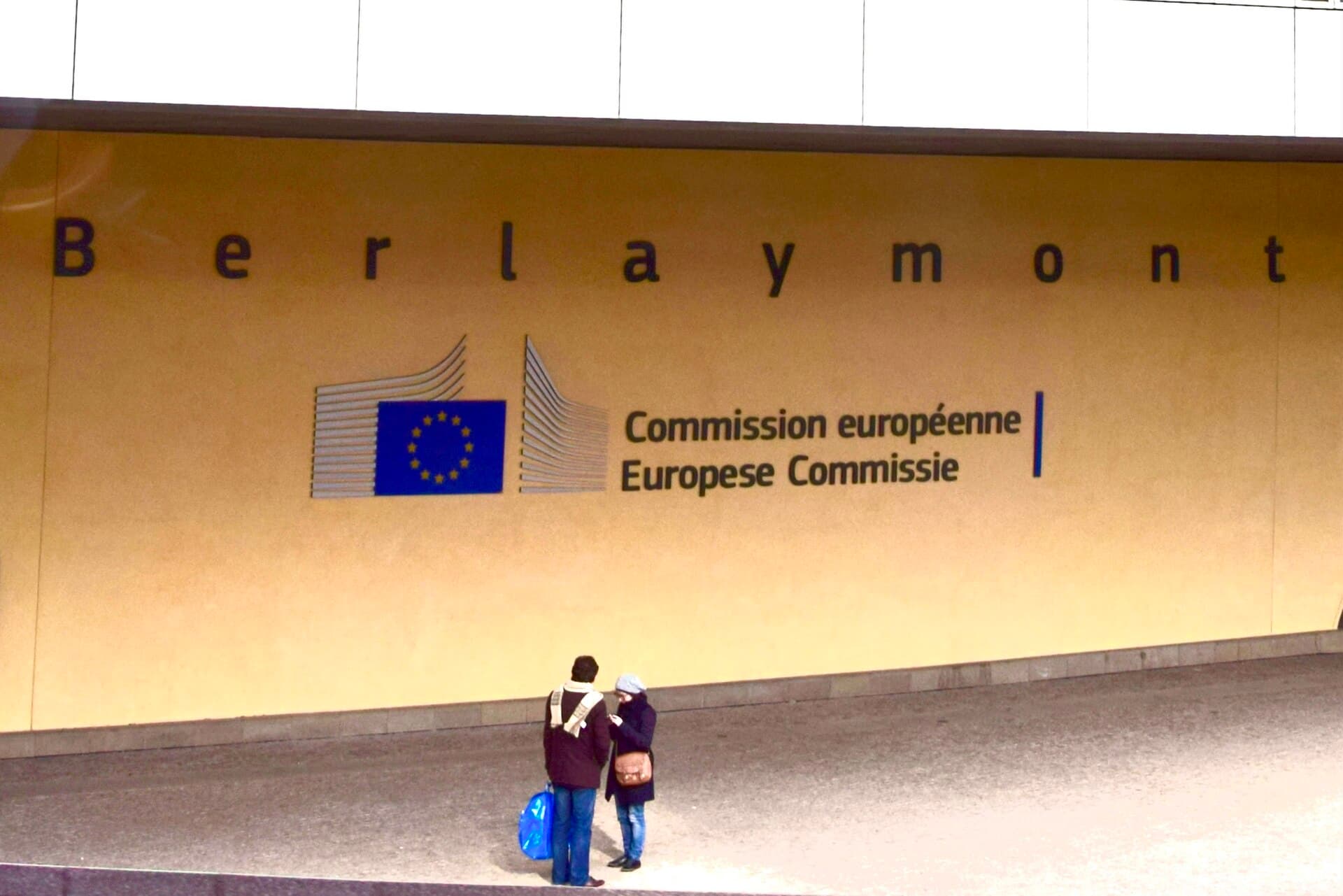
Canada is steadily reorienting its economic and security future toward Europe, and the shift is no longer a matter of rhetoric. With the trade conflict with the United States dragging on and showing few signs of a clean resolution, Prime Minister Mark Carney's government has moved on multiple fronts to bind Canada more tightly to the European Union and its member states. On 4 May 2026, the prime minister acted to strengthen trade and security partnerships with European nations, part of a broader Canadian pivot toward a continent that Ottawa increasingly describes as a community of reliable democratic allies.
The logic driving the turn is captured in a single phrase that has become a fixture of Canadian policy debate, namely friend-shoring. The idea is to reduce dependence on a less predictable United States by deepening ties with partners whose rules, values and long-term reliability Canada can count on. For a country that sends the overwhelming majority of its exports south, that is an ambitious and difficult project. But the disruption of recent years has convinced Ottawa that concentration on a single market has become a strategic vulnerability rather than a convenience.
The European turn spans trade, defence industry, scientific research and diplomacy, and it carries direct consequences for Canadian workers, businesses and security. It promises new markets for exporters, new contracts for the defence sector, and a louder Canadian voice in transatlantic affairs. It also demands patience, because no relationship can replace the United States quickly, and because the benefits will accrue over years rather than months.
A Pivot Born of Necessity
The deepening of Canada-Europe ties did not begin in a vacuum. It is the response of a mid-sized trading nation to an environment in which its largest partner has become a source of uncertainty rather than stability. The trade conflict with Washington has unsettled supply chains, raised costs and forced Canadian firms to reconsider where they sell and source. In that climate, diversification has moved from a long-standing aspiration to an urgent priority.
The intellectual frame is friend-shoring, widely understood as a strategy of trading and partnering with dependable allies rather than chasing the lowest cost or the nearest market. For Canada, Europe is the natural object of that strategy. The European Union shares Canada's broad commitment to the rules-based order, democratic governance and open markets, and it is large enough to matter to the Canadian economy in a way few other partners can.
The pivot also reflects a wider realignment of Canadian foreign policy under the Carney government. A prime minister with deep roots in international finance and central banking has approached the relationship with Europe as a structural rebalancing rather than a temporary reaction, treating the diversification of Canada's economic and security partnerships as a defining objective of his mandate. None of this means abandoning the United States, which remains by far Canada's most important market and security partner. The aim is to widen Canada's options so that pressure from any single quarter carries less weight, and so the country is less exposed when relations with Washington turn turbulent. Resilience, not rupture, is the stated goal.
The Trade Foundation: CETA and Beyond
The economic relationship rests on a substantial foundation. The European Union is Canada's second-largest trading partner for goods and services, with total trade reaching roughly $178.6 billion in 2025, a figure that, while far smaller than trade with the United States, is significant enough to anchor a serious diversification effort. The Comprehensive Economic and Trade Agreement, known as CETA, underpins the relationship by removing the great majority of tariffs and easing access for exporters on both sides of the Atlantic.
Ottawa and Brussels have not been content to let that foundation sit static. In March 2026, the two sides launched negotiations on an EU-Canada Digital Trade Agreement, with Canada's trade minister, Maninder Sidhu, and the European trade commissioner, Maros Sefcovic, leading the effort. The digital agreement, Canada's first of its kind, aims to set clear rules for data flows, online commerce and consumer protection, addressing parts of the modern economy that the original CETA was not designed to cover.
The March meeting in Toronto produced more than the digital launch. The two sides also signed measures to modernise and reinforce CETA itself, including on investment dispute procedures, a pattern of incremental but steady deepening that signals a relationship being actively built rather than merely maintained. For Canadian businesses, the practical promise is access and certainty: clearer digital rules and a modernised trade framework lower the friction of selling into a market of hundreds of millions of consumers, an attractive proposition for exporters seeking to reduce their exposure to a single dominant customer.
Defence Industry Gains Ground
Perhaps the most consequential breakthrough has come in defence. In February 2026, Canada became the first non-European country to join the European Union's Security Action for Europe initiative, known as SAFE, a major programme designed to rearm the continent. The terms Canada secured were unusually favourable, allowing Canadian content to make up as much as 80 per cent of the value of contracts conducted under the instrument, far above the threshold available to other non-European participants.
That access is a substantial prize for Canadian industry. It positions Canadian firms to compete for European defence contracts on terms close to those enjoyed by companies based in the bloc, opening opportunities across sectors such as surveillance, secure communications, and dual-use technologies in cyber and artificial intelligence. For an industry that has long oriented itself toward the United States, the SAFE arrangement offers a genuine alternative market and a measure of insulation from the ups and downs of the American relationship.
The implications for Canadian workers are direct. Defence and aerospace manufacturing supports skilled, well-paid employment across several provinces, and new European contracts could sustain and expand that work. As Europe embarks on a sustained programme of rearmament, Canada's privileged access means its firms are positioned to capture a share of the demand rather than watching from the sidelines. The defence dimension also reinforces the strategic logic of the pivot: by embedding Canadian industry in European supply chains, Ottawa reduces its dependence on American procurement and builds relationships that could prove valuable across the security domain.
Research and the Knowledge Economy
The European turn extends into science and innovation, areas central to Canada's long-term economic competitiveness. Canada is an associate member of Horizon Europe, the European Union's flagship research and innovation programme, participating in the pillar focused on global challenges and industrial competitiveness. That association gives Canadian researchers and institutions access to one of the largest collaborative research networks in the world.
For Canadian universities, firms and research bodies, the value lies in partnership and funding. Participation in Horizon Europe allows Canadian scientists to join consortia working on shared priorities, from clean energy to health to advanced manufacturing, and to plug into European expertise and resources. In fields where progress depends on scale and collaboration, access to such a network is a meaningful advantage that diversifies Canada's research links beyond North America.
The research relationship also complements the trade and defence pillars. Many of the technologies that matter most to modern economies, including artificial intelligence, advanced materials and clean energy systems, sit at the intersection of commercial and security applications, so deeper collaboration with Europe feeds directly into the industrial opportunities Canada is pursuing through CETA and SAFE. Such ties tend to be durable: research partnerships build personal and institutional relationships that outlast any single agreement, and they help align Canadian and European approaches to the rules that will govern emerging technologies, making the research dimension an investment in the long-term depth of the relationship.
A Strategic Partnership Takes Shape
The various threads sit within a deliberate diplomatic architecture. In June 2025, Canada and the European Union announced a New EU-Canada Strategic Partnership of the Future, accompanied by a Security and Defence Partnership, a framework intended to elevate the relationship across the board and to treat Canada and Europe as comprehensive partners rather than parties to a series of separate deals.
The strategic partnership matters because it provides coherence. Rather than a scattering of trade, defence and research initiatives, it offers a structure that links them, letting both sides set shared priorities and coordinate across files. For Canada, it represents recognition that its future is increasingly bound up with Europe's, and that the relationship merits the kind of sustained, high-level attention long reserved for the United States.
The defence and security component is especially notable given the broader context. As Canada navigates strained relations with Washington over military spending and continental defence, a formal security partnership with the European Union gives Ottawa another anchor and another set of partners. It reflects a Canada determined not to place all its security eggs in a single basket. The partnership is best understood as the diplomatic expression of friend-shoring: where the term once described a trade strategy, it now captures a comprehensive realignment of Canadian foreign policy toward dependable allies, and the Strategic Partnership of the Future is the vehicle carrying that realignment forward.
The Limits of the Pivot
For all its momentum, the European turn faces real constraints, and Canadian officials are careful not to oversell it. The most obvious is geography and scale. The United States remains overwhelmingly Canada's largest trading partner, and the integration of the two economies, built over generations across shared borders and supply chains, cannot be unwound or replaced in any short timeframe. Europe is an addition to the American relationship, not a substitute for it.
The numbers underline the asymmetry. Trade with the European Union, though substantial at roughly $178.6 billion in 2025, is a fraction of Canada's trade with the United States. Even rapid growth in the European relationship would leave Canada dependent on the American market for the foreseeable future, so the pivot reduces vulnerability at the margins rather than eliminating it. Diversification buys resilience, not independence.
Practical hurdles also temper the ambition. Distance raises transport costs, regulatory differences persist despite CETA, and Canadian firms accustomed to selling next door must invest time and effort to break into European markets, competing and delivering rather than merely gaining access. There is a political dimension too: deepening ties with Europe must be managed without needlessly antagonising Washington, on which Canada still depends for trade and continental defence. Ottawa's challenge is to diversify in a way that strengthens its hand without provoking retaliation, because the pivot is a hedge, and hedges are most effective when they are not mistaken for threats.
What's Next
The coming months will test how quickly ambition translates into results. Negotiations on the digital trade agreement are expected to advance through the year, and their conclusion would mark a concrete deepening of the economic relationship and a template for managing the digital economy with a major partner. Progress on modernising CETA will offer a further measure of momentum.
On defence, attention will turn to whether Canadian firms can convert their privileged access under SAFE into actual contracts and jobs. The favourable terms Canada secured create the opportunity, but the payoff depends on Canadian industry winning work in a competitive European market. Early successes would validate the strategy and build the domestic constituency for deeper engagement, while disappointment would invite questions about how much the access is worth in practice.
The broader trajectory points toward a Canada that is more European in its orientation than at any time in recent memory, even as it remains anchored to North America. The Carney government appears committed to the pivot as a structural feature of Canadian policy rather than a passing response to one trade dispute. Whether friend-shoring delivers the resilience Ottawa is counting on will become clearer as the trade conflict with Washington runs its course, but the direction has been set, and the investment in Europe is now well under way.
Spotted an issue with this article?
Have something to say about this story?
Write a letter to the editor


Comments
Be the first to comment.