Canada Keeps Distance from Iran War While Calling Strikes Illegal
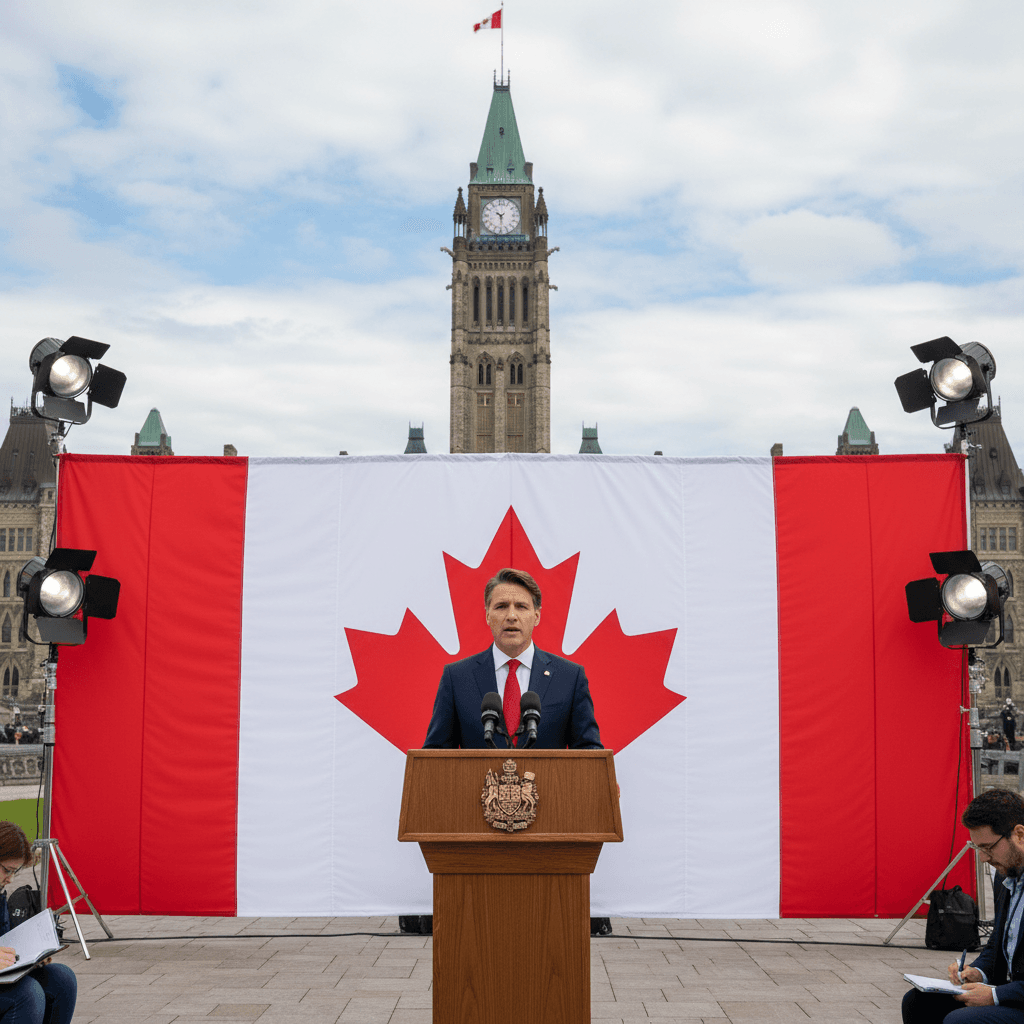
Prime Minister Mark Carney delivered one of the most carefully calibrated foreign policy statements of his tenure in early April 2026, announcing that Canada would not participate in the U.S.-Israeli offensive against Iran while simultaneously declining to condemn its closest allies and trading partners for carrying it out. The statement, characterised by diplomatic observers as a high-wire act, described Iran as the principal source of instability in the Middle East and expressed full support for Israel's right to self-defence, while also warning that the specific strikes carried out appeared inconsistent with international law. It was a position designed to offend as few people as possible while still staking out a distinct Canadian posture, and the response, both domestically and internationally, has been anything but uniform.
The Balancing Act: Alliance Loyalty Versus Legal Principle
Canada has been a member of NATO since its founding and shares the deepest intelligence, defence, and economic integration with the United States of any country in the world. The Five Eyes intelligence partnership, NORAD, the Canada-U.S.-Mexico Agreement, and thousands of bilateral regulatory arrangements make any meaningful rupture with Washington essentially unthinkable as a matter of practical governance. When the United States and Israel launched coordinated strikes against Iranian nuclear facilities and Revolutionary Guard command infrastructure in March 2026, Canada faced the familiar dilemma that middle powers navigating an alliance with a hegemon always face: how to maintain credibility as an independent voice without triggering consequences from the superpower you depend on.
Carney's answer was structured around two separable claims. First, that Iran's behaviour over the preceding decade, including its support for Hezbollah and Hamas, its ballistic missile programme, its nuclear enrichment activities, and its supply of weapons to Russia for use in Ukraine, had made it the pre-eminent destabilising actor in the Middle East. This framing aligned Canada with the United States and Israel on the underlying threat assessment. Second, that the specific military response chosen, involving strikes on civilian-proximate infrastructure and the use of force outside the framework of either a UN Security Council authorisation or a narrowly defined act of immediate self-defence, raised serious questions of legality under the UN Charter and customary international law.
By separating the threat diagnosis from the remedy, Carney attempted to maintain solidarity with the alliance's underlying security concerns while preserving Canada's long-standing identity as a country that champions the rules-based international order. Foreign policy analysts have noted that this is not a novel Canadian approach: Canada declined to participate in the 2003 invasion of Iraq using similar framing, citing the absence of UN Security Council authorisation while avoiding outright condemnation of the United States. The parallel is imperfect, but the institutional logic is consistent.
What Canadians Think: The Polling Landscape
A March 2026 Ipsos poll conducted in the immediate aftermath of the initial strikes found that 61 per cent of Canadians disapproved of the U.S.-Israeli offensive against Iran, with particularly high disapproval rates in Quebec (74 per cent) and British Columbia (67 per cent). Support for the strikes was highest in Alberta and among Conservative voters, with roughly 42 per cent of Conservative-identifying respondents expressing approval.
These numbers matter to the Carney government for several reasons. On a purely electoral calculation, the majority of Canadians, including the urban progressive coalition that forms the Liberal base, oppose the strikes. Taking a stronger pro-Washington stance would have created genuine political costs domestically. The 61 per cent disapproval figure gave Carney political cover to maintain distance from the operation without being characterised as caving to a fringe anti-war movement.
The polling also reflects deeper Canadian attitudes about military force that have been consistent across generations. Canadians have long expressed higher comfort with multilateral peacekeeping and international institution-building than with unilateral or bilateral military action. The Iraq war experience reinforced this predisposition. Canada's non-participation in that conflict did not damage the country's relationship with the United States in any lasting way, a historical precedent that clearly informed the Carney government's calculus.
Opposition Conservative Leader Pierre Poilievre argued that Canada should have stood more firmly with its American ally and that Carney's language about international law was needlessly provocative toward Washington. This position has some electoral logic given Conservative voter demographics but runs against the broader national polling, which suggests Carney's balancing act reflects where most Canadians actually are on the question.
Canada's Foreign Policy Position in a Shifting World
Canada's posture on Iran fits within a broader reorientation of its foreign policy that has accelerated under Carney. With the Trump administration pursuing a more transactional and unilateralist approach to global affairs, Canada has had to make choices about whether to follow Washington's lead, chart a more independent course, or find ways to play both roles simultaneously depending on the file.
On trade, Canada has pursued an aggressive diversification strategy, deepening relationships with the European Union under CETA, advancing Indo-Pacific trade partnerships, and strengthening bilateral agreements with South Korea, Japan, and several Southeast Asian nations. This trade diversification is partly an economic hedge against U.S. tariff pressure, but it also signals a broader willingness to build a foreign policy that does not treat Washington as the singular reference point.
On multilateral institutions, Canada has been a vocal defender of the UN system, the International Criminal Court, and the World Trade Organization at a time when the United States has been ambivalent or actively hostile toward these bodies. Carney's language on the Iran strikes, specifically the reference to international law, is consistent with this broader institutional commitment. It is not an isolated rhetorical choice but part of a deliberate positioning of Canada as a country that believes the post-1945 rules-based order is worth defending even when allies choose to circumvent it.
Trade and Energy Implications of the Iran Conflict
Canada is not a significant direct trader with Iran, and Canadian companies face U.S. secondary sanctions risks that make any commercial engagement with Tehran essentially impossible. The trade implications of the Iran conflict for Canada are therefore less about bilateral commerce and more about global commodity markets, particularly oil and natural gas.
Iran is a significant oil producer, and military conflict that disrupts Iranian production or threatens the Strait of Hormuz has historically triggered oil price spikes. In the weeks following the initial strikes, Brent crude rose approximately eight per cent before partially retreating as markets assessed the limited initial scope of the strikes and Iran's measured initial response. Canadian heavy oil producers in Alberta benefited from the price bump, though analysts cautioned that sustained conflict could simultaneously boost Canadian oil revenues and complicate the broader global economic environment on which Canadian exports depend.
Natural gas markets were similarly affected. Canada has been building out its LNG export infrastructure to serve Asian markets, and any disruption to Middle Eastern gas supply chains potentially strengthens the case for Canadian LNG as a reliable alternative source for European and Asian buyers. The Carney government has highlighted this connection in its communications with European partners, positioning Canada as a stable, rule-of-law alternative to more volatile supply regions.
Canada-U.S. Relations: Navigating the Tension
The White House's initial reaction to Canada's non-participation was muted rather than hostile, which itself was a signal. The Trump administration, focused on managing a complex military operation and its diplomatic aftermath, did not make Canada's abstention a bilateral grievance in the way it might have on a trade or defence spending issue. Behind the scenes, Canadian officials reported that the communication between Ottawa and Washington on the Iran file was professional and continuous throughout the crisis period, with Canada sharing intelligence assessments and maintaining operational coordination on regional security matters even while declining combat participation.
This distinction between intelligence cooperation and military participation is an important one in the Canada-U.S. relationship. Canada can be a full Five Eyes partner, a close NORAD ally on continental defence, and a cooperative presence in the Indo-Pacific without being a participant in every military operation the United States chooses to undertake. The boundaries of that distinction are constantly negotiated, and Carney has chosen to lean into them rather than collapse them.
The longer-term question for Canada-U.S. relations is whether the Trump administration's second term will increasingly demand a more binary form of loyalty from its allies, one in which abstention on military operations is treated as a form of defection. If that threshold is crossed, Canada's carefully calibrated position on Iran becomes harder to sustain without genuine costs to the relationship. For now, the Carney government appears to have navigated the immediate moment without triggering a crisis, but the underlying tension in the alliance over the rules-based order versus the new American nationalism has not been resolved.
Domestic Debate and Parliamentary Response
In the House of Commons, the Carney government's Iran position drew criticism from multiple directions simultaneously. The Conservatives argued it was insufficiently supportive of allies. The NDP and Green Party argued it was insufficiently critical of the strikes and that Canada should have more clearly called for a ceasefire and an immediate halt to the military campaign. The Bloc Québécois, reflecting the high disapproval rates in Quebec, pushed for a stronger rejection of the offensive and argued that Canada's continued arms export relationship with Israel required urgent review.
The government's position held under this cross-pressure, though the foreign affairs committee has announced hearings on Canada's arms export policies in light of the conflict. Canada suspended certain arms export permits to Israel in 2024 following pressure from civil society groups and opposition parties. The current government has maintained that suspension while continuing to review the broader policy framework. The Iran escalation has intensified pressure from advocacy groups to make the suspension permanent and extend it to dual-use technology exports.
For most Canadians, the Iran conflict is a distant concern filtered through the lens of energy prices, alliance relationships, and national values about international law. Carney's handling of it reflects both the genuine complexity of Canada's position in a fractured international order and the domestic political reality that the Canadian public broadly prefers a country that speaks for international law even when it is inconvenient for the alliance.