Carney Hosts India's Trade Minister in Push for Free Trade Deal
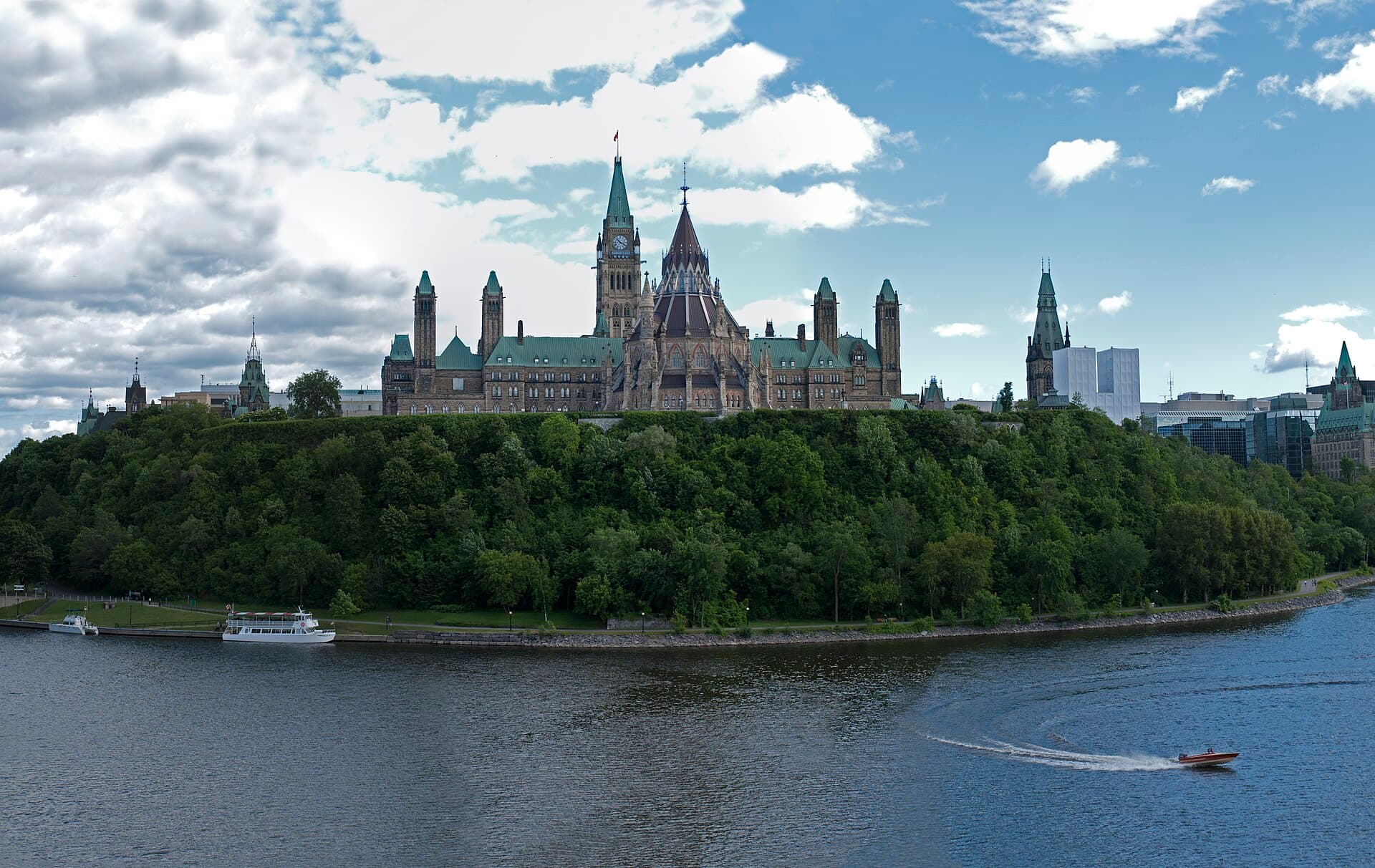
Prime Minister Mark Carney met India's Commerce and Industry Minister Piyush Goyal in Ottawa this week as the two countries pushed to revive negotiations on a free trade agreement that stalled in 2023. Carney told reporters Canada and India were "working fast" and exploring opportunities in energy, agri-food, technology, and education, a shift in tone from the diplomatic deep freeze of the past two years.
Why Goyal is in Canada
Goyal is leading a business delegation of more than 150 members on a two-day visit running from May 25 to 27. The schedule includes meetings with Carney, Trade Minister Maninder Sidhu, and political leaders and business executives in Ottawa and Toronto. The aim, according to Indian officials, is to seek Canadian investment and build commercial ties ahead of a formal free trade agreement.
For Ottawa, the visit is a milestone. It is the most senior trade-focused engagement between the two governments since relations collapsed in 2023 over Canadian allegations that Indian state agents played a role in the killing of Sikh activist Hardeep Singh Nijjar in Surrey, British Columbia.
Goyal told Canadian reporters that Carney's recent visit to Mumbai and New Delhi, the first by a Canadian prime minister in eight years, had "completely changed" the bilateral relationship.
What's on the table
Canadian officials have identified energy exports, agri-food, critical minerals, technology services, and post-secondary education as the most promising files. India is the world's most populous country and one of its fastest-growing major economies. It is also a large potential customer for Canadian liquefied natural gas, potash, uranium, lentils, and educational services.
Indian negotiators are pressing for lower tariff and non-tariff barriers on textiles, pharmaceuticals, and information technology services, as well as easier visa pathways for skilled workers and students. The Indian government has long wanted broader access to Canadian financial services markets for Indian banks and insurers.
Both sides have publicly avoided putting deadlines on the talks, but officials briefed on the file said the two governments would like to land a framework agreement by the end of 2026 if possible, with detailed market access negotiations to follow.
The 2023 freeze and the reset
Previous trade talks were suspended in September 2023 when then-prime minister Justin Trudeau publicly linked Indian state actors to the Nijjar killing. New Delhi rejected the allegation, expelled Canadian diplomats, and froze visa services. Bilateral trade contracted and Indian investment in Canada cooled.
Carney, who took office in 2025 and won a Liberal majority in the April 2026 election, made resetting the India relationship one of his early foreign-policy priorities. His March visit to India was framed as a turning point. Both sides agreed to restore diplomatic representation and to reopen channels on trade.
The Nijjar investigation has not gone away. RCMP charges remain active and consular relations are still cooler than they were before 2023, but trade and investment channels have reopened.
Why Carney wants this deal
For Carney, an India deal is part of a wider strategy to diversify Canadian trade away from the United States. President Donald Trump's tariff regime has hit Canadian steel, aluminum, autos, and lumber, and Ottawa has been actively cultivating alternative markets in Europe, the Indo-Pacific, and South Asia.
Carney has described India as a generational opportunity for Canadian exporters and investors, citing the country's growing middle class, infrastructure needs, and demand for energy and skilled services. He has also pointed to Canada's Indian diaspora, the largest outside of India itself, as a built-in commercial and cultural advantage.
India's foreign direct investment in Canada has historically been modest, concentrated in technology services, pharmaceuticals, and natural resources. Canadian officials hope a trade deal would lift those flows in both directions.
Opposition reaction
The Conservative opposition has been broadly supportive of restarting trade negotiations with India, though Conservative MPs have pressed the government on whether the Nijjar investigation will be insulated from the commercial talks. Pierre Poilievre's office said the party supports diversification of trade away from the United States but wants assurances that justice issues are not bargained away.
The NDP has raised concerns about labour and human rights protections in any final text, particularly around farmer protests and press freedom in India. The Bloc Québécois has flagged dairy and supply management as red lines that should not be reopened.
Education and skilled migration
The education file is a substantial component of the bilateral relationship. India is the largest source country for international students in Canada, with Indian students contributing significantly to the finances of post-secondary institutions across the country. The 2023 freeze and the subsequent federal cap on international student numbers have together produced uncertainty for the sector.
Indian negotiators have flagged the international student question as important to their domestic political base, and they have pressed Ottawa for clarity on visa processing and on post-graduation work permits. Canadian universities and colleges, particularly in Ontario and British Columbia, have lobbied for predictable rules that allow them to plan multi-year intakes.
What it means for Canadians
If concluded, an India trade deal could reduce tariffs on Canadian agricultural exports, particularly pulses, canola, and potash, while opening Indian markets to Canadian education and financial services. Indian negotiators are likely to seek easier rules on temporary entry for skilled workers, which would intersect with Canada's evolving immigration policy.
For Canadian consumers, an agreement could lower prices on Indian-made textiles, pharmaceuticals, and specialty foods, while creating opportunities for Canadian firms to expand in one of the world's largest growth markets. For Indo-Canadian communities, the warming of relations could translate into smoother visa processing and renewed cultural and commercial exchange.
Critical minerals and energy
One of the more promising areas of cooperation is critical minerals, where Canada's resource base in cobalt, lithium, nickel, and rare earths could meet India's growing demand for battery and electronics manufacturing inputs. The federal government has identified critical minerals as a strategic priority and has been positioning Canada as a reliable supplier to allied and friendly nations.
Energy exports are another major area. India's electricity demand continues to grow rapidly, and Canadian liquefied natural gas, uranium for nuclear power, and oil could find significant markets. The Carney government's National Electricity Strategy emphasises Canadian energy security and export potential, providing a backdrop for these discussions.
The geopolitical context
The trade reset comes at a moment when both countries are recalibrating their relationships with Washington. Trump's tariffs have pushed Canada to look beyond North America. India, meanwhile, has been navigating tensions with the United States over Russian energy purchases and with its neighbour Pakistan after a brief military confrontation in 2025.
Carney has positioned Canada as a reliable middle power willing to deepen ties with democracies in the Indo-Pacific, even where bilateral irritants remain. The India file is the most prominent test of that strategy.
The Indo-Canadian business community
The Indo-Canadian business community has been a quiet but persistent advocate for restoring trade relations. Indo-Canadian Chambers of Commerce in Toronto, Vancouver, and Calgary have run their own delegations to India over the past year and have been pressing both governments to convert dialogue into concrete commercial outcomes.
Family-owned businesses with operations in both countries, particularly in food processing, agricultural inputs, hospitality, and technology services, have been among the most affected by the bilateral freeze. Visa delays, banking restrictions, and uncertain travel arrangements have all created friction for businesses that operate across the two markets.
The Carney government has signalled a more responsive approach to these business concerns, including faster visa processing for legitimate commercial travel and greater clarity on bilateral investment screening.
The agricultural and pulse opportunity
India is one of the world's largest consumers of pulses, including lentils and chickpeas, and Canadian producers in Saskatchewan and Alberta have historically been major suppliers. The 2023 freeze added uncertainty to the trade, and the resumption of higher-volume bilateral activity could provide significant relief to Prairie farmers.
Pulse Canada, the national association representing the sector, has been actively engaged with both governments on tariff reductions, quality standards, and shipping logistics. The association has flagged that a trade agreement could meaningfully expand market access for Canadian pulses, beyond the current channels.
The broader agricultural picture, including canola, wheat, and oilseeds, would also benefit from a more predictable bilateral framework. India's growing demand for food imports represents one of the largest opportunity sets in international agricultural trade.
Provincial trade missions
Provincial governments have also been active in the India relationship. Ontario, Quebec, British Columbia, and Alberta have each pursued provincial trade missions to India over the past year, focused on subnational economic ties, education partnerships, and investment promotion.
The provincial activities complement federal diplomatic engagement and reflect the reality that many Canadian commercial relationships, including those in education, technology, and manufacturing, are organised at the provincial level. Provincial premiers have publicly supported the federal reset.
What's next
Goyal and Sidhu are expected to sign a joint statement before Goyal leaves Canada, outlining areas for further negotiation. Technical-level talks between trade officials will then resume in the summer, with the next round likely in New Delhi.
Carney has not yet committed to a return visit to India in 2026, though officials say one is possible if negotiations advance. Indian officials, for their part, are pressing for a Carney visit to coincide with the country's republic day celebrations next January.
For now, the message from both capitals is that the trade dialogue is alive and moving. Whether it can be translated into a final agreement, and whether the Nijjar investigation can coexist with deepening commercial ties, will be the questions that define the next phase.
Spotted an issue with this article?
Have something to say about this story?
Write a letter to the editor


Comments
Be the first to comment.