Carney's Majority Government: What Changes for Canada Now
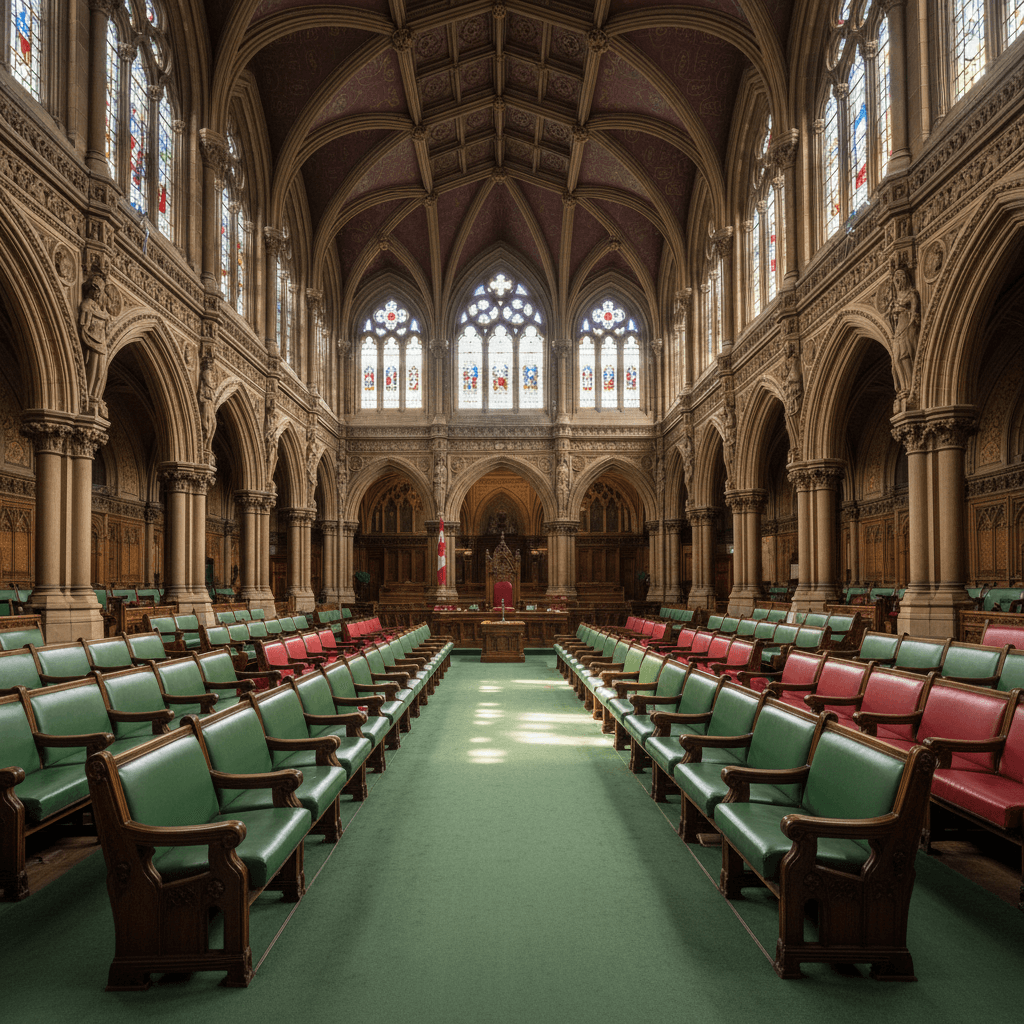
On the evening of April 13, 2026, Prime Minister Mark Carney's Liberal government crossed the threshold that eluded the party for nearly a decade. Three federal byelections held simultaneously in Scarborough Southwest, University-Rosedale, and Terrebonne, Quebec, all swung Liberal, pushing the government's seat count to 174 in the 343-seat House of Commons. Combined with five floor crossings earlier in the parliamentary session, the result is the first Liberal majority government since Justin Trudeau's sweep in 2015, and it reshapes the legislative landscape of Canadian federal politics for the next three years.
How the Majority Was Built
The road to 174 seats was unconventional by historical standards. Rather than arriving on a single election night, the majority was assembled incrementally. Carney's Liberals won the 2025 federal election with a strong minority, capitalising on trade anxiety triggered by the Trump administration's tariff campaigns and positioning the prime minister as a steady economic hand. That minority was then reinforced through floor crossings, as members from the NDP and Bloc Québécois broke with their caucuses over specific votes on economic legislation.
The byelections in Scarborough Southwest and University-Rosedale were triggered by the retirement of two long-serving Liberal MPs. Both ridings are considered reliably Liberal-leaning, but the margins mattered. A weak showing would have signalled softening urban support. Instead, both ridings returned Liberal candidates with comfortable margins, providing an organizational confidence boost heading into a more contested race in Terrebonne.
Terrebonne, situated northeast of Montreal, had been held by the Bloc Québécois for years and represented genuine swing territory. The Liberal win there was attributed to a combination of localised infrastructure promises tied to the federal government's new housing and transit funding commitments, and a broader softening of hard-sovereigntist sentiment among younger Quebec voters who, polling suggests, increasingly prioritise cost-of-living issues over constitutional politics.
With five floor crossings added to the byelection tallies, the Liberal caucus sits at 174, two seats above the majority threshold of 172. The margin is thin but functional. Unless multiple members are simultaneously absent for health or other reasons, the government can pass confidence votes and supply motions without negotiating with the NDP or Bloc on each measure.
What a Majority Actually Changes Legislatively
The practical difference between a strong minority and a working majority is less dramatic in day-to-day governance than headlines sometimes suggest, but it is significant at the margins, and those margins are where ambitious policy lives. Under the previous minority configuration, every budget bill, every major piece of legislation, required at minimum the tacit cooperation of one opposition party. That calculus shaped what the government put forward and how it was framed.
Several pieces of legislation that were delayed or watered down during the minority period are expected to be reintroduced or strengthened. Clean energy procurement rules, which drew NDP objections over labour protections and Bloc objections over provincial jurisdiction, are expected to return in a more robust form. Amendments to the Competition Act that would give regulators stronger tools to challenge foreign corporate consolidation were similarly held up. Both are now viable for the fall legislative calendar.
The government's housing legislation, tied to the Build Communities Strong Fund, will also be easier to advance. Elements of the housing platform that required coalition partners to accept federal conditions on provincial transfers were politically sensitive in minority territory. A majority gives Carney the ability to attach federal affordability and zoning-reform conditions to infrastructure transfers without worrying that a Bloc revolt will collapse the government over perceived jurisdictional overreach.
Foreign policy legislation, including a proposed overhaul of the Magnitsky-style sanctions framework and new rules governing foreign interference in federal elections, is also expected to move more quickly. These measures had broad rhetorical support from all parties but were repeatedly delayed by procedural disagreements about scope and oversight mechanisms. With House committee majorities now falling to the Liberals, the government can control the amendment process more tightly.
Opposition Response and the New Parliamentary Dynamic
Conservative Leader Pierre Poilievre called the byelection results disappointing and reiterated his characterisation of the Carney government as a continuation of Liberal economic mismanagement. The official opposition has 119 seats and retains its role as the government's primary critic, but its ability to force legislative defeats is now eliminated. The Conservatives will focus their energy on the next scheduled federal election, which must occur no later than October 2029, and on building a policy platform that speaks to an electorate that has now handed the Liberals three consecutive electoral victories in various forms.
The NDP, now reduced to 22 seats following the defections, faces an existential strategic question. Under Jagmeet Singh, the party had leveraged its minority-parliament position into a supply-and-confidence arrangement that delivered several tangible progressive priorities: dental care expansion, pharmacare pilots, and increased housing transfers. With that leverage gone, the NDP must define what it stands for when it cannot bargain. Some within the party have publicly argued for a more combative posture; others believe the party should cooperate with the Liberals on select files to demonstrate relevance to voters.
The Bloc Québécois lost Terrebonne, its most symbolically significant defeat in the byelection cycle. Leader Yves-François Blanchet faces internal pressure after the result, though Bloc support across Quebec remains structurally solid in its core ridings. The party will argue that a federal Liberal majority concentrated in Ontario and urban Quebec is an insufficient reflection of the province's broader political will.
Economic Priorities Under a Stable Government
The Carney government has signalled that majority status will allow it to take a longer view on economic planning. The prime minister's background as a central banker and his tenure at the Bank of Canada and Bank of England shape his instinct toward institutional continuity and policy credibility over short-term signalling. With three-plus years of runway before an election, the government is expected to advance its trade diversification agenda more aggressively.
Canada's economic relationship with the United States remains the dominant external variable. The Trump administration's tariff structures, introduced in 2025 and maintained into 2026, have already reshaped trade flows in several sectors. The Carney government has pursued alternative markets in Europe, the Indo-Pacific, and the Middle East with increasing urgency. A majority government can commit to longer-term trade partnership agreements without the risk that an early election would interrupt ratification processes.
Domestically, fiscal management will be the central tension. The government's spending commitments on infrastructure, housing, Indigenous services, and defence modernisation are substantial. The Parliamentary Budget Officer has flagged concerns about the pace of federal debt accumulation. With a majority, the government no longer needs to outbid opposition parties with targeted spending announcements to secure votes. That could mean, in theory, somewhat more fiscal discipline. Whether the Liberals choose that path or expand their spending commitments now that they face no legislative constraint remains to be seen in the fall budget update.
What Carney's Majority Means for Social Policy
Several social policy files that have been in political limbo are expected to advance. The federal government's commitment to a national early learning and childcare system has been a flagship promise, but implementation timelines and funding formulas with provinces have been contentious. A majority government can apply more pressure on holdout provinces that have been slow to sign bilateral agreements, by making compliance a formal condition of federal transfer eligibility.
Dental care expansion, originally negotiated as part of the NDP supply-and-confidence deal, is now government policy and is unlikely to be reversed. The question is whether the government accelerates the rollout timeline or holds at the current phase. Health advocates have pushed for faster inclusion of vision and mental health services within the federal dental framework.
On reconciliation and Indigenous rights, the government has committed substantial new funding, but advocates have noted that financial commitments without structural change to how federal decisions engage with Indigenous communities fall short of what was promised under UNDRIP implementation. The majority gives the government the capacity to pass legislation on free, prior, and informed consent frameworks that were previously too politically delicate to advance in a minority setting.
The 2029 Election Clock Begins
Canadian political history suggests that majority governments often squander their advantages in their third year, when public fatigue and accumulated policy grievances create vulnerabilities. The Chrétien Liberals governed with consecutive majorities because they understood the discipline required to stay ahead of that cycle. The Carney government, starting from a position of legitimate majority status in April 2026, has roughly three and a half years before it must seek renewal from voters.
The structural challenge for the Liberals is that their coalition is geographically and demographically concentrated. Urban Ontario, suburban Quebec, and coastal British Columbia deliver the seats; rural and western Canada remain Conservative territory. Building durable majority support requires either deepening turnout among existing supporters or peeling off swing voters in the 905 belt around Toronto and in suburban Alberta. The government's economic record on housing affordability, trade stability, and cost of living will be the primary determinant of its fortunes in 2029.
For Canadians outside the political class, the arrival of a majority government means legislative predictability. Minority parliaments breed budget cycles that feel transactional, where each spending announcement carries the air of a coalition-maintenance exercise. A majority government can, in principle, make harder choices, absorb short-term unpopularity, and govern with a time horizon longer than the next confidence vote. Whether the Carney Liberals use that space wisely, or whether they treat 174 seats as permission for expansive spending without accountability, will define their legacy.
What to Watch in the Coming Months
The first concrete test of the majority will come with the fall economic update, expected in November 2026. Analysts will watch closely whether the government's fiscal path adjusts now that it no longer needs to purchase NDP or Bloc support. The composition of any new cabinet shuffle will also be telling. Carney has signalled an interest in bringing in outside expertise to key economic portfolios, and a majority parliament makes ambitious cabinet choices less politically costly.
Parliament returns from its spring recess in late April. The first legislative priority is expected to be a supplementary estimates bill to release infrastructure funding under the Build Communities Strong Fund. After that, watchers expect the government to reintroduce the stalled clean energy procurement legislation and begin hearings on Competition Act amendments. The committee landscape, now shaped by Liberal majorities, will determine how quickly these measures move through the legislative process and what they look like when they emerge.