Final Touches at BMO Field and BC Place as World Cup Nears
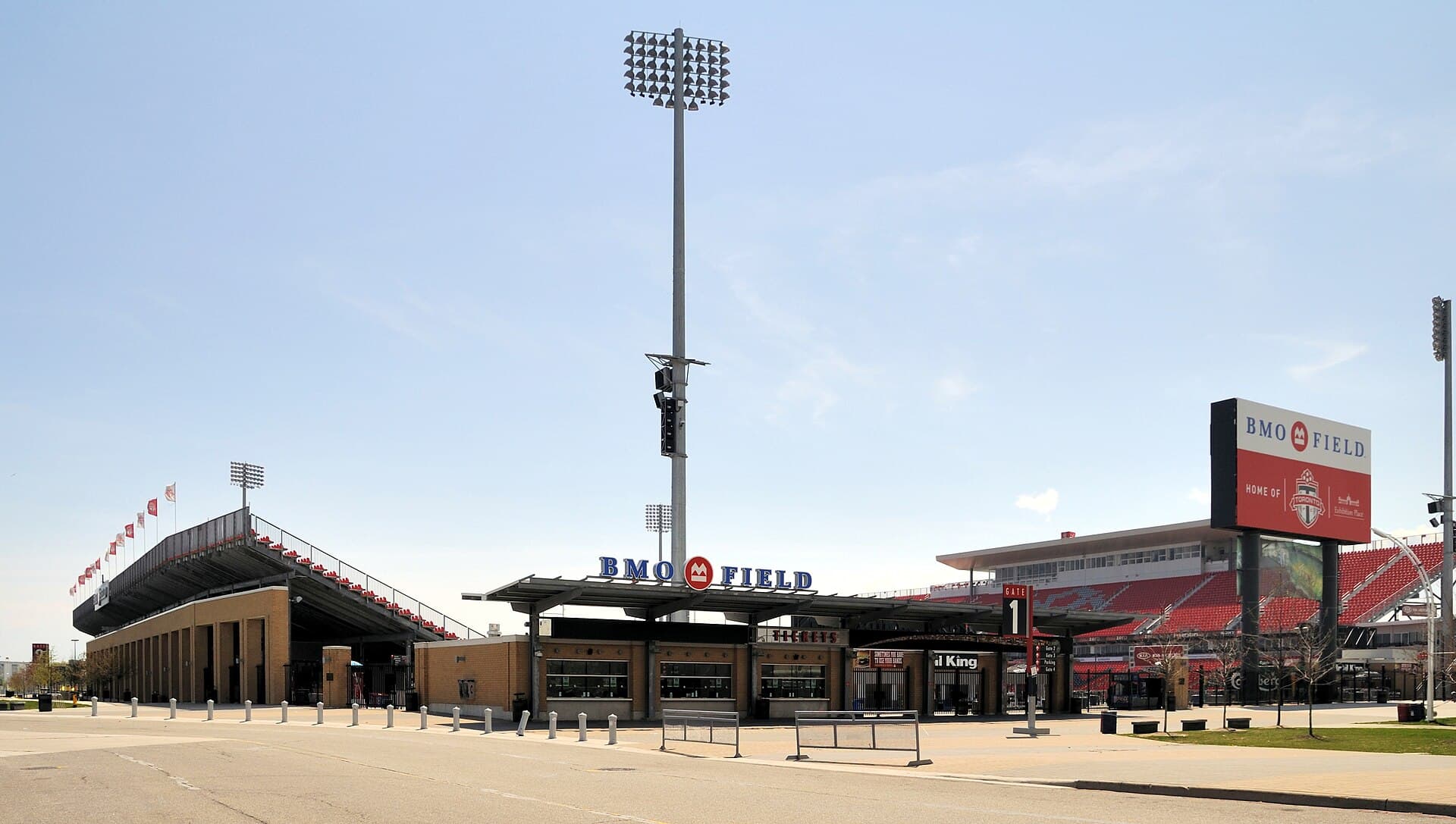
Canadian World Cup planners are deep into final preparations at BMO Field in Toronto and BC Place in Vancouver, with the FIFA World Cup just 19 days from kickoff. Toronto will host six matches, including Canada's tournament opener on June 12, while Vancouver will stage seven matches as the country plays its part in the largest World Cup ever staged.
BMO Field's transformation
BMO Field, the lakefront home of Toronto FC and Toronto Argonauts, has been substantially expanded for the tournament. A $146-million renovation lifted the venue past FIFA's 40,000-minimum capacity requirement, with new sections added and infrastructure upgraded throughout. The City of Toronto contributed $123 million of the cost, while Maple Leaf Sports and Entertainment put in $23 million.
The added sections, new concourses, upgraded broadcast facilities, and enhanced security infrastructure are all part of the makeover. The pitch itself, long a fixture of Toronto soccer, has been kept on a grass surface for both Toronto FC use and World Cup matches.
Final preparation work in late May includes installation of FIFA-mandated tournament branding, broadcast cabling, and last-minute fan zone setups. The venue will host Canada's group stage opener on June 12, expected to draw a sold-out crowd and significant national broadcast attention.
BC Place's grass transition
BC Place in Vancouver has undergone what local officials have described as one of the most complex venue transitions in tournament history. The stadium's artificial turf has been temporarily replaced with a grass playing surface, a FIFA requirement for World Cup matches. Three new elevators have been added, a new scoreboard has been installed, and locker rooms have been upgraded.
The B.C. government has pegged the provincial cost of hosting at between $532 million and $624 million, including a $196-million upgrade of the 55,000-seat stadium. Provincial officials have defended the spending as justified by the economic and reputational benefits of hosting matches in Vancouver.
The grass surface, in particular, has been the focus of intensive attention. Specialised grass crews have been working through the spring to ensure the playing surface meets FIFA standards. The venue will host seven matches across the tournament, including knockout-round games.
The 48-team format
The 2026 World Cup is the first to feature 48 teams, expanded from the 32-team format that has defined recent tournaments. The expansion has reshaped the schedule, with more group-stage matches and a longer overall tournament window.
The tournament kicks off in Mexico City and Guadalajara on June 11 and runs through July 19, with 16 cities in Canada, the United States, and Mexico hosting matches. The format includes 12 four-team groups, with the top two teams from each plus eight of the best third-place finishers advancing to a 32-team knockout round.
The expansion has been controversial in soccer circles, with critics arguing it dilutes the competition. Supporters counter that it gives more nations a meaningful pathway to the tournament and grows the game globally.
Canada's preparations
The Canadian men's national team is in Charlotte, North Carolina, for a pre-tournament training camp. The squad of 32 players will be trimmed to 26 before the tournament. Friendly matches against Uzbekistan on June 1 at Commonwealth Stadium in Edmonton and against the Republic of Ireland on June 5 at Stade Saputo in Montréal will be the final tune-ups.
Canada is in Group B alongside Bosnia and Herzegovina, Qatar, and Switzerland. The team's opener against Bosnia on June 12 will be played in front of a home crowd at BMO Field.
Head coach Jesse Marsch, whose contract was extended through 2030 this week, has set a competitive standard for the squad. The team will look to advance from the group and into the knockout rounds, building on the country's earlier qualification for the tournament and the Copa América semifinal run in 2024.
Toronto's match slate
The six matches at BMO Field include Canada's opener against Bosnia and a mix of group-stage and round-of-32 matches involving other nations. The city has prepared for hundreds of thousands of additional visitors during the matches, with fan zones, transit enhancements, and security measures all part of the planning.
The city's economic forecasters have estimated significant boosts to hospitality, retail, and tourism revenue, though some critics have questioned whether the upfront costs will be fully recovered. The legacy benefits of the renovation to BMO Field, however, are widely seen as positive for Toronto FC and the Argonauts.
Vancouver's match slate
The seven matches at BC Place include both group-stage and knockout matches. The venue's central location in downtown Vancouver gives the tournament a strong urban backdrop, with the city's mountains, harbour, and parks providing the visual setting for international broadcast coverage.
Tourism British Columbia has projected significant visitor numbers, with hotels in the downtown core already largely booked through the tournament window. The city has organised fan zones, expanded transit service, and special policing measures to manage the crowds.
The broadcast and global audience
The 2026 World Cup will be the most broadcast World Cup in history, with rights deals reaching across more than 200 countries and territories. Canadian broadcasters TSN, CTV, and Rogers Sports & Media have positioned themselves for tournament coverage that will reach Canadian audiences across television, streaming, radio, and digital platforms.
FIFA has invested heavily in production infrastructure, including dedicated broadcast facilities at each venue. The Toronto and Vancouver matches will feature multiple international broadcast feeds, with crews from major networks across Europe, South America, Asia, and Africa.
Indigenous reconciliation and the World Cup
Canada's tournament hosting includes specific elements that recognise the Indigenous nations on whose territories the matches will be played. The Toronto host city framework includes engagement with the Mississaugas of the Credit, the Anishinabek, and other Indigenous communities of the region. The Vancouver framework includes the Musqueam, Squamish, and Tsleil-Waututh nations.
Pre-match ceremonies, cultural programming, and community engagement events have been organised in coordination with Indigenous leaders. The tournament represents an opportunity to highlight Indigenous culture to a global audience while maintaining respect for the protocols established by Indigenous nations themselves.
The host city framework in Toronto
Toronto's hosting framework includes commitments on transportation, public spaces, fan zones, and community programming. The City of Toronto has coordinated with the province of Ontario and the federal government on costs, logistics, and security. Fan zones have been organised at Nathan Phillips Square and other downtown locations.
The city's tourism agency, Destination Toronto, has worked with hospitality businesses on capacity planning and visitor information. Restaurants, hotels, and retailers have prepared for the influx, with many running World Cup-themed promotions and dining experiences.
Security and logistics
Security planning has involved coordination between federal agencies, including the Royal Canadian Mounted Police, provincial police, and municipal forces. The Department of Public Safety has led the federal coordination, with major international events expertise drawn from previous Canadian hosting experiences including the 2010 Vancouver Winter Olympics.
Transportation planning has been intensive in both host cities. Toronto's TTC and GO Transit are expecting heightened ridership through the tournament, while Vancouver's TransLink and SkyTrain network are preparing for matchday surges.
The economic case
Federal and provincial governments have invested significant public funds in the tournament, and the economic returns will be closely scrutinised after the matches conclude. Direct visitor spending, broadcast rights revenue, and longer-term tourism benefits are all part of the case for hosting.
Critics have argued that the public cost is high and that legacy infrastructure benefits could be achieved through cheaper investments. Supporters counter that the global visibility of hosting World Cup matches is impossible to replicate through other means.
What it means for Canadians
For Canadian soccer fans, the tournament represents the biggest moment in the country's modern soccer history. The men's team's opening match in Toronto will be one of the most-anticipated sports moments of the year, and the broader tournament will keep international football in the public eye through June and July.
For host cities, the matches mean substantial visitor traffic, traffic disruption, and economic activity. For the broader country, the tournament is a chance to put Canadian cities on the world's screens at a moment when international attention is consistently elsewhere.
The legacy infrastructure
The tournament's legacy in Canada extends beyond the matches themselves. Toronto's renovated BMO Field will continue to serve Toronto FC and the Toronto Argonauts after the tournament, with expanded capacity that will support future events. Vancouver's BC Place upgrades will benefit the Vancouver Whitecaps, the BC Lions, and other tenants for years.
Beyond the venues, the broader investment in training facilities, transportation infrastructure, and tourism capacity is expected to support Canadian sport and tourism for the long term. Federal and provincial governments have framed the World Cup hosting as a generational investment.
The volunteer programme
FIFA's volunteer programme has drawn applications from across Canada. Volunteers will work in venue operations, fan engagement, transportation, hospitality, and many other functions across the tournament window. The programme has been organised in partnership with the host cities and with FIFA's tournament management staff.
For many volunteers, the World Cup represents a unique opportunity to be part of a global event. Training has been ongoing for months, with role-specific orientation and tournament-wide briefings ensuring that the volunteer cohort is ready to support delivery.
What's next
Final preparations at both venues are expected to wrap up in the next two weeks. FIFA delegations have been inspecting venues, training facilities, and broadcast infrastructure throughout May.
The opening match in Mexico City on June 11 will mark the start of the tournament. Canada's opener at BMO Field follows on June 12. For the cities, the federation, and the country's soccer community, the next month is about delivering on years of preparation.
Spotted an issue with this article?
Have something to say about this story?
Write a letter to the editor



Comments
Be the first to comment.