Quebec Liberals Lead in Polls for First Time Since 2022: What Shifted
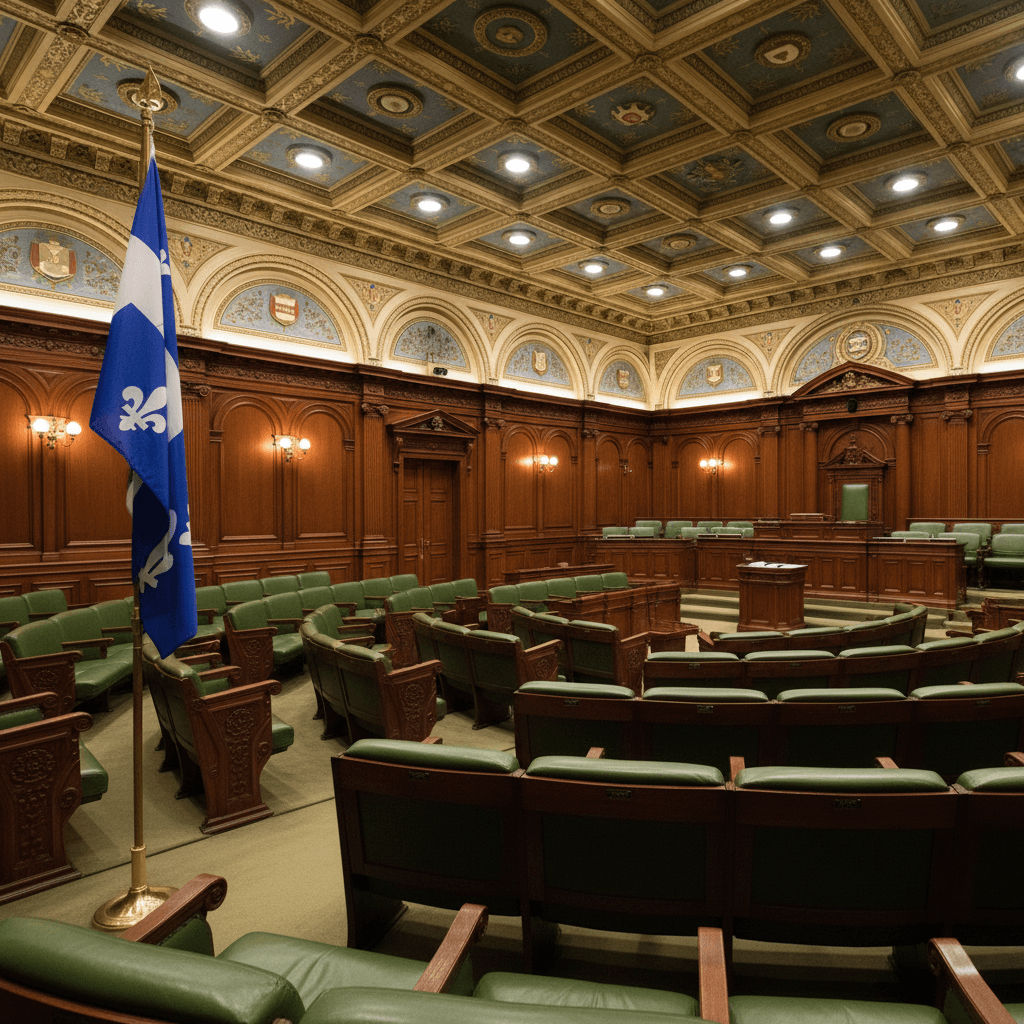
For the first time since losing the 2022 provincial election to the Coalition Avenir Québec, the Quebec Liberal Party is leading in provincial polling. A Léger survey conducted April 2 to 6 and published April 11, 2026 shows the Liberals at 33%, the Parti Québécois at 32%, the CAQ at 26% and Québec solidaire at 8%. The margin between the Liberals and PQ is within the poll's margin of error, making this a statistical tie at the top, but the directional shift is significant.
The last time the Liberals led provincial polling was in the weeks before the October 2022 election, when they nonetheless lost decisively to François Legault's CAQ government. That they have returned to the front of the pack now, four years later and under new leadership, speaks to a combination of Liberal recovery and CAQ erosion rather than a single dramatic shift in Quebec's political dynamics.
The Full Poll Breakdown
Léger's April survey paints a detailed picture of a Quebec electorate in flux. The Liberals at 33% are at their strongest since the 2022 election, having spent much of the intervening period stuck in the mid-20s while the CAQ dominated and the PQ rebuilt under new leadership. The party leads among anglophones and allophones, where it has always been dominant, but the more notable development is its improved standing among francophone voters in the suburbs of Montreal.
The PQ at 32% is a strong showing, reflecting the party's revitalization under Paul St-Pierre Plamondon. The PQ leads among francophone voters outside Montreal, particularly in the regions and smaller cities where national identity and economic anxiety intersect most intensely. Its strength in those communities, which were once CAQ strongholds, is the clearest sign of the CAQ's structural problems heading into the fall campaign.
The CAQ at 26% is a dramatic collapse from the 41% it won in the 2022 election. The governing party's support has eroded steadily over the past eighteen months as housing costs rose, health care frustrations mounted and the departure of popular figures from the caucus fuelled perceptions of disarray. The arrival of Christine Fréchette as new premier and party leader has not yet reversed that decline, though her supporters argue she has only been in the job for days.
Québec solidaire at 8% is well below its 2022 result of approximately 15%. The party's decline reflects the competitive realignment underway on the left and sovereigntist side of the spectrum, where the PQ's revival under St-Pierre Plamondon has drawn back voters who had experimented with solidaire's more explicitly progressive and anti-capitalist platform.
Why Liberal Support Has Recovered
The Liberal recovery reflects several intersecting trends. The most important is a shift in the policy environment that has moved voter concerns from the cultural and identitarian terrain where the CAQ excels to the economic terrain where the Liberals have traditionally been credible.
Housing affordability, cost of living and health care access now dominate every Quebec poll on voter priorities. These are files where the eight-year-old CAQ government has a record that can be scrutinized and criticized. The Liberals, as the principal opposition party from 2018 to 2022, can credibly position themselves as an alternative without bearing responsibility for current conditions.
The party has also benefited from a deliberate rebranding effort under Marc Tanguay, who became leader in 2022. Tanguay has worked to soften the Liberal Party's image on the language and immigration files, acknowledging that some of the party's positions were perceived as too accommodating to minority communities by francophone voters who see the protection of French as a legitimate priority. That repositioning has not cost the party its traditional base among anglophones and allophones, who have few other credible options, while it has opened the door to francophone moderates uncomfortable with the CAQ's direction.
Demographic shifts are also playing a role. Younger voters who came of age in Quebec's post-Quiet Revolution political culture are less animated by sovereignty and language debates and more focused on climate, affordability and social equity. The Liberals have invested in youth outreach and in updating their platform to reflect these concerns, with measurable if still modest results in the 18-to-34 age cohort.
Who the Liberal Leader Is and What They Stand For
Marc Tanguay, a Montreal lawyer who entered the National Assembly in 2018 as MNA for LaFontaine, has led the Liberals since November 2022. His background in labour law and his Montreal base give him credibility on the labour and business files that matter most to the party's francophone professional class constituency.
Tanguay's platform for the fall election is centred on three pillars. The first is a housing plan that goes further than the CAQ's on supply-side intervention, including a commitment to review municipal zoning to enable higher density near transit and a proposal to use the provincial pension fund, Caisse de dépôt, as a vehicle for direct investment in affordable rental construction.
The second pillar is health care, where the Liberals propose a significant investment in primary care reform, including an expansion of family medicine groups and interdisciplinary health teams designed to reduce emergency room pressure. The third is a more inclusive approach to immigration and integration, centred on the argument that Quebec needs more newcomers to address its labour shortages and that the province's integration infrastructure needs funding, not just restriction.
On the national unity file, Tanguay has been clear that the Liberals are a federalist party and have no intention of reopening the sovereignty question. That position has historically cost the Liberals votes among francophone nationalists, but it also provides clarity that some voters, particularly in business and in minority communities, find reassuring.
The PQ's Independence Push and Why It May Be Losing Steam
The Parti Québécois's recovery under Paul St-Pierre Plamondon has been one of the more interesting stories in Canadian provincial politics over the past three years. The PQ, which many analysts had written off as a spent force after consecutive weak showings in 2014 and 2018, won 14 seats in 2022 and has since positioned itself as the most dynamic force on the francophone nationalist side of the spectrum.
St-Pierre Plamondon has run an explicitly independence-focused campaign, arguing that sovereignty is the only lasting solution to Quebec's linguistic, cultural and economic vulnerabilities within Confederation. His personal credibility is high, his communication skills are widely acknowledged, and his party has done effective grassroots organizing in regions the PQ had long neglected.
Despite all of that, the poll showing the PQ at 32% and narrowly trailing the Liberals suggests some ceiling on the independence option's current appeal. Support for Quebec sovereignty has been relatively stable in the high-30s to low-40s range for years, and the PQ's challenge is to mobilize enough of that latent support on election day while also attracting soft nationalist voters who may prefer a CAQ or even a Liberal government to the disruption and uncertainty of a sovereignty referendum process.
The fiscal credibility question is also a recurring challenge for the PQ. The party's election platform, which would need to be funded in the context of an independent Quebec with its own currency, transfers and debt, has been difficult to cost convincingly. When voter attention is focused on housing prices and health care wait times, the abstract benefits of sovereignty are a harder sell than they might be in a period of constitutional grievance.
CAQ's Position and the Fréchette Factor
The CAQ enters the fall election as the governing party with all the advantages and liabilities that incumbency confers. It has eight years of government achievements to point to, including the childcare expansion, investment attraction successes and various income support programs that reach a large portion of the electorate. It also bears responsibility for everything that has not worked, from housing affordability to health care access to the fiscal pressures accumulating as Quebec's debt-to-GDP ratio has risen.
Fréchette's selection as leader was partly intended to address the CAQ's image problem by presenting a newer face while preserving institutional continuity. The bet is that voters who are dissatisfied with the Legault government may be willing to give a new leader a chance rather than switching parties entirely. That bet has worked in other provincial contexts, notably in Quebec's own recent history when Lucien Bouchard revived a flagging PQ government in the late 1990s.
Whether it works for Fréchette depends heavily on whether she can demonstrate in the spring sitting of the National Assembly and in the months before the fall campaign that she is genuinely steering a different course on the issues voters care most about. Early indications suggest she understands the assignment, but the window between now and a fall election call is narrow.
What Issues Are Driving Voter Shifts
Every major Quebec poll conducted in 2025 and early 2026 returns the same priority list. Housing affordability tops the list, followed by health care access, cost of living and the environment. Language and sovereignty, which dominated Quebec political discourse for decades, rank below all of these in most surveys, a shift that has fundamentally changed the competitive terrain.
The language and identity questions have not disappeared. Bill 96's implementation continues to generate friction in the business community and among anglophones and allophones. The debate over religious symbols in public institutions, which the CAQ navigated with its secularism law in 2019, remains a live issue in some communities. But these debates are no longer sufficient to determine election outcomes on their own.
Regional economic anxieties are also a significant driver. Quebec's regions, the communities outside Montreal and Quebec City that the CAQ courted successfully in 2018 and 2022, are experiencing labour shortages, infrastructure deficits and a sense of being deprioritized by a government focused on metro-area economic development. The PQ's strongest gains in recent polling are precisely in these communities, a signal that the CAQ coalition is fraying at its geographic base.
Historical Context and What the Fall Election Could Produce
Quebec's political history since the late 1990s has been characterized by dramatic swings between governments and persistent competitive instability. The province has produced majority governments for the PQ, the Liberals and the CAQ in succession, with each party cycling through periods of dominance and collapse. The pattern suggests that no Quebec coalition is permanent and that voter preferences can shift quickly in the final weeks of a campaign.
The current polling configuration, with three parties within a competitive range, is consistent with a minority government outcome in October. A Liberal minority supported by Québec solidaire, a CAQ minority propped up by pragmatic deal-making, or a PQ minority dependent on the CAQ or Liberals are all conceivable given current numbers. A Liberal majority is possible but would require a significant late-campaign surge. A PQ majority would require even more.
What is clear is that for the first time in four years, the Quebec Liberals have a genuine path back to power. Whether Marc Tanguay and his team can execute on that path through what will be one of the province's most competitive elections in recent memory is the central political question of 2026 in Quebec.