Snowbirds Will Be Grounded After 2026 as CT-114 Tutors Retire
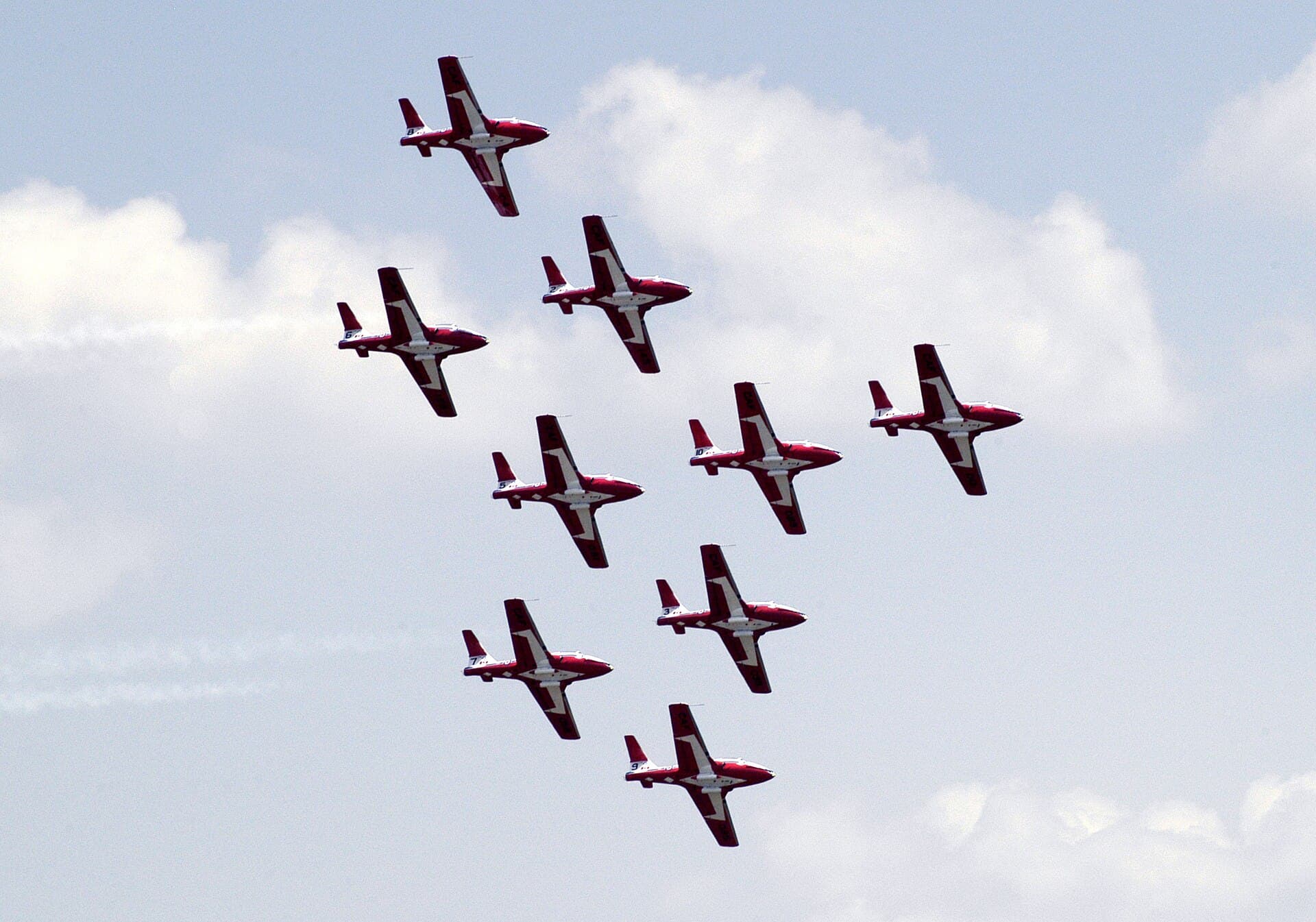
Canada's iconic Snowbirds demonstration squadron will be grounded after the 2026 flying season, with performances expected to resume only in the early 2030s once a new training aircraft arrives. Defence Minister David McGuinty made the announcement in May, confirming what military aviation watchers have long anticipated as the aging CT-114 Tutor jets approach the end of their flying life.
The end of the Tutor era
The CT-114 Tutor has been the Snowbirds' signature aircraft since the squadron's founding more than 50 years ago. The original Tutors entered service with the Royal Canadian Air Force in the 1960s as basic jet trainers and have remained in service well beyond their planned lifespan. The 2026 season will mark the team's 55th anniversary tour and the Tutor's final flying year.
Military officials and aviation experts have warned for decades that the Tutors were operating far beyond their intended design life. Spare parts have become harder to source, structural fatigue has emerged as a constant maintenance challenge, and the cost of keeping the jets airworthy has climbed each year.
The replacement aircraft
The federal government has selected the CT-157 Siskin II, a Canadian designation for a Swiss-made Pilatus PC-21 turboprop, as the Tutor's successor. The Siskin II will serve as the Royal Canadian Air Force's primary training aircraft, with the Snowbirds adopting it as their demonstration platform.
The choice of a turboprop rather than a jet has prompted debate within the aviation community. The PC-21 is widely used by other air forces, including those of Australia, Singapore, Switzerland, and the United Arab Emirates, and is regarded as a highly capable training platform. But for fans of the Snowbirds, the move from jets to turboprops marks a meaningful change in the team's profile.
The grounding timeline
The Snowbirds will fly a full 2026 season, including their traditional summer airshow circuit across Canada and into the United States. After the season ends in the autumn, the squadron will stand down to begin the transition to the new aircraft. Pilots and ground crews will move into training programs, and the existing Tutors will be retired and largely placed in museums or static displays.
The squadron is expected to remain grounded through the late 2020s as the new aircraft are delivered, pilots transition to the new platform, and the team's display routines are reworked. Performances are expected to resume in the early 2030s.
Why now
The decision reflects converging pressures. The Tutors are old and increasingly expensive to maintain. The federal government has committed to major increases in defence spending under the Carney government, including hitting NATO's 2 per cent of GDP target and working toward the higher 5 per cent commitment agreed at last year's Hague summit. Modernising training and demonstration aircraft is part of that broader push.
The Snowbirds also serve a recruitment and morale function for the air force, and the squadron's leaders have argued that flying obsolete equipment undercuts both. A clean break to a modern platform, even at the cost of a few years grounded, was seen as preferable to soldiering on with the Tutor.
The cultural impact
The Snowbirds are one of the Canadian Armed Forces' most visible public-facing units. They perform at hundreds of airshows, public events, and Canada Day celebrations each year, and their distinctive red and white jets are a familiar sight in skies across the country. The squadron is also a recruiting magnet, drawing prospective pilots and engineers to the Canadian Forces.
The loss of those performances for several years will be felt at community events, particularly in smaller communities for which a Snowbirds flyover is a highlight of the calendar. Air shows like the Canadian International Air Show in Toronto and the Atlantic Canada International Air Show in Halifax will need to reshape their headline programming.
The 2026 farewell schedule
The 2026 farewell schedule includes major Canadian airshows and select international appearances. The team has indicated that the routines for the final Tutor season will incorporate tributes to past members of the squadron and signature manoeuvres associated with the demonstration team's history.
Communities along the team's tour route have been preparing for what is expected to be elevated attendance at airshow events, with families travelling considerable distances to see the squadron perform in its iconic Tutor configuration one last time.
Tragedies and the safety record
The Snowbirds have had a difficult safety history in recent years. Two pilots and a public affairs officer have been killed in Tutor accidents in the past several years, and the squadron's flying program has been suspended multiple times for safety reviews. Investigators have repeatedly cited the aircraft's age as a contributing factor in serviceability issues.
The move to a modern platform is widely seen within the air force as a long-overdue safety upgrade, even if it means a temporary loss of demonstration flying.
Reaction across the country
Provincial and municipal leaders have offered mixed reactions. Several Atlantic Canadian communities, where the Snowbirds train, have voiced concern about the loss of summer flying. Saskatchewan officials, with the squadron based at 15 Wing Moose Jaw, have stressed the importance of maintaining the team's headquarters and training base through the transition.
Veterans' groups have generally welcomed the modernisation. Several have argued that the move signals a broader investment in the Royal Canadian Air Force's training and demonstration capability after years of underfunding.
The team's economic and cultural footprint
Beyond the airshows themselves, the Snowbirds generate substantial cultural and economic activity. Communities that host the team for performances regularly report visitor spending in the hundreds of thousands of dollars, supporting hospitality, retail, and tourism businesses. The team's appearances at Canada Day events have become a fixture in many cities.
The squadron also plays a role in Canadian Forces recruitment outreach. Pilots and ground crews engage with school groups, community organisations, and youth aviation clubs, providing visibility for military careers. The grounding period will create a gap in those engagements, though the air force has signalled that other community outreach will continue.
Smaller communities, in particular, have voiced concerns about the loss of summer flyovers. For many towns and rural municipalities, a Snowbirds appearance is a once-in-a-generation moment that draws families from across the region.
The Siskin II's capabilities
The Pilatus PC-21 turboprop, which will become the CT-157 Siskin II in Canadian service, is a modern training aircraft designed to simulate the handling characteristics of fast-jet platforms. It has been adopted by air forces around the world for advanced pilot training and is widely regarded as among the most capable training platforms available.
The aircraft's avionics, instrumentation, and performance envelope provide a comprehensive training environment for pilots who will move on to fighter aircraft like the F-35A. Using the same platform for both routine training and demonstration flying will improve cost efficiency for the Royal Canadian Air Force.
The broader air force modernisation
The Snowbirds transition is one piece of a much larger air force modernisation. Canada is taking delivery of the F-35A Lightning II to replace its CF-18 fighter fleet, has ordered new search and rescue aircraft, and is rebuilding the long-range maritime patrol fleet. Over the next decade, the country has committed to unleash half a trillion dollars in defence investment, including new submarines, sensors, drones, and radar systems.
The CT-157 Siskin II will serve double duty as both a basic training aircraft and the Snowbirds' platform, replacing two roles with one airframe. The Department of National Defence has not yet published a delivery schedule but has indicated initial aircraft will arrive in the late 2020s.
15 Wing Moose Jaw
The Snowbirds have been based at 15 Wing Moose Jaw, Saskatchewan, since the unit's founding. The base has been integral to the team's identity, and the local community has built deep ties to the squadron over decades. Moose Jaw will remain the team's home through the transition.
The base also serves as the country's primary jet pilot training facility through the NATO Flying Training in Canada programme. The arrival of the Siskin II will mark a major modernisation for both the base and the broader flying training infrastructure that Canada operates with allied air forces.
Comparisons with allied demonstration teams
The Snowbirds have always been compared with allied national demonstration squadrons, including the United States Navy's Blue Angels, the United States Air Force's Thunderbirds, the Royal Air Force's Red Arrows, the French Patrouille de France, and others. The transition to a turboprop platform places the Snowbirds in a category that includes the Italian Air Force's Frecce Tricolori, which has flown the MB-339 jet trainer, and other squadrons using training aircraft.
The Red Arrows, the British equivalent, have flown the BAE Hawk jet trainer and have indicated they are also planning a future transition to a new platform. The Patrouille de France flies the Alpha Jet. Each squadron's choice reflects national defence priorities, manufacturing strategy, and the role of the demonstration team.
What's next
For the 2026 season, the Snowbirds will fly a farewell tour with the Tutor, with stops at major Canadian airshows and select international events. The team has indicated the 2026 routines will include tributes to the squadron's history.
After the season, the squadron will move into a multi-year stand-down. The Royal Canadian Air Force has committed to retaining the Snowbirds name, identity, and base location through the transition, with the team expected to relaunch in the early 2030s flying the new turboprop.
For Canadians who want to see the Snowbirds in their classic form, the summer of 2026 is the last chance. After that, the iconic red and white diamond formation will be a memory until a new generation of pilots returns to the skies.
Spotted an issue with this article?
Have something to say about this story?
Write a letter to the editor


Comments
Be the first to comment.