Air Canada Suspends Six Routes as Middle East War Pushes Jet Fuel Costs Higher
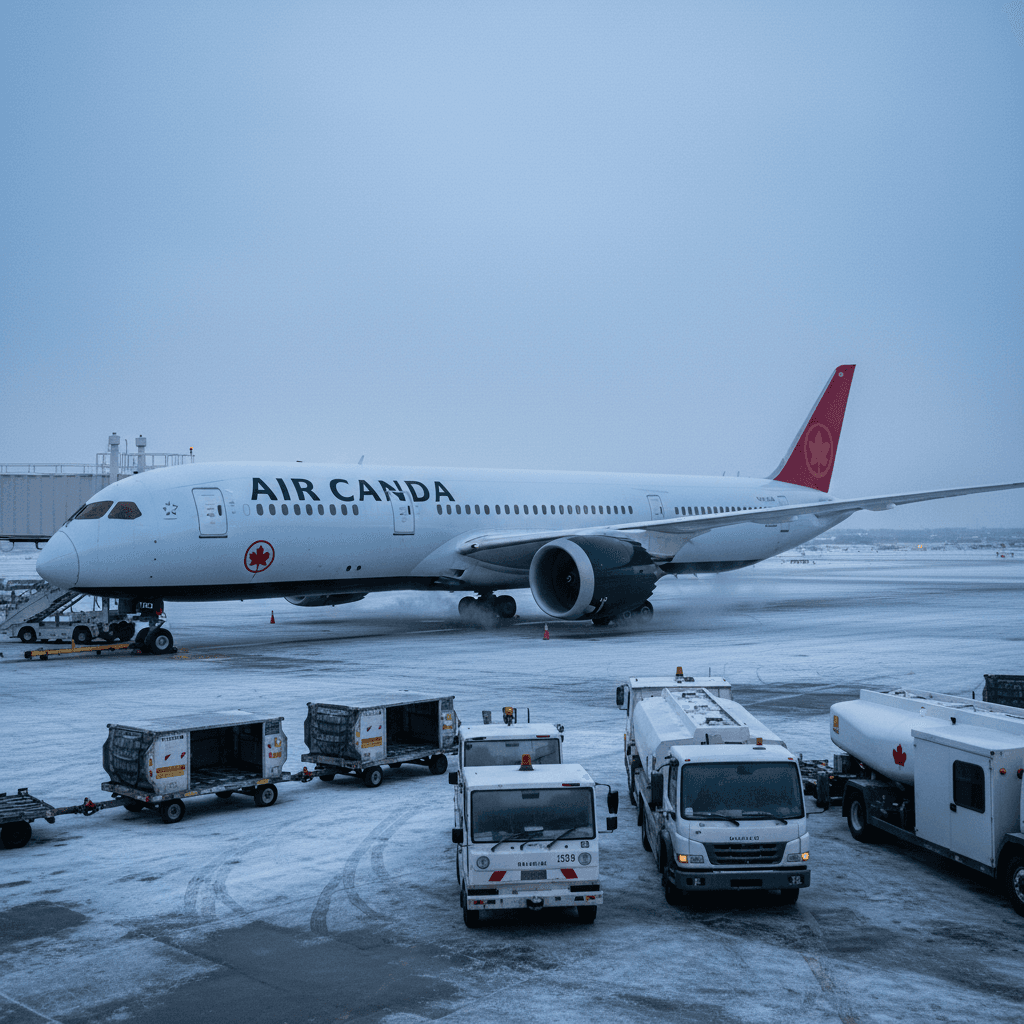
Air Canada has confirmed the suspension of six routes across its domestic and transborder network, telling employees and investors that the services are no longer economically feasible under current jet fuel prices. The carrier, which carries more passengers than any other Canadian airline, said the decision reflects the sharp rise in fuel costs tied to the Middle East conflict and softer bookings on several cross-border corridors.
Among the most prominent cuts, Air Canada is temporarily suspending service between Toronto and Montreal and New York's John F. Kennedy International Airport, effective June 1 through October 25. The carrier will continue to operate its LaGuardia and Newark services for now, though aviation analysts say the JFK pullback is a notable statement about the fragility of trans-border margins.
The airline has also extended prior suspensions on its Toronto-Dubai and Toronto/Montreal-Tel Aviv services through September 7 inclusive, citing airspace closures over Iran and parts of Iraq that have made safe routing unfeasible. Customers booked on those services are being offered rebooking options, alternative destinations in Europe, the United Kingdom, India, and Africa, or full refunds subject to fare rules.
What is being cut
The six suspended routes span a mix of cross-border and longer-haul services that rely heavily on premium-fare demand and the efficient use of wide-body aircraft. Company sources familiar with the review said the cuts concentrate on routes where load factors have been weaker this winter and where the fuel cost per available seat mile has risen faster than Air Canada's ability to recover the expense through higher fares.
The Toronto and Montreal to JFK routes, long considered prestige services for corporate clients, are the most visible casualties. Travellers with plans after June 1 are being redirected to LaGuardia or Newark, both of which remain on the network. Air Canada says it expects to resume JFK service after the autumn, but the timing will depend on fuel markets and the demand outlook.
Beyond the JFK suspension, the carrier has cut or paused selected regional routes where jet fuel costs and crew scheduling constraints have turned previously marginal flights into loss-makers. The airline has not named every route in detail in public disclosures, but has said the cuts are concentrated in markets that are adequately served by alternative carriers or by adjacent routings through larger hubs.
The fuel price shock
The global jet fuel market has been under pressure since late winter, when the Iran conflict disrupted shipping corridors and drove up insurance premiums on tankers transiting the Strait of Hormuz and the Red Sea. Refining margins on jet fuel, which had been narrowing early in the year, widened sharply as airlines scrambled to secure supplies and as regional airspace closures forced longer routings that consumed more fuel.
According to industry data, jet fuel prices in North America are running well above their levels at the start of the year, with regional differentials adding further pressure in central Canada. For airlines that hedge only part of their fuel consumption, the unhedged portion flows directly to operating costs. Air Canada has said its hedging book has cushioned part of the impact but has not offset it entirely.
The broader aviation industry is feeling the same squeeze. Delta, Lufthansa, Emirates, and other major carriers have extended cancellations on Middle East services into the autumn, and some have reduced frequencies on North American and European routes as crews, aircraft, and fuel budgets are reallocated. Industry analysts estimate that worldwide more than thirty thousand flights have been affected since the start of the year.
What passengers should expect
For Canadian travellers booked on the suspended services, the most immediate question is rebooking. Air Canada has said affected passengers will be offered three options: a rebooking to the same destination between September 8 and December 15 where available, a rebooking to an alternate destination in Europe, the United Kingdom, India, or Africa at no additional cost, or a refund or travel credit subject to fare rules. Aeroplan members can elect to receive the value of their booking as AC Wallet credit.
On the cross-border side, travellers headed to New York City will still have Air Canada options through LaGuardia and Newark, though those alternatives may not align perfectly with meetings or connections originally planned around JFK. The carrier is working with corporate travel managers to adjust itineraries and says it will prioritise its elite Aeroplan members when reaccommodation capacity is tight.
The Canadian Transportation Agency has reminded passengers that major airlines must provide alternate transportation or refunds when services are cancelled for reasons within airline control. Disputes over refund timelines and service standards have been a recurring source of complaints in recent years, and consumer advocates have urged travellers to keep documentation of their bookings and the airline's communications.
Economic implications for Canada
The route suspensions matter beyond the inconvenience to individual passengers. The JFK pair alone supports a significant volume of business travel between Toronto and Montreal and New York's financial district, and the reduction in capacity is likely to increase fares on competing services. The Greater Toronto Airports Authority and Aeroports de Montreal rely on strong cross-border connectivity as an economic amplifier, and any extended reduction in service could slow traffic growth at both hubs.
For the Canadian tourism sector, the timing is unhelpful. The June to October window covers the peak summer season for inbound travel from the United States and overseas. While LaGuardia and Newark absorb much of the cross-border demand, tour operators and hotel groups worry that headlines about Canadian route cuts could feed a perception of reduced service.
The federal government's temporary suspension of the excise tax on aviation fuel, announced this week as part of a broader fuel tax holiday, will provide a small cushion for the aviation sector. Industry associations, however, say the underlying problem is the global price of jet fuel, not the federal levy, and that the holiday will be a modest offset rather than a fix.
Pressure on Air Canada
Air Canada is navigating a difficult combination of factors. The cross-border market has softened as a result of the trade dispute with the United States, which has dampened business travel and shifted some leisure traffic toward domestic destinations. The Middle East conflict has shut down or complicated some of the airline's most profitable long-haul services. At the same time, the carrier is trying to manage labour relations, aircraft delivery delays, and a competitive domestic market.
The airline's shares have been pressured on the Toronto Stock Exchange in recent weeks as analysts have revised earnings expectations lower. Scotiabank, RBC Capital Markets, and National Bank Financial have all trimmed their near-term forecasts, citing the combination of higher fuel costs and weaker cross-border demand. Company officials say the route reviews are part of a broader discipline that also includes fleet optimisation and capacity adjustments in less profitable markets.
Labour groups, including the Air Canada Pilots Association and the Canadian Union of Public Employees, which represents cabin crew, have said they are watching staffing implications closely. The carrier has indicated that active suspensions will not lead to immediate layoffs, in part because affected aircraft and crews can be redeployed, but unions say prolonged route cuts could eventually trigger scheduling changes.
Airport and regional impact
Toronto Pearson and Montreal-Trudeau, the country's two largest airports by international passenger volume, will feel the capacity reduction in different ways. Pearson, already operating well above its pre-pandemic passenger totals, has slack capacity at peak hours in the international terminal that can absorb some reshuffling. Trudeau, which has been running near operational limits during peak summer months, may find the loss of a daily JFK frequency a partial relief for terminal and air traffic congestion, even as it chips away at the airport's cross-border economic footprint.
Regional airports that rely on Air Canada Express services to feed the main hubs are also watching the review closely. Smaller communities from Northern Ontario to the Maritimes have warned that broader capacity retrenchment could translate into reduced connectivity for their residents and businesses. The federal government's remote air services program provides some support for essential routes, but most regional connectivity decisions are made strictly on commercial terms.
Competitive landscape
WestJet, Porter Airlines, and Flair Airlines are expected to pick up some of the slack on domestic corridors where Air Canada has reduced frequencies. Porter, which has rapidly expanded its Embraer E195-E2 fleet and its cross-border network out of Toronto Pearson, has said it sees opportunities in markets where Air Canada is trimming schedules, though its own economics are subject to the same fuel pressures.
American, Delta, and United, which operate extensive services between the United States and Canada, are likely to absorb the bulk of JFK-bound travel. Analysts note that while capacity reallocation can protect passenger options in the short term, a permanent reduction in Canadian-flagged service between Canadian cities and New York's main international gateway would be a small but symbolically significant retrenchment.
What's next
Air Canada will update its capacity guidance when it reports first-quarter results later this spring. Investors and analysts will watch for details on how the carrier plans to manage the remainder of the summer schedule, whether additional routes might come under review, and how quickly the company expects to restore service on suspended corridors.
Much depends on factors outside any airline's control. A de-escalation of the Middle East conflict that reopens airspace and eases oil prices would clear the path for a faster return of the Tel Aviv and Dubai services. A stabilisation in Canada-U.S. trade relations could revive business travel demand and help the Toronto and Montreal to JFK routes pencil out again. A prolonged stretch of elevated fuel prices, by contrast, could force further route reviews across the industry.
For now, Canadian travellers planning summer trips should check their itineraries, confirm details with Air Canada, and prepare for a season in which the country's flag carrier is flying a smaller network than it had originally planned.