Coast Guard to Get $816 Million Arctic Boost as Ottawa Tightens Northern Security
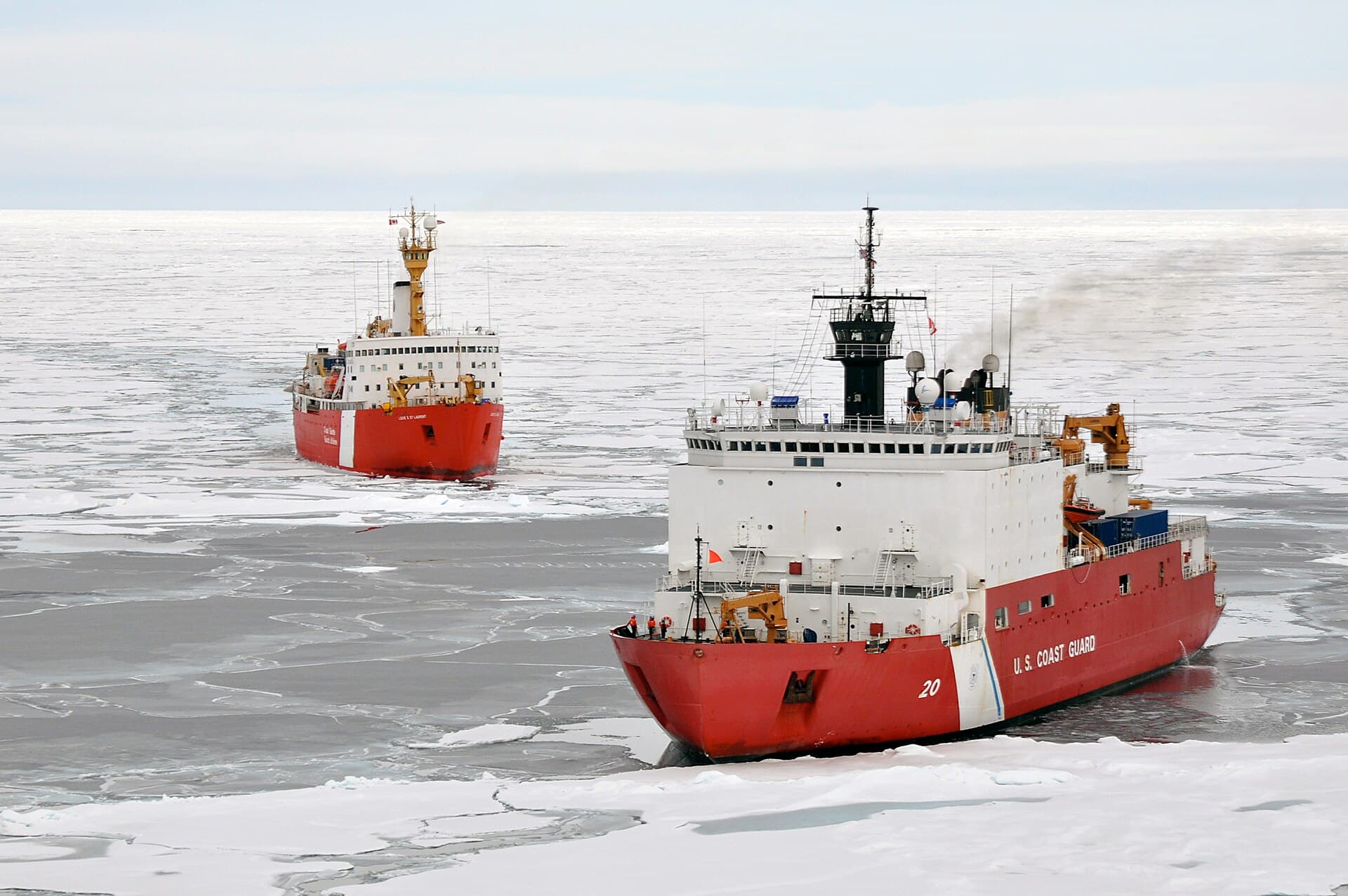
The federal government announced this week that the Canadian Coast Guard will receive an additional eight hundred and sixteen million dollars over the next seven years to expand Arctic surveillance, harden southern port security, and add new drones, radar, and patrol vessels to a service that until recently was treated primarily as a civilian search and rescue agency.
Public Safety Minister Bill McGuinty unveiled the plan in Ottawa alongside Coast Guard Commissioner Mario Pelletier, framing the funding as the next instalment in Prime Minister Mark Carney's broader Arctic and defence strategy. The announcement follows the prime minister's March pledge to invest more than forty billion dollars in northern infrastructure and military capability, and a separate move earlier this year to formally reposition the Coast Guard within Canada's security architecture.
Officials said the new money will be spread across maritime domain awareness systems, vessel acquisition, training, and joint operations with the Royal Canadian Navy. A portion will also fund expanded coast guard operations along the Pacific coast and in the Gulf of St. Lawrence, where smuggling, illegal fishing, and migrant interceptions have grown more complex.
What the money will buy
The largest single share of the funding will go toward maritime surveillance, including long-endurance drones, additional radar coverage, and upgraded data fusion systems that allow the Coast Guard to share real-time intelligence with the navy, the Royal Canadian Mounted Police, and the Department of National Defence. Officials said the goal is to build a single, integrated picture of activity across all three of Canada's ocean approaches.
New patrol vessels are also part of the package, with Ottawa promising to accelerate the delivery of medium-endurance ships designed for Arctic conditions. Those vessels will complement the planned fleet of polar icebreakers being built at Seaspan in North Vancouver and at Chantier Davie in Quebec, projects that together aim to make Canada what officials have described as an icebreaking superpower.
Coast guard officials said additional investments will also flow to remote ground stations, communications infrastructure, and search and rescue capacity in northern communities. The funding is designed to ensure that as commercial shipping increases through the Northwest Passage during ice-free summer windows, Canada has the assets and personnel to monitor and respond to incidents.
A coast guard reshaped for security
The announcement comes against the backdrop of a broader transformation of the Canadian Coast Guard. Earlier this year, the federal government formally repositioned the agency within Canada's security framework, allowing it to take on a more active role in counter-smuggling, port security, and surveillance missions that had traditionally been split between the RCMP, the navy, and the Canada Border Services Agency.
Officials emphasised that the Coast Guard will continue to be an unarmed civilian agency, but its mandate now explicitly includes contributions to maritime security and law enforcement support. The agency has begun cross-training personnel with navy and RCMP partners and is expected to deploy mixed crews on certain patrols in the coming years.
The shift reflects a broader recognition in Ottawa that Canada's maritime approaches are no longer the relatively quiet spaces they were a decade ago. Russian naval activity in the North Atlantic has grown, Chinese research vessels have repeatedly probed the High Arctic, and organised crime networks have stepped up smuggling operations through Atlantic and Pacific ports.
Arctic sovereignty in focus
For the Carney government, the funding is also a tangible response to the long-running political debate about whether Canada is doing enough to assert sovereignty over the Arctic. Successive governments have promised to invest in the north, only to fall short on procurement and infrastructure timelines that stretch decades.
The current plan, officials argue, is different in scale and in coordination. The Coast Guard funding sits alongside investments in Arctic forward operating locations at Inuvik, Yellowknife, Iqaluit, and Goose Bay, the planned acquisition of the Saab GlobalEye surveillance aircraft, the negotiation of a new submarine fleet, and the expansion of polar-orbiting satellite coverage. Combined, these programmes represent the most concentrated Arctic investment in Canadian peacetime history.
Indigenous leaders in the territories have urged Ottawa to ensure that Arctic spending is tied to meaningful benefits for northern communities, including job training, infrastructure upgrades, and the use of Indigenous knowledge in monitoring missions. Officials said the Coast Guard plan includes specific allocations for community-based partnerships and for cooperation with the Canadian Rangers, who provide much of the on-the-ground presence in remote regions.
Southern ports and the smuggling problem
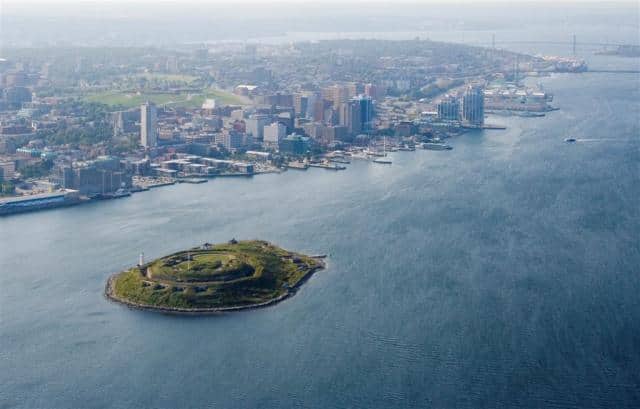
While Arctic security has dominated the political headlines, a significant share of the new funding will also be spent on the country's southern approaches. The Port of Vancouver, the Port of Montreal, and Halifax have all become major chokepoints for drugs, firearms, and money laundering, and the Coast Guard has been asked to play a larger role in interdicting suspicious vessels before they reach those ports.
Officials said additional drone coverage will be deployed off the Strait of Juan de Fuca and the Gulf of St. Lawrence, with intelligence shared in real time with the RCMP and CBSA. Coast guard patrols are also expected to increase along the Great Lakes and the St. Lawrence Seaway, where small-vessel smuggling has grown.
The political messaging around southern ports has dovetailed with the Carney government's response to repeated American complaints about cross-border drug flows, particularly fentanyl. Ottawa has used the new investment to push back against suggestions that Canada is not contributing enough to continental security, a recurring theme in tariff negotiations with Washington.
The labour and recruitment challenge
Recruiting and retaining the people needed to operate the expanded Coast Guard remains a significant challenge. The agency has struggled with vacancies in technical trades, ship engineering, and Arctic operations, and the new investment will require a corresponding surge in hiring and training.
Officials said additional funding will flow to the Coast Guard College in Sydney, Nova Scotia, and to specialised training programmes for Arctic deployments. The agency is also working with provincial colleges to establish accelerated technical streams that can move new recruits through training faster than the current pipeline allows.
The union representing Coast Guard members welcomed the announcement but cautioned that pay, working conditions, and family support measures must keep pace if the agency hopes to fill the new positions. Without a recruitment surge, even the best-equipped fleet risks sitting idle.
Reaction across parties
The Conservative Party's defence and public safety critics praised the increase in resources but argued that the funding is still insufficient given the scale of the challenge. Critics also pressed the government to publish detailed delivery timelines for the new vessels and drones, noting that previous Coast Guard procurement programmes have suffered from extended delays.
The Bloc Québécois called for more of the resulting work to flow to Quebec shipyards and supply chains, particularly given the strong defence and shipbuilding base in the Quebec City and Lévis region. The NDP focused on Indigenous benefits and on whether the increased Coast Guard role in law enforcement might erode the agency's civilian character.
The Carney government responded that detailed delivery schedules will be released as procurement contracts are signed and that Canadian content commitments will be embedded in every major contract. Officials said an updated Coast Guard fleet plan will be published before the end of the year.
International cooperation in the Arctic
The Coast Guard investment is being shaped in part by Canada's deepening cooperation with allied northern coast guards and navies. The Arctic Coast Guard Forum, which brings together the eight Arctic states, has become a venue for sharing best practices on search and rescue, environmental response, and increasingly on maritime domain awareness. Canadian officials have argued that effective Arctic security requires sustained allied cooperation, particularly with Denmark, Norway, Iceland, and the United States.
Beyond the Arctic Forum, Canadian Coast Guard officers have participated in joint training exercises with their Norwegian, British, and Danish counterparts, focusing on icebreaking operations, polar search and rescue, and cooperation in disrupted communications environments. Those exercises have built relationships that pay off when emergencies do occur in remote regions.
The international cooperation also extends to scientific work. Canadian Coast Guard vessels routinely support climate, oceanographic, and biological research conducted by Canadian and allied scientists. The new funding will sustain and expand those scientific partnerships, which contribute to the broader understanding of how the Arctic environment is changing.
Search and rescue capacity
Search and rescue remains the most visible day-to-day function of the Canadian Coast Guard and one of the most important reasons for sustained federal investment. The agency responds to thousands of incidents each year along Canadian coastlines and on the Great Lakes, ranging from sinking vessels to medical emergencies on fishing boats to overdue pleasure craft in remote bays.
The new funding will support additional search and rescue stations in northern coastal communities, expanded helicopter rotations, and improved coordination with the Canadian Armed Forces' search and rescue squadrons. Joint exercises with provincial first responders and Indigenous community-based search and rescue teams will also be expanded.
Officials have emphasised that the broader security mandate of the Coast Guard will not displace its core search and rescue mission. On the contrary, additional resources and improved technology are expected to enhance the agency's ability to respond to emergencies, particularly in remote regions where response times have historically been long.
What's next
The first tranche of the new funding will flow over the coming twelve months, with priority placed on surveillance assets and Arctic operations. Larger vessel acquisitions will take longer, with new patrol ships expected to enter service later in the decade.
For Carney, the announcement is part of a deliberate effort to demonstrate that his government can deliver on long-promised investments in defence and sovereignty without waiting for ideal economic conditions. With trade pressure from Washington unlikely to ease soon, the political case for visible, tangible spending on Canadian security has only grown.
Spotted an issue with this article?
Have something to say about this story?
Write a letter to the editor
Comments
Be the first to comment.