Germany Makes $12 Billion Submarine Pitch to Canada With Promise of 50,000 Jobs
Germany's defence minister, Boris Pistorius, made a personal pitch in Ottawa this week to convince Prime Minister Mark Carney's government to award a contract worth up to twelve billion dollars to ThyssenKrupp Marine Systems for the construction of up to twelve Type 212CD submarines, promising to deliver the first four boats by 2036 and to generate roughly fifty thousand Canadian jobs over five years.
The visit, his third trip to Canada in three years as defence minister, marked the most aggressive sales push yet for the Type 212CD programme as Ottawa nears a final decision between Germany and South Korea on the largest naval procurement in modern Canadian history. The federal government has told both bidders it intends to choose a preferred supplier by the end of June, narrowing a competition that has dragged on since the summer of 2025.
Pistorius arrived at the CANSEC defence trade show in Ottawa accompanied by an investment package, government-to-government endorsements from Berlin and Oslo, and a detailed economic case prepared with ThyssenKrupp and Norway's Kongsberg group. The pitch represents one of the most coordinated foreign defence sales efforts ever directed at Canada and underscores the strategic value Europe places on locking the country into a transatlantic submarine architecture.
What is on offer
The Type 212CD is a conventionally powered submarine, jointly developed by Germany and Norway, designed for operations in the North Atlantic and the Arctic. It is built around an air-independent propulsion system that allows it to remain submerged for weeks at a time without surfacing, an essential capability for patrols beneath the polar ice. Germany has already contracted to build six boats for itself and four for Norway, with construction now underway at ThyssenKrupp's Kiel shipyard.
The Canadian offer would add up to twelve more boats to that production line, making the combined German-Norwegian-Canadian fleet the largest and most modern conventional submarine force in the world. NATO planners have argued that such a fleet would dramatically improve the alliance's ability to track Russian and Chinese submarines in northern waters, areas where Canadian and allied capability has eroded steadily over the past two decades.
Pistorius and ThyssenKrupp executives emphasised that the design is fully mature and that production lines are running, allowing earlier deliveries than a brand-new design would permit. They told reporters in Ottawa that the company could reallocate boats currently destined for German or Norwegian use to Canada in exchange for adjusted later deliveries, getting Canadian submarines in the water years sooner than competing offers.
The economic case
The German pitch leans heavily on economic numbers. ThyssenKrupp estimates the project would inject roughly eighty-six billion dollars into the Canadian economy over its lifetime, with peak employment of about fifty thousand workers across direct manufacturing, supply chains, training, and long-term sustainment. Much of that work would be concentrated in Atlantic Canada and Quebec, with smaller clusters of suppliers in Ontario and British Columbia.
Federal officials have been cautious about endorsing those figures, noting that contractor estimates almost always exceed the eventual reality on large defence programmes. But the order of magnitude is real, and the Department of Industry has been quietly building a list of Canadian firms with the technical capacity to participate in submarine construction, maintenance, and combat system integration.
The economic story is politically important for the Carney government, which has promised to use major defence spending to anchor industrial renewal in regions hurt by the collapse of cross-border manufacturing under President Donald Trump's tariff regime. A submarine programme spread across Halifax, Quebec City, and other yards could become one of the largest single industrial investments of the decade.
The South Korean alternative
Berlin's main competition comes from South Korea's Hanwha Ocean, which is offering a version of its KSS-III submarine and has promised similarly aggressive delivery schedules and Canadian industrial benefits. Hanwha executives have argued that South Korea's recent experience building large submarines and exporting them abroad gives it an edge in price, schedule, and risk management.
Some analysts have suggested that Ottawa might consider splitting the order between the two suppliers, taking a smaller number of each design. The federal government has publicly resisted that idea, arguing that a split fleet would inflate sustainment costs and complicate crew training. Officials have indicated they intend to pick a single supplier and a single design.
Pistorius's personal visit, and his willingness to bring Norway and senior German industrial leaders into the room, was widely read in Ottawa as a sign that Berlin views the contract as a strategic prize worth fighting hard for. South Korean officials are expected to make a counter-visit before the June decision.
Why Ottawa is buying submarines
Canada's existing Victoria-class submarine fleet, acquired second-hand from the United Kingdom in the late 1990s, is approaching the end of its service life. Years of maintenance challenges have left the boats available only intermittently, and the navy has struggled to keep a single submarine at sea for sustained patrols.
The strategic environment has also shifted. Russian submarine activity in the North Atlantic has surged since the 2022 invasion of Ukraine, and Chinese long-range maritime activity in the Arctic has grown alongside Beijing's investments in icebreakers and polar logistics. Canadian defence planners have argued that the country needs a credible undersea presence in both oceans to deter incursions, protect undersea cables and infrastructure, and contribute to NATO operations.
The Carney government has framed the submarine project as a cornerstone of its broader Arctic and defence strategy, alongside the Saab GlobalEye surveillance aircraft, expanded coast guard capability, and accelerated F-35 deliveries. Combined, those programmes represent the largest peacetime defence investment in Canadian history.
Industrial and basing implications
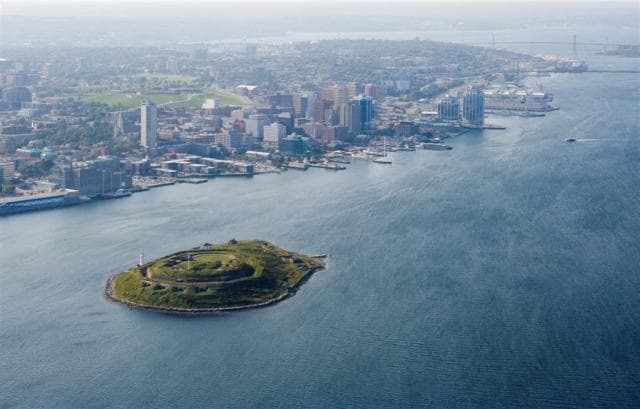
Atlantic Canadian leaders have been lobbying intensely for any submarine programme to anchor a sustained construction and maintenance footprint in Halifax, where Irving Shipbuilding has been building Royal Canadian Navy combatants for more than a decade. Quebec officials have pushed for a share of combat system integration work, drawing on the province's strong defence electronics sector.
British Columbia, home to the West Coast naval base at Esquimalt, is expected to receive a share of the boats, although the precise basing balance between the Atlantic and Pacific has yet to be decided. The Royal Canadian Navy has historically split its submarine fleet between the two coasts, and that pattern is likely to continue with a larger Type 212CD or KSS-III force.
The German bid includes commitments to establish a Canadian sustainment and training centre, transfer technical data, and license intellectual property for follow-on Canadian work. ThyssenKrupp executives have argued that this kind of deep industrial partnership distinguishes their offer from a more transactional foreign purchase.
Risks and unknowns
For all the political momentum, the submarine programme carries substantial risk. Major naval shipbuilding projects routinely run over budget and behind schedule, and Canada's recent track record on defence procurement has been mixed at best. The promise of four boats by 2036 is ambitious by any standard and would require a uniquely cooperative arrangement with German and Norwegian fleets to come close to delivery.
Some analysts have also questioned whether Canada has the trained submariners to crew a fleet of up to twelve boats. The Royal Canadian Navy has struggled to recruit and retain submarine crews for the existing four-boat fleet, and a tripling of the force would require sustained personnel growth and a significant expansion of training infrastructure.
Finally, the politics of choosing between Germany and South Korea will not be simple. Both countries are close partners of Canada, and the losing bidder will likely lobby intensely for offset work on follow-on contracts. The choice will set the tone for Canadian defence relationships across the Atlantic and Pacific for years to come.
The South Korean counter-pitch
Hanwha Ocean, the South Korean shipbuilder behind the competing KSS-III submarine offer, has emphasised the speed and discipline of South Korean industrial delivery, the maturity of its in-service experience, and aggressive industrial partnership offers for Canadian yards and suppliers. South Korean naval officials have visited Ottawa and Halifax multiple times over the past year as part of the campaign.
The South Korean bid has also been backed by Seoul's broader strategic outreach to Canada. South Korea has positioned itself as a key Indo-Pacific partner for Ottawa, with growing cooperation on intelligence, technology, and trade. The submarine pitch sits within that wider relationship and is expected to be defended vigorously through any decision process.
Some analysts have argued that the South Korean bid offers price advantages that the German offer cannot match, while the German pitch emphasises long-term integration with NATO operations. The federal evaluation team has been weighing those tradeoffs across multiple dimensions, including the differing geopolitical signals each choice would send.
The transatlantic security alignment
Beyond the technical and economic considerations, the submarine decision will send a powerful signal about Canada's strategic alignment. Choosing the German bid would deepen Canada's integration with European naval planning, particularly with Germany and Norway, and would situate the Royal Canadian Navy at the centre of a transatlantic underwater surveillance architecture.
That alignment would have implications for everything from joint patrol scheduling to munitions interoperability to officer exchange programs. European partners have been pushing hard for Canada to play a larger role in North Atlantic security, and the submarine choice would be one of the most consequential indicators of how Ottawa sees that role.
The choice would also resonate with broader European debates about defence independence from the United States. As Trump administration policies have raised questions about the reliability of American security guarantees, European countries have been investing heavily in their own capabilities. A Canadian decision to align with the German-Norwegian submarine programme would be a meaningful contribution to that broader effort.
What's next
The federal government is expected to announce its preferred supplier before the end of June, kicking off a year or more of contract negotiation, industrial benefit planning, and parliamentary review. First steel is unlikely to be cut for several years even under the most optimistic schedule.
For Pistorius, the trip to Ottawa was both a sales mission and a strategic gesture, demonstrating Berlin's willingness to invest political capital in a major partnership with Canada at a moment when the transatlantic alliance is under strain. For Carney, the decision will be one of the defining defence calls of his mandate, and one that will shape Canadian naval capability for the second half of the century.
Spotted an issue with this article?
Have something to say about this story?
Write a letter to the editor

Comments
Be the first to comment.