Gaza Ceasefire Fragile as Warning of Permanent Divide Grows
The Gaza ceasefire reached between Israel and Hamas in October 2025 remains in place but increasingly fragile, with the senior representative of the international Board of Peace warning that the deteriorating status quo risks becoming permanent and presenting a roadmap detailing obligations for both Israel and Hamas to implement a more durable ceasefire. Canadian officials have continued to engage with the multilateral effort to stabilise the situation, even as the humanitarian conditions in Gaza remain extremely difficult and Israeli airstrikes have continued intermittently.
The current situation in Gaza
The ceasefire that ended the most intense phase of the war between Israel and Hamas was agreed in October 2025, more than two years after the Hamas attack on southern Israel on October 7, 2023. Since the ceasefire took effect, the situation in Gaza has been characterised as neither war nor peace, with limited reconstruction, continued Israeli military operations and ongoing humanitarian needs that have remained desperately unmet.
Since the ceasefire began, Israel has gradually expanded the Yellow Line westward and now controls roughly 58 per cent of Gaza, compared with 53 per cent under the original ceasefire map. The territorial expansion has been a source of significant tension between Israel and the broader international community engaged in stabilising the post-war environment.
Israeli airstrikes have continued in Gaza, with the Palestinian Ministry of Health reporting that more than 850 people have been killed in such strikes since the ceasefire went into effect. The strikes have been concentrated in areas Israel says are being used for renewed Hamas activity, though humanitarian organisations have reported significant civilian casualties.
The Board of Peace warning
Nikolay Mladenov, the high representative overseeing the international Board of Peace established for Gaza, has warned publicly that the deteriorating status quo risks becoming permanent. Mladenov has presented a roadmap detailing obligations for both Israel and Hamas to implement a more sustainable ceasefire framework.
The Board of Peace was established as part of the broader ceasefire framework agreed in 2025 and has been intended to coordinate the transitional governance and reconstruction processes for Gaza. Its work has been complicated by the continuing fragility of the ceasefire, by the territorial dynamics on the ground and by the slow pace of reconstruction investment.
The Board's roadmap reportedly identifies specific steps that Israel and Hamas would each need to take to stabilise the ceasefire. The proposals have been the subject of significant diplomatic engagement, but no comprehensive new agreement has been reached.
The disarmament stalemate
The question of Hamas disarmament has remained one of the most contentious issues in the post-ceasefire period. In mid-April, Hamas rejected the Board of Peace's initial disarmament plan, later submitting a counter-offer tying any disarmament to guarantees for the establishment of a sovereign Palestinian state, a halt to Israel's westward expansion and an end to Israeli attacks on its fighters.
Israel has continued to insist on the complete disarmament of Hamas as a precondition for any further normalisation of the situation. The gap between the Hamas and Israeli positions has been one of the central obstacles to progress toward a more durable framework.
The role of Palestinian Authority governance in Gaza has been another contested issue. International proposals have envisioned a gradual return of Palestinian Authority administration to Gaza, but the Israeli government has resisted such proposals and the Palestinian Authority itself has questioned the conditions under which it would take on responsibility for Gaza.
Canadian engagement
Canada has continued to engage with the international effort to stabilise the situation in Gaza, including through diplomatic engagement with regional partners and through humanitarian funding for organisations operating in the territory. Federal officials have continued to call for full implementation of the ceasefire and for unimpeded humanitarian access.
The Carney government has continued the broad framework of Canadian Middle East policy, including support for a two-state solution and for the security of both Israelis and Palestinians. Federal officials have engaged with both Israeli and Palestinian counterparts, including through participation in multilateral forums.
Canadian funding for UNRWA, the United Nations agency for Palestinian refugees, has continued, with the federal government having restored funding after a temporary pause in 2024. UNRWA remains one of the principal channels of humanitarian assistance into Gaza, although its operations have been constrained by the broader security environment.
What it means for Canadians
The conflict has continued to be a significant issue for Canadian diaspora communities. The Jewish and Palestinian Canadian communities have both continued to advocate strongly for their respective perspectives, and federal officials have continued to engage with both communities on questions of policy and on issues of community safety in Canada.
Federal officials have continued to be concerned about the security environment for both Jewish and Muslim Canadians during periods of heightened tension in the Middle East. Hate crime statistics released by Statistics Canada and by police services have shown elevated levels of antisemitic and anti-Muslim incidents through the conflict period and into the post-ceasefire phase.
The federal government has continued to invest in community security programming, including through enhanced funding for security infrastructure at religious institutions and community centres. Provincial governments have also continued to coordinate with federal authorities on broader community safety measures.
The humanitarian dimension
The humanitarian situation in Gaza has remained extremely difficult through the post-ceasefire period. Reconstruction has proceeded slowly, basic services have been intermittent and food security has remained a significant concern. International humanitarian organisations have continued to call for full unimpeded access to all areas of Gaza.
Canadian non-governmental organisations have continued to operate in the region through various partnerships, including through the Canadian Foodgrains Bank, Médecins Sans Frontières and other organisations. Canadian donations through these channels have continued at significant levels, although fundraising has been challenging given the duration of the crisis.
The medical evacuation of injured Palestinians for treatment in third countries has continued at limited scale. Some Canadian hospitals and provincial health authorities have participated in international medical evacuation programmes, although the overall scale of such evacuations has remained small relative to the level of need.
Regional implications
The Gaza situation has continued to affect broader regional dynamics, including the prospects for normalisation between Israel and Saudi Arabia and other Gulf states. Saudi officials have repeatedly stated that any normalisation framework would need to include credible progress toward a Palestinian state.
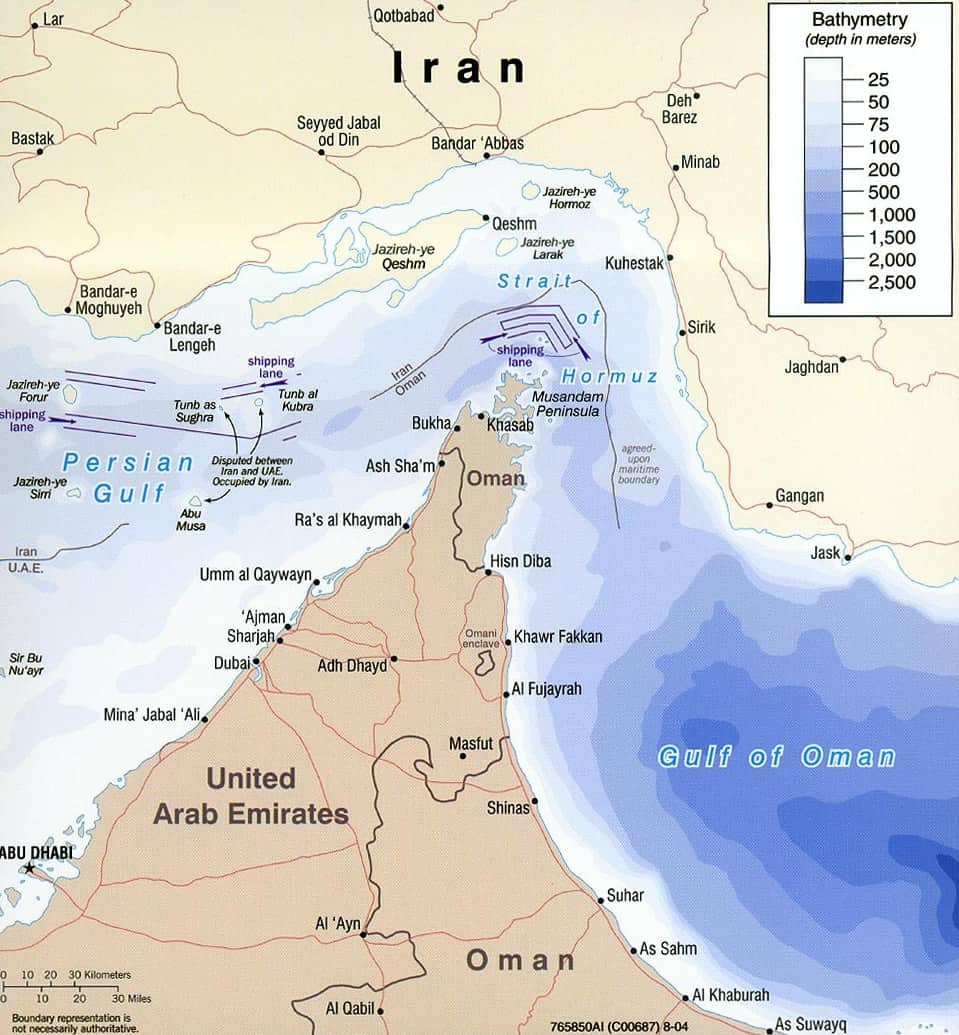
The interaction between the Gaza situation and the US-Iran negotiations has continued to be a feature of regional diplomacy. Iran's regional posture, including its relationships with Hamas, Hezbollah and other regional actors, has been a continuing factor in both the Israel-Palestinian dynamic and in the broader US-Iran negotiations now reportedly approaching a framework agreement.
The Egyptian government has continued to play a central role as a mediator between Israel and Hamas, hosting numerous rounds of negotiations and continuing to manage the Rafah border crossing. Egyptian officials have continued to express concern about the long-term implications of the Gaza situation for regional security.
What's next
The Board of Peace's roadmap is expected to remain at the centre of international engagement in coming weeks. The success or failure of the roadmap in moving the situation toward a more stable framework will depend significantly on the engagement of both Israel and Hamas, as well as on continued international diplomatic and financial support.
Reconstruction funding remains a key variable for the longer-term trajectory of Gaza. International donors, including Gulf states, European Union members and others, have committed significant funding in principle, but the actual disbursement and use of those funds has been constrained by the operational environment and by political disputes over governance arrangements.
For Canada, the focus will continue to be on multilateral engagement, on humanitarian funding and on supporting community safety at home. The Carney government has signalled that Canadian engagement will continue at consistent levels through the duration of the post-ceasefire stabilisation process, with adjustments as the situation on the ground evolves.
Spotted an issue with this article?
Have something to say about this story?
Write a letter to the editor


Comments
Be the first to comment.