Ottawa Expands AI Compute Funding in Push for Sovereign Capacity
The federal government is pouring fresh money into artificial intelligence as part of a coordinated drive to build what it calls sovereign capacity, a strategy aimed at keeping the computing power, data and talent that underpin modern AI firmly inside Canada. On 12 May 2026, Evan Solomon, the Minister of Artificial Intelligence and Digital Innovation, announced support for 44 projects through the AI Compute Access Fund, representing $66 million of the broader $300 million fund. The recipients span much of the Canadian economy, working across life sciences, health care, energy, advanced manufacturing, agriculture, finance, natural resources and transportation.
The announcement formed one piece of a busy stretch of AI policy activity, with ministers in several provinces unveiling complementary investments over the course of a single week. Taken together, the measures signal a government determined to treat artificial intelligence not as a niche technology file but as core economic infrastructure, comparable in strategic importance to roads, ports and power lines. The unifying theme is the concept of sovereign AI, the idea that a country should not have to rely entirely on foreign providers for the foundational tools of a transformative technology.
That concern has sharpened as the global race for AI talent and infrastructure has intensified. Much of the world's large-scale computing capacity sits with a small number of U.S. technology giants, and Canadian researchers and companies have long depended on American cloud platforms to train and run advanced models. The new funding reflects an effort to reduce that dependence, to anchor sensitive data within Canadian borders and to ensure that home-grown firms can scale without exporting their most valuable work.
The push also carries clear economic ambitions. By tying compute access to companies operating in strategic sectors, Ottawa is betting that cheaper and more reliable access to AI infrastructure will translate into jobs, productivity gains and commercial breakthroughs that stay in Canada. Whether the strategy can keep pace with the scale of investment seen elsewhere remains an open question, but the direction of travel is unmistakable.
The AI Compute Access Fund
At the centre of the 12 May announcement is the AI Compute Access Fund, a $300 million program designed to help Canadian companies obtain the computing power they need to develop and commercialise AI applications. The first tranche, the $66 million directed to 44 projects, targets firms that have promising AI work but lack affordable access to the high-performance computing required to bring it to market.
Compute, the raw processing capacity used to train and run AI models, has become one of the most significant barriers facing smaller and mid-sized firms. Training a sophisticated model can require enormous and expensive computing resources, and the cost can put advanced AI out of reach for companies that are not technology giants. By subsidising access, the fund aims to level the field and allow Canadian businesses to compete without first building or buying infrastructure they cannot afford.
The breadth of the recipient list underscores the government's view that AI is a general-purpose technology relevant across the economy rather than confined to the software sector. Firms in life sciences and health care may use AI to accelerate research or improve diagnostics, while those in agriculture, energy and natural resources could apply it to optimise operations and reduce waste. Spreading the funding across so many sectors reflects an intention to seed AI adoption widely.
According to a government statement, the support is meant to help these companies transform their industries and create jobs, positioning Canada to capture more of the economic value that AI is expected to generate. The fund represents an early and visible expression of the broader sovereign capacity strategy, and the first 44 projects are likely to be watched closely as a test of whether targeted compute subsidies can deliver tangible commercial results.
Building Sovereign Data Centres With TELUS
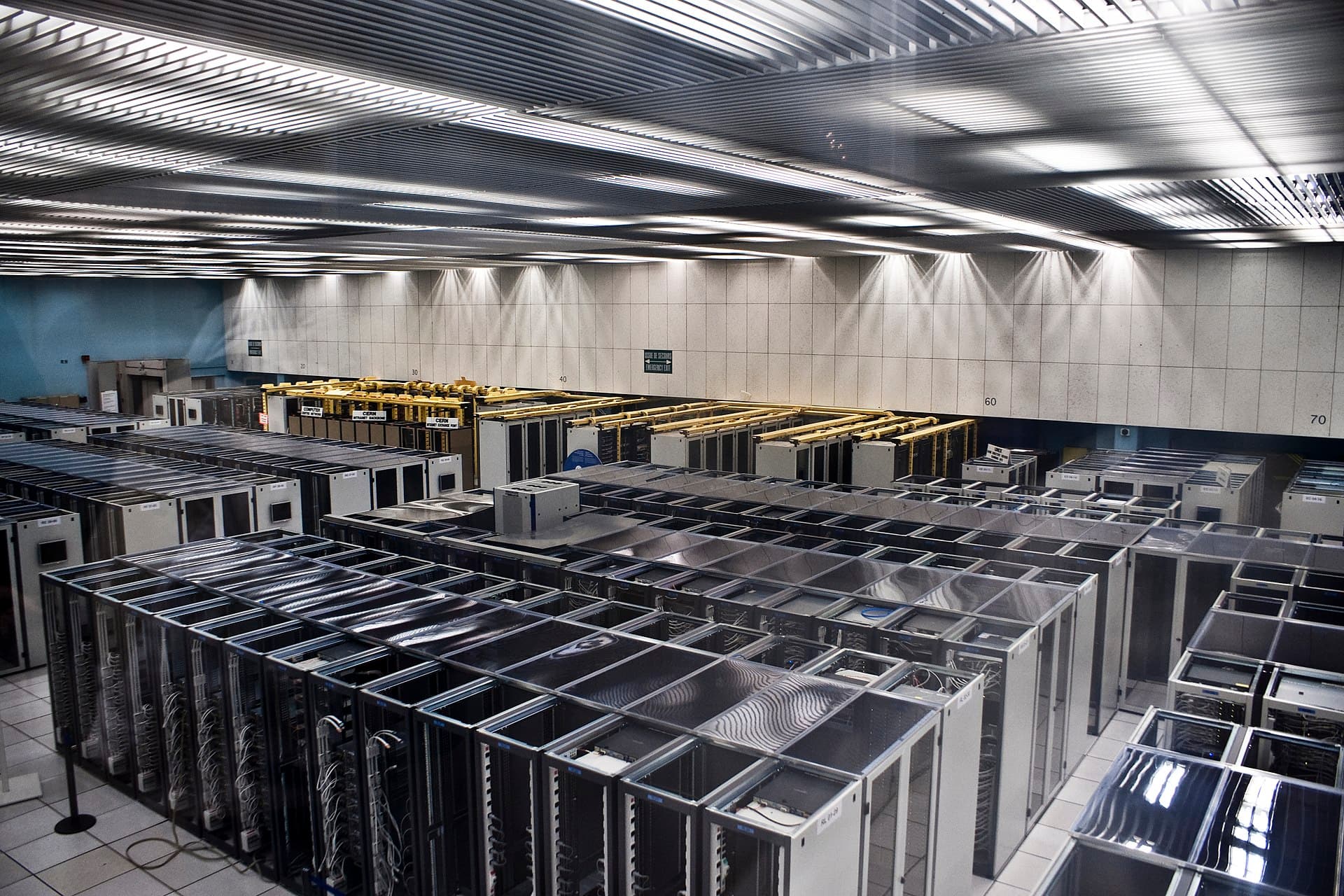
A more ambitious strand of the strategy involves physical infrastructure. The Government of Canada and TELUS are advancing an initiative to build large-scale sovereign AI data centres, including a proposed large-scale project in British Columbia intended to increase the country's sovereign compute capacity. Where the AI Compute Access Fund helps companies buy access to existing computing power, the data centre initiative aims to expand the supply of that power within Canadian borders.
The logic of building domestic data centres flows directly from the sovereignty argument. Hosting computing capacity on Canadian soil, operated by a Canadian company, gives the government and businesses greater control over where sensitive data resides and how it is governed. It also reduces exposure to decisions made by foreign providers, an issue that has gained prominence amid concerns about reliance on U.S. cloud platforms for critical workloads.
The British Columbia project fits into a broader federal push to scale up the country's AI infrastructure. In April 2026, Canada launched a national initiative, sometimes described as the Artificial Intelligence Sovereign Compute Infrastructure Program, to build large-scale AI supercomputing capacity. The TELUS partnership represents one of the concrete projects emerging under that wider umbrella, translating policy ambition into bricks, servers and power connections.
Large data centres, however, come with significant trade-offs. They consume substantial amounts of electricity and water, and their energy demands have become a growing concern as governments weigh AI expansion against climate commitments. The siting of such facilities, the source of their power and their impact on local grids are likely to feature in the public debate as the projects move forward, particularly in provinces balancing electrification goals with new industrial demand.
Provinces Join the Effort
The federal strategy has been reinforced by a series of regionally focused announcements that extend the AI push beyond Ottawa. On 11 May 2026, Minister Gregor Robertson announced more than $17.3 million for eight businesses in British Columbia's technology sector, money intended to accelerate the adoption and commercialisation of AI and quantum technologies. The investment reflects an effort to strengthen the province's standing as a hub for advanced computing and emerging fields.
Days later, the effort turned to the prairies. On 19 May 2026, Minister Eleanor Olszewski announced $6.8 million through the Regional Artificial Intelligence Initiative for five projects in Alberta, support that the government said would underpin more than 70 jobs. The regional focus signals an intention to spread the benefits of AI investment across the country rather than concentrating them in a handful of established centres.
Alberta has emerged as a notable focal point for AI activity. A $24 million investment will support 20 new appointees to the AI Chairs program run by CIFAR, the research organisation that has played a central role in Canada's AI ecosystem. That announcement, made at the Upper Bound conference in Alberta, ties the talent dimension of the strategy to a province increasingly eager to diversify its economy beyond energy.
The pattern across these announcements is one of layered support: funding for compute access, for physical infrastructure, for regional commercialisation and for research talent. Each piece addresses a different bottleneck in the AI value chain, and together they reflect an attempt to build a more complete domestic ecosystem rather than betting on any single intervention.
Why Sovereign AI Matters
The recurring emphasis on sovereignty reflects a strategic calculation about the place of artificial intelligence in national economic and security policy. AI has come to be seen by many governments as a foundational technology, one whose control confers lasting advantages. Relying on foreign infrastructure for such a technology carries risks, from data exposure to vulnerability to decisions made outside the country.
For Canada, those concerns are amplified by geography and trade. The bulk of the world's leading AI infrastructure and many of its dominant providers are based in the United States, Canada's largest trading partner and a country with which relations have grown more complicated under the current administration in Washington. Dependence on U.S. cloud providers for critical computing has therefore taken on a political as well as a technical dimension.
Keeping talent in Canada is an equally pressing motivation. The country has long been a leader in foundational AI research, producing pioneering scientists and ideas, yet it has often watched that talent and the commercial value built on it migrate abroad. Investments in research chairs, compute access and domestic infrastructure are partly aimed at giving Canadian researchers and entrepreneurs reasons to build and stay at home.
The sovereign AI agenda also intersects with questions of data governance. Canadians' health records, financial information and other sensitive data carry legal and ethical obligations about where and how they are stored and processed. Hosting that data and the AI systems that use it within Canadian jurisdiction makes those obligations easier to enforce, an argument that resonates particularly in sectors such as health care and finance.
Jobs, Energy and Competitiveness
The economic case for the AI push rests heavily on jobs and competitiveness. The Alberta funding alone is tied to more than 70 positions, and the broader strategy is premised on the idea that a stronger domestic AI sector will generate skilled employment and lift productivity across the industries that adopt the technology. The inclusion of sectors such as manufacturing, agriculture and natural resources reflects a belief that AI's benefits can reach well beyond the technology industry itself.
Competitiveness is the other side of that argument. Governments around the world are investing heavily in AI, and Canadian officials have framed their measures as necessary to keep the country in the race rather than ceding ground to larger economies. The concern is that without adequate compute, infrastructure and talent, Canadian firms could find themselves perpetual customers of foreign platforms rather than creators of their own AI-driven products.
Energy looms as a central complication. The data centres at the heart of the sovereign compute strategy are intensive consumers of electricity, and their expansion adds to the rising demand that is already reshaping Canadian energy planning. The growth of AI infrastructure therefore connects directly to broader debates about electricity supply, grid capacity and the climate implications of how that power is generated.
Balancing these forces will test the coherence of the government's wider agenda. The same administration promoting large-scale AI infrastructure is also grappling with electrification, affordability and emissions, and the energy appetite of data centres sits squarely at the intersection of those files. How Ottawa and the provinces reconcile AI expansion with their power and climate commitments will shape the practical success of the sovereign capacity strategy.
What's Next
With $66 million of the $300 million AI Compute Access Fund now committed, attention turns to how the remaining funds will be allocated and whether the first 44 projects deliver the commercial and employment results the government has promised. Future tranches will offer a clearer picture of which sectors and regions the program is prioritising as it matures.
The TELUS data centre initiative and the broader sovereign compute program represent longer-term undertakings whose progress will unfold over years rather than months. Construction timelines, energy arrangements and the eventual capacity these facilities provide will determine how far they move the needle on Canada's dependence on foreign infrastructure. The British Columbia project in particular will serve as an early indicator of the strategy's feasibility.
On the talent front, the new CIFAR AI Chairs and the regional initiatives will take time to show their effects, as research and commercialisation operate on extended horizons. The success of these measures will be judged not only by the money spent but by whether Canada can retain and attract the researchers and companies driving the field forward.
For now, the cluster of May 2026 announcements marks a clear statement of intent. Ottawa has signalled that it views artificial intelligence as critical national infrastructure and that sovereignty over compute, data and talent will guide its investments. The harder work of execution, against a backdrop of intense global competition and significant energy demands, lies ahead.
Spotted an issue with this article?
Have something to say about this story?
Write a letter to the editor


Comments
Be the first to comment.