Canada Germany LNG Deal Marks First European Supply Contract
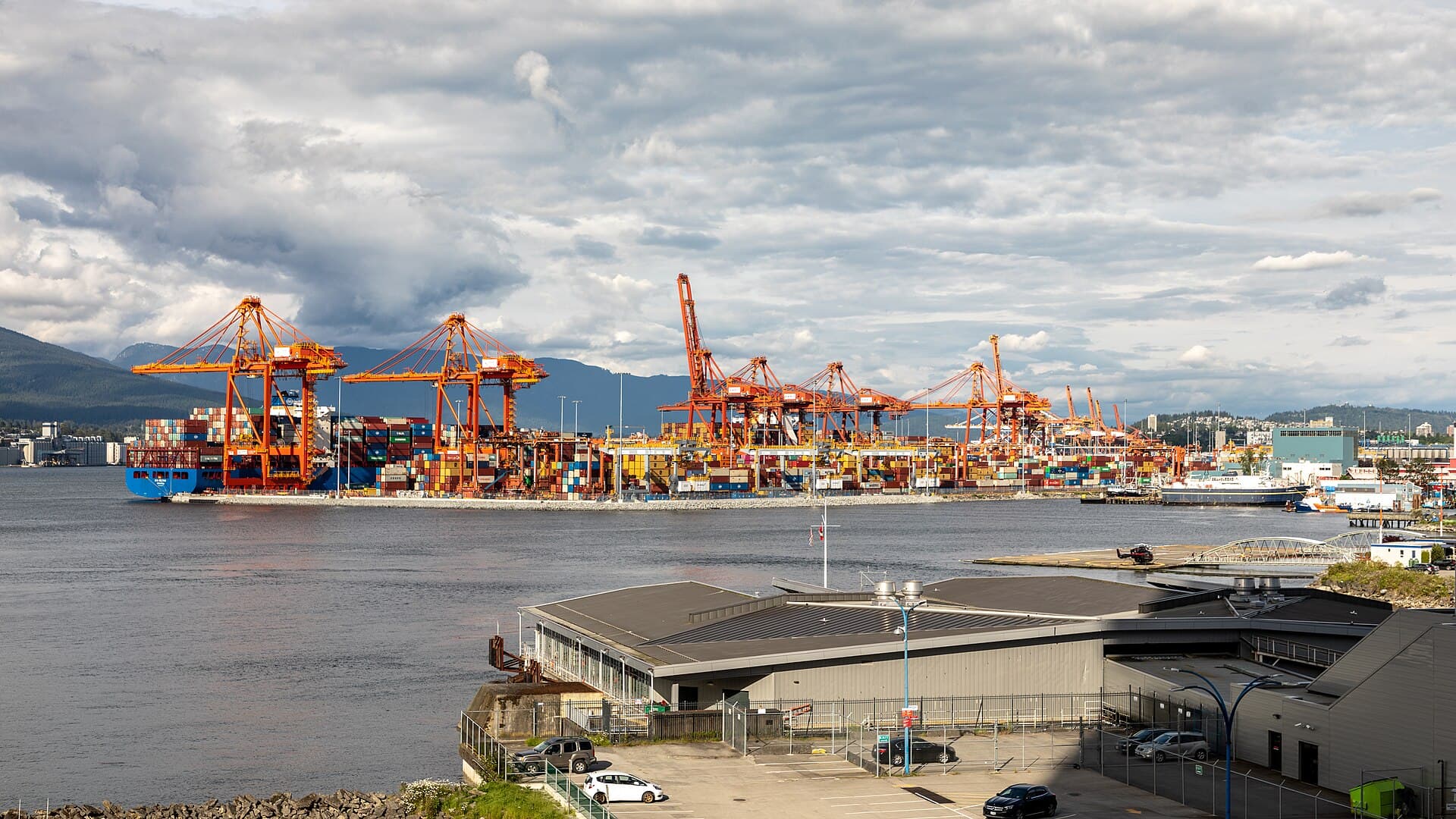
The federal government is preparing to announce a landmark liquified natural gas export deal between the Ksi Lisims LNG project in northern British Columbia and German state-owned energy company SEFE, sources familiar with the agreement confirmed this week. The 20 year supply contract, expected to be unveiled in Vancouver on Wednesday by Energy Minister Tim Hodgson, will see one million tonnes of LNG shipped from the Nisga'a Nation territory off the coast near Prince Rupert beginning in 2030. It is the first long term Canadian gas supply deal with a European buyer.
The announcement caps a year of intense lobbying by Berlin to lock in new sources of LNG after Germany's emergency pivot away from Russian gas in the wake of the 2022 invasion of Ukraine. For Canada, it is the most concrete signal yet that Prime Minister Mark Carney's energy diplomacy is producing material outcomes, and it gives political cover to a domestic LNG industry that has been waiting more than a decade for a meaningful European-facing market.
What was agreed
According to multiple reports, SEFE will purchase one million tonnes of LNG per year from the proposed floating Ksi Lisims facility, with deliveries scheduled to begin in 2030. The contract spans two decades, making it one of the longest LNG supply agreements signed in the current European procurement cycle. The deal will support the project's path to final investment decision, a milestone the developers have been working toward against a difficult macroeconomic backdrop.
The Ksi Lisims LNG facility is a proposed roughly 10 billion dollar floating export terminal located 80 kilometres north of Prince Rupert, in waters within Nisga'a Nation traditional territory. The project, developed in partnership with the Nisga'a Lisims Government, Rockies LNG, and Western LNG, would have a capacity to export 12 million metric tonnes of LNG per year when fully built out. The SEFE contract represents roughly 8 per cent of that capacity.
Why Germany is buying
Germany was Europe's most dependent major economy on Russian pipeline gas before the war in Ukraine, and Berlin has spent the last four years rebuilding its gas supply portfolio. SEFE, which was the German subsidiary of Russia's Gazprom before being nationalised in 2022, has been at the centre of that effort. The German government has signed deals with the United States, Qatar, Norway, and Egypt, but European policymakers have repeatedly identified Canada as a strategically attractive supplier because of its democratic institutions, regulatory stability, and proximity to European demand once Pacific liquefaction capacity comes online.
Germany's economic ministry has previously held up Canada as an example of the kind of trusted supplier relationship Berlin wants to build, and Chancellor Friedrich Merz has made the energy security file a personal priority. The SEFE contract gives the German government a politically defensible source of long-dated LNG supply, with deliveries scheduled to coincide with the planned retirement of remaining German coal capacity in the early 2030s.
The Canadian political backdrop
For the Carney government, the deal arrives at a useful moment. The Prime Minister has been telling Canadians since taking office that the world is facing an energy crisis and that Canada has a responsibility, and an economic opportunity, to help solve it. Earlier this month in British Columbia, Carney told Premier David Eby and reporters that Canada's resource sector has to be part of the country's productivity and trade response to American protectionism.
The deal is also the first real test of Carney's promise to fast track major projects. The Prime Minister introduced legislation earlier in May designed to streamline federal approvals for large infrastructure, including pipelines, transmission lines, and LNG terminals. While Ksi Lisims is still working through its own federal and provincial environmental approvals, the political momentum behind the project has clearly accelerated since the SEFE deal moved into final negotiations.
Reaction from environmental groups
Environmental organisations were quick to express concern that the deal would lock in two decades of new fossil fuel infrastructure at a moment when Canada is meant to be reducing emissions. The Pembina Institute said in a statement that any new LNG project must be evaluated against the country's 2030 and 2050 climate targets, and that long term contracts risk creating stranded assets if European demand declines faster than expected. Environmental Defence questioned whether the federal government has adequately analysed the lifecycle emissions of the floating terminal and the upstream gas production that will feed it.
Ksi Lisims and the Nisga'a Lisims Government have argued that the project will be among the lowest emission LNG facilities in the world, in part because of its plan to use renewable electricity to power liquefaction. Industry analysts, however, note that emissions accounting for LNG projects remains contested, particularly around methane leakage in the upstream supply chain and the comparison with coal that LNG is meant to displace.
Indigenous leadership
One politically significant feature of Ksi Lisims is that it is being developed in partnership with the Nisga'a Nation, which has self-government and treaty rights in the area. The Nisga'a Lisims Government has framed the project as a major economic opportunity for the community and a model of Indigenous-led resource development. Several other First Nations in the region have expressed concerns about cumulative impacts, but the Nisga'a partnership has given the project a profile that distinguishes it from earlier LNG proposals that ran into prolonged Indigenous opposition.
The Carney government has been pushing for what officials describe as an Indigenous economic reconciliation framework, in which major projects are designed from the outset with First Nations as equity partners. The SEFE deal will likely be used as a showcase of that approach, though critics argue that the framework has not yet been tested on more contested projects in northern Alberta and central British Columbia.
What it means for the Canadian economy
The economics of Ksi Lisims will depend heavily on price differentials between the Pacific and Atlantic LNG markets, on shipping costs through the Panama Canal, and on whether the facility can secure additional long term contracts. The SEFE deal is foundational but not sufficient on its own to underwrite a 10 billion dollar facility. Industry analysts say two or three more anchor customers will be needed to take the project to a final investment decision.
For British Columbia, the announcement is likely to be welcomed in Prince Rupert and other coastal communities that have struggled with the boom and bust cycle of forestry and mining. The provincial government has been generally supportive of LNG development as long as projects can meet its CleanBC framework. The Eby government has signalled that it sees Ksi Lisims as a leading example of how new LNG projects can be sequenced into the energy transition rather than against it.
The competing project landscape
Ksi Lisims is not the only proposed Canadian LNG facility competing for European customers. LNG Canada in Kitimat is already in operation following its long delayed startup, and a phase two expansion is now in planning. Cedar LNG, an Indigenous led project also in northern British Columbia, is moving toward construction. The Eastern Canadian project landscape is also evolving, with several proposals under early development in the Atlantic provinces aimed at the European market.
The combination of projects, if all proceed on their current timelines, would substantially expand Canadian LNG export capacity by the early 2030s. The strategic question for Ottawa is how to support the development of the projects that produce the best alignment of economic returns, environmental performance, and Indigenous economic participation. The Carney government has signalled that it will not pick winners explicitly but will use federal financing tools to influence which projects move forward fastest.
Strategic implications
Beyond the immediate commercial details, the deal carries strategic weight for Canadian foreign policy. Carney has been pushing the argument that Canada should diversify its trade and energy relationships away from a dangerous overdependence on the United States. The SEFE contract is, in concrete terms, exactly that kind of diversification. It also pairs Canada more tightly with Germany at a moment when both governments are seeking to push back against tariffs and trade coercion from Washington.
European officials have indicated that more Canadian energy deals could follow. Polish, Dutch, and Italian state-linked utilities are reportedly in earlier stage conversations with Canadian developers about possible long term LNG supply, particularly as European industrial users seek to hedge against geopolitical risk. The next 18 months are likely to be decisive for whether Canada can convert this single contract into a recognisable trans-Atlantic LNG corridor.
The labour and skills dimension
Like the broader electricity strategy, the LNG build out faces significant labour and skills constraints. Specialised welders, pipefitters, marine engineers, and process operators will be needed in volumes that exceed the current Canadian training pipeline. Provincial governments, the federal labour market team, and industry associations have begun coordinating on apprenticeship expansion and on targeted immigration pathways for skilled workers in the sector.
The First Nations and Inuit workforce dimension is also significant. Many of the projects under development are in Indigenous traditional territories, and project sponsors have committed to substantial Indigenous employment targets. Translating those targets into actual jobs requires a multi year investment in pre employment training, mentorship, and culturally appropriate retention support, work that is now being formalised through partnerships between project sponsors, Indigenous educational institutions, and federal training programs.
What's next
Hodgson is expected to formally announce the deal in Vancouver, with senior representatives from SEFE and the Nisga'a Lisims Government in attendance. The project will still require Ksi Lisims to clear its remaining federal and provincial environmental reviews, and the developers will need to secure additional long term contracts before lenders sign off on construction financing. A final investment decision is expected at some point in 2027.
Construction, if approvals proceed on the current timeline, would begin late in 2027 with first cargoes targeted for 2030. That timing aligns with the broader European procurement window for new LNG, after which most analysts expect demand growth to flatten as renewables and storage continue to displace gas in power generation. Canada's challenge will be to make the most of the next four years to convert political momentum into hard infrastructure decisions.
Spotted an issue with this article?
Have something to say about this story?
Write a letter to the editor


Comments
Be the first to comment.