Carney Electricity Strategy Aims to Double Canada's Grid by 2050
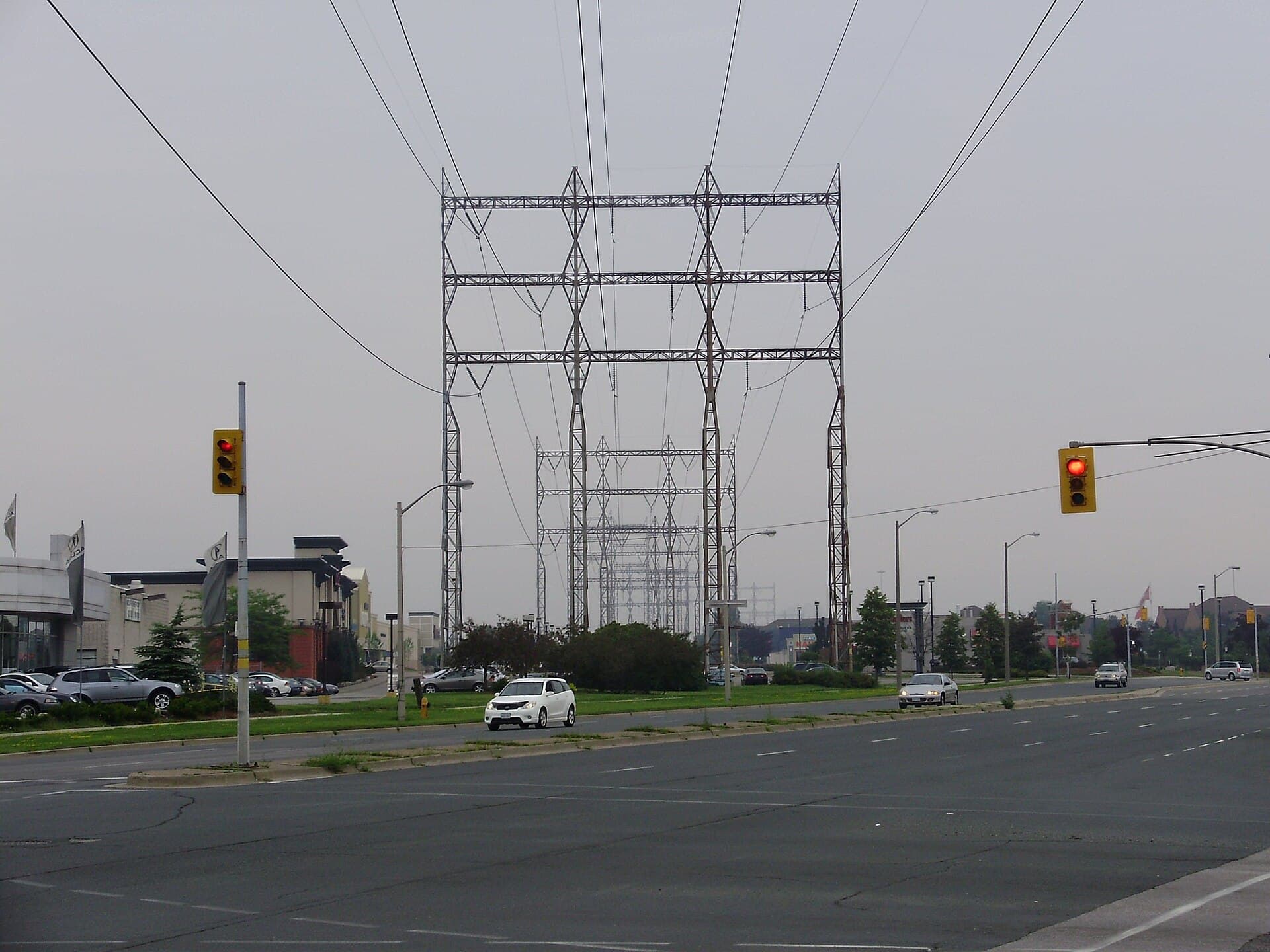
Prime Minister Mark Carney's national electricity strategy, unveiled earlier this month, commits Canada to doubling the capacity of its electrical grid by 2050 and aims to lower energy costs for roughly 70 per cent of households. The plan, which the government has framed as one of its largest single industrial commitments since the second world war, will rely on a mix of clean energy, expanded transmission, and a significant role for natural gas during the transition. It is also expected to support more than 130,000 new skilled jobs through to mid century.
The strategy is among the boldest and most expensive nation building commitments any Canadian government has made in living memory. Officials say construction will cost more than one trillion dollars over the lifetime of the program, with a mix of public and private capital. The Prime Minister has tied the strategy directly to his broader economic and trade agenda, framing electricity as the foundational input for everything from artificial intelligence to manufacturing reshoring.
What the strategy does
The strategy is built around four pillars. The first focuses on infrastructure: expanding generation capacity, building new transmission lines, modernising distribution networks, and adding large scale energy storage. The second addresses regulation, including revisions to the federal Clean Electricity Regulations that have been criticised by some provinces as too restrictive on natural gas. The third pillar is workforce development, with the government estimating that more than 130,000 highly skilled workers will be needed to build out the doubled grid. The fourth is a domestic manufacturing strategy, aiming to ensure that more of the components that go into Canada's grid are made in Canada.
Among the most politically significant components is a planned east west grid expansion. Canada's existing electricity network is heavily oriented north south, with most provinces sending or receiving power across the border with the United States rather than across provincial lines within Canada. The Carney government has argued that this orientation leaves the country economically vulnerable to American policy decisions and unable to use clean hydroelectric capacity in Quebec, Manitoba, and British Columbia to balance demand in other provinces.
The role of natural gas
One of the strategy's most contested elements is its embrace of natural gas as a transition fuel. The government has indicated it will adjust the federal Clean Electricity Regulations to allow more flexibility for natural gas-fired generation, particularly in provinces such as Alberta and Saskatchewan where coal phase outs are creating short term reliability concerns. The change is intended to provide political cover for those provinces to support broader federal clean energy investment.
Environmental groups have criticised the carve out as a step backward. Clean Energy Canada and the Pembina Institute have argued that natural gas without carbon capture is incompatible with Canada's net zero target and that doubling grid capacity should be done primarily with renewables, nuclear, and storage. Industry groups, by contrast, have welcomed the flexibility and described it as a realistic recognition of the operational challenges of running a continent scale grid.
Nuclear and Indigenous partnership
The strategy commits the federal government to expanding nuclear generation, including small modular reactors. A separate memorandum of understanding with Alberta will see the federal and provincial governments work together to develop a provincial nuclear strategy, with the goal of adding nuclear capacity to Alberta's grid by 2050. The federal government has previously committed funding to small modular reactor development in Ontario, New Brunswick, and Saskatchewan, and the new strategy will extend that approach more systematically.
The government has also signalled that Indigenous-led generation and transmission projects will be priority candidates for federal financing. Several major hydroelectric and grid projects in northern Quebec, northern Manitoba, and northern Ontario have Indigenous communities as equity partners, and the new strategy will offer dedicated streams of federal credit support and loan guarantees for such partnerships.
Cost and financing
The price tag is enormous. The strategy projects more than one trillion dollars in total construction costs through to 2050, although officials emphasise that this is spread over a quarter century and that most of the financing will come from private capital. Public dollars will be used to cover specific shortfalls, support strategic infrastructure such as east west interties, and provide investment certainty through long term contracts and loan guarantees.
The government estimates that 30,000 new jobs will be created by the end of 2028, with another 100,000 added by 2050. Those projections have been welcomed by labour groups, although some have warned that the jobs will be heavily concentrated in trades that are already in short supply, including electricians, lineworkers, and high voltage engineers. Federal officials have said the strategy will be paired with new immigration and skills training initiatives to expand the pool of qualified workers.
Provincial reaction
Provincial responses have varied. British Columbia and Quebec, which have abundant hydroelectric capacity, have welcomed the east west transmission focus and the prospect of selling more electricity into other provincial markets. Ontario has been broadly supportive, particularly given the implications for the province's nuclear refurbishment program. Alberta and Saskatchewan have welcomed the natural gas flexibility but want more detail on how federal financing will be deployed in their jurisdictions.
Manitoba has flagged that any expansion of east west transmission should not come at the expense of its existing electricity export business with the United States. Atlantic provinces, particularly Nova Scotia and New Brunswick, have signalled interest in tying into a national transmission system as part of their own phase out of coal-fired generation, although the costs of trans-provincial transmission across the Maritimes are likely to be significant.
Federal provincial coordination
One of the most distinctive features of the strategy is the degree of coordination it requires across federal and provincial jurisdictions. Electricity policy in Canada is primarily a provincial matter, with each province operating its own grid through a public utility, a regulated private monopoly, or a hybrid model. Achieving the strategy's goals will require the federal government to negotiate bilateral implementation agreements with each province, a process that is expected to take through to 2027.
Officials have already begun the negotiations. Quebec has been described as the most enthusiastic provincial partner, given the strategic value of its hydroelectric generation to a national grid. British Columbia, with its own hydro endowment and a Liberal-aligned provincial government, has also been engaged. Alberta's negotiations have been more politically complex but have been moving forward. Saskatchewan, Manitoba, and the Atlantic provinces have each entered preliminary discussions, with the precise terms still being worked out.
What it means for Canadians
For most households, the immediate consequences of the strategy will be limited. Electricity rates are largely set by provincial regulators, and any cost reductions will materialise only as new generation and transmission infrastructure comes online. The government's projection that 70 per cent of households will see lower bills is dependent on completion of the full strategy, although officials say some near term benefits should appear as new transmission interties reduce wholesale costs.
For Canadian industry, the strategy is much more significant. Energy intensive sectors, from steel to data centres, have been pressing Ottawa for years for greater certainty on long term electricity supply. The strategy is intended to give those sectors the confidence to make capital investments in Canada rather than relocate to lower cost jurisdictions abroad, particularly in the United States where the cost of electricity has become a major siting factor for new manufacturing.
Climate implications
The strategy is also a centrepiece of the government's climate agenda. Canada has committed to net zero greenhouse gas emissions by 2050, and a much greater share of the economy will need to be electrified to meet that commitment. Doubling the grid is consistent with the scale of build out that the Canadian Climate Institute and other think tanks have said is required, although the analytical community is divided on whether the proposed natural gas carve out is consistent with achieving the 2050 target.
The strategy also has implications for Canada's international climate diplomacy. With the United States dialing back federal climate ambition, several middle powers have been looking to Canada to play a more visible role in pushing forward energy transition policy in international forums. The strategy gives Carney a more credible platform on which to do so, particularly when paired with the recent Canada Germany LNG deal and the broader push to fast track major projects.
The Indigenous economic dimension
Indigenous economic participation has been positioned as a structural feature of the strategy rather than as an afterthought. Federal officials have been clear that major transmission and generation projects will be expected to include Indigenous equity participation where consistent with the relevant treaty and self government frameworks. The Indigenous Loan Guarantee Program, expanded earlier in the year, will be one of the tools available to underwrite that participation.
Several Indigenous led organisations, including the First Nations Major Projects Coalition, have welcomed the framing while also pressing for greater certainty on the operational details. The combination of federal financing, provincial regulatory cooperation, and meaningful Indigenous equity participation will determine whether the strategy delivers on its promise of building durable economic partnerships rather than producing the kind of conflict driven projects that have characterised parts of the recent past.
What's next
The strategy will need to be turned into a series of concrete pieces of legislation and regulation over the coming months. The revised Clean Electricity Regulations are expected to be released this summer. Federal Crown corporations, including the Canada Infrastructure Bank, will be issued new mandate letters reflecting the strategy. Bilateral agreements with each province will be negotiated through to 2027.
Implementation will not be straightforward. Building transmission lines across multiple provinces requires complex coordination of regulatory, environmental, and Indigenous consultation processes. Nuclear projects have long lead times and have historically been prone to cost overruns. Workforce gaps could become a binding constraint long before financing does. For the Carney government, the strategy represents both an opportunity and a test: a chance to define the century ahead, and a hard demonstration of whether Canada can actually build at the scale the strategy contemplates.
Spotted an issue with this article?
Have something to say about this story?
Write a letter to the editor

Comments
Be the first to comment.