Frechette opens Quebec legislature with bill to renew Bill 96 notwithstanding clause
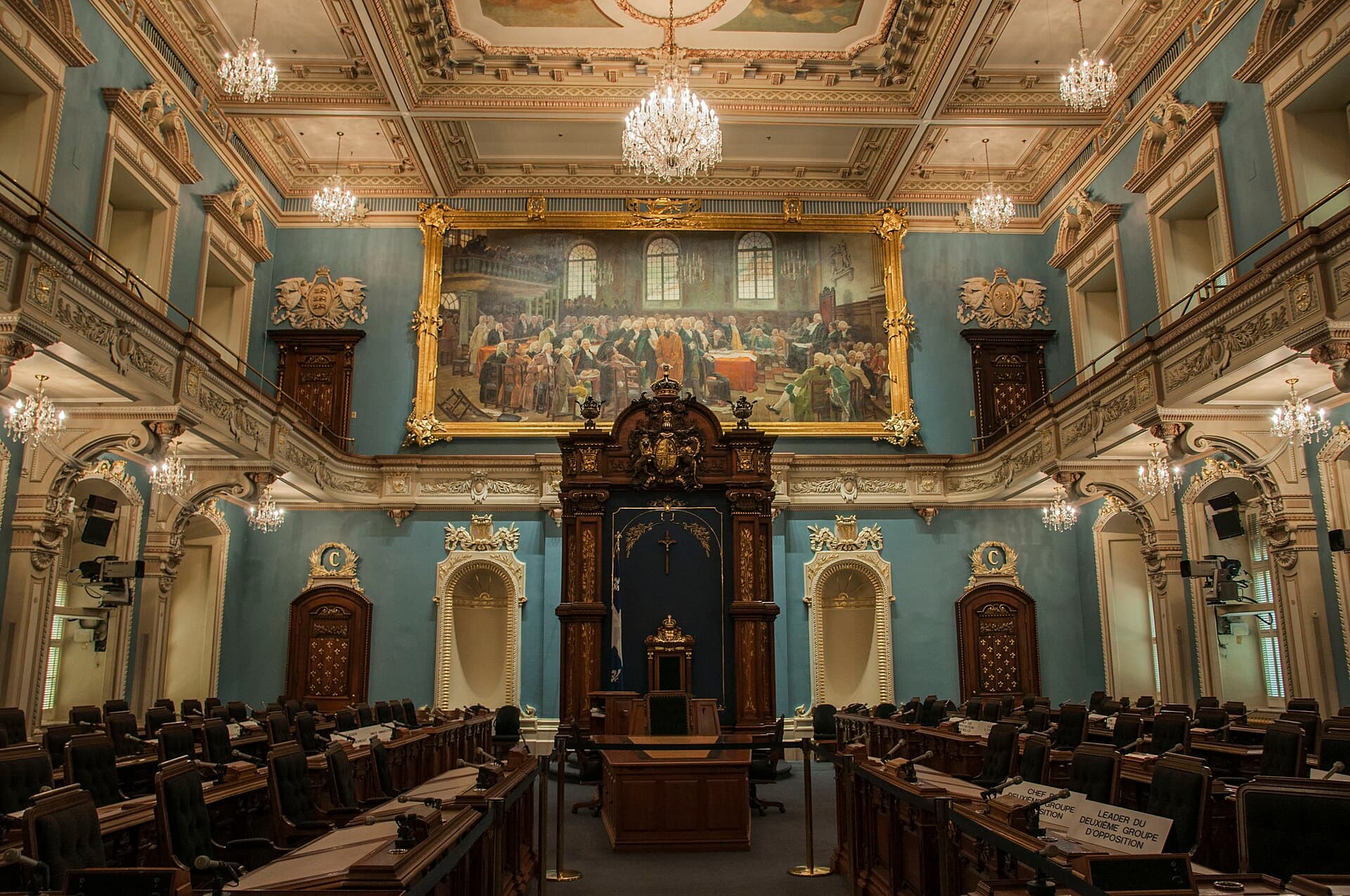
Quebec Premier Christine Frechette has chosen to open the new session of the National Assembly with a bill to renew the notwithstanding clause shielding Bill 96, the province's French-language law, placing one of the most contentious tools in Canadian constitutional politics at the top of her legislative agenda. The move sets the tone for a compressed and high-stakes spring sitting that will run for only about five weeks before the legislature rises for the summer.
Frechette, leader of the Coalition Avenir Quebec, was sworn in as premier on April 15, 2026, and has moved quickly to define her priorities. In her opening speech she set out an agenda spanning the rising cost of living, the housing crisis, homelessness, conjugal violence, language, and a proposed Quebec constitution. The decision to lead with the notwithstanding clause, however, is what has drawn the sharpest reaction.
As Quebec is Canada's second-largest province, the choices its government makes about language law and about the use of the notwithstanding clause carry weight well beyond its borders. Both touch on questions of rights, identity and the balance between provincial autonomy and the Charter of Rights and Freedoms, debates that have shaped national politics for decades and that resurface with each renewal.
The notwithstanding clause and Bill 96
The bill at the centre of the new session would renew the notwithstanding clause as it applies to Bill 96. The notwithstanding clause, found in Section 33 of the Charter of Rights and Freedoms, allows governments to override certain Charter rights for renewable periods of up to five years. Because the protection it provides expires unless renewed, governments that rely on it must periodically return to the issue, as Quebec is doing now.
Bill 96 strengthened French-language requirements in Quebec, reinforcing the province's long-standing efforts to protect and promote the French language in public life, commerce and government services. By invoking the notwithstanding clause, the province shielded the law from certain Charter challenges, and renewing that shield keeps those protections in place against legal challenge for another term.
The five-year renewal cycle built into the clause means the question is not settled once and then forgotten. Each renewal becomes an occasion to revisit the underlying policy and the decision to pre-empt Charter scrutiny, ensuring that the debate over both Bill 96 and the use of the clause recurs at regular intervals.
Quebec's use of the notwithstanding clause has a long history, reaching back to the early years after the Charter was adopted, and the province has invoked it more readily than most jurisdictions in defence of measures it considers central to its distinct character. That history gives the current renewal a familiar shape, even as each fresh invocation reignites the same fundamental arguments about where the line between collective objectives and individual rights should fall.
For supporters, the clause is a legitimate instrument that lets a democratically elected legislature give effect to its priorities, particularly on a matter as central to Quebec identity as the French language. For critics, its use to insulate legislation from Charter review raises concerns about the protection of individual rights, a tension that lies at the heart of the controversy now playing out in the National Assembly.
A wide-ranging opening agenda
While the notwithstanding clause has captured attention, Frechette's opening speech laid out a broader set of priorities that reflect pressing concerns across the province. She named the rising cost of living and the housing crisis, two issues that weigh heavily on households and that have dominated political debate in jurisdictions across Canada in recent years.
She also pointed to homelessness and to conjugal violence, signalling that her government intends to address social challenges alongside economic ones. Those areas speak to vulnerable populations and to the demands placed on public services, and their inclusion suggests an agenda that reaches beyond the language and constitutional questions that have drawn the most commentary.
Language featured in the speech as well, consistent with the prominence of the Bill 96 renewal, as did the idea of a proposed Quebec constitution. A provincial constitution would be a significant undertaking, touching on how Quebec defines its own institutions and values, and its appearance among the premier's priorities indicates an ambition to address foundational questions of provincial identity.
The breadth of the agenda stands in some tension with the limited time available to pursue it. With a wide list of priorities and only a short sitting ahead, the government faces choices about what it can realistically advance, and the decision to put the notwithstanding clause first signals where its immediate emphasis lies.
A fast start in office
In the roughly three weeks since being sworn in, Frechette has moved at a brisk pace, both within the province and beyond it. She has secured a meeting with Prime Minister Mark Carney in Ottawa, establishing an early line of communication with the federal Liberal government on matters of shared concern between the province and the country.
She has also met with U.S. Trade Representative Jamieson Greer in Washington, signalling attention to the cross-border trade relationship that matters greatly to Quebec's economy. Engaging with American officials so soon after taking office suggests that trade, and the uncertainties surrounding it, rank among the new premier's priorities as she establishes herself on the national and international stage.
On the domestic economic front, Frechette announced a tax cut of one percentage point for roughly 75,000 small and medium-sized businesses in the province. The measure targets a large segment of Quebec's business community, and it offers a concrete policy deliverable early in her tenure, aimed at a constituency that plays a central role in the provincial economy.
Taken together, the meetings and the tax announcement convey a premier intent on demonstrating activity and reach in her first weeks. By engaging with both Ottawa and Washington while also delivering a tangible domestic measure, Frechette has sought to project competence and momentum ahead of a sitting that will be short and politically charged.
The early outreach to Mark Carney's federal government is notable given the often complicated relationship between Quebec and Ottawa, where questions of jurisdiction, funding and constitutional authority can produce friction. Establishing a working channel with the prime minister early in her tenure gives Frechette a foundation for the negotiations on shared files that inevitably arise between a province and the federal government, from health and immigration to the economy.
The Washington meeting, meanwhile, underscores how exposed Quebec is to the currents of continental trade. The province exports heavily to the United States, and any shift in tariff policy or in the terms of cross-border commerce can ripple through its industries and workforce. By seeking out the U.S. Trade Representative so soon after taking office, Frechette signalled that protecting Quebec's economic interests in a turbulent trade environment ranks high among her concerns.
A compressed legislative window
The timing of the session sharpens the stakes of the government's choices. Frechette has only about five weeks of legislative agenda before the National Assembly rises for the summer, a narrow window in which to advance her priorities. That compression forces hard decisions about sequencing, and the prominence given to the notwithstanding clause reflects how the government has resolved them.
The summer break is more than a pause. It marks the unofficial start of campaign season ahead of a Quebec election set for October 2026. With a vote looming, the spring sitting takes on added significance as the last extended opportunity for the government to legislate and to frame the issues before the province turns toward the campaign.
That electoral backdrop colours every decision in the session. Legislation passed or debated in the coming weeks will shape the terms on which the parties contest the autumn vote, and the choice to lead with language and the notwithstanding clause positions those themes prominently as the campaign approaches.
The short timeline also limits how much of the broad agenda Frechette can realistically pursue before the recess. Items such as a proposed Quebec constitution are substantial undertakings unlikely to be resolved in a matter of weeks, suggesting that some priorities will carry over as campaign commitments rather than completed legislation.
Opposition pushback
The decision to make the notwithstanding clause her first order of business has drawn criticism from opposition parties. Their objection centres not only on the substance of the clause but on the choice to prioritise it ahead of other pressing concerns, particularly given the limited time available before the summer recess.
Critics have argued that with the cost of living, housing and other challenges weighing on Quebecers, leading with a constitutional and language measure reflects a questionable ordering of priorities. The argument frames the government's choice as a matter of emphasis, suggesting that the issues most affecting daily life should have come first in a session with so little time.
The criticism also taps into the broader unease that surrounds any use of the notwithstanding clause. Because the clause overrides Charter protections, its invocation tends to provoke debate about rights and about the appropriate limits of legislative power, and opposition parties have seized on that sensitivity in challenging the government's approach.
For Frechette, the pushback is a sign of the political terrain ahead. With an election approaching, the opposition's critique of her priorities previews the lines of attack likely to feature in the autumn campaign, and her willingness to lead with the clause despite that criticism suggests she sees political advantage, or principle, in doing so.
What is next
The immediate focus turns to the bill itself and its passage through the National Assembly during the brief spring sitting. As the government's lead item, its progress will be watched closely, both for what it means for Bill 96 and for what it signals about the priorities Frechette intends to carry into the election campaign.
The renewal mechanism built into the notwithstanding clause ensures that the issue will not disappear after this session. With the clause subject to renewal every five years, the debate over its use and over the language protections it shields will recur, keeping the question alive in Quebec politics and in the wider national conversation about rights and federalism.
Beyond the immediate bill, the coming weeks will reveal how much of Frechette's broader agenda, from the housing crisis to a proposed Quebec constitution, can advance before the National Assembly rises. With the unofficial campaign season set to begin and an October 2026 election on the horizon, the choices made in this compressed sitting will help define the contest to come and the direction of Canada's second-largest province.
Spotted an issue with this article?
Have something to say about this story?
Write a letter to the editor


