U.S. pauses 86-year-old joint defence board with Canada
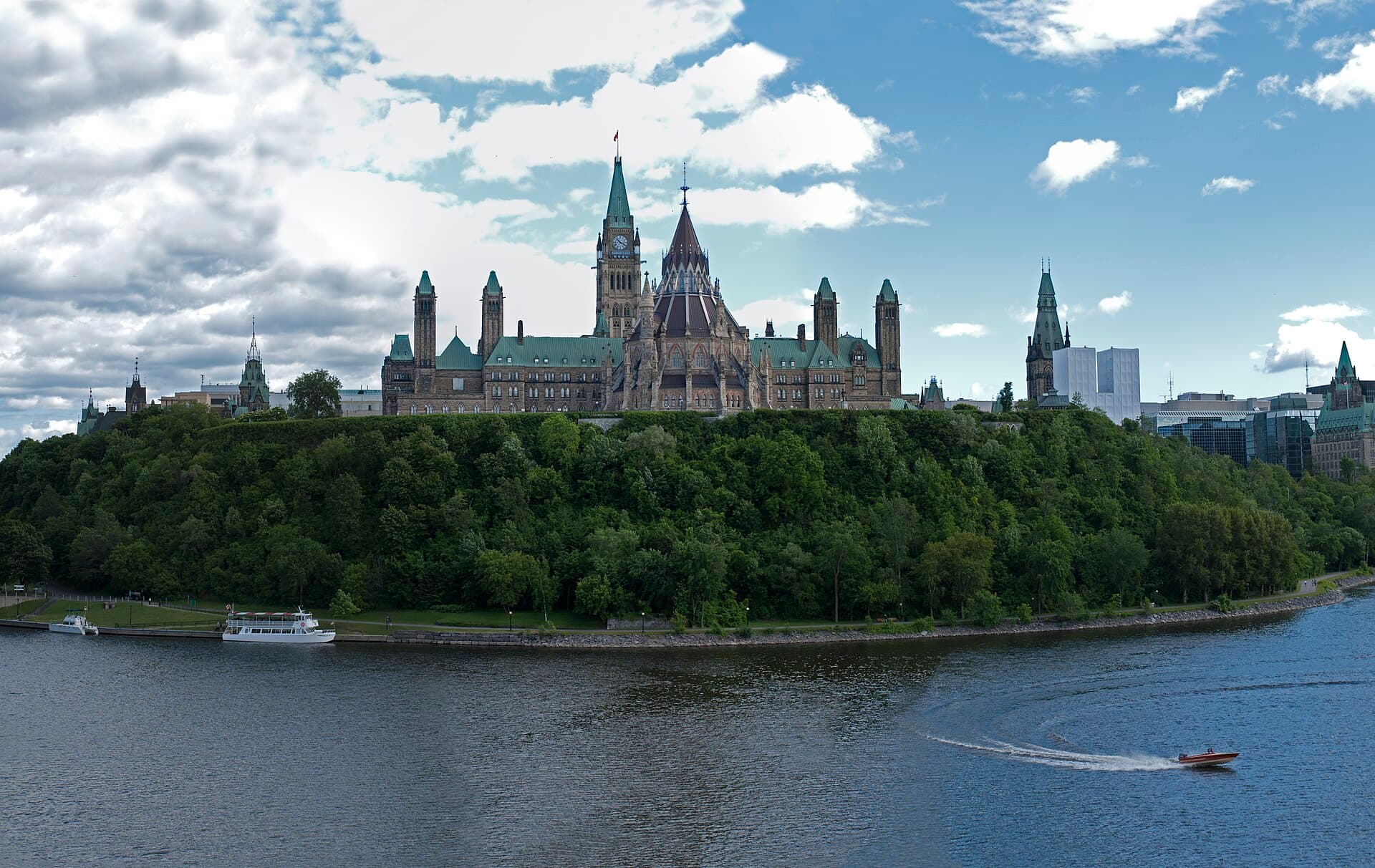
The United States announced on Monday, May 18, 2026, that the Pentagon is pausing its participation in the Permanent Joint Board on Defence, the oldest standing advisory body governing Canada-U.S. continental defence. The board, known by its initials as the PJBD, was established in 1940 during the early years of the Second World War, making the institution roughly 86 years old. The decision to step back from one of the most enduring fixtures of the bilateral defence relationship landed at a tense moment for two countries whose ties have been strained by trade disputes and tariff battles.
U.S. Undersecretary of War Elbridge Colby delivered the announcement, framing it as a reassessment rather than a permanent withdrawal. The department is, in his words, 'pausing the Permanent Joint Board on Defense to reassess how this forum benefits shared North American defense.' The choice of language left open the possibility of a return, but the symbolism of suspending a body that has operated continuously since the war was unmistakable. The PJBD has advised governments in Washington and Ottawa on the defence of the continent for generations, surviving the Cold War, the creation of NORAD and decades of shifting political leadership in both capitals.
The American statement went further than a simple administrative pause. It asserted that 'Canada has failed to make credible progress on its defense commitments,' a pointed criticism that placed the move squarely within the long running dispute over how much each NATO ally spends on its military. By tying the suspension to spending, the Pentagon signalled that the pause was intended as pressure rather than mere bureaucratic housekeeping, and it ensured the decision would reverberate through Canadian politics.
What the Permanent Joint Board on Defence does
The PJBD is not a command structure and does not direct troops or weapons. It is an advisory forum, bringing together senior military officers, diplomats and civilian officials from both countries to study and recommend measures for the joint defence of North America. Since its creation in 1940, the board has served as a venue where the two governments could quietly align their thinking on continental security, from coastal defence in the war years to air defence during the Cold War and, more recently, the challenges posed by new missile and surveillance technologies.
Its enduring value has been less about any single decision and more about the habit of consultation it sustained. By meeting regularly, the board kept channels open between the two militaries even when the broader political relationship cooled. That role as a steady, low profile point of contact is precisely what makes its suspension notable, since it removes a forum that has historically absorbed friction rather than generated it.
The board has always operated alongside, rather than in place of, the more operational arrangements that bind the two countries. Chief among those is NORAD, the North American Aerospace Defense Command, the binational command responsible for aerospace warning and control over the continent. NORAD remains the workhorse of joint defence, and nothing in the American announcement suggested that command would be affected. The pause applies to the advisory board, not to the operational machinery that keeps watch over North American skies.
Still, the distinction may offer only limited comfort. Advisory bodies and operational commands are part of the same web of trust, and weakening one strand can raise questions about the durability of the others. For Canadian officials, the worry is less about the immediate loss of a single committee and more about what its suspension says regarding the overall health of the partnership.
The spending dispute behind the move
At the heart of the American criticism lies the question of defence spending, an issue that has divided NATO allies for years and has become especially charged since the alliance raised its ambitions. At The Hague summit in June 2025, NATO members agreed to a target of five per cent of gross domestic product on defence and related spending by 2035, with at least 3.5 per cent earmarked for core defence. That figure represented a substantial increase over the older benchmark of two per cent of GDP, a threshold many allies, including Canada, had long struggled to reach.
Colby pointed directly to remarks by Prime Minister Mark Carney at the World Economic Forum in Davos earlier this year, using them to illustrate what the Pentagon characterised as a gap between words and action. 'We can no longer avoid the gaps between rhetoric and reality,' the undersecretary wrote. 'Real powers must sustain our rhetoric with shared defense and security responsibilities.' The message was that Ottawa had spoken ambitiously about its commitments without, in the American view, backing those statements with sufficient resources.
Carney has maintained that Canada is committed to the new alliance target and has taken concrete steps toward it. The government has said the country is on track to meet the older two per cent benchmark for the first time this fiscal year, in part through an additional roughly C$8.7 billion in spending. Reaching two per cent would mark a milestone that has eluded successive Canadian governments, even if it falls well short of the longer term five per cent goal that allies have set for the middle of the next decade.
The disagreement reflects a deeper divergence in expectations. Washington has grown increasingly insistent that allies shoulder a larger share of the collective burden, while Canada has argued that spending should be judged alongside its contributions to continental defence, Arctic security and alliance operations. The pause in the PJBD turned that abstract debate into a tangible diplomatic rupture.
Carney plays down the suspension
Prime Minister Carney sought to lower the temperature when he addressed the matter at a news conference in Quebec. He acknowledged the board's long history while cautioning against reading too much into the American decision. 'It has a long heritage but I wouldn't overplay the importance of this,' he said, casting the pause as a setback the relationship could weather rather than a crisis demanding alarm.
The measured response fit a broader pattern in Ottawa's handling of the relationship with Washington, which has been marked by an effort to avoid escalation even as American rhetoric sharpened. By describing the board as a body of heritage rather than of operational necessity, Carney implicitly distinguished it from NORAD and the other working arrangements that he and his officials view as the true backbone of continental defence. The aim appeared to be to reassure Canadians that the country's security was not suddenly diminished.
Yet the prime minister's calm framing carried risks of its own. Opposition voices and defence analysts could argue that downplaying the pause underestimates the diplomatic signal it sends, particularly when paired with the Pentagon's blunt assertion that Canada had failed to make credible progress. The political challenge for Carney is to project steadiness without appearing complacent about a deterioration in the most important relationship Canada has.
The episode also tested the government's central argument that its rising defence budget is finally bringing Canada into line with allied expectations. If Washington remains unconvinced even as Ottawa approaches the two per cent threshold, it raises the question of whether any near term increase will be enough to satisfy an American administration intent on the far higher five per cent benchmark.
The Canadian sovereignty dimension
For Canada, the dispute touches a sensitive nerve that runs deeper than budget figures. Continental defence has always involved a delicate balance between cooperation with a vastly more powerful neighbour and the protection of Canadian sovereignty, especially across the vast and increasingly contested Arctic. The PJBD was, in part, a mechanism through which Canada could ensure its voice was heard in continental planning rather than simply deferring to American priorities.
The Arctic looms large in this calculation. Melting ice, new shipping routes and growing interest from rival powers have made the far North a focus of security planning, and Canada has insisted on its authority over its northern waters and airspace. Modernising NORAD to detect and respond to new threats has been a shared priority, but it is also expensive, and the spending dispute now complicates the politics of that joint effort. A weakened advisory relationship could make it harder to coordinate the very upgrades both countries say they want.
Sovereignty concerns cut in two directions. On one hand, Canada relies on the American alliance for capabilities it cannot field alone, which limits how far Ottawa can push back against Washington's demands. On the other, an overly dependent relationship risks ceding too much influence over decisions that affect Canadian territory. The suspension of the PJBD sharpens that dilemma by removing a forum where Canada could press its interests directly.
What it means for the broader relationship
The pause arrives against a backdrop of broader strain between the two countries, much of it rooted in trade. Tariff disputes and commercial tensions have soured the atmosphere, and the decision to suspend a defence body, even an advisory one, suggests that the friction is no longer confined to economics. When security cooperation becomes entangled with grievances over spending and trade, the relationship loses some of the insulation that once kept defence ties steady regardless of political weather.
For Canadian markets and businesses, the immediate practical effect is limited, since the PJBD does not govern commerce or trade flows. The greater concern is the signal it sends about predictability. Investors, exporters and allies alike watch the Canada-U.S. relationship for evidence of stability, and a public rupture in defence consultation adds to a sense that the partnership is entering a more uncertain phase. Uncertainty itself carries costs, even when no specific policy has changed.
The decision also feeds into a wider debate within Canada about how much the country should rely on the United States across every domain, from defence procurement to energy and trade. Each new point of friction strengthens the argument, advanced by some, that Canada should diversify its partnerships and invest more heavily in its own capabilities. Whether the pause accelerates that thinking or proves to be a passing irritant will depend on how both governments manage the weeks ahead.
What's next
The most pressing question is whether the United States will lift the pause, and on what terms. Because the Pentagon framed the suspension as a reassessment, the door appears open to resumption, most likely contingent on visible movement by Canada toward the spending levels Washington is demanding. That ties the fate of the board to the federal budget process and to how convincingly Ottawa can demonstrate that its additional spending amounts to credible progress.
Carney's government will face pressure to clarify its plan for reaching not only the two per cent target it expects to meet this year but the more demanding five per cent figure agreed at The Hague. The political and fiscal challenge of that longer term commitment is considerable, and the suspension of the PJBD has made the stakes of the debate harder to ignore. Domestic critics are likely to seize on the episode to argue that Canada has been too slow to invest in its own defence.
NORAD modernisation and Arctic security will remain the practical heart of the relationship regardless of the board's status, and officials on both sides have an interest in keeping those efforts on track. Much will hinge on whether the two governments can separate the operational cooperation that protects the continent from the political dispute over money and trade that prompted the pause. If they can, the suspension may prove a contained episode. If they cannot, it could mark the start of a deeper unravelling of a partnership that has endured for more than eight decades.
Spotted an issue with this article?
Have something to say about this story?
Write a letter to the editor


