Carney breaks ground on Quebec graphite mine billed as the G7's largest
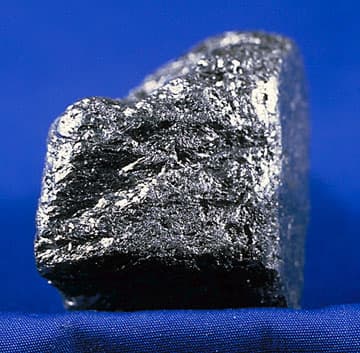
Prime Minister Mark Carney travelled to central Quebec on Monday to mark the official start of construction on a mine that the federal government is positioning as a cornerstone of Canada's bid to build a domestic supply of battery materials. On May 19, 2026, Nouveau Monde Graphite, known as NMG, held a ground-breaking ceremony for its Matawinie mine in Saint-Michel-des-Saints, a forested community north of Montreal. The project is being billed as the largest graphite mine in the G7, and its backers say it could help reshape where the world's electric-vehicle batteries get one of their most important raw materials.
Carney attended the ceremony alongside Quebec Minister Bernard Drainville and a range of community stakeholders. The prime minister framed the project as a piece of a larger national effort to strengthen the economy and reduce reliance on foreign suppliers for the minerals that increasingly power modern industry. He said the mine 'will make us stronger', a phrase that captured the political message Ottawa has attached to critical-minerals development at a moment of strained trade relations with the United States.
For the small Laurentian community that will host the mine, and for a Quebec economy eager to anchor itself in the clean-energy supply chain, the start of construction represents a long-anticipated milestone. The Matawinie project has been in development for years, and the formal beginning of building work signals that financing, permitting and commercial commitments have reached the point where shovels can finally go into the ground.
What the Matawinie mine will produce
The Matawinie operation is designed around natural graphite, a mineral that sits at the centre of the global push toward electric transportation. According to the details released around the ceremony, the mine is expected to produce an average of roughly 106,000 tonnes of natural graphite each year. That output is projected to continue for roughly 25 years, giving the project a long operational horizon that its backers say can support stable employment and steady supply for downstream manufacturers.
Construction and commissioning are expected to take about 31 months, with full commercial production targeted for the end of 2028. That timeline places Matawinie's ramp-up in the latter part of the decade, a period when demand for battery materials is widely expected to keep climbing as automakers expand their electric line-ups and as grid-scale storage grows.
Graphite is used in the anodes of electric-vehicle and grid batteries, making it one of the materials that determines how quickly the world can scale up clean transportation and energy storage. While lithium and cobalt often dominate headlines, graphite typically makes up the largest share of a battery's raw-material mass, which is part of why governments have grown increasingly focused on securing supply.
The scale of the planned operation is what allows NMG and its supporters to describe Matawinie as the largest graphite mine in the G7. That distinction matters less as a record than as a statement of intent: it signals that an advanced economy is attempting to build meaningful domestic capacity in a sector long dominated by a handful of foreign producers.
Why graphite has become a strategic priority
The strategic logic behind the project is rooted in geography. China dominates global graphite mining and, even more decisively, the processing that turns raw graphite into battery-ready material. That concentration has left Western governments worried about their exposure, particularly as the energy transition increases demand for the mineral. The result has been a coordinated push, across Canada, the United States and allied nations, to build domestic and allied supply chains that are less vulnerable to disruption.
For Canada, that push is embodied in a national critical-minerals strategy that aims to develop deposits, attract processing investment and link Canadian resources to manufacturers at home and among trusted partners. Quebec, with its abundant hydroelectric power and existing mineral resources, has positioned itself as a natural hub for that effort, courting battery-material projects as part of a broader industrial strategy.
The timing also intersects with trade tensions and tariffs involving the United States. As the cross-border relationship has grown more contentious, the argument for economic resilience and self-sufficiency in essential materials has gained political weight in Ottawa. A domestically anchored graphite supply offers a hedge against both geopolitical concentration abroad and friction with Canada's largest trading partner.
Within that context, Matawinie functions as more than a single mine. It is a test of whether Canada can move a major critical-minerals project from concept to production, demonstrating that the country can compete in a part of the supply chain where it has historically had little presence.
Quebec's appeal as a site for such a project rests in part on its clean and abundant electricity. A graphite operation powered by hydroelectricity can offer a lower-carbon profile than competing supply from jurisdictions that rely on coal or other fossil fuels, a distinction that matters to automakers under growing pressure to account for the emissions embedded in their batteries. That environmental dimension adds to the strategic case, allowing Canadian material to be presented not only as more secure but also as cleaner than much of the graphite available on world markets today.
Federal financing and government backing
The project's progress has been underpinned by substantial public support. Federal backing includes a $459-million financing package from Export Development Canada and the Canada Infrastructure Bank. That package follows earlier commitments from the Canada Growth Fund, layering multiple federal institutions behind the development.
The involvement of these agencies reflects a deliberate policy choice to use public financing tools to de-risk early-stage critical-minerals projects that private capital alone has been slow to fund. Mines are expensive and slow to build, and the returns can be uncertain in the years before production begins. By stepping in with financing, federal institutions aim to bridge that gap and accelerate the build-out of a domestic supply chain.
Carney said the project is expected to eventually add nearly $2 billion to the economy and to create about 1,000 jobs. Those figures, cited by the prime minister, point to the economic case that the government is making for its support: that the public money will translate into long-term employment and economic activity, much of it concentrated in a region that stands to benefit from a major industrial anchor.
The jobs dimension is central to the political appeal of the project in Quebec, where resource development has long been intertwined with regional economic identity. A long-life mine offering steady employment carries weight in communities that have historically depended on natural-resource industries.
Commercial deals that secure the output
Beyond government financing, the project has lined up commercial commitments that give it a measure of market certainty. Commercial and offtake agreements with Panasonic Energy, the Government of Canada, and Traxys North America cover more than 70 per cent of expected production. Offtake agreements, in which buyers commit in advance to purchase a defined share of output, are a crucial signal of viability for a mining project, because they reduce the risk that the material will be produced without a guaranteed market.
The inclusion of Panasonic Energy is notable given the company's role as a major manufacturer of battery cells, linking the Quebec mine directly to the downstream end of the supply chain. The participation of Traxys North America, a metals and minerals trading and logistics firm, adds a commercial intermediary with reach into global markets. The Government of Canada's place among the buyers further underscores the strategic framing of the project.
Securing buyers for the majority of production before construction is complete helps explain why the financing and the ground-breaking have come together now. With a large share of output already committed, the project's economics rest on firmer ground than they would for a mine searching for customers after the fact.
Taken together, the offtake agreements and the federal financing form the foundation on which the construction phase now proceeds. They represent the practical work of turning a critical-minerals strategy into an operating asset, with both public and private actors sharing in the commitment.
What it means for Canadians
For Canadians, the Matawinie project touches on several overlapping concerns. The most immediate is employment: the roughly 1,000 jobs cited by the prime minister, concentrated in a Quebec community, represent a tangible local benefit, and the long projected mine life suggests those positions could endure for decades. Regional economic development of this kind has broad resonance in a country where resource industries remain a significant employer.
The project also speaks to the country's economic resilience at a time of trade uncertainty. By developing a domestic source of a material that is otherwise concentrated in foreign hands, Canada gains a measure of insulation from supply shocks and geopolitical pressure. That resilience has become a more prominent theme in national policy as relations with the United States have grown more complicated.
There is, too, a place for the project within the broader clean-energy transition. As Canadians weigh the shift toward electric vehicles and renewable power, the availability of domestically produced battery materials shapes the country's ability to participate in, rather than merely consume from, the supply chains that underpin that shift. A Quebec graphite mine feeding Canadian and allied manufacturers connects national resource wealth to the industrial future the transition implies.
What is next
With construction now formally under way, attention turns to execution. The roughly 31-month construction and commissioning period sets the stage for full commercial production by the end of 2028, and meeting that schedule will be the next major test for NMG and its backers. Large mining projects can encounter delays, cost pressures and technical challenges, and the years ahead will reveal how smoothly Matawinie moves from building to operating.
The project will also serve as a reference point for Canada's wider critical-minerals ambitions. If Matawinie reaches production on schedule and delivers the economic benefits its supporters have promised, it could strengthen the case for further public investment in domestic supply chains. Difficulties, conversely, would offer lessons about the obstacles that remain in turning strategy into operating mines.
For now, the ground-breaking marks a clear step forward. The combination of federal financing, secured offtake agreements and high-level political attention signals that the project has cleared the early hurdles that stall many mining ventures. Whether it ultimately fulfils the expectations attached to it will become clearer as construction progresses toward the end of the decade.
Spotted an issue with this article?
Have something to say about this story?
Write a letter to the editor


