Xi warns Trump of Taiwan conflict as Canada watches its trade exposure
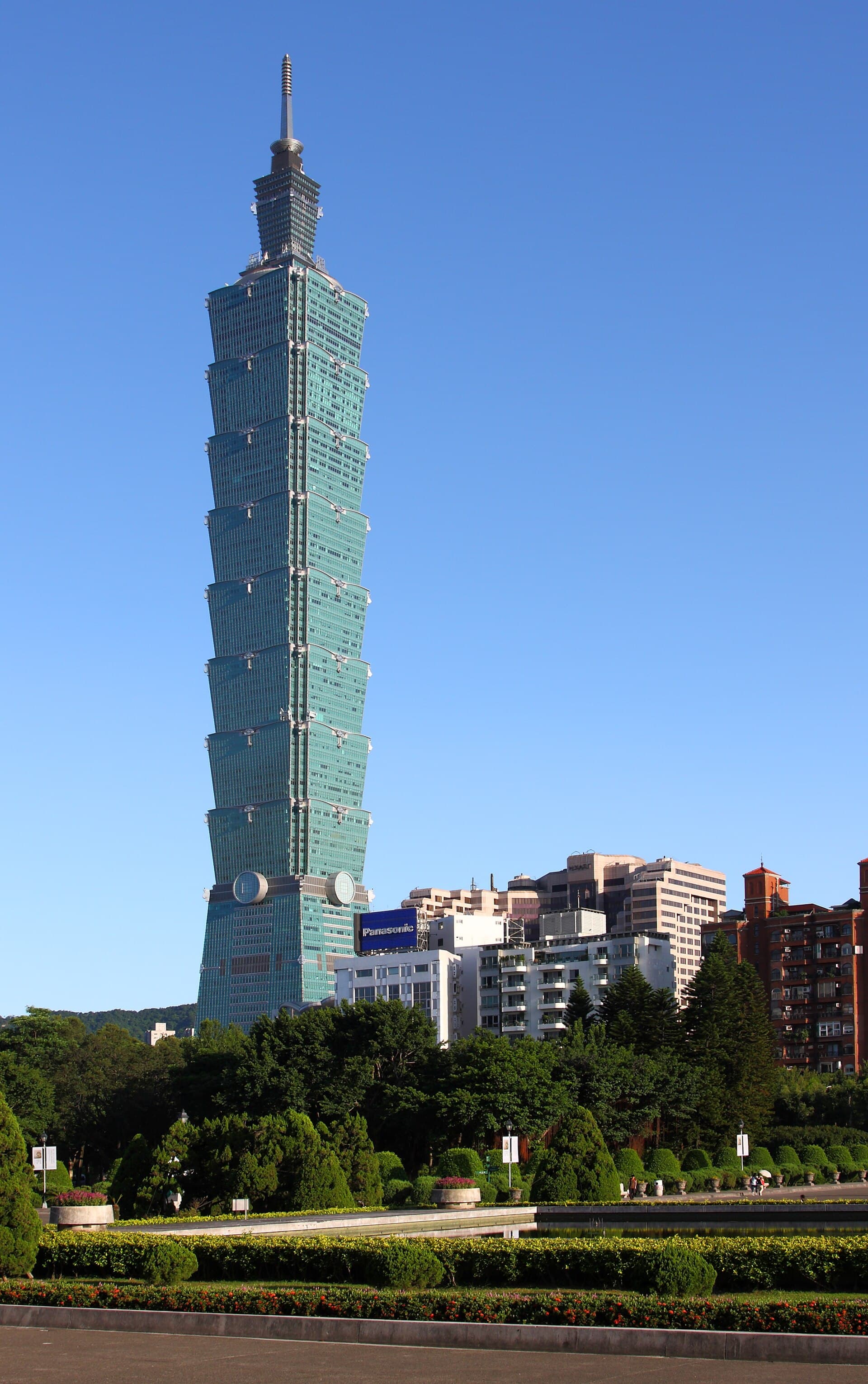
Chinese leader Xi Jinping reportedly warned U.S. President Donald Trump of the risk of conflict over Taiwan during a summit in Beijing that ran from May 13 to 15, 2026, according to accounts of the meeting. The two leaders are said to have ranged across the world's most dangerous flashpoints, including Taiwan and the Middle East, but came away without major agreements on either. For Canada, a country whose prosperity is bound up with both the United States and China, the talks were a reminder of how exposed the national economy is to tensions far across the Pacific.
According to reports, Xi cautioned of 'clashes and even conflicts' with the United States over Taiwan, warning that friction over the island could jeopardise the relationship between the world's two largest economies. The phrasing, if accurate, marked an unusually direct acknowledgement from Beijing of how quickly the dispute could escalate. Analysts have urged caution in interpreting second hand accounts of a closed door meeting, but the broad thrust, that Taiwan remains the most combustible issue between Washington and Beijing, is consistent with years of escalating rhetoric.
The summit produced no breakthrough on the questions that matter most. The leaders discussed global flashpoints without resolving them, leaving the underlying disputes intact. For markets and governments watching from a distance, the absence of agreement was itself a signal, suggesting that the two powers remain locked in a contest with no clear off ramp. Canada, which has tried to manage a complex relationship with China while staying aligned with the United States, has a direct stake in how that contest unfolds.
Taiwan at the centre of the rivalry
Taiwan sits at the heart of the friction between Beijing and Washington. China claims the self governing island as its territory and has never renounced the use of force to bring it under control. The United States, along with many other countries, maintains unofficial ties with Taipei while avoiding formal recognition, a deliberately ambiguous posture meant to deter conflict without provoking it. That balance has grown harder to sustain as Chinese pressure on the island has intensified.
Analysts describe a multi domain strategy through which China has sought to wear down Taiwan without firing a shot. The approach reportedly combines military posturing, expanded cyber espionage and economic coercion, applying pressure across several fronts at once. The aim, according to this analysis, is to erode Taiwan's confidence and complicate the calculations of its partners while keeping each individual action below the threshold that might trigger a decisive response.
A recent episode illustrated the pattern. A Chinese research vessel, reported to be the Tongji, was said to have been spotted on May 7 about five nautical miles outside Taiwan's restricted waters before returning to China around May 11. Such activity, while short of a confrontation, fits the broader picture of probing and presence that analysts say characterises Beijing's approach. Each incident on its own is minor, but together they form a steady campaign of pressure that keeps the region on edge.
The danger, observers warn, is that this incremental pressure raises the risk of miscalculation. A vessel straying too close, a military exercise misread, or a cyber intrusion that crosses an unseen line could spark a crisis that neither side intended. Xi's reported warning to Trump, if accurate, may have been intended precisely to convey how narrow the margin for error has become.
Why Canada is exposed
For Canada, the Taiwan question is not a distant abstraction. China is one of the country's largest trading partners, and the commercial relationship runs deep across agriculture, energy, manufacturing and consumer goods. That dependence cuts both ways, giving Canadian exporters access to an enormous market while leaving them vulnerable to the swings of a relationship that Ottawa does not control. Any serious deterioration between Beijing and Washington would inevitably ripple into Canadian commerce.
Canada has also experienced Chinese economic coercion firsthand. Beijing has previously targeted Canadian agricultural exports, including canola, using trade as a lever in broader disputes. That history makes Canadian producers acutely aware of how political tensions can translate into lost sales and disrupted markets. A crisis over Taiwan could prompt renewed pressure on precisely the kinds of exports that have been caught in the crossfire before, with consequences for farmers and processors across the Prairies.
Beyond agriculture, Canada faces supply chain and semiconductor risks that a Taiwan crisis would sharply intensify. Taiwan is a linchpin of the global chip industry, and any disruption to its output would cascade through manufacturing worldwide, affecting everything from cars to electronics. Canadian industries that depend on these components, and the broader economy that relies on functioning global supply chains, would feel the strain even without any direct involvement in the conflict itself.
The human dimension is significant as well. Canada is home to large Chinese-Canadian and Taiwanese-Canadian communities, for whom tensions across the strait carry deep personal resonance. A crisis would affect families with ties to the region, complicate travel and remittances, and test the country's ability to manage relations with Beijing while protecting the interests and security of its own citizens. The diaspora dimension ensures that any Taiwan conflict would be felt within Canada, not merely observed from afar.
Canada's Indo-Pacific posture
Ottawa has tried to navigate this terrain through its Indo-Pacific Strategy, which frames China as an increasingly disruptive global power even as Canada seeks to preserve trade ties. The strategy reflects a deliberate effort to balance competing imperatives: the economic value of the Chinese market against the security and values based concerns that have driven a more cautious approach. It represents an acknowledgement that Canada can neither decouple entirely from China nor ignore the risks the relationship carries.
That balancing act has extended to the military domain. Canadian warships have transited the Taiwan Strait, signalling support for the principle of freedom of navigation and alignment with allies who conduct similar passages. Such transits are calibrated to assert a right of access through international waters without crossing into provocation, but they nonetheless place Canada visibly within the contest unfolding in the region. Beijing has objected to such transits in the past, viewing them as interference in what it regards as a domestic matter.
The strategy leaves Canada exposed to a fundamental tension. Aligning closely with the United States on Indo-Pacific security strengthens Canada's standing with its most important ally and reflects shared concerns about Chinese behaviour. Yet that alignment also raises the risk of retaliation against Canadian trade, given Beijing's demonstrated willingness to use economic tools against countries it views as hostile. Managing that tension is the central challenge of Canada's posture in the region.
A Taiwan crisis would force these competing pressures into the open. Canada would face difficult choices about how far to support American and allied responses, how to protect its economic interests, and how to safeguard its citizens, all while operating in an environment of acute uncertainty. The Indo-Pacific Strategy provides a framework for those decisions, but a genuine conflict would test it far beyond anything Ottawa has yet confronted.
Markets and the economic stakes
The economic consequences of a Taiwan crisis for Canada would extend well beyond any single sector. Global markets would react sharply to a confrontation involving the world's two largest economies, and Canadian financial markets, deeply integrated with those of the United States, would not be spared. Equity prices, currency values and commodity markets all respond to geopolitical shocks, and a clash over Taiwan would rank among the most severe such shocks imaginable.
Shipping and trade routes through the Indo-Pacific are vital arteries of global commerce, and any disruption would raise costs and create delays across the system. Canada, as a trading nation that relies on access to Asian markets, would feel the effect through higher prices, constrained supply and reduced demand for its exports. The interconnected nature of modern trade means that a conflict thousands of kilometres away could quickly translate into empty shelves, idled factories and weakened growth at home.
The semiconductor dimension deserves particular emphasis. Because so much of the world's advanced chip manufacturing is concentrated in Taiwan, a crisis there would expose the fragility of supply chains that underpin much of the modern economy. Governments and companies have spoken of diversifying chip production, but such efforts take years to bear fruit. In the meantime, Canada and its partners would remain heavily reliant on a source of supply that a conflict could abruptly remove.
The diaspora and domestic dimension
Within Canada, the human stakes of a Taiwan crisis would be felt most acutely by communities with roots in the region. The country's large Chinese-Canadian and Taiwanese-Canadian populations maintain enduring ties of family, culture and commerce across the Pacific, and any confrontation would reverberate through those communities long before its economic consequences arrived in full. For many Canadians, the prospect of conflict over the island is not a matter of distant geopolitics but of personal connection.
A crisis would also raise practical concerns for the government in Ottawa. The safety of Canadian citizens in the region, the disruption of travel and family contact, and the potential for tensions to surface domestically would all demand attention. Canada has experience managing the difficult intersection of foreign policy and diaspora interests, and a Taiwan conflict would test that capacity under intense pressure, requiring careful handling to protect citizens without inflaming divisions at home.
The domestic dimension underscores why Canada cannot treat the Taiwan question as a matter for others to resolve. The interests at stake, from the security of citizens to the cohesion of communities, are distinctly Canadian, even though the dispute itself plays out thousands of kilometres away. That reality gives Ottawa a direct stake in efforts to keep the rivalry between Washington and Beijing from tipping into open conflict.
What's next
The immediate question is whether the Beijing summit, despite producing no agreements, served to lower the temperature or merely confirmed the depth of the divide. The reported warning from Xi suggests Beijing wanted Washington to understand the seriousness of the Taiwan issue, but warnings can be read as either a step toward caution or a hardening of positions. Analysts are likely to study the aftermath of the meeting closely for signs of which interpretation holds.
For Canada, the prudent course is to continue strengthening the resilience that its Indo-Pacific Strategy envisions, from diversifying trade relationships to reducing dependence on vulnerable supply chains. The challenge is that such resilience cannot be built quickly, and the risks are present now. Ottawa will need to weigh how to support allied positions on Taiwan without inviting the kind of economic retaliation that has hit Canadian exporters before.
Much will depend on whether the broader rivalry between Washington and Beijing finds any stabilising mechanism in the months ahead. The two economies remain deeply intertwined, which gives both sides incentives to avoid a rupture, yet the Taiwan dispute has repeatedly shown how those incentives can be overwhelmed by nationalism and strategic competition. Canada, caught between its largest trading partners, has limited ability to shape that dynamic and a large stake in how it resolves.
What remains clear is that a Taiwan crisis would touch Canada across nearly every dimension of national life, from markets and supply chains to diaspora communities and defence commitments. The summit in Beijing offered no resolution, only a reminder of the stakes. For Canadian policymakers, businesses and families with ties to the region, the reported exchange between Xi and Trump will reinforce the case for vigilance in a part of the world whose tensions Canada cannot escape but must prepare to weather.
Spotted an issue with this article?
Have something to say about this story?
Write a letter to the editor

