Blue Jays Injury Crisis: Springer Down, Bieber Delayed, Season Hanging in the Balance
The Wheels Come Off
It seemed, for three beautiful games in early April, that the Toronto Blue Jays had found something. A season-opening three-game sweep of the Oakland Athletics, accomplished in a manner that set an MLB strikeout record and announced the team's intention to compete in the American League East with maximum aggression. The pitching was dominant, the offence was timely, and the efficiency of the performance generated genuine excitement about what the 2026 Blue Jays could accomplish over a full 162-game season.
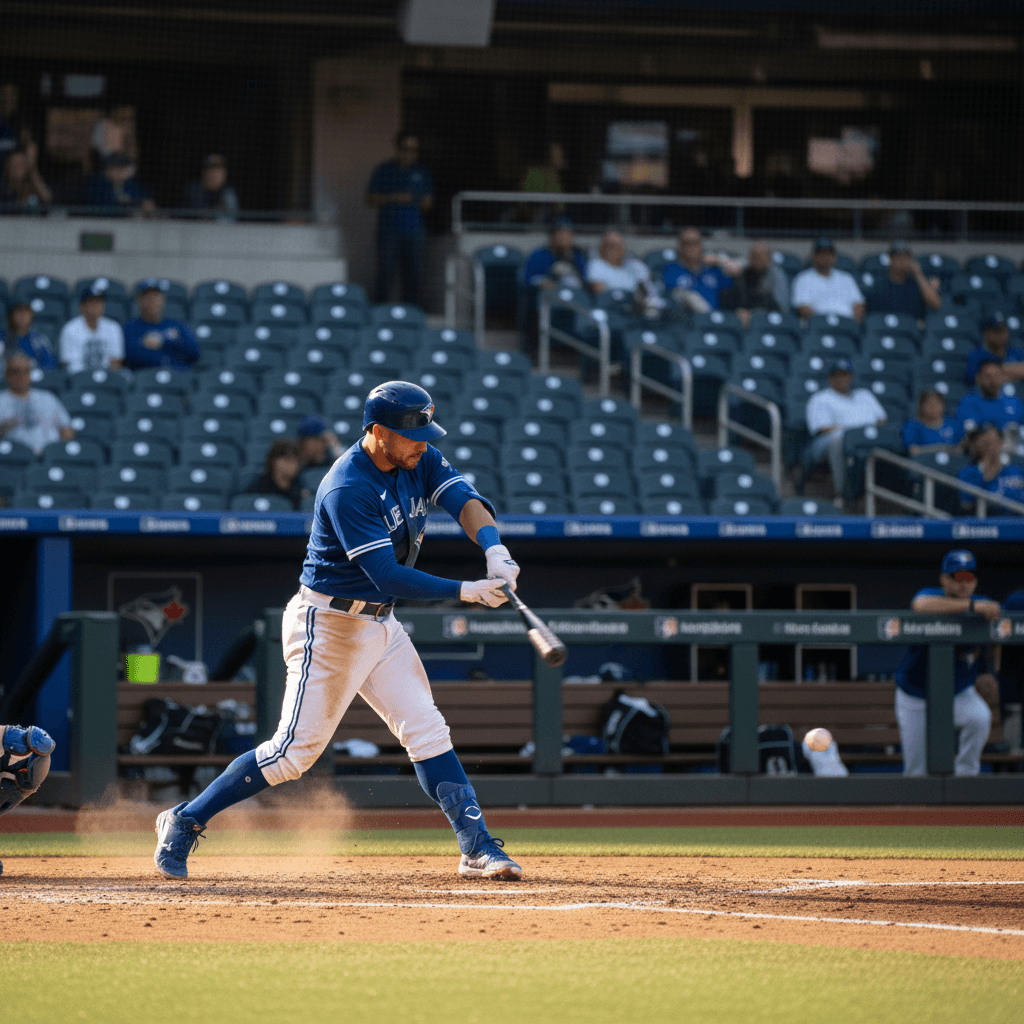
Then the injuries arrived, as they have a way of doing in baseball, and the picture that looked so promising after those three Oakland games began to develop complications. George Springer, the veteran outfielder who was supposed to provide the veteran leadership and run-production that the Blue Jays' lineup depends on, went to the 10-day injured list with a fractured left big toe, the kind of injury that sounds minor until you understand how a baseball player's ability to push off and generate power from the lower body is directly tied to the health of every bone in their foot.
David Bieber, the starting pitcher whose role in the rotation was considered central to the team's ability to compete, was transferred to the 60-day injured list with a timeline for his return that the organisation has been careful not to specify too precisely. At 7-10 and sitting fourth in the AL East in mid-April, the Blue Jays are facing a question that was not supposed to be part of the 2026 conversation: is this season salvageable?
George Springer and What His Absence Means
George Springer is not the same player he was five years ago. That is not a criticism so much as an acknowledgment of the natural arc of a baseball career. At this stage of his career, Springer provides the Blue Jays with something specific and valuable: veteran presence, a credible middle-of-the-order bat on the days when his body cooperates, and the kind of experienced leadership in the clubhouse that a team with young players genuinely needs when the games get difficult.
The fractured left big toe is particularly concerning because of how it affects Springer's mobility. Even when he returns from the injured list, the question of how much his power and his ability to run the bases will be affected by residual pain or compensatory adjustments in his mechanics is a real and legitimate concern. Baseball players returning from foot injuries sometimes require multiple weeks to find their full rhythm, and in a season where the Blue Jays cannot afford to carry a compromised version of any player in their lineup, the timeline for Springer's return to full effectiveness matters as much as the timeline for his physical return to the field.
Without Springer, the Blue Jays' lineup loses its most experienced run-producer and the protective bat that makes the players hitting around him more dangerous. In baseball, lineup construction is about creating sequences that force opposing managers into uncomfortable decisions, and Springer's presence in the order was one of the primary reasons those sequences were possible. His absence simplifies the task for opposing pitchers considerably, and that simplification is already reflected in the team's 7-10 record in the weeks since the roster has been navigating without him.
David Bieber and the Rotation Collapse
The transfer of David Bieber to the 60-day injured list is, in terms of competitive impact, the more significant of the two injury developments currently burdening the Blue Jays. Starting pitching is the foundation of any team's ability to compete over a 162-game season. A rotation with a genuine ace-level performer at the front is a competitive equaliser, a structural advantage that compensates for offensive inconsistency or defensive vulnerability on the nights when the ace takes the mound.
Bieber was supposed to be that front-of-the-rotation presence for the 2026 Blue Jays, and his unavailability for an uncertain period of time creates a hole in the pitching staff that has no obvious internal answer. The organisation will need to be creative with their depth, and creativity with pitching depth in baseball is often a polite way of describing a process that produces inconsistent results. Minor-league call-ups, emergency starters, and the creative use of bullpen arms to cover innings are all tools available to manager John Schneider, but none of them replicate what a fully healthy Bieber would provide.
The rotation without Bieber is a competitive unit, not a dominant one, and the difference between competitive and dominant in the American League East is the difference between being in the wild card conversation in September and being a genuine divisional threat. The AL East, which features the New York Yankees, Boston Red Sox, Baltimore Orioles, and Tampa Bay Rays alongside the Blue Jays, is the most competitive division in baseball, and fifth place in that division can be achieved with an entirely adequate team that simply did not have the pitching to separate itself from its neighbours.
Who Steps Up: The Lineup Without Springer
The Blue Jays' lineup without George Springer is still capable of scoring runs, but the margin for error in individual at-bats is reduced, and the pressure on the players hitting in the middle of the order increases substantially. Vladimir Guerrero Jr., the franchise cornerstone and the most feared bat in Toronto's lineup when he is producing at his peak level, becomes the singular focus of opposing pitching strategies in a way that he is not quite when Springer is healthy and available.
Guerrero's ability to handle that additional attention, to find ways to be productive when every pitching staff in the league is designing their game plan around limiting his damage, is the central offensive question for the Blue Jays over the next several weeks. When Guerrero is on, when he is driving the ball with authority and forcing pitchers to work in the zone, the Blue Jays' offence is capable of generating the run totals required to compete in the AL East. When he is in a cold stretch, which every hitter experiences over a long season, the absence of Springer means there is no established veteran bat to carry the load while Guerrero finds his rhythm.
Bo Bichette and the rest of the infield regulars need to elevate their performance in this period of injury absence. Bichette's ability to drive in runs from the middle of the order and to provide consistent at-bat quality against a variety of pitching types is the secondary offensive requirement. The outfield depth, the players who step into expanded roles while Springer is on the IL, will need to perform above their established career averages to compensate for the lost production.
The AL East Competitive Landscape
The American League East is the division where optimistic projections go to die. The Yankees, Red Sox, Orioles, and Rays are all organisations with the payroll depth, drafting history, and development infrastructure to field competitive teams annually, and the Blue Jays' 7-10 record in a division where every opponent carries similar capabilities is not yet an alarming deficit. It is, however, a warning that the team cannot afford to continue allowing the losses to accumulate while they wait for Springer and Bieber to return.
The Yankees entered the 2026 season with the roster expectations that the Yankees always carry, and their early performance has not provided any indication that they are vulnerable to the kind of extended losing streak that would allow the rest of the division to gain ground on them quickly. The Red Sox, who made significant acquisitions in the offseason, have the starting pitching depth that makes them a credible threat to stay in the divisional race through September. The Orioles, who have the kind of young talent that creates genuine long-term concern for AL East competitors, are playing competitive baseball early in the 2026 season.
In that competitive context, the Blue Jays' injury situation is not just a temporary setback. It is a threat to their ability to stay within striking distance of the division leaders through the first half of the season. Baseball rewards patience and depth across a 162-game schedule, but teams that fall too far behind early in the season must play at an unsustainable pace for an extended period to make up the deficit, and pitching staffs, more than any other element of a baseball team, suffer from the workload demands of a chase.
The Realistic Ceiling and Structural Questions
Honest assessment of the 2026 Blue Jays' realistic ceiling requires addressing a question that has been present in the background of the franchise's competitive window for the last two seasons: is this team, fully healthy, actually built to win the American League East or compete seriously in the playoffs, or are they a talented but ultimately incomplete team that is consistently good enough to be competitive without being quite good enough to win the division?
The case for optimism, to be fair to the organisation and the roster, is real. Guerrero Jr. is one of the best hitters in the American League when he is producing consistently. The pitching depth, even without Bieber, includes starters who are capable of delivering quality starts against playoff-calibre competition. The defence is a strength, and the team's analytical approach to roster construction has generally produced efficient baseball on both sides of the ball.
The case for concern is equally real. The Blue Jays have been in this conversation, this same mid-April evaluation of whether the team is good enough to compete seriously in the AL East, for multiple consecutive seasons, and the results have consistently landed in the same place: good enough to be relevant through August, not quite good enough to win the division, and typically eliminated from the wild card race by late September when the teams with stronger pitching pull away.
What Management Should Do
General Manager Ross Atkins and the Blue Jays front office face a decision point that will define the trajectory of the 2026 season: commit to the current roster with the expectation that health returns and the team performs at its ceiling, or begin the process of identifying the trade market for pitching upgrades that can compensate for Bieber's absence.
The trade market for starting pitching in April is not the trade market for starting pitching in July. The July deadline is when sellers identify their unavailable players and buyers identify their maximum offers. In April, the conversations are exploratory, but the organisations that enter July with a clear sense of what they need and what they are willing to pay are the ones that tend to make the best deals when the deadline pressure accelerates decision-making.
The Blue Jays should be in those exploratory conversations now, not because they are conceding the season, but because identifying a starting pitching option who could be available in July requires planting seeds in April. The cost of a quality mid-rotation starter at the July deadline is typically significant in terms of prospect capital, and the Blue Jays' farm system, which has replenished itself meaningfully over the past two offseasons, has the assets to make a legitimate offer for the kind of pitcher who could compensate for Bieber's absence in the second half.