Canada's NBA Invasion: How Barrett, Murray, and a Generation Took Over the League
The Invasion Is Complete
There is a moment when a trend becomes a fact, when what was once described as a surprise or an anomaly accumulates enough evidence to demand a different kind of description. Canadian basketball reached that moment somewhere in the middle of the 2025-26 NBA regular season, when the number of prominent Canadian players contributing meaningfully to playoff-contending rosters grew large enough that the conversation shifted from recognising individual achievements to acknowledging a national phenomenon.
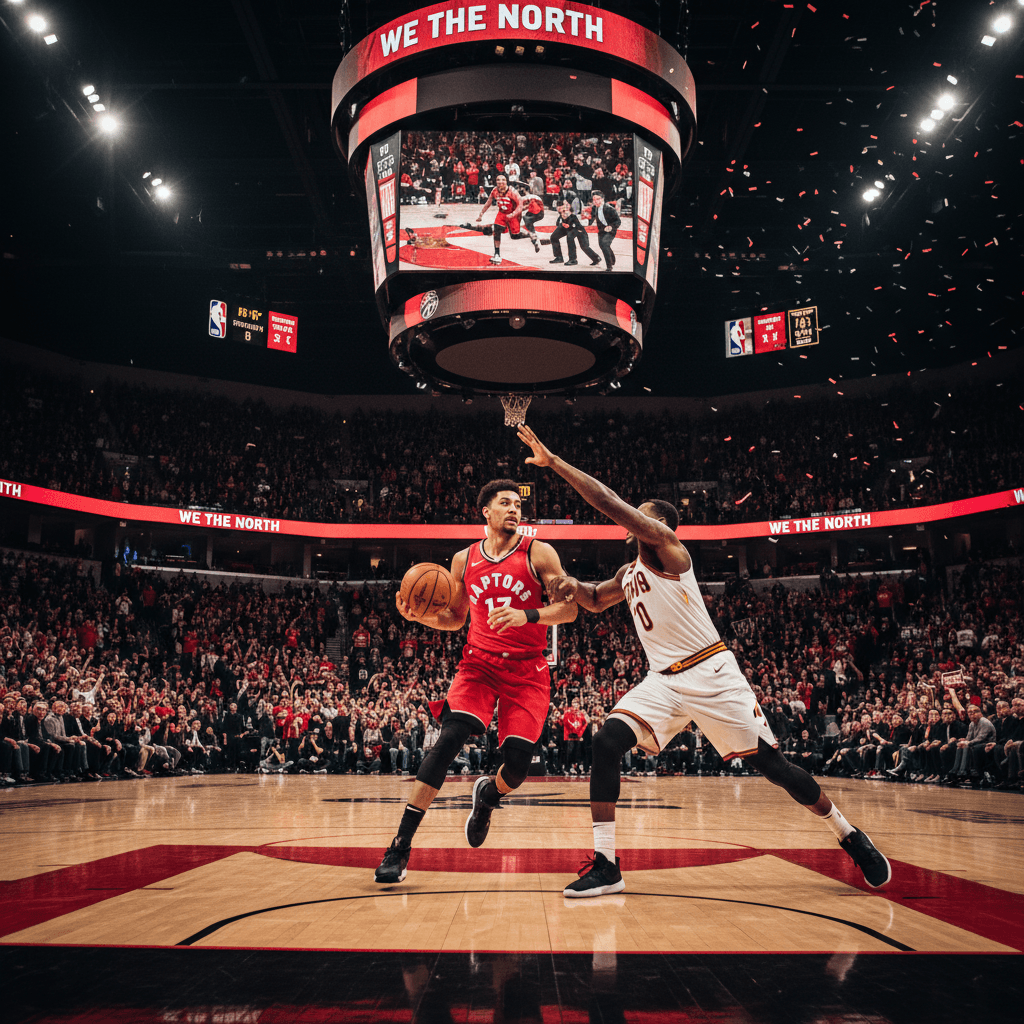
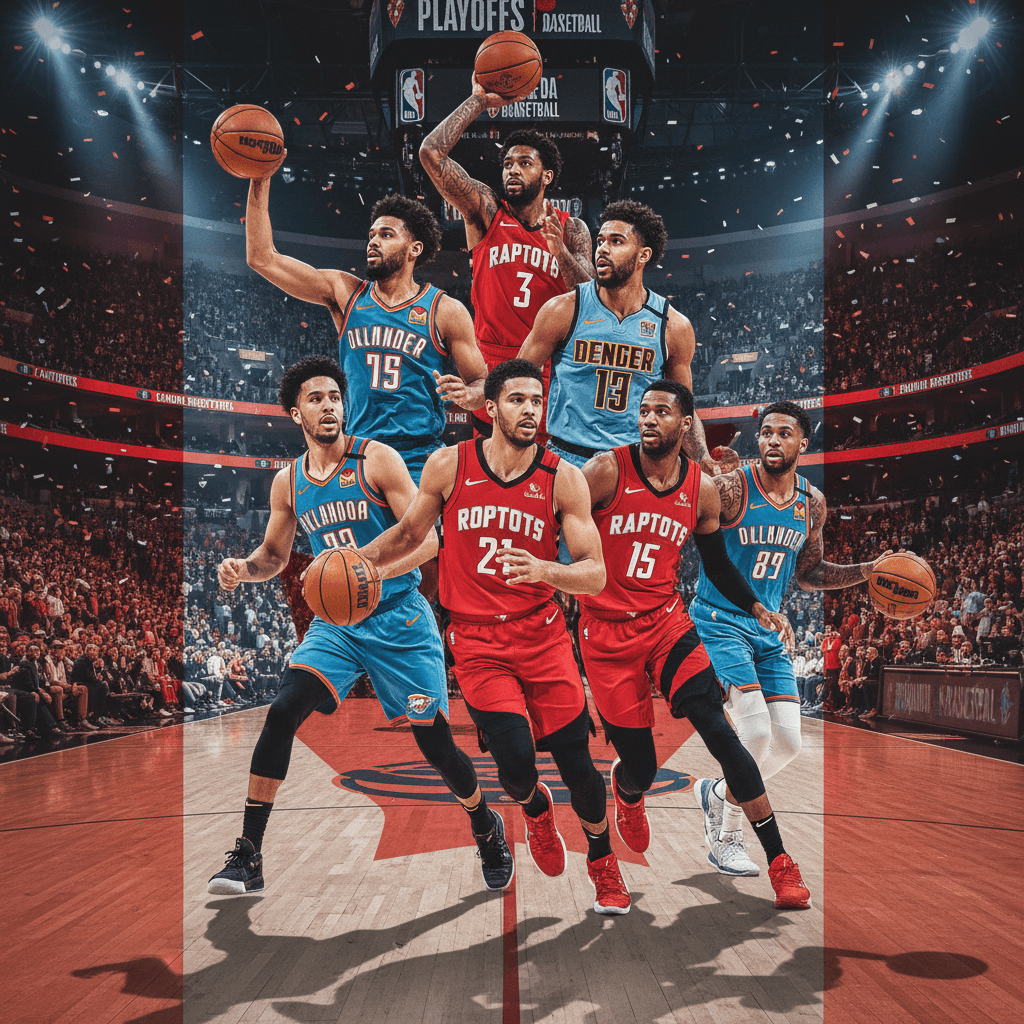
The 2026 NBA playoffs feature an unprecedented concentration of Canadian talent at the highest level of professional basketball. Shai Gilgeous-Alexander is the MVP frontrunner and the leader of the Western Conference's top seed. RJ Barrett is Toronto's primary co-star alongside Scottie Barnes on the first Raptors playoff team since 2023. Jamal Murray is Denver's second-best player and one of the most clutch performers in the postseason over the past five years. Dillon Brooks and Andrew Wiggins are contributing to their respective teams' playoff ambitions in roles that go beyond the token Canadian representation that used to be the extent of the country's NBA presence.
This is a full examination of how Canada became a basketball superpower, who the key players are in the 2026 postseason, what this generation means for the sport's cultural development in Canada, and what comes next for a country that is still discovering the full extent of its basketball potential.
The Full Roster: Canada in the 2026 Playoffs
The count of Canadian players in the 2026 NBA playoffs is not merely an impressive number. It is a statement about depth. In previous generations, Canadian NBA representation meant one or two players on rosters, often in supporting roles, occasionally breaking through as genuine stars. The current generation is different in both volume and quality. Canada is not producing NBA players. It is producing NBA stars, leaders, and franchise cornerstones at a rate that no country outside the United States can currently match.
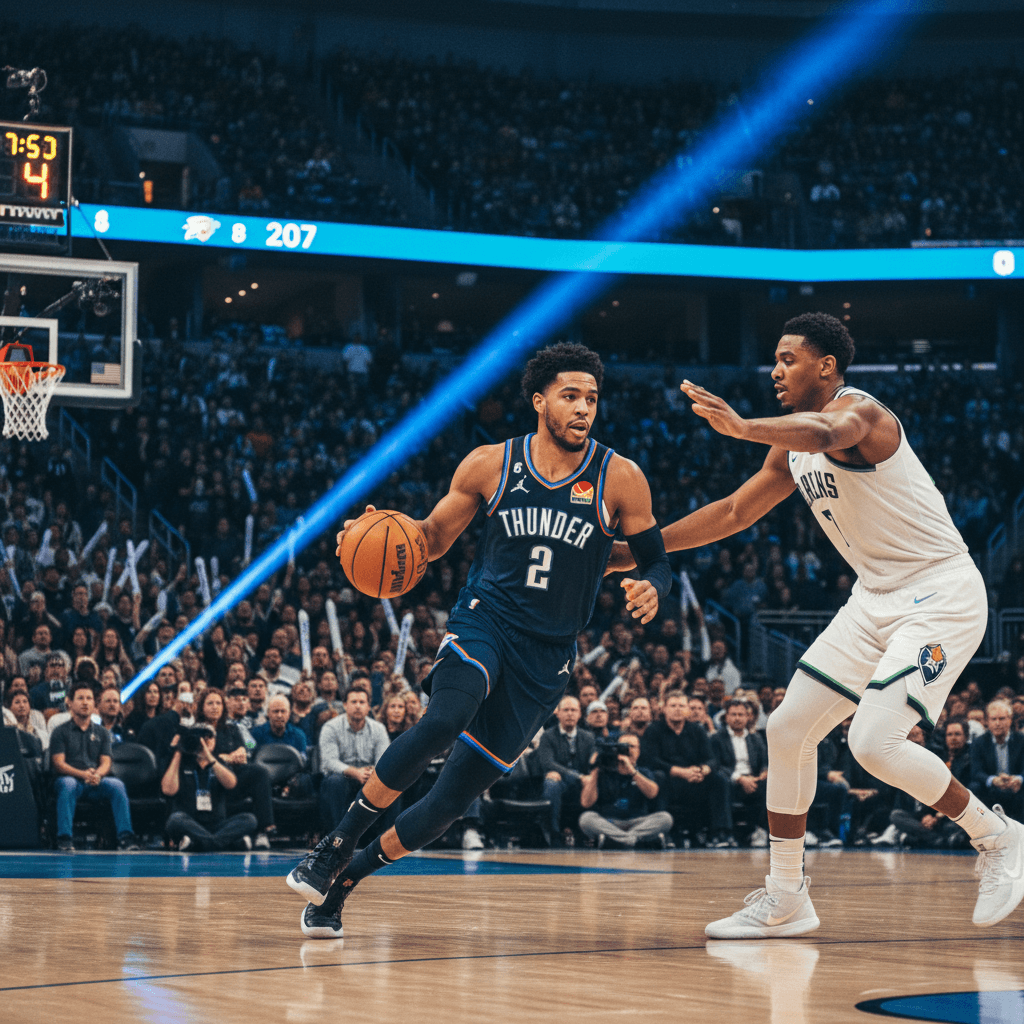
Shai Gilgeous-Alexander in Oklahoma City is the apex of the current generation's achievement, the player who has taken the SGA narrative from promising star to legitimate MVP candidate. His Oklahoma City Thunder are the top seed in the West, built around a Canadian player from Hamilton, Ontario, which would have been a sentence that required significant explanation to a basketball audience as recently as fifteen years ago.
How Canada Became a Basketball Powerhouse
The transformation of Canada into a basketball nation is not a single story with a single cause. It is a convergence of demographic, cultural, and institutional developments that accumulated over two decades and produced a generation of elite talent that is now fully visible at the highest level of the professional game.
The demographic foundation of the transformation is immigration. The large-scale immigration to Canadian cities, particularly Toronto, Mississauga, Brampton, and Hamilton, from Caribbean, African, and other communities with deep basketball traditions, produced a generation of young Canadians for whom basketball was the primary sport, the sport played in gyms and on outdoor courts in every season, the sport that connected to their family backgrounds in ways that hockey, for all its deep presence in Canadian culture, often did not.
The Role of Canada Basketball
Canada Basketball, the national governing body that oversees the sport from youth development through the senior national team, has been a central institutional actor in the development of the current NBA generation. The organisation's investment in elite youth development programmes, its relationships with the NBA and with American university programmes, and its cultivation of the national team identity that has turned representing Canada into a genuine point of pride for elite players have all contributed to the environment that produced the current generation of stars.
The national under-17 and under-19 programmes, which identify elite Canadian prospects and provide them with development environments that approximate the competition level they will face in American prep programmes and NCAA basketball, have been pipelines for multiple current NBA players. The experience of competing with other elite Canadian peers, of being part of a national programme rather than isolated individuals in different American development environments, has built the kind of collective identity among Canadian NBA players that is visible when they talk about each other publicly and in the informal networks of support that exist among players who share a national background.
Impact Players: Who Is Making the Biggest Difference in the 2026 Postseason
Among all the Canadian players in the 2026 NBA playoffs, three are positioned to have the most significant individual impacts on the postseason results. Shai Gilgeous-Alexander in Oklahoma City is the player whose performance will most directly determine whether a team makes a deep run or exits early. If SGA plays at his regular-season level against the playoff-level defensive schemes that every opponent will deploy against him, the Thunder are a legitimate Finals contender. If the defensive adjustments that are coming for him in every round find a way to limit his effectiveness below the threshold required for Oklahoma City to win, the team's supporting cast is not yet experienced enough to compensate.
Jamal Murray in Denver carries the historical weight of playoff performances that have already made him a legend in Nuggets history. The 2026 playoffs represent another opportunity for Murray to demonstrate that his bubble run and his 2023 championship were not anomalies but expressions of a consistent capacity to elevate when the games matter most. If Denver is going to compete with Oklahoma City and whoever emerges from the Eastern Conference, Murray's ability to be the player who takes over in critical moments is not a secondary factor. It is the primary variable in the Nuggets' equation.
Basketball Culture in Canada: The Transformation
The generational shift in Canadian sports identity that the current NBA generation is accelerating is visible in the data. Youth basketball participation in Canada has grown substantially over the past decade, with the sport now challenging hockey for the primary sport designation among youth in southern Ontario and urban centres across the country. The conversion of hockey arenas into basketball courts during the spring and summer months, which was a logistical curiosity two decades ago, is now standard practice in communities where demand for basketball ice time would be a grammatically confusing concept.
The cultural markers of basketball's penetration into Canadian identity are everywhere. Basketball shoes are fashion items in Canadian cities in the same way they have been in American cities for decades. Basketball vernacular has entered Canadian popular culture. The NBA draft, once an event that Canadians followed primarily because of the occasional Canadian prospect, is now a national occasion where multiple Canadian players are expected each year at the lottery and in the first round. That expectation, that normalisation of Canadian elite basketball talent, is the most significant cultural shift of all.
The Legacy of Steve Nash and the Path Forward
Any account of Canadian basketball's rise to global relevance must include Steve Nash, the Victoria, British Columbia native who was a two-time NBA MVP with the Phoenix Suns and who built the road that the current generation is travelling. Nash was the first Canadian to win the league's highest individual honour, and the significance of that achievement in 2005 and 2006 was not merely personal. It was institutional, a proof of concept that Canadian basketball players could reach the very top of the sport and that the country's relationship with basketball was not merely peripheral.
Nash's influence on the current generation of Canadian players is difficult to overstate. He is a figure who actively participated in the development of Canadian basketball infrastructure after his playing career, who used his platform and his relationships to advocate for the sport in Canada, and who served as a visible example to young Canadian players that the path from a Canadian city to NBA stardom was real and achievable. The players of the current generation grew up knowing Nash had done it, knowing the path existed, and that knowledge changed what was conceivable when they were nine or ten years old and deciding how seriously to take their basketball ambitions.
The pipeline of Canadian talent behind the current generation is deeper than it has ever been. The players who are seventeen and eighteen years old in 2026, developing in Canadian youth basketball systems and beginning to attract the attention of American university programmes, are the inheritors of a tradition that barely existed for the generation before SGA and Barrett and Murray. They are growing up in a country where the NBA MVP might be Canadian, where the best clutch performer in the playoffs might be from Ontario, where the idea of Canada as a basketball nation is not a future aspiration but a present reality.
What Comes Next
The 2026 playoffs are not the end of the Canadian NBA story. They are one of the most compelling chapters in it, but the story continues with every game these players play, every young Canadian they inspire, and every institutional investment that the success of the current generation motivates. The question is not whether Canada will continue to produce elite basketball talent. The structural changes that produced the current generation are permanent, and their effects will compound rather than diminish over time.
The question is how deep the impact goes, how many Canadian cities beyond the southern Ontario corridor begin contributing elite players to the pipeline, and whether the national team programme can translate the individual success of NBA stars into collective success on the international stage that would bring the full scope of Canadian basketball achievement to a global audience simultaneously rather than one remarkable individual at a time.
The generation of Barrett, Murray, SGA, Brooks, and Wiggins opened the door. What comes through that door next is the story that is still being written, and judging by the talent that Canadian basketball has already produced, the next chapter will be at least as remarkable as this one.