Raptors Game 1: Toronto Returns to Playoff Basketball After Three Years Away
The Wait Is Over
Three years is a long time in professional basketball. Three years of rebuilding conversations, of young player development narratives, of regular seasons that ended in late March when the playoff picture became mathematically impossible. Three years of Toronto Raptors fans watching the postseason on television, following teams they had no real stake in, and waiting for the moment when their franchise would be back in the field.
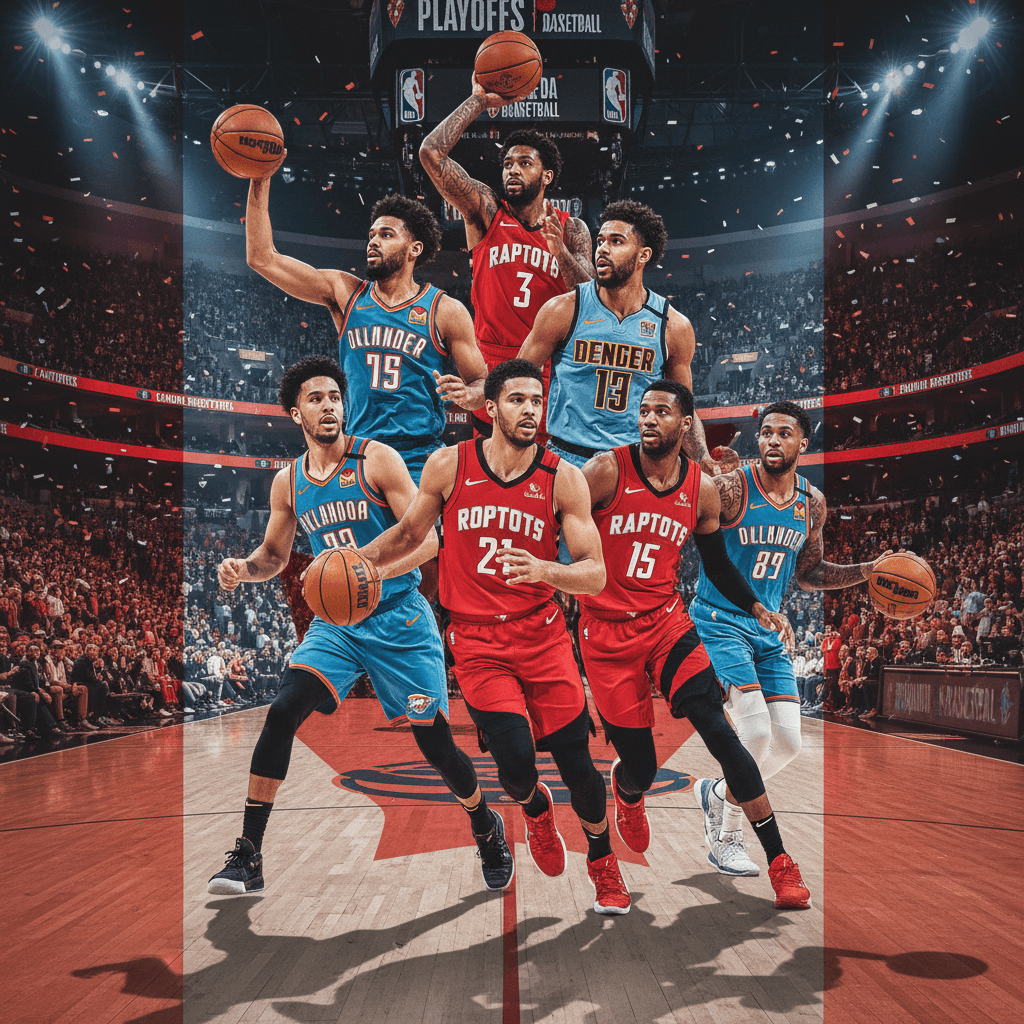
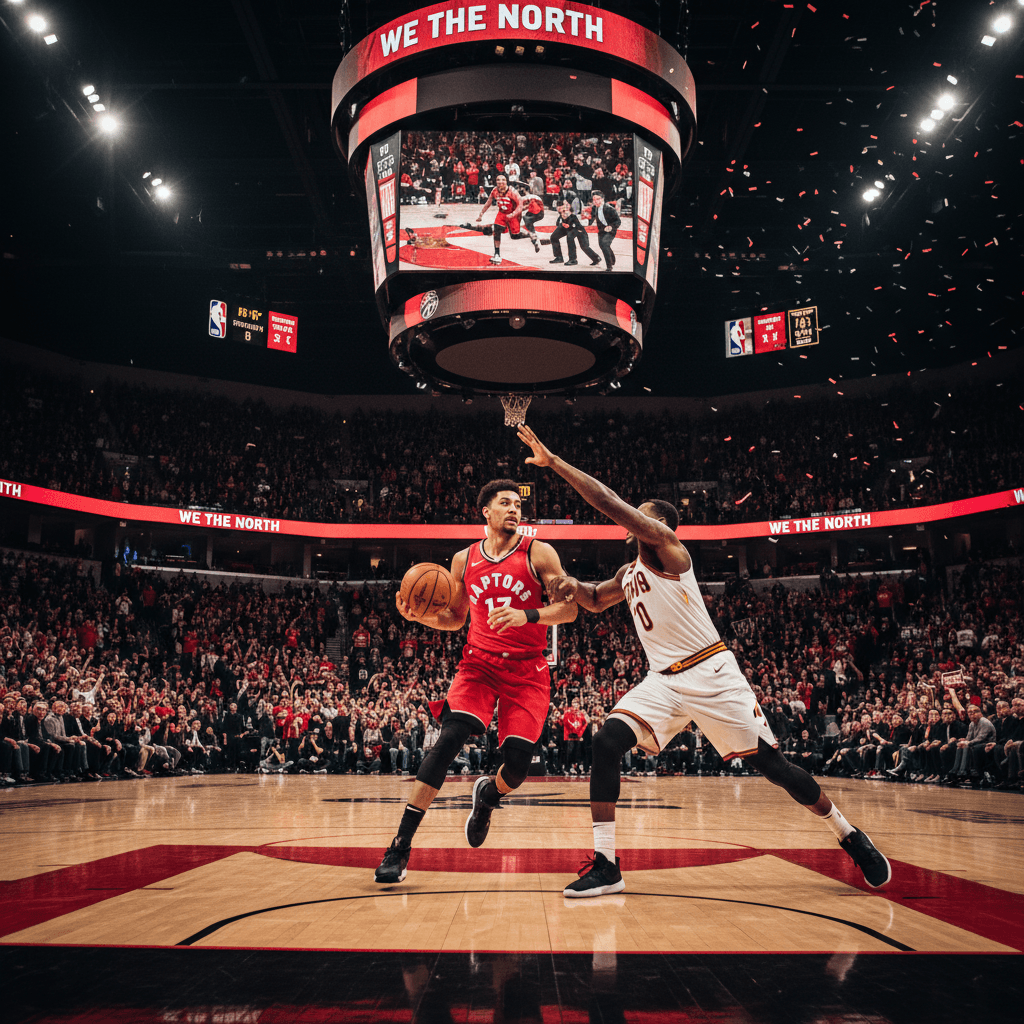
That moment arrived on April 18, 2026, when the Toronto Raptors, seeded fifth in the Eastern Conference, faced the Cleveland Cavaliers in Game 1 of the first round at 1 p.m., broadcast on Prime Video. The setting was almost anticlimactic in its simplicity: a basketball game, two teams, one afternoon, the start of something that had been anticipated for three years. For the players, for the coaching staff, and for the fanbase that has filled Scotiabank Arena through the lean years with the patient loyalty that defines Raptors Nation, it was not anticlimactic at all. It was the beginning.
The storylines entering Game 1 were numerous and complicated. The Raptors had swept the Cavaliers three times in the regular season, a record that suggested a meaningful competitive advantage heading into the series. But Cleveland, recognising their vulnerability, had addressed it in the most direct way possible: by acquiring James Harden in a February trade that transformed their offensive profile entirely and made them a categorically different team than the one Toronto had dominated in November and December.
Scottie Barnes and the Leadership Moment
Scottie Barnes has been the Raptors' most important player for two seasons now, and the 2026 playoffs represent the moment when his leadership role becomes fully visible on the national and international stage. Barnes is a different kind of basketball player than the franchise cornerstones who came before him in Toronto. He is not primarily a scorer in the way that DeMar DeRozan was or the way that a traditional franchise player is expected to be. He is a connector, a versatile defender, a playmaker who makes the people around him better in ways that appear on advanced metrics but can be difficult to capture in a single game highlight.
The playoffs, however, demand more than connectivity. They demand moments, and moments require the willingness to take the ball in your hands when the game is on the line and make the play that determines the outcome. Barnes has shown, in the second half of the 2025-26 regular season, that he has developed that willingness. His iso scoring has improved. His mid-range game has become more reliable. His free-throw shooting, which was a legitimate liability earlier in his career, has improved to a level that no longer costs the Raptors in late-game situations.
For Barnes, Game 1 against Cleveland was a statement opportunity. The Cavaliers have defenders capable of making his night difficult, and the way he responded to that defensive challenge set the tone for his entire postseason. The Raptors need Barnes at a level that was not quite available to them in previous seasons, and the evidence from the second half of the regular season suggests that he is ready to provide it.
RJ Barrett and His Return to Form
Few storylines in the 2025-26 Raptors season have been more satisfying for the Canadian basketball community than RJ Barrett's return to form. The Mississauga, Ontario native, who was acquired from the New York Knicks and initially struggled to find his footing in Toronto while dealing with injuries and the adjustment to a new system, emerged in the second half of the season as exactly the kind of two-way wing scorer the Raptors needed alongside Barnes.
Barrett's scoring punch, his ability to create his own shot off the dribble and to score from multiple levels, gives Toronto a secondary offensive option that opposing defences cannot ignore while focusing their primary attention on Barnes. The combination of Barnes and Barrett in the Raptors' starting lineup creates legitimate two-way problems that make Toronto difficult to gameplan for, and the fact that both players are motivated by the opportunity to perform on a Canadian stage gives the pairing an emotional dimension that reinforces the tactical one.
For Canadian basketball fans, Barrett playing well in the playoffs is more than a team interest. It is a national one. Barrett grew up in Ontario, developed his game in Canadian youth basketball programs, and represents the country's growing ability to produce NBA-calibre talent at the wing position. His success in the 2026 playoffs would be celebrated from Mississauga to Victoria in the way that Canadian athletes performing on the biggest stages always generate a pride that crosses provincial lines.
The Harden Variable: How Cleveland Changed Everything
The most significant factor separating the Cleveland team that Toronto swept in the regular season from the Cleveland team that took the floor in Game 1 of the 2026 first round is James Harden. The February trade that brought Harden to Cleveland was the Cavaliers' organisation stating clearly that they had identified their weakness, which was the absence of a primary ball-handler capable of generating high-quality offence in the half-court, and they were willing to pay the significant cost of acquiring a veteran star to address it.
Harden's playoff track record is complicated and well-documented. There are postseasons in which he has been the best player on the floor throughout a series and postseasons in which his production has declined at the exact moments when it was most needed. What is not complicated is his talent, which remains elite even in the latter stages of his career. His step-back three-pointer is still one of the most unstoppable individual offensive weapons in the league when he is executing it with confidence. His ability to draw fouls and convert at the free-throw line makes him uniquely difficult to defend aggressively without paying a direct cost at the charity stripe.
For the Raptors' defence, Harden presents a specific challenge: they cannot send help on his drives without giving up corner threes, and they cannot stay home on the corner shooters without giving him the driving lanes he needs. That read-and-react dilemma, which has frustrated Harden defenders for his entire career, is as relevant in the 2026 playoffs as it was a decade ago, and the Raptors' defensive scheme needed to have a specific answer prepared for Game 1.
What Toronto Needs to Advance
The Raptors' path to a second-round appearance runs through their ability to execute on several specific competitive requirements. First, their defence needs to be exceptional. Toronto has the personnel to be a legitimate defensive team, with Barnes capable of guarding multiple positions and the roster depth to switch assignments without creating exploitable mismatches. That defensive capability needs to be deployed with discipline and intensity for 48 minutes per game, and it needs to be calibrated specifically to limit the Harden influence while not entirely conceding the areas of the floor where Cleveland's other scorers are most dangerous.
Second, the Raptors need to be efficient in transition. Cleveland's acquisition of Harden slightly slowed their pace relative to how they played earlier in the season, and Toronto's best offensive moments come in the open court, where Barnes and Barrett can attack before defences are set and where the pace is too fast for Harden to hide defensively. If the Raptors can generate turnovers and convert them into quick transition buckets, they reduce the impact of Cleveland's half-court offensive improvements while maximising Toronto's existing advantages.
Third, the Raptors need contributions from beyond Barnes and Barrett. The playoff series will feature game plans specifically designed to limit both of their best players, and the nights when one or both are held below their averages are the nights when Toronto's role players need to provide the offence that keeps the Raptors competitive. The players who step into those moments, who make the right play when the game is in the balance and the opponent has taken away the primary option, will define whether this Raptors team advances.
The Emotional Return and Raptors Nation
Scotiabank Arena has been through several versions of the Toronto Raptors in recent seasons. The championship era team, the core that competed at the highest level and gave the city its only NBA title. The transition team, the one that was clearly in the process of rebuilding without yet having the young core in place to be competitive. The developing team, the one with Barnes and a collection of promising players that fell just short of the postseason. And now, in 2026, the playoff team, the version of the Raptors that the patience of the fanbase helped produce.
The return of playoff basketball to Toronto is an event that the city's basketball community has been anticipating with a genuine, building excitement. The Raptors' 2019 championship created a basketball culture in Toronto that outlasted the roster that won it, and the years of rebuilding did not erode that culture. They deepened it, in the way that difficult times deepen the appreciation for good ones. When the Raptors took the floor for Game 1 against the Cavaliers, the community that filled Scotiabank Arena had been waiting specifically for this, and the energy that came with that waiting is not something that can be manufactured or scheduled. It had to be earned.
For Raptors fans who experienced 2019, the playoff return carries the specific joy of reconnection. For younger fans who experienced only the building years, it carries the first flush of what it means to have your team in the field when the basketball world is paying close attention. Both experiences are genuine, and both contribute to the atmosphere that makes Toronto a meaningful NBA market during a playoff run.
Series Outlook and What Comes Next
The Toronto-Cleveland series is the Eastern Conference first-round matchup that analysts have identified as the most difficult to predict, precisely because the regular-season results suggest one outcome while the Harden acquisition suggests another. A three-game regular-season sweep indicates Toronto's structural advantages in certain competitive areas, and those advantages did not disappear when Harden arrived. They simply need to be redeployed in a way that accounts for the new version of Cleveland's offence.
The series will likely be decided in Games 5 and 6, assuming the competitive balance that the first few games suggest is real. Toronto has the home-court advantage as the higher seed, and winning their home games is the baseline requirement for advancement. If the Raptors can protect Scotiabank Arena and steal one game in Cleveland, the mathematical advantage shifts decisively in their favour, and the Cavaliers, for all the improvement that Harden represents, will be playing catch-up in a series format that is difficult to reverse once the momentum has shifted.
The 2026 NBA playoffs mark the formal beginning of the next chapter for the Toronto Raptors, and the quality of that chapter will be written over the next several weeks. Barnes, Barrett, and the rest of the roster that endured the rebuilding years have arrived at the moment that rebuilds are designed to produce. What they do with it will define the franchise's trajectory for years to come, and for the millions of Canadians watching with them, the stakes feel personal in the way that only sport at its best can manage.