Carney Pitches Canada as Global Investment Hub During New York Visit
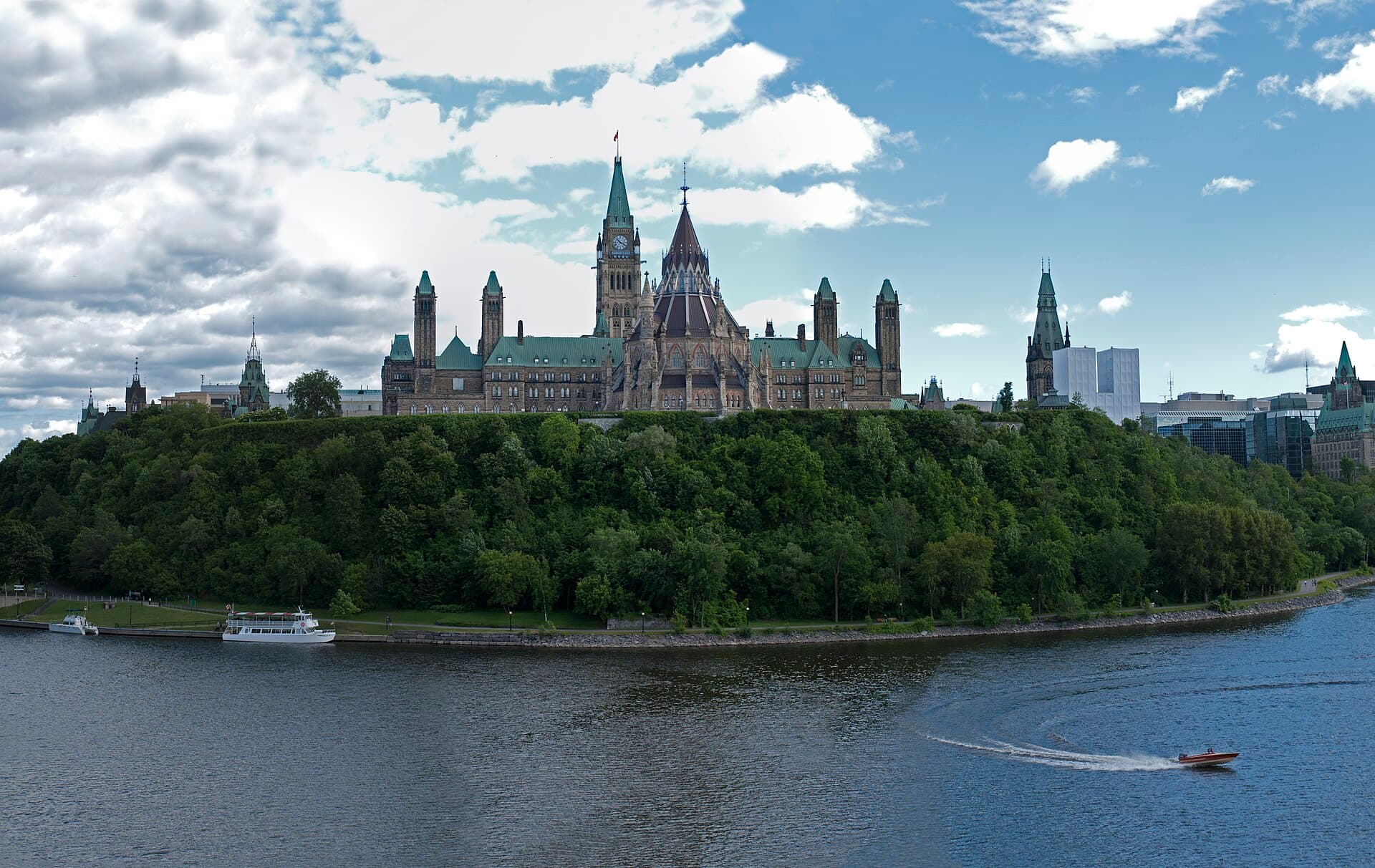
Prime Minister Mark Carney wrapped up a high-profile visit to New York City this week with a direct pitch to global investors: that Canada, despite a bruising trade fight with its largest neighbour, is open for business and intends to position itself as a premier destination for capital. The visit, which ran through the end of May, saw the prime minister meet with chief executives, entrepreneurs, fund managers and institutional investors as Ottawa works to anchor what it describes as roughly $1 trillion of new investment in Canada over the next five years.
What Carney told investors
According to statements from the Prime Minister's Office, Carney framed Canada as a stable, resource-rich and increasingly self-reliant economy at a moment when global investors are searching for predictability. The government has signalled that the bulk of the targeted investment would flow into energy, transportation, data infrastructure and defence, four sectors the Liberals have placed at the centre of their economic agenda since winning a majority in April.
The prime minister's office said the New York meetings were designed to showcase major projects already in the pipeline and to reassure capital markets that Canada's regulatory environment is being streamlined rather than expanded. The message was aimed squarely at investors who have grown wary of cross-border uncertainty since the United States imposed a series of sectoral tariffs on Canadian goods.
In a speech delivered in New York late in the week, Carney called for what he described as a new partnership with the United States, language that struck a notably conciliatory tone after months of retaliatory measures. He paired that olive branch, however, with a pledge to diversify Canada's trading relationships, vowing to double Canadian exports to markets outside the United States over the next decade.
The trade backdrop
The visit unfolded against a tense economic backdrop. Washington has kept 25 per cent tariffs on Canadian vehicles and automotive components in place, alongside duties of up to 50 per cent on steel, aluminium and copper. Those measures have weighed on Canadian manufacturers and contributed to a cautious mood among businesses weighing major capital commitments.
Carney has repeatedly argued that the answer to that pressure is not isolation but a combination of deeper diversification abroad and selective integration with the United States in strategic sectors. The prime minister has said he wants Washington to lower its sectoral tariffs on autos, steel, aluminium, copper and wood products in exchange for moves toward closer cooperation in areas such as energy and critical minerals.
The government says it has signed more than 20 economic and security agreements over the past year as part of that diversification push, touching markets in Europe, Asia and the Indo-Pacific. Officials describe the strategy as building optionality, reducing the share of Canadian trade that depends on a single partner whose policies have become harder to predict.
The investment agenda at home
The New York pitch is the international face of a domestic agenda the Carney government has been advancing through Parliament. The Liberals have argued that attracting private capital at scale requires removing internal barriers, accelerating approvals for major projects and giving investors confidence that timelines will hold.
That argument has translated into legislation aimed at knitting the Canadian economy into a more unified market and at fast-tracking projects deemed to be in the national interest. The government contends that clearing regulatory bottlenecks is the single most effective lever it has to convert investor interest into shovels in the ground.
Energy and resource development feature prominently in the plan, a politically delicate emphasis given tensions with some provinces over jurisdiction and climate policy. The government has tried to thread that needle by pairing its investment ambitions with commitments to lower-emission projects, critical minerals and the infrastructure needed to move Canadian exports to tidewater.
Reaction and skepticism
The investment target is ambitious, and not everyone is convinced the capital will materialise on the scale Ottawa projects. Business investment in Canada has been weak, falling for several consecutive quarters, and economists have pointed to trade uncertainty as a primary reason firms have held back. Persuading those same firms to commit hundreds of billions of dollars will require more than speeches in Manhattan.
Opposition voices have questioned whether the government can deliver the regulatory certainty it is promising without running into the provincial disputes and environmental reviews that have slowed past projects. Critics have also noted that a charm offensive aimed at American investors sits awkwardly alongside the government's stated goal of reducing dependence on the United States.
Supporters counter that Carney, a former central banker with deep ties to global finance, is uniquely positioned to make the case directly to the people who allocate capital. The prime minister's office has leaned into that biography, presenting him as a credible interlocutor who understands both the language of markets and the policy levers a government can pull.
What it means for Canadians
For ordinary Canadians, the stakes of the investment drive are concrete. Major projects in energy, transportation and data infrastructure promise construction jobs, regional development and, over the longer term, a broader tax base. The government argues that a wave of private investment is essential to lifting productivity, which has lagged for years and which economists identify as a core weakness in the Canadian economy.
There are risks as well. A strategy built around large-scale resource and infrastructure development raises questions about environmental tradeoffs, Indigenous consultation and whether the benefits will be shared across regions. How the government manages those questions will shape whether the investment agenda is seen as a national success or a source of fresh division.
The diversification component matters too. If Canada can genuinely broaden its export base, the economy becomes less vulnerable to the kind of tariff shocks that have rattled manufacturers this year. If it cannot, the country remains exposed to decisions made in Washington regardless of how warmly its leaders speak of partnership.
How the strategy fits Carney's biography
The investment drive is in many ways an expression of the prime minister's own background. Before entering politics, Carney spent years at the highest levels of central banking and global finance, building relationships with the institutions and individuals who move capital around the world. The government has been keen to leverage that credibility, presenting the prime minister as someone who can speak to investors in their own terms.
That biography is a political asset and a potential vulnerability. Supporters argue that few Canadian leaders have been as well placed to make the case for the country abroad, and that Carney's understanding of markets lends weight to his promises of stability and reform. The trust of global capital, in this view, is something the prime minister has spent a career earning.
Critics, however, have questioned whether a leader so closely associated with the world of finance can credibly champion the interests of ordinary workers and communities. The government has sought to rebut that critique by tying the investment agenda to job creation and regional development, arguing that attracting capital is a means to broadly shared prosperity rather than an end in itself.
The diversification gamble
Underlying the New York pitch is a larger gamble about Canada's place in the world economy. For decades, the country's prosperity has rested on privileged access to the American market, an arrangement that delivered enormous benefits but also created a dependence that the trade conflict has exposed as a liability. The government's bet is that Canada can reduce that dependence without sacrificing the advantages of continental integration.
Pulling that off is far from guaranteed. Diversifying trade and investment toward Europe, Asia and other markets requires building new relationships, infrastructure and supply chains, a process measured in years rather than months. In the meantime, the gravitational pull of the American economy remains immense, and weaning Canadian businesses off it is easier to proclaim than to achieve.
The prime minister's simultaneous courting of American investors and pursuit of diversification reflects an attempt to hedge. Rather than choosing between the United States and the rest of the world, the government is trying to keep both doors open, deepening selective ties with Washington while spreading Canada's bets more widely. Whether that balancing act proves coherent or contradictory will become clearer as the strategy unfolds.
The opposition's critique
The investment drive has not gone unchallenged at home. Opposition parties have questioned whether the government can deliver the regulatory certainty it promises without becoming mired in the provincial disputes and lengthy reviews that have stalled major projects in the past. They have pressed the government to explain how its trillion-dollar ambition translates into concrete commitments rather than aspirational targets.
Critics have also seized on the apparent tension between courting American investors and the government's stated goal of reducing reliance on the United States. Travelling to New York to woo capital, they argue, sits uneasily with rhetoric about diversification and independence, and risks sending mixed signals about where the government's priorities truly lie.
The government has pushed back, framing the strategy as pragmatic rather than contradictory. Officials contend that attracting investment from wherever it can be found, including the United States, is consistent with a broader effort to strengthen the Canadian economy and reduce vulnerability over time. The debate reflects a deeper disagreement about how Canada should position itself in a world where its closest economic partner has become a source of uncertainty.
What's next
The New York visit is unlikely to be the last of its kind. The government has signalled that it intends to keep making the case abroad, with further outreach to investors in Europe and Asia expected as part of the diversification strategy. Domestically, attention turns to whether the legislative groundwork the Liberals have laid will translate into approved projects on the ground.
The trade file, meanwhile, remains unresolved. Negotiations tied to the review of the continental trade agreement loom over everything, and Canada's ability to secure relief from American tariffs will help determine how confident investors feel about committing capital. For now, the prime minister is betting that a message of stability and ambition, delivered in the financial capital of the world, can begin to move the needle.
Whether that bet pays off will be measured not in headlines from Manhattan but in the investment figures reported over the coming quarters. The government has set a high bar for itself, and Canadians will be watching to see whether the pitch becomes reality.
Spotted an issue with this article?
Have something to say about this story?
Write a letter to the editor

Comments
Be the first to comment.